Attractions and Places To See in Bistrița-Năsăud - Top 20
Best attractions and places to see in Bistrița-Năsăud include a diverse range of landmarks, natural features, and cultural sites within Transylvania, Romania. The region's landscape combines the Eastern Carpathians with the Transylvanian Plateau, featuring mountains, lakes, and historical locations. Bistrița-Năsăud is known for its well-preserved traditions and historical significance as one of Transylvania's Saxon fortresses. Visitors can explore a variety of attractions, from towering peaks to historic city centers.
Best attractions and places to see in Bistrița-Năsăud
- The most popular attractions is Bistrița, a settlement that is one of the seven Saxon fortresses in Transylvania. Its evangelical church, with a 75-meter-high tower, is an architectural monument showcasing the transition from Gothic to Renaissance styles.
- Another must-see spot is Ineu Peak, a summit in the Rodna Mountains. This peak is the second highest in the range, reaching an altitude of 2,279 meters, and is part of the mixed reservation "Ineu - Lala".
- Visitors also love Gârgălău Peak, a summit located in the eastern part of the Rodna Mountains. At 2,158 meters, it offers panoramic views over the Rodna Mountains and beyond.
- Bistrița-Năsăud is known for its historical sites, mountain peaks, and natural monuments. The region offers a variety of attractions to see and explore, from ancient churches to challenging hiking routes.
- The attractions in Bistrița-Năsăud are appreciated by the komoot community, with 63 highlights and 26 photos shared by users.
Last updated: July 20, 2026
Bistrița
Highlight • Settlement
The evangelical church is the emblem of Bistrița. It is located in the center of the city. It is an architectural monument representative of the transition from Gothic to Renaissance style in Transylvania. The church tower is perched 75 meters high. It is one of the tallest towers in Romania.
You can go to the top of the church by taking an elevator. Admiring the panorama of a city helps you better understand its layout and also helps you get your bearings.
Translated by Google •
Tip by

Ovidenia Orthodox Church Bistrița
Highlight • Religious Site
Translated by Google •
Tip by

Sign up now to discover places like this
Get recommendations on the best single tracks, peaks, & plenty of other exciting outdoor places.
Sign up for free
Ineu Peak
Highlight • Summit
Translated by Google •
Tip by

La Cărți Shelter
Highlight • Mountain Hut
- Location: About 1 - 2 minutes from the main ridge to the south (towards the Anieșul mic valley). It is about 50m south of the signpost with the Saddle Between Springs. The refuge has red reflective strips, on the northern, eastern and western parts, so that it can be found at night / fog, and baits were made on the path that comes from the spring and the signs.
- GPS coordinates:
N 47 ° 33.376 '
E 24 ° 40.221 '
Altitude: 1828 m
Other:
Water sources: Rătăfoi's fountain (spring), at about 100m to the NW
The refuge was newly built in August 2017 by the Mountain Tourism Association "Hai Pe Munte" Iași, with the support of the Bucovina Guides Association, Rodna Mountain Rescue, Rodna Mountain Gendarmerie and Rodna Mountains National Park.
Translated by Google •
Tip by
Gârgălău Peak
Highlight • Summit
Translated by Google •
Tip by
Historic Houses in Bistrița's Old Town
Highlight • Historical Site
Translated by Google •
Tip by
Gărgălău Shelter
Highlight • Mountain Hut
Solid wood construction, similar to the one in the "La Carti" saddle.
Capacity: 12 people in bivouac conditions, on 2 bunk beds.
Other:
Location: Saua Gargălău
GPS coordinates: 47.5713056°, 024.7963611° or 47°34'16.7"N 24°47'46.9"E (pay attention to the format), near Saua Gargalau towards S-SW at approximately 50m.
Translated by Google •
Tip by
Refuge Under Ineu Peak
Highlight • Mountain Hut
- The shelter is provided with two overlapping prices of two places each (total four places); in case of force majeure, six people can be accommodated.
Stone floor slabs were placed on the floor to remove the unpleasant effect of excess moisture.
- Location: About 2-3 minutes from the main ridge and Saua Inaului, to the west (towards Pietrosu). Located on the bypass of the Inau peak, about 100 meters NW from the sign in Șaua cu Lac. The shelter is 1.5 - 2 hours from the refuge from Șaua Curățel
- GPS coordinates: N 47gr 31 '20.3 "E 24gr 52' 57.6"
Altitude: 2150
Other:
Water sources:
- safe: in the saddle of Inăuț, 1-2 minutes downhill, from the branch of the path to the Lala lakes.
- temporary (after rainy periods):
1. 50 meters from the shelter in the direction of Gărgălău, down the path (left)
2. from the ridge at the cross that marks the place where a mountain rescuer lost his life (about 5 minutes from the shelter) descend to the bottom of the Bile, on an animal path, a stony gorge is identified (front, slightly right) where water can be found 2-3 minutes after the deviation from the marked path. It is good to have a smaller vessel to collect water (a cup, for example) as the flow of the spring is small.
Translated by Google •
Tip by
Tășuleasa Social
Highlight • Rest Area
They invested all their knowledge and experiences accumulated over more than 18 years of organizational activities for this project. It is an environmental NGO, known in particular for its policy of saving trees.
Come discover the many other projects that this dynamic team has created. You are in the right place to meet the right people. The place is free and operates solely on donations. You can sleep and eat there.
Translated by Google •
Tip by
Cailor Waterfall in Rodnei Mountains National Park
Highlight • Waterfall
Translated by Google •
Tip by

Sign up for free to discover even more attractions in Bistrița-Năsăud.
Sign up for free
Already have an account?
Start today with a free account
Your next adventure awaits.
Login or Signup
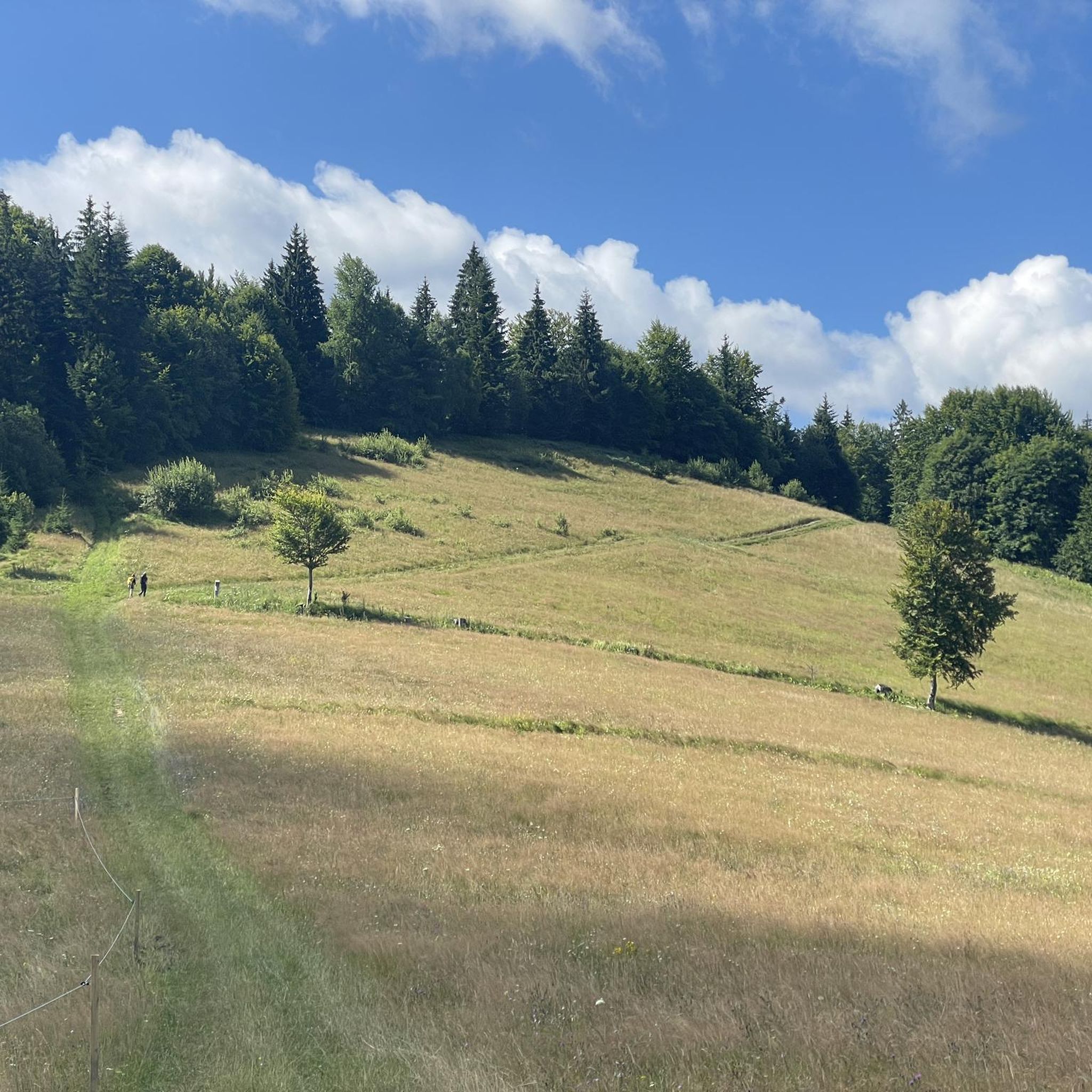
Other adventures in Bistrița-Năsăud

Tips from the Community

Very nice view of the lake and the surrounding mountains!
0
0

Ovidenia is the old name of the holiday in the Orthodox calendar on November 21, which corresponds to the Entry of the Mother of God into the Church. The main Orthodox church of Bistrița is dedicated to this day. The building was originally the church of the Minorite Monastery of "St. Andrei", also called the Crown Church, which dates back to the 13th century. It is a hall church with cross vaults and pointed arches, representative of the early Transylvanian Gothic of Cistercian origin. The church was bought by the United Romanian Parish (Greek Catholic) in 1895. In 1948, with the proscription of the United Romanian Church by the communist regime, the entire complex (church and monastery) was handed over to the Romanian Orthodox Church.
12
0
Under the protection of the Hungarian Queen Elisabeth, the inhabitants of Bistriţa became the most important merchants in the region in the 15th century. They handled trade between Transylvania and Moldavia. The city was declared a "royal free city", a status that gave it economic, legal and political autonomy. The proud town houses, many of which are still well preserved, bear witness to this heyday.
14
0
Bistrița is located in a wide depression, surrounded by rolling hills that dominate the landscape. The settlement was founded when the region in the north-eastern corner of Transylvania, which at the beginning of the Middle Ages lay between the royal possessions, was settled by settlers from Hungary, but above all by groups of Flemish, Walloons, Saxons and Bavarians, who were later grouped together under the name "Transylvanian Saxons". Through the Golden Bull of the Saxons of 1224, they were endowed with a number of rights and freedoms that brought them high social status and economic privileges. The first mention of the place dates back to 1241, when in the codes of the Echternach monastery, between the settlements destroyed by the Mongols, "oppidum Nosna" is mentioned, the name given by the settlers to the settlement founded on the banks of the Bistrita river.
14
0

Welcome to an unforgettable adventure for cycling enthusiasts! Explore a mountain paradise where you can enjoy the view of the beautiful mountains and picturesque vineyards while pedaling your bike. Here you will be met by warm and welcoming women who will give you the best experiences. With quality wines to pamper your taste buds and the warm hospitality of the locals, you will return home with unforgettable memories and a sense of satisfaction. It is a place where adventure meets refined wine and the friendliness of the people.
0
1

A beautiful, cozy old town
1
1

Bistrița is one of the seven Saxon fortresses in Transylvania. This city has an interesting history which can still be read through the architectural style of the many buildings and religious complexes. The evangelical church is the emblem of Bistrița. It is located in the center of the city. It is an architectural monument representative of the transition from Gothic to Renaissance style in Transylvania. The church tower is perched 75 meters high. It is one of the tallest towers in Romania. You can go to the top of the church by taking an elevator. Admiring the panorama of a city helps you better understand its layout and also helps you get your bearings.
3
0
Frequently Asked Questions
What natural attractions can I explore in Bistrița-Năsăud?
Bistrița-Năsăud offers a variety of stunning natural features. You can visit Ineu Peak and Gârgălău Peak in the Rodna Mountains, both offering challenging hikes and incredible views. Don't miss the picturesque Cailor Waterfall within the Rodnei Mountains National Park. Colibița Lake, often called a 'sea in the mountains,' is another popular spot for its serene beauty. The region also boasts the Arcalia Arboretum Park and the Poiana Narciselor (Narcissus Meadow) on Muntele Saca.
Are there opportunities for hiking in the Bistrița-Năsăud region?
Yes, Bistrița-Năsăud is a fantastic destination for hiking, especially in the Rodna Mountains. You can find challenging routes to summits like Ineu Peak and Gârgălău Peak. For more detailed routes and options, explore the Hiking in Bistrița-Năsăud guide, which includes trails like the Izvorul Bistriței Lake – Horses' Waterfall loop.
Where can I find panoramic views in Bistrița-Năsăud?
For breathtaking panoramic views, consider climbing the 75-meter-high steeple of the Evangelical Church in Bistrița, which offers a great perspective of the city. In the mountains, Ineu Peak (2,279 m) and Gârgălău Peak (2,158 m) provide extensive vistas over the Rodna Mountains and beyond.
What historical sites should I visit in Bistrița-Năsăud?
The city of Bistrița itself is rich in history, being one of Transylvania's seven Saxon fortresses. Explore the Evangelical Church, the Sugălete Ensemble of merchant houses, and the Coopers' Tower. The Ovidenia Orthodox Church Bistrița, originally a 13th-century Minorite Monastery, is another significant historical and architectural site. Don't miss the Historic Houses in Bistrița's Old Town, which reflect the city's past wealth.
Are there any significant cultural institutions or museums in the region?
Yes, the Bistrița-Năsăud Museum Complex is a key cultural hub, housing sections dedicated to ethnography, folk art, natural sciences, fine arts, history, and archaeology. The Cultural Palace in Bistrița hosts various performances and events. You can also visit the Casa Argintarului (Silversmith's House) for insights into local craftsmanship, and memorial houses dedicated to writers Liviu Rebreanu and George Coșbuc.
What kind of outdoor activities are available besides hiking?
Beyond hiking, Bistrița-Năsăud offers excellent opportunities for road cycling and running. You can find various routes for these activities, such as those listed in the Road Cycling Routes in Bistrița-Năsăud guide and the Running Trails in Bistrița-Năsăud guide. The Via Transilvanica also passes through the county, offering long-distance exploration for adventurers.
Are there family-friendly attractions in Bistrița-Năsăud?
Absolutely. The city of Bistrița itself, with its historic center and the opportunity to ascend the Evangelical Church tower, is considered family-friendly. The Ovidenia Orthodox Church Bistrița and the Historic Houses in Bistrița's Old Town are also suitable for families. For outdoor enjoyment, the Arcalia Arboretum Park, the Dendrological Park of Unirea, and the Municipal Park Bistrița offer green spaces for relaxation and exploration.
Can I experience local traditions or crafts in Bistrița-Năsăud?
Yes, Bistrița-Năsăud is known for its well-preserved traditions. You can explore local craftsmanship at places like the Casa Argintarului (Silversmith's House) in Bistrița. The region also offers opportunities to experience authentic local life, including locally grown ingredients and traditional recipes. The Bistrița-Năsăud Museum Complex frequently hosts exhibitions that highlight the region's ethnography and folk art.
What is the best time of year to visit Bistrița-Năsăud?
The best time to visit Bistrița-Năsăud largely depends on your interests. Spring and summer (May to September) are ideal for hiking and exploring natural attractions like the Poiana Narciselor when the narcissus blooms. The warmer months are also perfect for enjoying Colibița Lake and other outdoor activities. Autumn brings beautiful foliage, while winter offers opportunities for snow sports in the mountainous areas, though some mountain passes might be challenging.
Is there a specific landmark associated with Bram Stoker's Dracula in the area?
While Bram Stoker never visited the area, the Tihuța Pass in Bistrița-Năsăud is famously associated with his novel 'Dracula.' It's a scenic mountain pass that adds a touch of literary mystique to the region, even if the connection is purely fictional.
What is the significance of the Evangelical Church in Bistrița?
The Evangelical Church in Bistrița is the emblem of the city and a significant architectural monument. It showcases the transition from Gothic to Renaissance styles in Transylvania. Its towering steeple, reaching 75 meters, is among Romania's tallest and offers panoramic views of the city from its top, accessible by elevator.
Are there any unique geological features to see?
The Rodnei Mountains, part of the Rodnei National Park, are known for their glacial lakes, such as Lala and Lezer lakes, which are unique geological formations. The mountainous relief of the county, with peaks like Ineu Peak, also presents impressive geological landscapes formed by ancient glacial activity.
Most popular attractions in Bistrița-Năsăud

Get inspired with the komoot mobile app


Didn’t find what you were looking for?
Are you keen on exploring more awesome places nearby? Browse our guides:
Explore more
Still not found the Highlight you’re looking for? See guides of the top attractions in other regions:
