The best walks and hikes around Lake Biskupińskie
4.7
(27)
317
hikers
32
hikes
Hiking around Lake Biskupińskie offers a blend of historical exploration and natural scenery. The region is characterized by its significant archaeological sites, such as the Biskupin Archaeological Museum, and the surrounding lake landscape. The area provides diverse hiking trails, ranging from accessible paths suitable for leisurely strolls to more challenging treks. The terrain includes paths around the lake and through nearby areas, with varied elevation gains.
Best hiking trails around Lake Biskupińskie
- The most popular hiking route is Route of…
Last updated: May 15, 2026
24.2km
06:14
130m
110m
Hard hike. Very good fitness required. Easily-accessible paths. Suitable for all skill levels.
4.5
(2)
39
hikers
Easy hike. Great for any fitness level. Easily-accessible paths. Suitable for all skill levels.

Sign up for free
5.0
(1)
22
hikers
2.82km
00:43
10m
10m
Easy hike. Great for any fitness level. Easily-accessible paths. Suitable for all skill levels.
5.0
(3)
12
hikers
Moderate hike. Good fitness required. Easily-accessible paths. Suitable for all skill levels.
11
hikers
Easy hike. Great for any fitness level. Easily-accessible paths. Suitable for all skill levels.
Get access to more routes and recommendations from other explorers.
Sign up for free
Already have an account?
Our route recommendations are based on thousands of hikes, rides, and runs completed by other people on komoot.
Start today with a free account
Your next adventure awaits.
Login or Signup


Tips from the Community

Interesting village. I didn't expect to see anything like this in Poland.
0
0
A visit is worthwhile
0
0
A visit is worthwhile
0
0

A well -kept large park with a small Żniński Lake. A bridge over the water. At the entrance, the Narrow Gauge Railway Station.
2
0
The Church of the Blessed Virgin Mary Queen of Poland in Żnin is a neo-Gothic church built in 1909 on the site of a former Dominican monastery that existed from 1338 to 1839. Originally constructed as a Protestant church, it was consecrated as a Catholic church in 1945 and formally consecrated in 2010 by Archbishop Henryk Muszyński. The church houses baroque artwork including a painting of the Virgin Mary and Child from the original Dominican monastery, and since 2004 it has been the fourth church in Poland to possess relics of Saint Gianna Beretta Molla.
2
0
The Chopin monument in Żnin was originally created in 1926 for the Marcinkowo estate by sculptor Jakub Juszczyk and was commissioned by Wiesław Tuchołka, the first Polish district administrator of Żnin county. In 1962, the seven-ton monument was transported from Marcinkowo to Żnin in a challenging operation that required special equipment, during which the transport platform's wheels buckled under the weight and the statue had to be secured with ropes. The monument features musical notation from Chopin's Prelude in A major instead of the composer's name, and depicts the composer in a seated position as if about to play piano.
1
0
The Museum of Pałuki Land in Żnin is housed in a historic building that uniquely combines a former Jewish shop from around 1890 with a German magistrate building from 1906, creating an unusual architectural blend. The museum showcases local history through diverse exhibitions including vintage printing machines from the family business that created Poland's first women's magazine "Moja Przyjaciółka" in the 1930s, motorboat racing memorabilia reflecting Żnin's status as a center for water sports, and traditional Pałuki ethnographic displays. The facility also features the Tadeusz Małachowski Gallery, which has hosted exhibitions of works by world-renowned artists including Marc Chagall and Salvador Dalí, and displays intarsia artwork by Edmund Kapłoński, one of Poland's most celebrated artists in this wood inlay technique.
1
0
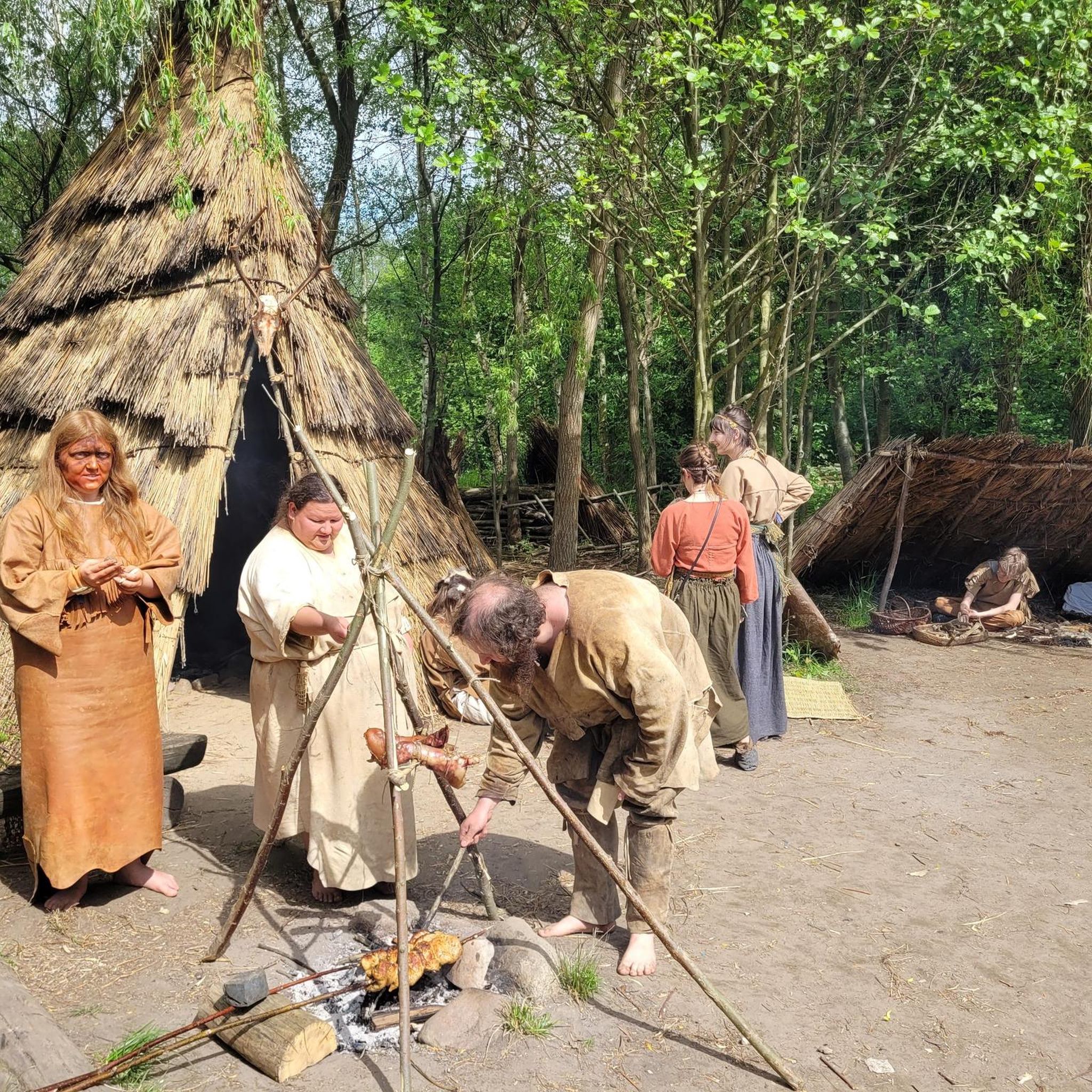
Archaeological investigations at Biskupin revealed remains of an early medieval settlement from the 10th-11th centuries, which served as a service and craft village connected to a small fortified settlement on the Biskupin peninsula. The reconstructed "Piast Village" features an oval layout with a central square surrounded by several smoke houses (kurne chaty) built using log construction and wattle-and-daub techniques, each measuring about 25-30 square meters with a central hearth and no windows. The village demonstrates various medieval crafts including leatherworking, pottery, blacksmithing, bread baking, and tar production, and is part of the Piast Trail tourist route.
2
0
Frequently Asked Questions
How many hiking trails are available around Lake Biskupińskie?
There are over 30 hiking routes around Lake Biskupińskie, offering a variety of experiences. These include 23 easy trails, 10 moderate routes, and 1 more challenging hike, ensuring options for all fitness levels.
What kind of terrain can I expect on hikes around Lake Biskupińskie?
The terrain around Lake Biskupińskie is varied, featuring paths around the lake, through historical sites, and into nearby natural areas. While some paths are easily accessible with minimal elevation gain, others, like the Route of Leszek the White, involve more significant elevation changes and require good fitness.
Are there any family-friendly hiking options near Lake Biskupińskie?
Yes, Lake Biskupińskie offers several family-friendly routes. Many paths are easily accessible and suitable for all skill levels. For example, the Biskupin Archaeological Museum – Piast Village Biskupin loop from Gąsawa is an easy 2.3 km path connecting two significant historical sites, perfect for a leisurely family outing.
What historical sites or landmarks can I explore while hiking in the area?
The region is rich in historical significance. A primary attraction is the Archaeological Museum in Biskupin, often called the 'Polish Pompeii,' where you can explore well-preserved remains of an ancient settlement. Routes like the Piast Village Biskupin – Biskupin Archaeological Museum loop from Biskupin take you directly through this fascinating area.
Are there any circular hiking routes around Lake Biskupińskie?
Yes, many of the trails around Lake Biskupińskie are designed as loops, allowing you to start and end at the same point. Examples include the easy Biskupin Archaeological Museum – Piast Village Biskupin loop from Gąsawa and the slightly longer Piast Village Biskupin – Biskupin Archaeological Museum loop from Biskupin.
What do other hikers enjoy most about hiking in Lake Biskupińskie?
The area is highly rated by the komoot community, with an average score of 4.7 stars from over 20 reviews. Hikers often praise the unique blend of historical exploration with natural scenery, particularly the well-preserved archaeological sites and the accessible paths that cater to various experiences.
Are there any longer, more challenging hikes available?
For those seeking a more demanding experience, the Route of Leszek the White is a difficult 24.2 km (15.0 miles) trail that takes approximately 6 hours and 14 minutes to complete, featuring a notable elevation gain. This route is ideal for hikers with good fitness levels.
Can I find moderate difficulty trails in the Lake Biskupińskie region?
Yes, there are 10 moderate trails in the region. An example is the Żnin Market Square and Tower – Museum of Pałuki Land loop from Żnin Licealna, which is a 14.2 km (8.8 miles) route taking about 3 hours and 39 minutes, offering a good balance of length and challenge.
What is the best time of year to go hiking around Lake Biskupińskie?
While specific seasonal recommendations are not provided, the blend of historical sites and natural beauty suggests that spring and autumn would offer pleasant temperatures and vibrant scenery. Summer is also suitable, though it might be busier, especially around the main attractions.
Are there any easy, shorter walks for beginners or those looking for a quick stroll?
Absolutely. The region has 23 easy trails. For a quick and accessible walk, consider the Żnin Town Hall Tower – Żnin Market Square and Tower loop from gmina Żnin, an easy 3.4 km (2.1 miles) route that can be completed in about 52 minutes.
Is Lake Biskupińskie a good destination for combining cultural exploration with hiking?
Yes, Lake Biskupińskie is an excellent destination for this. The presence of the Archaeological Museum in Biskupin, with its 'living history' reconstructions, allows hikers to immerse themselves in ancient culture while enjoying the surrounding natural paths. Many trails directly connect or pass through these significant historical points.
Most popular routes around Lake Biskupińskie

Get inspired with the komoot mobile app


Explore more
Browse the best Hikes in other regions.
