The best gravel rides around Aizelles
4.7
(7)
72
riders
9
rides
Gravel biking around Aizelles offers a diverse landscape characterized by rolling hills, green valleys, and extensive forests. The region features a mix of paved and unpaved paths, making it suitable for gravel cycling. Key natural features include the Bois de Berrieux and Vauvelair forests, along with the Ruisseau de Fayau and Ru du Moulin rivers. The historic Chemin des Dames ridge also provides varied terrain and panoramic views for cyclists.
Best gravel bike trails around Aizelles
- The most popular gravel…
Last updated: November 18, 2026
4.0
(4)
36
riders
46.3km
02:36
300m
300m
Moderate gravel ride. Good fitness required. Mostly paved surfaces.
5.0
(2)
12
riders
14.8km
00:50
100m
100m
Easy gravel ride. Mostly paved surfaces.

5.0
(1)
7
riders
24.4km
01:34
230m
230m
Moderate gravel ride. Good fitness required. Mostly paved surfaces.
7
riders
31.4km
01:57
300m
300m
Moderate gravel ride. Good fitness required. Mostly paved surfaces.
3
riders
45.7km
03:38
670m
670m
Hard gravel ride. Very good fitness required. You may need to push your bike for some segments of this route.
Get access to more routes and recommendations from other explorers.
Already have an account?
Our route recommendations are based on thousands of hikes, rides, and runs completed by other people on komoot.
Start today with a free account
Your next adventure awaits.



Tips from the Community

The Vauclair Abbey near Bouconville-Vauclair in the Aisne department was founded in 1134 by Bernard of Clairvaux as a Cistercian monastery. In the Middle Ages, it developed into an important monastic complex; it was significantly expanded, particularly in the 13th century. During the First World War, Vauclair was located directly in the combat zone of the Chemin des Dames and was almost completely destroyed by artillery fire in 1917. The ruins visible today have been archaeologically investigated, excavated, and partially secured since the 1960s. Directly next to the ruins, there is now a medicinal herb garden with around 400 species and a conservation orchard. This verger conservatoire preserves old regional apple and pear varieties; according to the French Garden Association, there are about 84 different varieties represented there. Together with the monastery ruins, the site thus commemorates not only the history of the Cistercians but also their close connection to agriculture, horticulture, and botany.
1
0

In 1914, the peasant village of Ailles covered about 340 hectares, one third of which was forest. 61 houses were grouped around the church of Saint-Martin. The population was declining: in the 1901 census there were still 147 inhabitants, while in 1911 there were only 118. In honor of the Battle of Craonne, a magnificent elm had been planted on March 7, 1814. A century later, it witnessed a new battlefield as French and German shells wiped the village off the map...
1
0
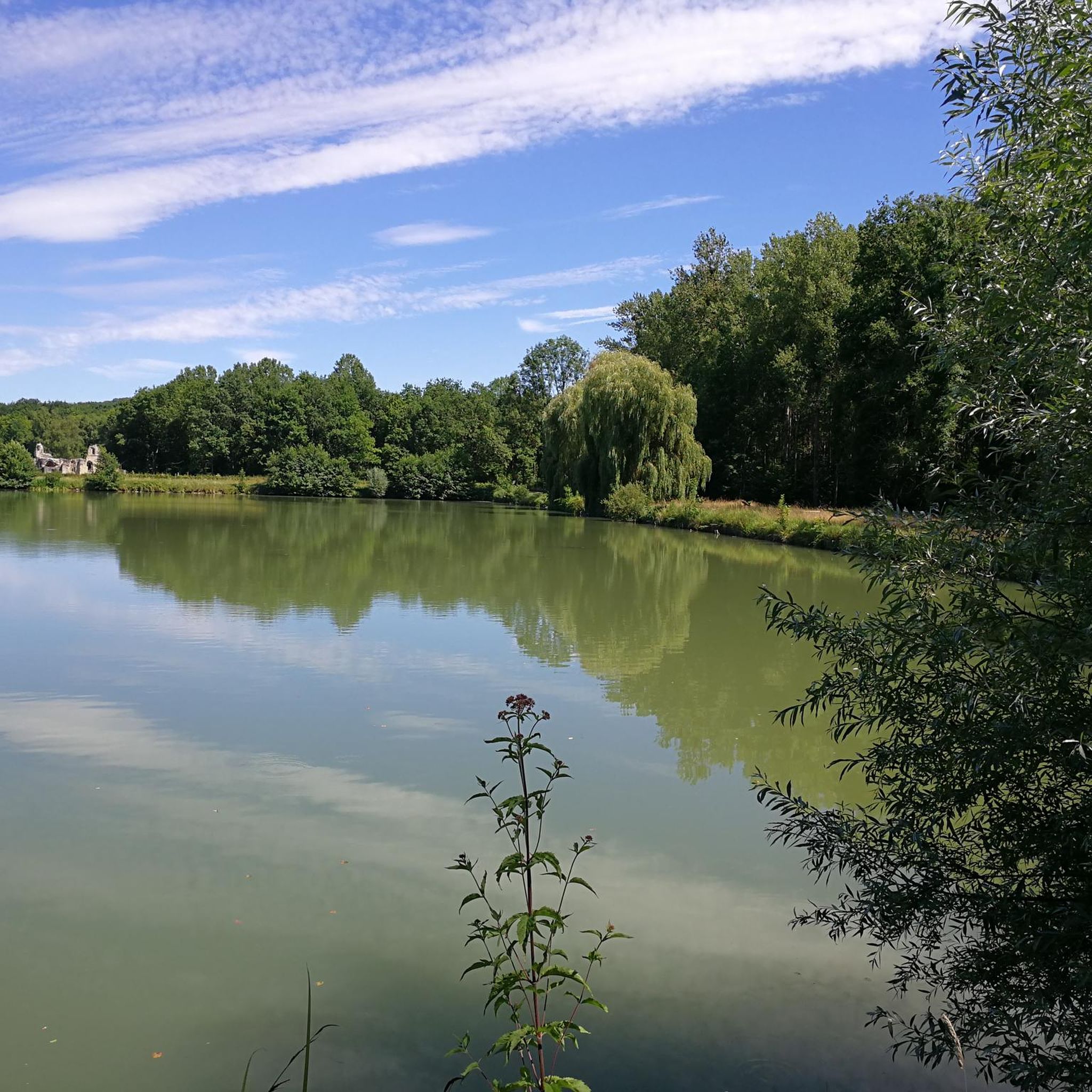
Hidden in the middle of the forest, this Cistercian abbey, founded in 1134 by Bernard of Clairvaux, appears like a mirage. Its majestic ruins bear witness to a turbulent past. From the Hundred Years' War and the French Revolution to the First World War, the abbey suffered considerable destruction. In the 1960s, the site was overgrown with brambles and forgotten. Thanks to the archaeological excavation group "Sources" led by Father Courtois, it experienced a rebirth.
2
0
The observation tower, inaugurated on April 16, 2013, overlooks the Plateau de Californie, a strategic site of the battles of the Chemin des Dames. The 20-meter-high, freely accessible tower offers a historical insight into the landscape and recalls the importance of the heights during the war. It also offers visitors who climb it an unparalleled view of the village of Craonne below, but also of the Chemin des Dames and the Champagne plain... The observation tower is topped with a blue beacon that is activated at night, thus forming a monument in the landscape. During the day, it allows one to survey the plain of Reims, while at night, conversely, it is visible from this plain. The structure of the tower consists of a spatially modular wooden Mikado, whose arrangement has been chosen according to the configuration of the terrain and the orientation of the viewpoints. The dimensions of the steps and handrails facilitate the climb and mitigate the feeling of vertigo that may arise. For this structure built amidst trees, wood was the obvious material. Renewable materials were selected: glued laminated timber from pine for the long supports, posts and beams from larch, larch wood for the steps, and tropical woods (Massaranduba, Cumaru, Ipé, Doussié…) for the platforms and railings. These woods, originating from French Guiana, are certified and their extraction is controlled. Source and further information: https://www.chemindesdames.fr/
1
0

Beautiful quiet place for a walk
0
0

Originally, the place invaded by marshes was called Courmanblain , and Saint Bernard installed a first group of Cistercian monks there in 1134, responsible for clearing this space and building the abbey there. Nowadays, it is the remains of the building that you will discover, because due to its proximity to the Chemin des Dames , the abbey suffered very heavy damage during the Nivelle offensive during the First World War .
0
0
Entrance to Centre Parcs at Lac d'Ailette
0
0
Inaugurated on April 16, 2013, the observation tower overlooks the Plateau de Californie, a strategic location during the war on the Chemin des Dames. Standing at a height of 20 meters and freely accessible, it offers a historical perspective on the landscapes and serves as a reminder of the importance of high points during the war. It also offers visitors who climb it an incomparable view of the village of Craonne below, as well as the Chemin des Dames and the Champagne plain. Equipped at its summit with a blue lighthouse, put into operation at night, the observation tower constitutes a beacon of memory in the landscape. Allowing a view of the plain of Reims during the day, it is, in a reverse movement, visible at night from this plain.
0
0
Frequently Asked Questions
What kind of terrain can I expect on gravel bike trails around Aizelles?
The gravel bike trails around Aizelles feature a diverse landscape of rolling hills, green valleys, and extensive forests. You'll encounter a mix of paved and unpaved paths, including routes through the Bois de Berrieux and Vauvelair forests, as well as along the historic Chemin des Dames ridge, which offers varied terrain and panoramic views.
Are there any easy gravel bike routes suitable for beginners or families?
Yes, Aizelles offers several easy gravel bike routes. For instance, the Vauclair Abbey – Lake Ailette loop from Bouconville-Vauclair is an easy 8.2-mile (13.2 km) path, often completed in under an hour. Another accessible option is the Lac de l'Ailette – View of Lake Ailette loop from Neuville-sur-Ailette, which is 9.5 km long.
What are some notable landmarks or attractions I can see along the gravel bike routes?
Many routes pass by significant historical and natural sites. You can explore the Vauclair Abbey Ruins, which include well-preserved structures and a medicinal plant garden. The historic Chemin des Dames ridge is also dotted with monuments and offers views of sites like the Ferme d'Hurtebise War Memorial and the Napoleon Statue in Craonne. The Monks' Pond is another natural highlight.
What do other gravel bikers say about the trails in Aizelles?
The gravel biking routes around Aizelles are highly rated by the komoot community, with an average score of 4.5 stars from several reviews. Over 40 gravel bikers have used komoot to explore the varied terrain, often praising the quiet woodlands and scenic views of the rolling landscapes.
Is Aizelles a good destination for family-friendly gravel biking?
Yes, Aizelles offers options suitable for families. The region's diverse network includes easier loops, such as the Vauclair Abbey – Lake Ailette loop from Bouconville-Vauclair, which is relatively short and accessible, making it a good choice for families looking for a less strenuous ride through scenic landscapes.
Are there any circular gravel bike routes available?
Yes, many of the gravel bike routes around Aizelles are designed as loops. Examples include the popular Vauclair Abbey – Lake Ailette loop from Craonne and the View of Lake Ailette – Vauclair Abbey loop from Sainte-Croix, both offering comprehensive tours of the area's natural beauty and historical sites.
What is the best time of year for gravel biking in Aizelles?
The region's rolling landscapes and forests are enjoyable throughout much of the year. Spring and autumn generally offer pleasant temperatures and beautiful scenery, with vibrant foliage or blooming flora. Summer can also be good, especially for rides through the shaded forests. Winter conditions might include colder weather and potentially muddy paths, so checking local conditions is advisable.
Are there places to eat or stay near the gravel bike trails in Aizelles?
While Aizelles itself is a small commune, the wider area offers amenities. Nearby towns like Laon (20 km away) and Reims (30 km away) provide a wider selection of restaurants, cafes, and accommodation options, including hotels, gites, and chambres d'hôtes. Some smaller villages along the routes may also have local cafes or eateries.
Is public transport available to Aizelles, and can I bring my bike?
Public transport options directly to Aizelles might be limited. However, you can likely reach larger nearby towns like Laon or Reims by train, and some regional buses may allow bikes, though this varies. It's recommended to check specific train or bus operator policies regarding bicycle transport in advance.
Are there any regulations for cycling in the forests around Aizelles, such as permits?
The Bois de Berrieux and Vauvelair monastic forest are significant natural areas. Generally, cycling is permitted on marked trails and forest roads. However, specific regulations regarding permits or restricted areas can apply, especially in protected zones. It's always best to look for local signage or consult the Aisne department's forestry or tourism office for the most current information before heading out.
Where can I park my car when starting a gravel bike ride in Aizelles?
Parking availability can vary depending on your starting point. In Aizelles village, you may find local parking spots. For routes starting from specific locations like Craonne, Bouconville-Vauclair, or Sainte-Croix, there are often designated parking areas near trailheads or in the village centers. Always check for local parking signs and regulations.
Most popular attractions around Aizelles

Get inspired with the komoot mobile app


Explore more
Browse the best Gravel rides in other regions.
