The best gravel rides around Giano Dell'Umbria
5.0
(1)
45
riders
5
rides
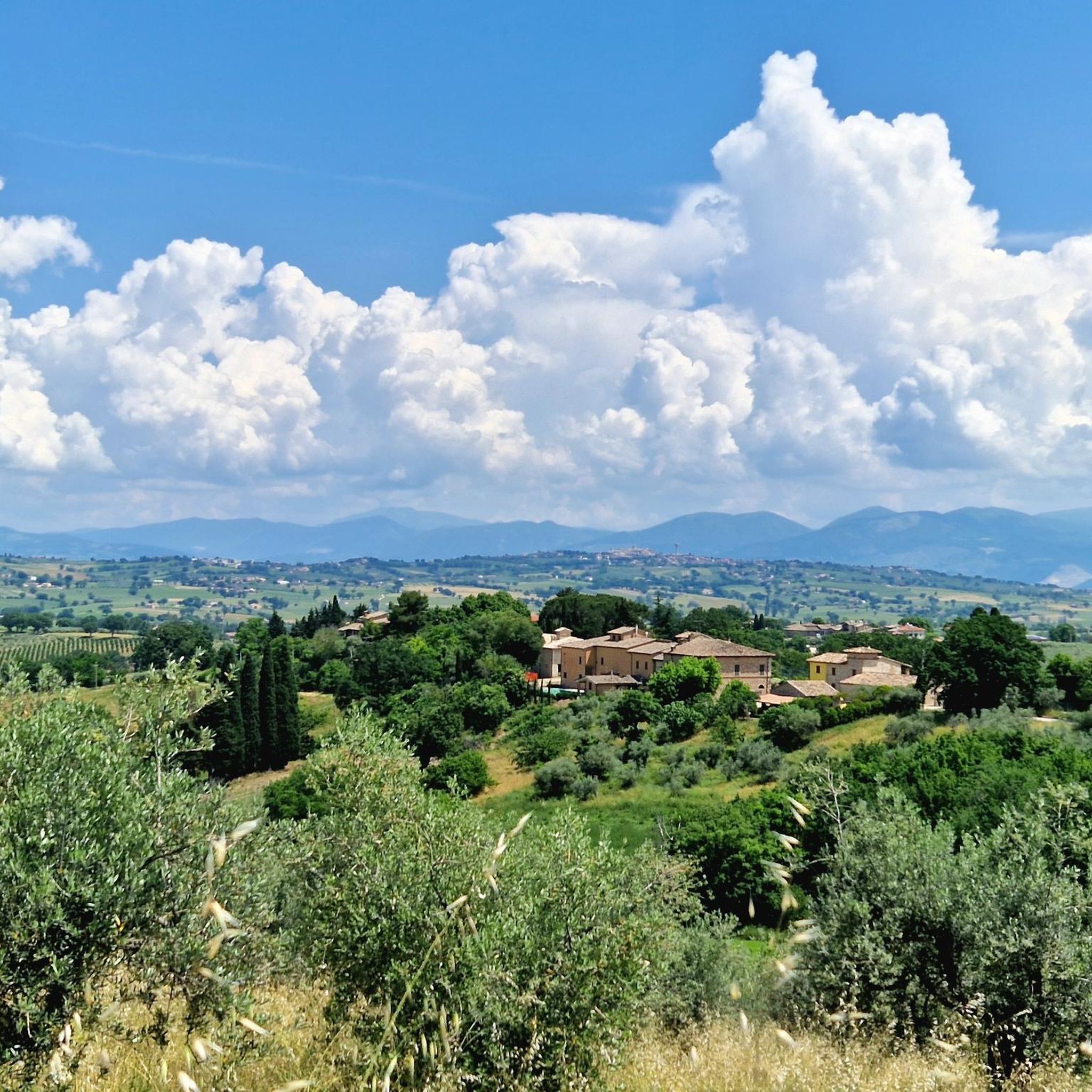
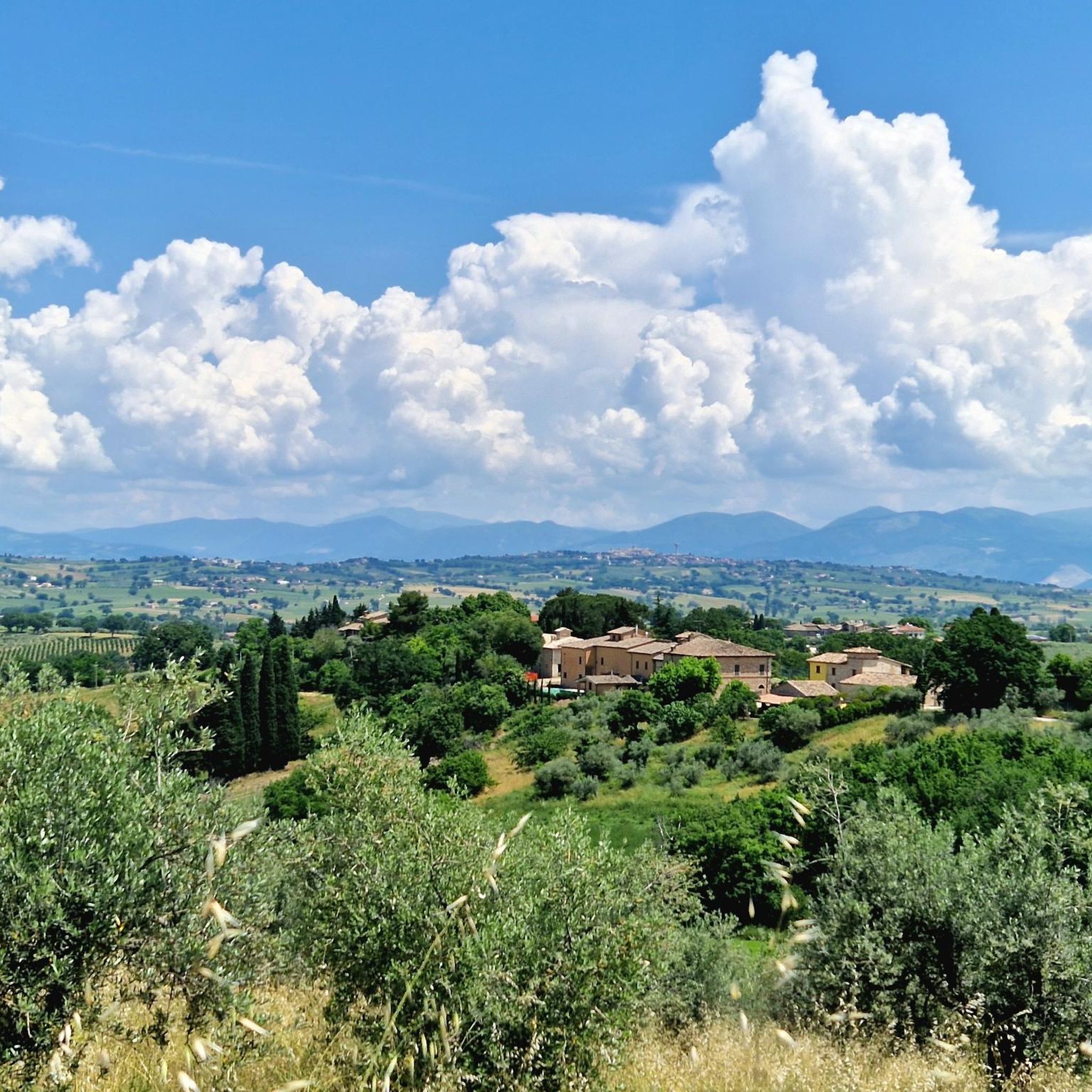
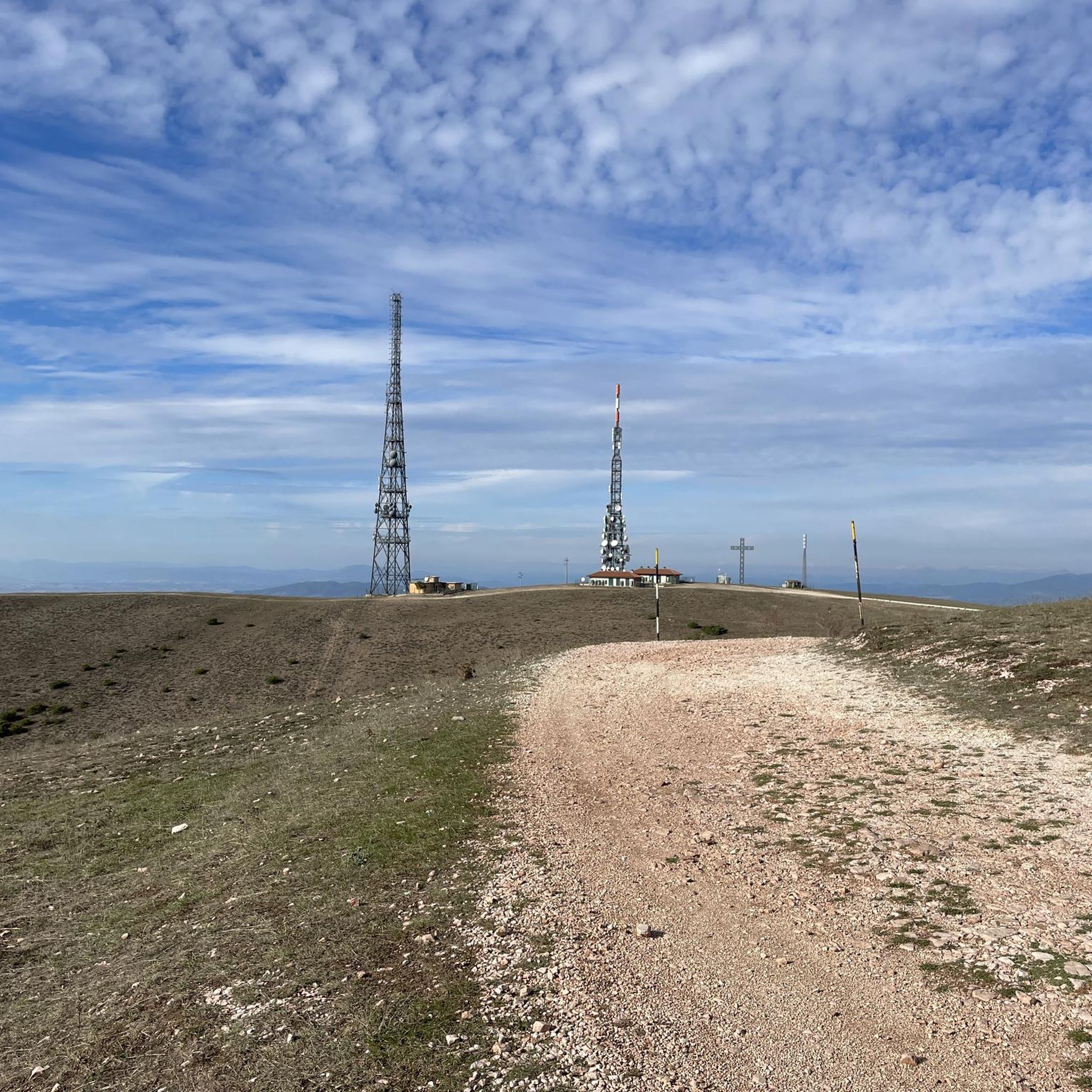
Gravel biking around Giano Dell'Umbria is characterized by its hilly terrain at the foot of the Monti Martani, offering expansive views over the Umbrian plain. The region features extensive olive groves and vineyards, with gravel paths winding through these cultivated landscapes. A network of "white roads" (strade bianche), composed of beaten earth or gravel, provides well-maintained unpaved surfaces suitable for gravel bikes, connecting riders to villages and natural sites. Elevations reach up to 1,795 feet (547 meters), ensuring varied routes…
Last updated: May 11, 2026
5.0
(1)
30
riders
80.4km
05:29
1,150m
1,150m
Hard gravel ride. Very good fitness required. Mostly paved surfaces. Suitable for all skill levels.
5.0
(1)
4
riders
48.1km
03:29
990m
990m
Hard gravel ride. Very good fitness required. Mostly paved surfaces. Suitable for all skill levels.

Sign up for free
3
riders
38.6km
02:36
770m
780m
Hard gravel ride. Very good fitness required. Mostly paved surfaces. Suitable for all skill levels.
2
riders
40.2km
02:37
580m
580m
Hard gravel ride. Very good fitness required. Mostly paved surfaces. Suitable for all skill levels.
2
riders
5.74km
00:27
100m
100m
Easy gravel ride. Great for any fitness level. Mostly paved surfaces. Suitable for all skill levels.
Our route recommendations are based on thousands of hikes, rides, and runs completed by other people on komoot.
Start today with a free account
Your next adventure awaits.
Login or Signup
Tips from the Community

View of Giano dell'Umbria
0
0
Giano dell'Umbria provincial road, rising sun.
0
0

It is located along the path of the same name, a very suggestive place of peace that recalls the sermon of Saint Francis to the birds
0
0

Bring some cash to climb the tower 😀
0
0

Cathedral of Santa Maria Assunta, Spoleto Cathedral Cathedral: the symbol of the city of Spoleto With its magnificent façade, Spoleto Cathedral provides a kind of backdrop to the Piazza Duomo, which is home to many other buildings. The cathedral was built in the 12th century on the remains of an earlier religious building named after Santa Maria del Vescovado, which in turn stood on an older church dedicated to the martyr Primiano. The crypt of Santa Primiano, accessed through the rectory, dates back to the 9th century and represents the only original part of the old cathedral, which was rebuilt at the end of the 12th century. Adjacent to the facade of the cathedral, on the left side, is the imposing square-shaped bell tower. The façade also features an elegant portico with five rounded arches supported by Corinthian columns, a marvelous work by the master Ambrogio Barocci dating from 1492. The upper part is divided into two levels separated by a cornice supported by blind arches: the lower part is decorated with five beautiful rose windows, the central one being larger and surrounded by the symbols of the four evangelists; the upper part features three rose windows and three pointed-arch niches, of which the central, larger one is decorated with a wonderful mosaic depicting Christ enthroned between the Madonna and Saint John the Evangelist. The decorative elements are further emphasized by the use of blocks of local white and pink stone, which highlight the architectural details. Inside, the space is divided into three naves with a central apse, and the plan is a Latin cross with a transept. The building houses numerous works of art by artists from various eras: the bronze bust of Urban VIII was made by Gian Lorenzo Bernini in 1640; the cross with the iconography of the Living Christ (Triumphal) is a work by Alberto Sotio from 1187; and the cycle of the Stories of the Virgin, which adorns the central apse, was painted by Filippo Lippi between 1467 and 1469. Finally, two chapels are particularly admirable: the Chapel of the Santissima Icona, which houses a 12th-century Byzantine panel that, according to tradition, was given to the city of Spoleto by Frederick Barbarossa as a sign of peace; and the Chapel of the Reliquies, which houses one of the only two surviving letters written by Saint Francis himself. It is a small rectangular parchment (13 x 6 cm) made of goatskin, consisting of nineteen lines, addressed to Fra Leone. The other handwritten letter is the so-called Chartula, kept in the Basilica of Assisi and, according to tradition, written by Francis in 1224 after his stigmatization on Mount Verna. The interior of the building, as it appears today, is the result of a decisive intervention in the 17th century that gave it a Baroque style. Text / Source: Exploring Umbria srl, https://www.exploring-umbria.com/de/entdecke-spoleto/gehenswuerdigkeiten-in-spoleto/kathedrale-santa-maria-assunta-dom-von-spoleto/#:~:text=Die%20Kathe Drale%20 was%20 built%20 in the%20tw%C3%B6th%20th century%20 on%20, a%20%C3%A4older%2C%20%20%20%20M%C3%A4rtyr%20Primiano%20%20%20house%20dedicated to the%20M%C3%A4rtyr%20Primiano%20.
15
0
The Park - Fonti del Clitunno, Ristorante Pizzeria, Campello Sul Clitunno A body of water with a circumference of just over 400 meters and an area of almost 10,000 square meters, this small lake is home to numerous plant species that contribute to the fame of the Fonti del Clitunno. Moss, seagrass, water horsetail, sedge, curled brosca, giant shrimp, marsh forget-me-not, and water nasturtium, also known as watercress, are just some of the plants found in the pond. Around the banks are the trees that characterize the surroundings, most notably the cypress poplar, covered in dense foliage in summer. Then there's the weeping willow, whose spread dates back to the fashion that spread this plant in Paris in the 1840s, which is said to have shaded Napoleon's tomb on Saint Helena. Text / Source: Fonti del Clitunno - Ristorante Pizzeria, Campello Sul Clitunno https://www.fontidelclitunno.it/
14
0
Fonti del Clitunno - Ristorante Pizzeria, Campello Sul Clitunno Dream apartments, treat yourself to the relaxation you deserve. A gastronomic experience in the Parco della Poesia and a garden with tables for pampering yourself. From here, O Clitumnus, the white herds and the bull, the greatest holocaust, have repeatedly dipped into your sacred waters, bringing Roman triumphs to the temples of the gods. History Have you ever seen the Fonti del Clitunno? If not, and I don't think so, otherwise you would have told me about it, go and see. "I saw it recently and regret having done it too late." Thus wrote Pliny the Younger to a friend, and his advice still holds true today. The Fonti del Clitunno as we see them today are different from those of the first century, during Pliny's time. A violent earthquake in 444 AD changed the face of the area and was likely the cause of the narrowing of the Clitunno River, which had previously been navigable. The layout of the Clitunno springs as we see them today is thanks to the patient work of Paolo Campello della Spina, who, between 1860 and 1865, removed the earth to make room for the pond and encouraged the growth of vegetation that still characterizes the Clitunno springs today. A few years later, Giosue Carducci wrote the barbaric ode "Alle Fonti del Clitunno." Text/Source: Fonti del Clitunno - Ristorante Pizzeria, Campello Sul Clitunno https://www.fontidelclitunno.it/
14
0
Bevagna / Region – Umbria / Province – Perugia (PG) The town, surrounded by a city wall with towers and gates, has an intact medieval structure (12th-13th centuries). In the upper part of the town, numerous Roman remains can still be seen: the ruins of a temple, the theater, and a thermal bath complex, of which a frigidarium with a magnificent black and white floor mosaic depicting marine figures from the 2nd century AD survives. The medieval town structure, with its squares and noble houses, developed over the Romanesque foundations: The magnificent Piazza Silvestri is home to the Palazzo dei Consoli (1270), which houses the Torti Theater, the Romanesque churches of San Silvestro and San Michele Arcangelo, both from the late 12th century, and the church of San Domenico e Giacomo (1291). Worth seeing is the Palazzo Comunale (late 18th century), which houses the historical archives, the library, and the art gallery. The Baroque churches of the Monastery of Santa Margherita and San Filippo are also very interesting. At the highest point in the town stands the Church of San Francesco (late 13th century). Next to the altar, one can see the stone on which St. Francis knelt when he preached to the flock of birds at Pian d'Arca. The 18th-century Palazzo Lepri houses the Museum of Bevagna, with works that tell the story of the town from pre-Roman times to the 18th century: archaeological finds from the ancient city of Mevania, medieval documents, and paintings by Dono Doni, Fantino, and Corrado Giaquinto. In the surrounding area, the Sanctuary of Madonna delle Grazie (late 16th century), the Sanctuary of Madonna della Valle, and the Monastery of Annunziata (11th century), formerly a defensive castle, rise up against the hillsides. Text / Source: Umbria Tourism.it contatti@umbriatourism.it https://www.umbriatourism.it/de/bevagna
14
1
Frequently Asked Questions
What kind of terrain can I expect on gravel bike trails around Giano dell'Umbria?
Gravel biking around Giano dell'Umbria features predominantly hilly terrain at the foot of the Monti Martani, offering expansive views over the Umbrian plain. You'll encounter extensive olive groves and vineyards, with gravel paths winding through these cultivated landscapes. The region is known for its 'white roads' (strade bianche), which are well-maintained unpaved surfaces of beaten earth or gravel, perfect for gravel bikes.
Are there any easy gravel bike routes suitable for beginners in Giano dell'Umbria?
Yes, there is at least one easy route available. For a shorter, less challenging ride, consider the Gravel loop from Gaglioli. This 5.7 km (3.6 miles) trail leads through the local countryside and can typically be completed in under half an hour, making it a great option for those new to gravel biking or looking for a relaxed spin.
What are some of the more challenging gravel biking options in the area?
For experienced gravel bikers seeking a challenge, Giano dell'Umbria offers several difficult routes with significant elevation gains. One such option is the Cathedral of Spoleto – Historic Center of Spoleto loop from Castel Ritaldi, an 80.4 km (50.0 miles) trail with over 1,150 meters of climbing, connecting significant historical centers.
Are there any gravel routes that pass through the famous Sagrantino wine region?
Yes, the region is renowned for its Sagrantino wine. While specific routes vary, many gravel paths wind through the extensive vineyards and olive groves. The broader Strada del Sagrantino offers itineraries that connect riders with local viticulture and stunning landscapes around towns like Montefalco, which is known for its wine and panoramic views.
What historical landmarks or points of interest can I see along the gravel bike trails?
The area is rich in history. You can cycle past charming medieval hamlets and castles such as Castagnola, Montecchio, and Morcicchia. Notable attractions include the Historic Center of Bevagna, the Castel Ritaldi Castle, and the Rocca di Gualdo Cattaneo. The splendid Abbey of San Felice, a Romanesque masterpiece, is also a rewarding destination for a cultural stop.
Can I find routes that are part of the larger Assisi–Spoleto–Norcia Cycle Route?
Absolutely. A fantastic 'white road' section of the renowned Assisi–Spoleto–Norcia Cycle Route, specifically between Torre di Montefalco and Ponte dell'Occhio, offers an excellent gravel biking experience. This allows you to pedal away from traffic and immerse yourself in the natural scenery.
What do other gravel bikers say about the trails in Giano dell'Umbria?
The gravel biking experience in Giano dell'Umbria is highly rated by the komoot community, with an average score of 5.0 stars. Over 39 gravel bikers have used komoot to explore the varied terrain, often praising the scenic views, the unique 'white roads,' and the opportunity to combine physical activity with cultural and culinary experiences.
Are there any loop routes available for gravel biking?
Yes, many of the gravel routes in the area are designed as loops, allowing you to start and end in the same location. Examples include the Cathedral of Spoleto – Historic Center of Spoleto loop from Castel Ritaldi and the Olivo di Macciano – Sanctuary of Madonna della Stella loop from Picciche, which offer circular journeys through the Umbrian landscape.
What are the typical elevations encountered on gravel rides in this region?
Giano dell'Umbria is situated in a hilly area, with elevations reaching up to 547 meters (1,795 ft) above sea level. This means you can expect varied routes with both challenging climbs and rewarding descents. For instance, the Torre del Colle – View of Gualdo Cattaneo loop from Gualdo Cattaneo involves over 800 meters of ascent.
Are there opportunities for wine and oil tourism along the gravel routes?
Absolutely. The region is famous for its olive oil and Sagrantino wine. Many gravel paths wind through extensive olive groves and vineyards. You can often combine your ride with visits to traditional oil mills and wineries, particularly in nearby Montefalco, offering a comprehensive experience of Umbrian culture and gastronomy.
What is the best time of year for gravel biking in Giano dell'Umbria?
Umbria's 'white roads' are known for draining rainwater effectively, making them passable even in inclement weather. However, for the most pleasant experience, spring and autumn offer mild temperatures and beautiful scenery, ideal for exploring the olive groves and vineyards. Summers can be hot, while winters are generally mild but can be damp.
Is public transport available to access gravel biking trails around Giano dell'Umbria?
While Giano dell'Umbria is a smaller town, public transport options like regional buses connect it to larger centers in Umbria. It's advisable to check local bus schedules and policies regarding bicycle transport if you plan to use public transport to reach specific trailheads or return from a longer ride.
Most popular routes around Giano Dell'Umbria
Most popular attractions around Giano Dell'Umbria

Get inspired with the komoot mobile app


Explore more
Browse the best Gravel rides in other regions.
