The best gravel rides around Viala-Du-Tarn
4.4
(11)
125
riders
16
rides
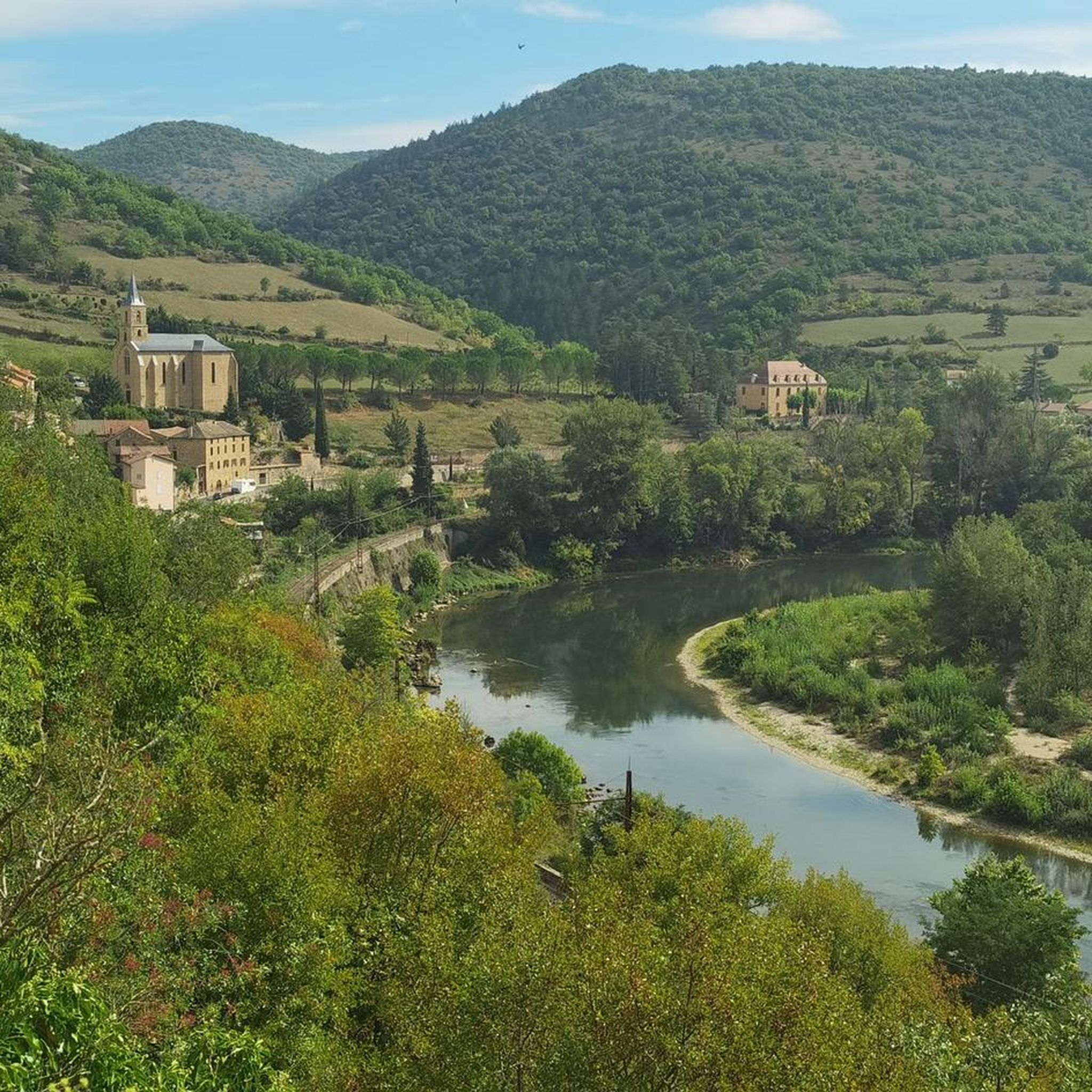
Gravel biking around Viala-Du-Tarn offers diverse terrain within France's Aveyron department, nestled in the Grands Causses Regional Natural Park. The region is characterized by the dramatic Gorges du Tarn and Raspes du Tarn, with the Tarn river bordering the communal territory. Riders will encounter varied landscapes, from the Lévézou slopes reaching altitudes up to 1,050 meters, to the "caussenard" heritage of the Larzac plateau. This area provides a network of paths well-suited for gravel bikes, blending rolling sections with more…
Last updated: October 5, 2026
3.0
(4)
41
riders
28.3km
01:47
240m
240m
Moderate gravel ride. Good fitness required. Mostly paved surfaces. Suitable for all skill levels.
13
riders
89.1km
06:18
1,220m
1,220m
Hard gravel ride. Very good fitness required. You may need to push your bike for some segments of this route.

4.0
(1)
12
riders
41.7km
02:46
490m
490m
Hard gravel ride. Very good fitness required. Mostly paved surfaces. Suitable for all skill levels.
2
riders
89.8km
06:59
1,680m
1,680m
Hard gravel ride. Very good fitness required. Mostly paved surfaces. Suitable for all skill levels.
5.0
(1)
12
riders
37.5km
02:33
570m
570m
Hard gravel ride. Very good fitness required. Mostly paved surfaces. Suitable for all skill levels.
Get access to more routes and recommendations from other explorers.
Already have an account?
Our route recommendations are based on thousands of hikes, rides, and runs completed by other people on komoot.
Start today with a free account
Your next adventure awaits.
Tips from the Community

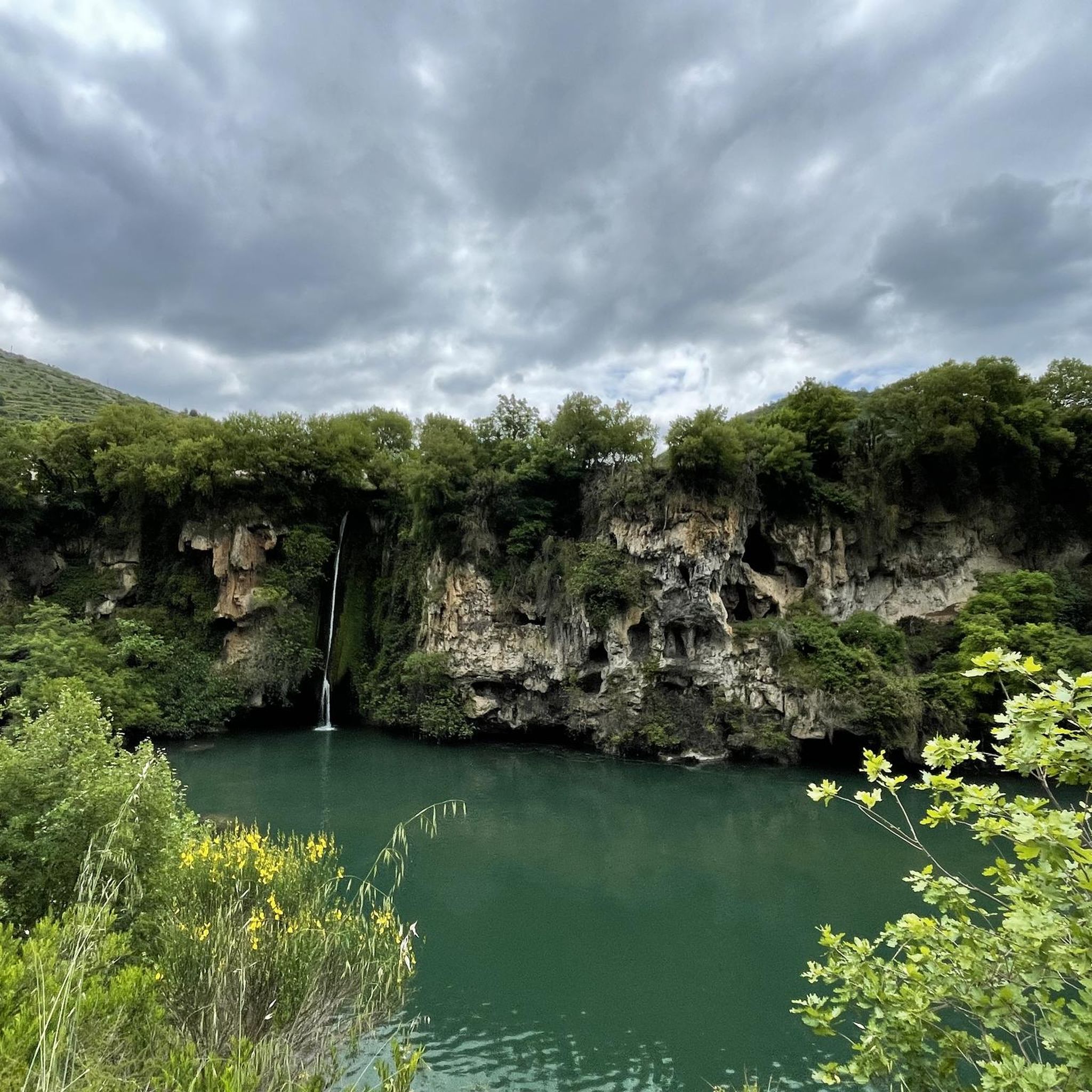
In the heart of Creissels, the Pesquié basin forms a surprisingly vast body of water (1,000 m²) compared to the modest stream that feeds it. Its name, which comes from Occitan and means "fish pond", recalls the ancient purpose of the place, linked to fish farming. The town hall now occupies the premises of a former fish farm. The basin is fed by the Creissels waterfall, a typical resurgence of the karst functioning of the Larzac: the water infiltrated into the limestones of the plateau reappears after an underground journey. In September 2023, the municipality dredged the basin and created a spawning ground for brown trout (Salmo trutta). The restoration has borne fruit, as trout have since recolonized the body of water, alongside amphibians and other aquatic organisms that find refuge in the surrounding wetland.
2
0
This place is the starting point of the Voie Verte which runs along the Tarn and leads to Creissels. You can discover the troglodytic village of Peyre in particular, a very pleasant forest section which, in places, forms a real green tunnel. Further on, you can enjoy a magnificent view of the Millau Viaduct.
2
0
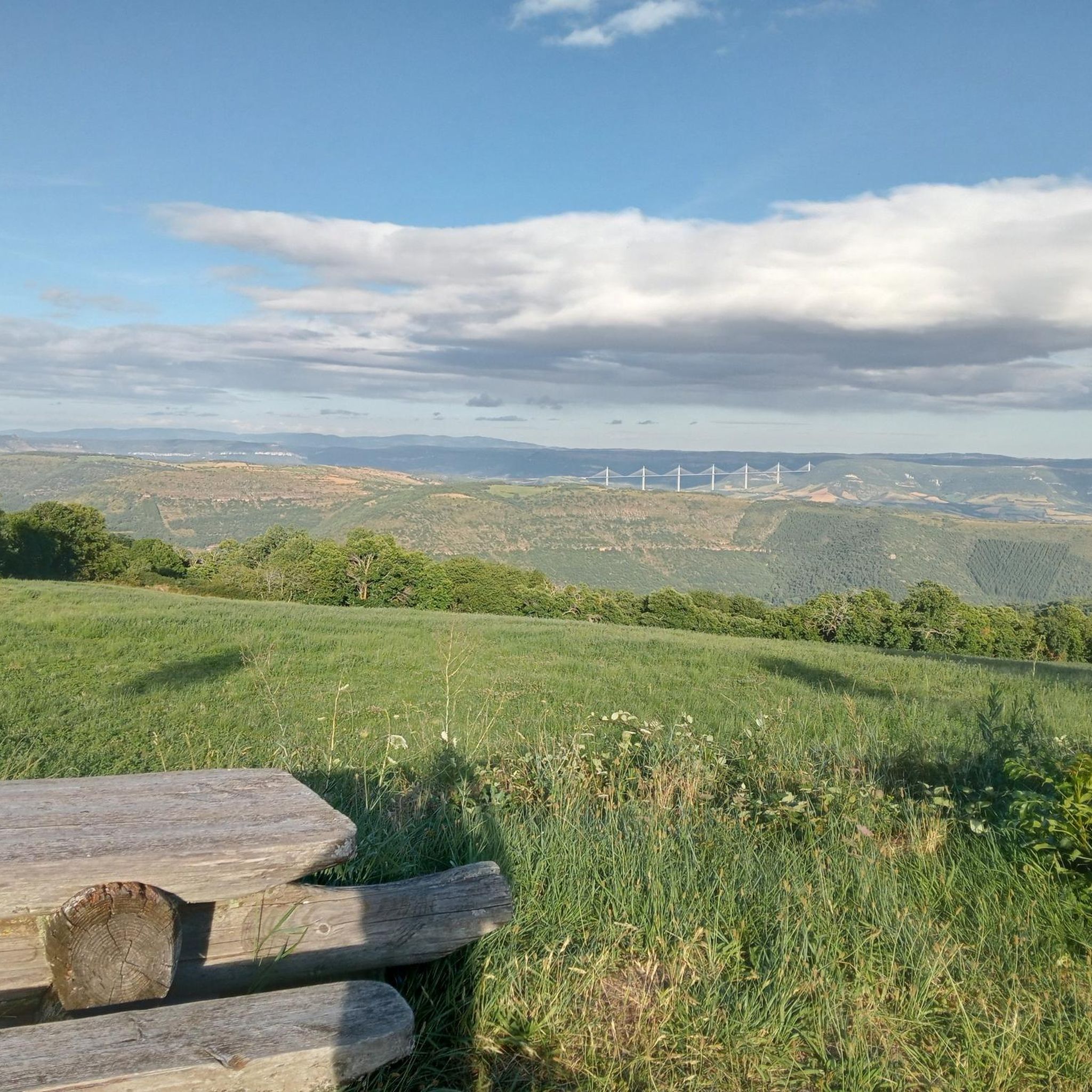
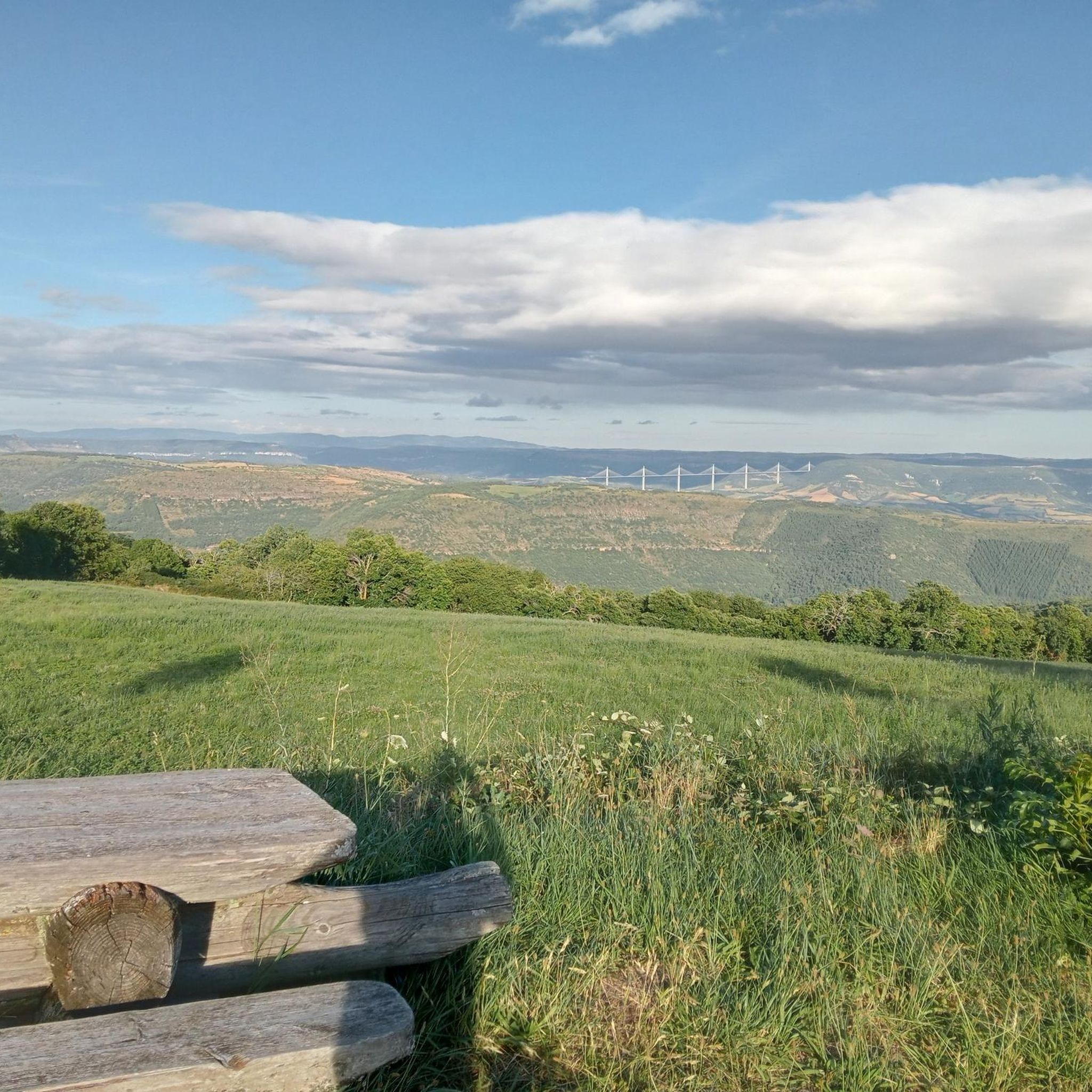
From the Larzac plateau, the Brunas site offers a vast panorama of the Millau valley. Stretched between the two banks of the Tarn, the viaduct with its seven concrete piers appears in its entirety. Behind it unfolds the entire causse Rouge, a large limestone plateau whose undulations dominate the valley. Then, the Puech d’Andan is distinguished by its wooded silhouette, cut in two by a clear central notch. Further to the right stands the Pouncho d'Agast, a pyramidal promontory marking the beginning of the causse Noir at an altitude of 841 m. Brunas is also a true site for free flight. The take-off area is located directly on the plateau; the site is mainly used with a north wind and allows paragliders to take off and then land in the vicinity of the same sector, with approximately 370 m of elevation difference down to the valley. The spectacle of the sails evolving in front of the viaduct adds a particular dimension to this panorama.
2
0
Isolated in the middle of the open landscapes of the Larzac, the fortified farm of Brouzes is a remarkable testimony to medieval rural architecture. The complex, whose construction began in 1491, is organized in a rectangle around three courtyards. It was later remodeled, notably in 1628, then in the 18th century. Behind its appearance as a large farm lies a true defensive architecture: the buildings are largely vaulted, a stable has loopholes, two towers reinforce the south side, and a dovecote tower as well as an old bread oven complete the complex. The farm nevertheless experienced a long period of abandonment. Uninhabited from 1922 to 1970, it was progressively looted and severely degraded. In the 1970s, an artist couple, Élisabeth and Claude Baillon, bought it and began its restoration. Their intervention largely contributed to saving the complex, which was finally classified as a historic monument in 1990.
2
0
Perched at an altitude of about 730 meters, the Cap de Coste viewpoint overlooks the eastern end of the Boundoulaou cirque. It reveals a vast panorama of the Millau basin and its surrounding massifs. To the left, the easily recognizable Millau Viaduct spans the Tarn valley to connect the Larzac to the Causse Rouge. Further to the right stretches the latter: a large limestone plateau whose undulations dominate the valley. Then, the Puech d’Andan stands out with its wooded silhouette, cut in two by a clear central notch. Finally, further away, the Pouncho d’Agast, an emblematic relief of the Causse Noir, is easily recognized by its profile like a true limestone pyramid.
3
0
Perché at an altitude of approximately 730 meters, the Cap de Coste viewpoint overlooks the eastern end of the Boundoulaou cirque. It reveals a vast panorama of the Millau basin and its surrounding massifs. To the left, the easily recognizable Millau Viaduct spans the Tarn valley, connecting the Larzac to the Causse Rouge. Further to the right stretches the latter: a large limestone plateau whose undulations dominate the valley. Then, the Puech d’Andan stands out with its wooded silhouette, cut in two by a clear central notch. Finally, further away, the Pouncho d’Agast, an emblematic relief of the Causse Noir, is easily recognized by its profile like a true limestone pyramid.
2
0
From this switchback on the road to Labro, the Larzac plateau suddenly opens up to reveal the spectacular cirque of Saint-Geniez-de-Bertrand. This has been progressively formed by the erosion of the limestone series that make up the Larzac. The water, by infiltrating the fractures in the limestone, gradually dissolves the rock and circulates at depth before emerging at the foot of the slopes. This underground action, associated with runoff and valley erosion, causes a progressive retreat of the cliffs and slopes: this is the phenomenon of regressive erosion. Over time, the limestone reliefs recede towards the interior of the plateau and a vast indentation forms, giving birth to the cirque.
2
0
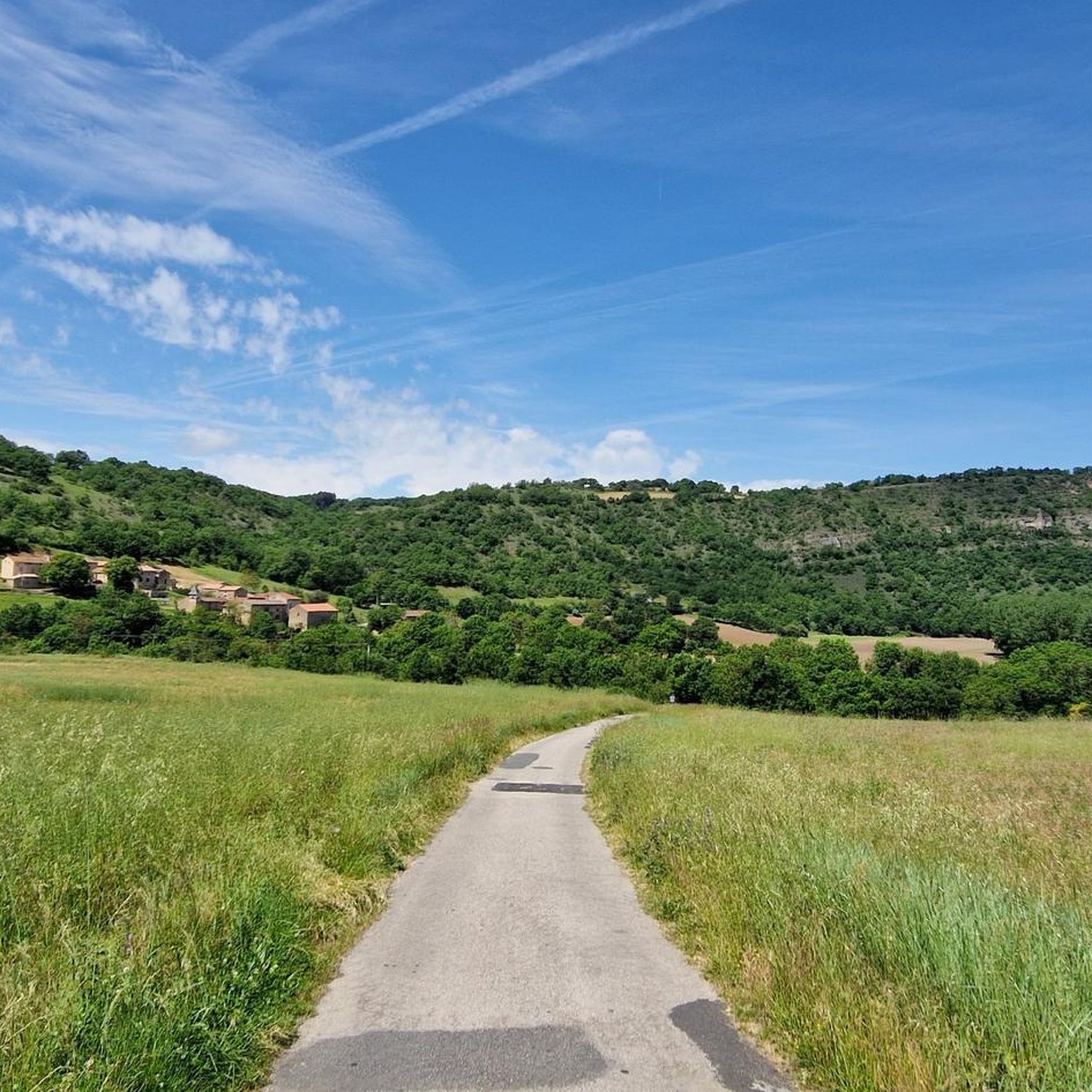
This section of the greenway follows a narrow and shaded path, where dense vegetation forms a real green tunnel in places. The natural surface is particularly pleasant to ride on. These wooded sections alternate with a few openings, which allow you to reconnect with the Tarn river and, further on, the Millau viaduct.
2
0
Frequently Asked Questions
How many gravel bike trails are available around Viala-Du-Tarn?
Viala-Du-Tarn offers a wide selection of gravel biking routes, with over 15 trails available. These routes cater to various skill levels, from moderate paths to more challenging climbs through the region's diverse landscapes.
What kind of terrain can I expect on gravel bike trails around Viala-Du-Tarn?
The terrain around Viala-Du-Tarn is incredibly varied, reflecting its location within the Grands Causses Regional Natural Park. You can expect a mix of rolling paths, sections along the dramatic Gorges du Tarn and Raspes du Tarn, and climbs up the Lévézou slopes. The region is known for its 'caussenard' heritage, offering diverse landscapes from plateaus to river valleys.
Are there gravel bike trails suitable for beginners in Viala-Du-Tarn?
Yes, while many routes are challenging, there are options for less experienced riders. The region offers at least one easy-rated gravel bike trail, providing a gentler introduction to the area's beautiful scenery. Always check the route details for specific difficulty ratings before you set out.
What is the typical elevation gain on gravel routes in Viala-Du-Tarn?
The elevation gain varies significantly depending on the route. For example, a moderate route like the Old bridge loop from Saint-Georges-de-Luzençon involves around 268 meters of ascent. More difficult trails, such as the View of the Millau Viaduct loop from Saint-Georges-de-Luzençon, can feature ascents of nearly 800 meters, offering a good workout and rewarding views.
Which routes offer the best views of the Millau Viaduct?
Several routes provide breathtaking views of the iconic Millau Viaduct. The View of the Millau Viaduct loop from Saint-Georges-de-Luzençon is a popular choice, specifically designed to showcase this architectural marvel. Another excellent option is the View of the Millau Viaduct loop from Candas, which also offers stunning perspectives.
Are there any circular gravel routes available?
Yes, many of the gravel bike trails in the Viala-Du-Tarn area are designed as loops, allowing you to start and finish at the same point. Examples include the Lake Villefranche-de-Panat loop from Violon-Bas and the Saint-Rome-de-Tarn loop from Saint-Rome-de-Tarn, which passes by the Tiergues Dolmen.
What natural landmarks can I see while gravel biking in Viala-Du-Tarn?
The region is rich in natural beauty. You can cycle along the dramatic Gorges du Tarn and Raspes du Tarn, and explore areas around lakes like Lac de Pinet and Lac de la Gourde. Keep an eye out for the Cascade des Raspes du Tarn, a beautiful waterfall, and enjoy panoramic views from spots like the Roc Saint-Jean lookout.
Are there any historical sites or cultural attractions accessible by gravel bike?
Yes, Viala-Du-Tarn and its surroundings are steeped in history. You can explore charming villages with historic churches and 15th-century rampart remains. The Saint-Rome-de-Tarn loop, for instance, passes by the Tiergues Dolmen, offering a glimpse into ancient heritage. The region's diverse 'caussenard' heritage also includes unique architectural elements in hamlets like Le Minier and Saint Symphorien.
What do other gravel bikers enjoy most about gravel biking in Viala-Du-Tarn?
The area is highly rated by the komoot community, with an average score of 4.7 stars from over 6 reviews. Riders often praise the diverse terrain, the stunning views of the Millau Viaduct and the Gorges du Tarn, and the well-suited network of trails for gravel bikes that blend road bike aerodynamics with mountain bike versatility.
Is Viala-Du-Tarn a good destination for family-friendly gravel biking?
While many routes offer challenging climbs, there are easier sections and paths around lakes that can be more suitable for families. It's recommended to check the difficulty ratings and elevation profiles of specific routes to find those that align with your family's experience level. The scenic beauty and varied landscapes ensure there's something for everyone.
What is the best time of year for gravel biking in Viala-Du-Tarn?
The region is generally pleasant for gravel biking from spring through autumn. Spring offers lush greenery and comfortable temperatures, while autumn provides beautiful foliage. Summers can be warm, so early morning or late afternoon rides are often preferred. Always check local weather forecasts before heading out.
Are there opportunities for other outdoor activities besides gravel biking in Viala-Du-Tarn?
Absolutely! Beyond gravel biking, Viala-Du-Tarn is a hub for outdoor enthusiasts. You can enjoy hiking on numerous marked trails, water sports like canoeing, kayaking, and stand-up paddleboarding on the Tarn river, and even tree climbing at Acroparc du Mas. The area's lakes also offer fishing and pleasant walks.
Most popular routes around Viala-Du-Tarn
Most popular attractions around Viala-Du-Tarn

Get inspired with the komoot mobile app


Explore more
Browse the best Gravel rides in other regions.
