The best gravel rides around Heers
4.5
(27)
616
riders
21
rides
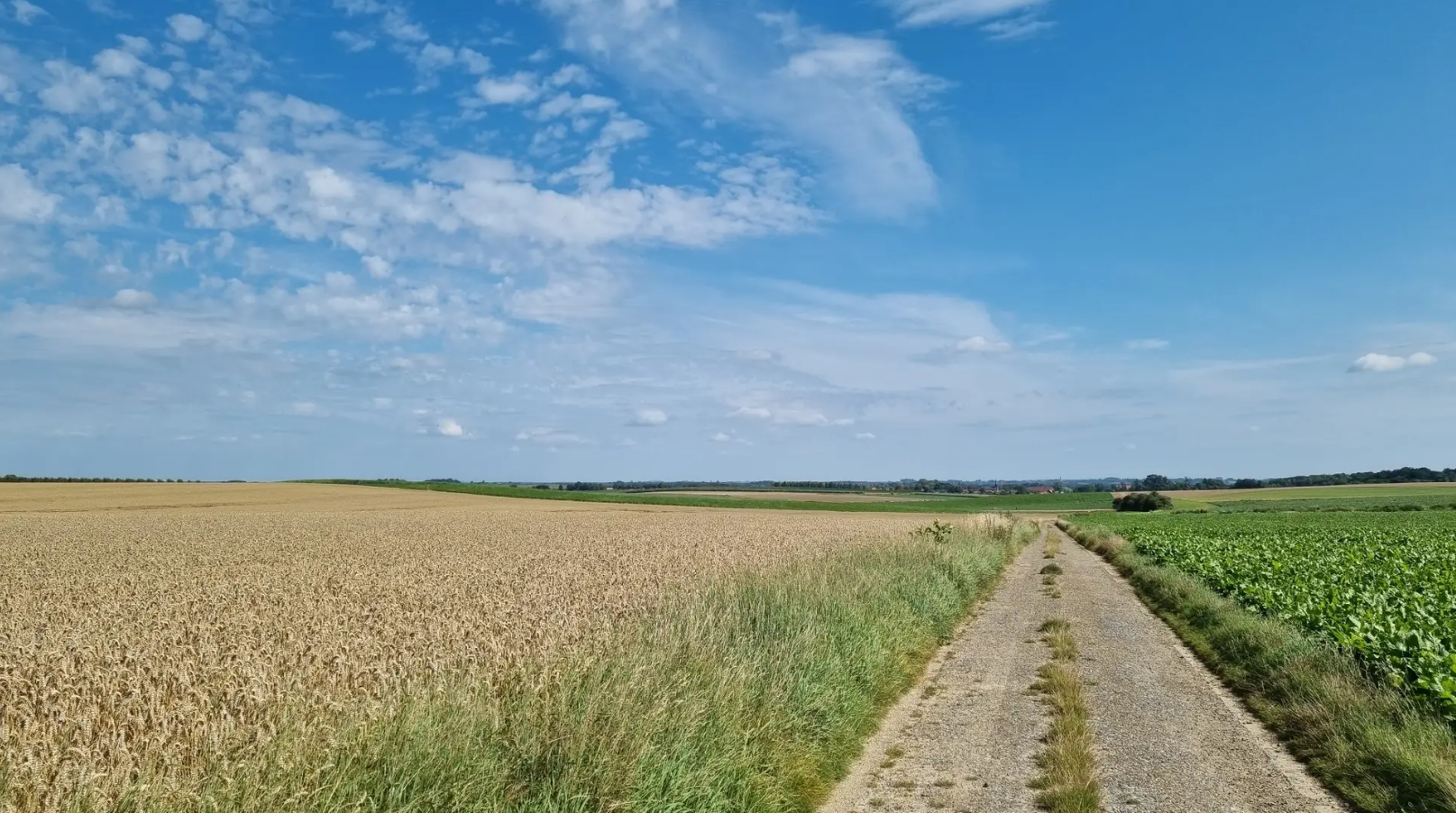
Gravel biking around Heers offers a diverse experience within the Haspengouw region, characterized by its varied terrain. The area features expansive orchards, historic sunken lanes, and challenging cobbled sections. These elements combine to create a landscape well-suited for gravel cyclists seeking both scenic paths and technical challenges. Elevation gains on some routes can exceed 2,000 feet, providing demanding climbs.
Best gravel bike trails around Heers
- The most popular gravel bike trail is Haspengouw MTB Tour, a 62.9 miles (101.3…
Last updated: November 21, 2026
4.8
(6)
112
riders
101km
07:08
770m
770m
Hard gravel ride. Very good fitness required. You may need to push your bike for some segments of this route.
4.8
(6)
112
riders
97.9km
06:51
680m
680m
Hard gravel ride. Very good fitness required. You may need to push your bike for some segments of this route.

5.0
(2)
34
riders
78.9km
04:38
500m
500m
Hard gravel ride. Very good fitness required. You may need to push your bike for some segments of this route.
5.0
(1)
28
riders
94.9km
05:40
620m
620m
Hard gravel ride. Very good fitness required. You may need to push your bike for some segments of this route.
5.0
(1)
18
riders
32.8km
01:50
200m
210m
Moderate gravel ride. Good fitness required. Mostly paved surfaces.
Get access to more routes and recommendations from other explorers.
Already have an account?
Our route recommendations are based on thousands of hikes, rides, and runs completed by other people on komoot.
Start today with a free account
Your next adventure awaits.
Other adventures around Heers

Tips from the Community

In 1970, the Jeker was canalized and its bed was moved, so the mill can no longer operate. The mill pond was preserved. Since then, milling has been done electrically. Since 1995, the mill has only been used as a residence.
2
0

The Blaarmolen is a watermill on the Jeker dating from 1836 which has been out of operation since the diversion of this watercourse in 1968, but was restored to working order in 2013. The most downstream mill of all Tongeren watermills on the Jeker was first mentioned in 1235 as molendinum de Blale. Later mentions date from 1364, 1386, 1450, 1544 and 1596. The location of the Blaarmolen was more or less described in the deed of 18 October 1571: "sijn meulen tot Bloyl op der jacoeren gelegen, ree(n)genoot nae Nederhem die jacoer, nae Ketsingen die gemeyn straet gaende van Bloel lancx der Jecoeren naar Mall”. Traditionally, the watermill was owned by the van Hamal family, who held it as a fief from the counts of Loon. Successively, the mill was in the possession of the lords of ‘s Herenelderen (before 1450), the Renesse (1544), Hermans (1780), de Becker Remy (1855), Jorissen (1931). The Blaarmolen was also the ban mill for the residents of ’s Herenelderen, as evidenced by two preserved court records of ’s Herenelderen from 1716 and 1784-1785. In the 17th century, the mill contained both a rye mill and an oil mill. This is evident from a statement of repairs carried out in 1650, part of which was borne by the fief holder, the baron of Elderen. The Blaarmolen, in its current state, forms an elongated building, the narrowest side of which is located along the water. Presumably, the miller's house was originally included in the same building. Traces of this are still visible in the attic of the second floor. The buildings are grouped around a rectangular, cobbled courtyard, accessible via an entrance gate in the north facade. The Jeker flows again along the south side of the courtyard, where the mill pond is also located. Inventaris Onroerend Erfgoed: Watermolen Blaarmolen en woelkom, https://id.erfgoed.net/erfgoedobjecten/37419
2
0

Historic watermill along the Jeker. Although the oldest mentions date back to 1235, the current, characterful brick building dates from 1836.
3
0

Special experience on the gravel in the wooded surroundings
0
0

The new Castle De Klee was built on behalf of and for the baroness Sneyers-d'Attenhoven in 1904-07. After a fire in 1933, it was restored again. The whole is located in a landscape-style park, enclosed by an iron entrance gate between bluestone pillars.
4
0
in exceptionally warm weather, lovely in the shade
0
0

Wine terrace and bar at Wijnkasteel Genoels-Elderen. The cozy terrace of the wine castle is a lovely place to relax with a beautiful view of the garden and the pond. You can taste all the products of the wine castle, and coffee, regional beer, lemonade, and snacks are also available.
2
0
Frequently Asked Questions
What kind of terrain can I expect on gravel bike trails around Heers?
Gravel biking around Heers offers a diverse and engaging experience. You'll encounter expansive orchards, historic sunken lanes, and distinctive cobbled sections. This mix provides both scenic paths and technical challenges, making for a varied ride through the Haspengouw region.
Are there gravel routes suitable for different fitness levels in Heers?
Yes, the routes around Heers cater to a range of abilities. While many trails are rated as difficult, offering demanding climbs and requiring good fitness, there are also options suitable for moderate skill levels. For instance, the Café Coureur – Bissemstraat Climb loop from Kerniel is a shorter, difficult route that provides a good challenge without being excessively long.
What are the typical elevation gains on gravel bike trails in Heers?
The gravel routes in Heers can feature significant elevation gains, providing a challenging workout. Some routes have climbs exceeding 2,000 feet, and the region as a whole can offer routes with elevation gains up to 3,000 feet, ensuring plenty of demanding ascents.
What interesting sights or landmarks can I see along the gravel bike trails?
Heers and its surroundings are rich in historical and natural attractions. You might encounter impressive structures like Heks Castle or Castle of Betho. Unique art installations such as the Reading Between the Lines (See-Through Church) and the Floating Chapel of Helshoven are also nearby. The Grootloon High-Stem Orchards offer beautiful natural scenery, especially during blooming or harvest seasons.
When is the best time of year for gravel biking in Heers?
The Haspengouw region is particularly scenic during the blooming seasons (spring) and harvest (late summer/early autumn) when the orchards are at their most picturesque. These periods generally offer pleasant weather for cycling. While gravel biking is possible year-round, conditions can vary, so checking the forecast is always recommended.
Are there any circular gravel bike routes available in Heers?
Yes, many of the gravel bike routes around Heers are designed as loops, allowing you to start and finish at the same point. For example, the challenging Groenstraat cycle path – Café Coureur loop from Kerniel and the Alden Biesen Gatehouse – Wijngaerdbos Trail loop from Kerniel are both excellent circular options.
What do other gravel bikers enjoy most about gravel biking in Heers?
The komoot community highly rates the gravel biking experience in Heers, with an average score of 4.5 stars from over 20 reviews. Riders often praise the region's varied landscape, which includes beautiful orchards, historic sunken lanes, and challenging cobbled sections, providing a unique and engaging ride.
Are there family-friendly gravel biking options in Heers?
While many routes in Heers are rated as difficult due to significant elevation and technical sections, there are some moderate options that might be more suitable for families with older children or those seeking a less strenuous ride. It's best to check individual route details for specific difficulty ratings and terrain to ensure it matches your family's capabilities.
Can I bring my dog on the gravel bike trails around Heers?
The suitability of bringing dogs on gravel bike trails can vary by specific route and local regulations. While the guide doesn't explicitly state dog-friendly policies for all trails, it's generally advisable to keep dogs on a leash and be mindful of other trail users and local wildlife. Always check local signage and respect private property, especially when passing through orchards or farmlands.
Where can I find parking for gravel bike trails in Heers?
Specific parking information for each trail is often available on the individual route pages on komoot. Generally, you can look for parking near popular starting points or in nearby towns and villages like Kerniel or Bleret, which are common access points for routes such as the Widooie Castle – Climb to Vechmaal loop from Bleret.
Are there cafes or pubs near the gravel bike trails in Heers?
The Haspengouw region is known for its hospitality. While specific cafes or pubs are not detailed for every route, many trails pass through or near villages where you can find places to refresh. The Groenstraat cycle path – Café Coureur loop from Kerniel even mentions 'Café Coureur' in its name, suggesting a popular spot for cyclists.
Most popular attractions around Heers

Get inspired with the komoot mobile app


Explore more
Browse the best Gravel rides in other regions.
