Top 20 Caves around Lauter-Bernsbach
Best caves around Lauter-Bernsbach are primarily former mining tunnels and adits, reflecting the region's rich industrial heritage in the Erzgebirge (Ore Mountains). This area in Germany is characterized by its historical tin ore mining, offering subterranean experiences rooted in centuries of industrial activity. Visitors can explore sites that provide insight into past mining methods and local folklore. The landscape features remnants of old mine workings integrated into hiking trails.
Best caves around Lauter-Bernsbach
- The most popular caves is Cave Entrance…
Last updated: June 3, 2026
Princes' Cave
Highlight • Cave
Translated by Google •
Tip by

Cave Entrance on Floßgrabenweg
Highlight • Cave
Great highlight on the floßgrabenweg even if it's too scary for us 🙈
Translated by Google •
Tip by

Sign up now to discover places like this
Get recommendations on the best single tracks, peaks, & plenty of other exciting outdoor places.
Sign up for free
Herkules-Frisch-Glück Show Mine
Highlight • Historical Site
Translated by Google •
Tip by

Reichenbach Fundgrube Visitor Mine (Bernhardt Tunnel and Kunstschacht)
Highlight • Historical Site
Translated by Google •
Tip by

The Felsenbauend Glück Stolln
Highlight • Cave
Translated by Google •
Tip by

Sign up for free to discover even more caves around Lauter-Bernsbach.
Sign up for free
Already have an account?
Start today with a free account
Your next adventure awaits.
Login or Signup
Popular around Lauter-Bernsbach
Wonderful Silberberg – Day Tours to the Digital Hiking Badge with SummitLynx
Digitale Wandernadel
Wandertouren - Handwerk & Heimatgenuss
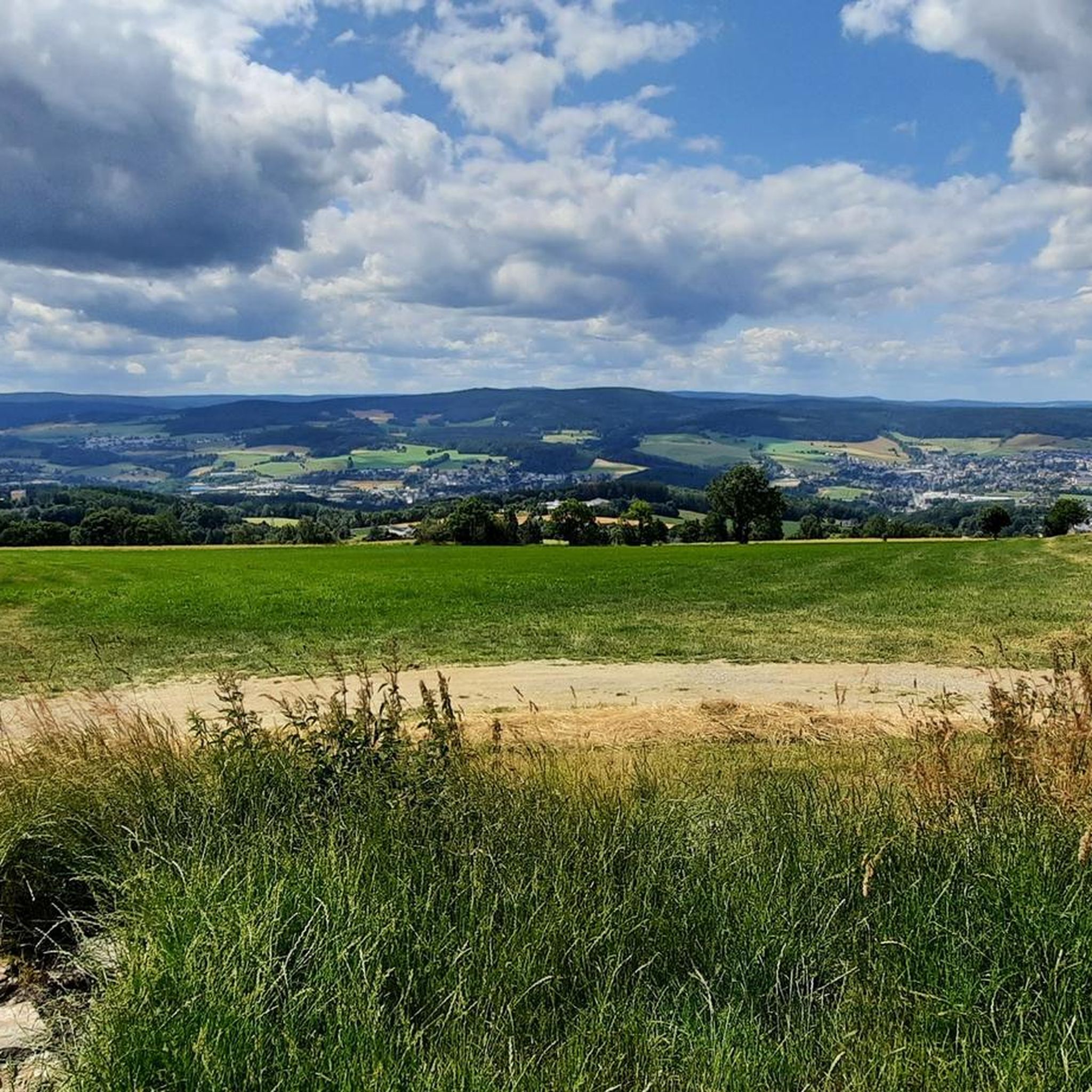
Hiking around Lauter-Bernsbach
Cycling around Lauter-Bernsbach
MTB Trails around Lauter-Bernsbach
Running Trails around Lauter-Bernsbach
Road Cycling Routes around Lauter-Bernsbach

Gravel biking around Lauter-Bernsbach
Other adventures around Lauter-Bernsbach


Tips from the Community

In the spring of 1783, work began on the tunnel. It served primarily for the investigation of the existing mountain range. For many years, the only miner working there, foreman Christian Gotthilf Martin, was occupied with this. Until operations ceased in 1805, the tunnel reached a length of 90 m. Only at a length of 14.8 m was a vein about 2 inches thick found, consisting of quartz, slate, calcite, and black blende, which, however, did not appear to be worth mining. https://zwoenitzer-anzeiger.de/2020/09/24/der-felsenbauend-glueck-stolln/
0
0

Nestled within the Lößnitz Forest, between Lößnitz, Aue, and Oberpfannenstiel, lies the former mining district of the mining town of Lößnitz, where mining has been practiced since at least 1382. However, the real mining boom in the Kuttengrund valley to the south didn't begin until around 1480. The primary minerals mined were silver, copper, arsenic, and lead. From 1500 onward, numerous adits were driven from the valley floors of the Kuttenbach and Fallbach streams. To date, research has identified 56 adits covering an area of approximately five hectares. From 1720, silver and arsenic mining was revived in eight individual mines. One of these mines is the so-called Reichenbach Adit, known locally as the Kutten Mine. The particularly high arsenic content ensured the mine a modest income until October 1907. The main customer and long-time operator was the private blue dye factory Niederpfannenstiel, located on the Schwarzwasser river.
0
0
A great highlight not only for the adults, it certainly stimulated the sense of adventure and imagination of our kids;)
0
0

a great corner, always worth a trip
1
0
very nice corner. Always worth a visit
0
0

Mama must be a good walker, there are 250 stairs to the mine :-)
0
0

Herkules-Frisch-Glück show mine With the traditional miner's greeting Glück Auf, we welcome you to the oldest mine in Saxony. After climbing 250 steps, you will be greeted by a unique atmosphere at a depth of 80 meters. In the middle of two marble halls and underground lakes, an educational and entertaining tour provides impressive insights into the mining activities of earlier days. If you want, you can try your hand at marble mining in the Herkules-Frisch-Glück show mine. But the show mine with the historic mountain forge also offers an atmospheric backdrop for romantic weddings, mountain concerts and Metten shifts. Source: https://www.erzgebirge-tourismus.de/bergbau-erleben/unter-tage/poi/schaubergwerk-herkules-frisch-glueck/poi.html
0
0
Frequently Asked Questions
What kind of "caves" can I expect to find around Lauter-Bernsbach?
The "caves" around Lauter-Bernsbach are primarily former tin ore mines and adits, reflecting the region's rich mining history in the Erzgebirge (Ore Mountains). You'll find subterranean experiences rooted in centuries of industrial activity, rather than natural cave formations like stalactite caves.
Are there any natural caves with stalactites or stalagmites in the Lauter-Bernsbach area?
No, Lauter-Bernsbach does not feature prominent natural stalactite or ice caves. The subterranean sites in this area are predominantly former mining tunnels and adits, offering insights into the region's historical tin mining industry.
Which historical mining sites can I visit near Lauter-Bernsbach?
You can visit several historical mining sites. The Herkules-Frisch-Glück Show Mine offers guided tours where you receive protective helmets and learn about the miner's world. Another significant site is the Reichenbach Fundgrube Visitor Mine, nestled in the Lößnitz Forest, which was restored by a local club and highlights the mining of silver, copper, arsenic, and lead.
Is the Stülpner Cave accessible to visitors, and what is its significance?
The Stülpner Cave originated from tin ore mining activities and is historically significant as a rumored hiding place for the legendary Erzgebirge folk hero, Karl Stülpner. It's important to note that the cave can sometimes be underwater, which may affect accessibility. It blends historical mining with local folklore.
Are there family-friendly cave experiences in the region?
Yes, the Herkules-Frisch-Glück Show Mine is considered family-friendly, offering guided tours that are engaging for all ages. The Cave Entrance on Floßgrabenweg is also noted as family-friendly and provides an accessible glimpse into an old mine.
What kind of geological features can be observed in the mines around Lauter-Bernsbach?
The mines around Lauter-Bernsbach, particularly the Cave Entrance on Floßgrabenweg, are noted for showcasing unique geological characteristics, described as "nice grain on the inside (iron)". These features provide a direct look into the mineralogical aspects of the old tin ore mines.
Can I combine a visit to a cave with a hike?
Absolutely. The Cave Entrance on Floßgrabenweg is a highlight along the Floßgrabenweg hiking trail, offering an accessible opportunity to experience the mining legacy while enjoying outdoor activities. Many old mines, like the Schneider-Stolln, are integrated into wonderful paths for hiking around Lauter-Bernsbach. For more hiking options, explore the Hiking around Lauter-Bernsbach guide.
What is the historical significance of the Princes' Cave?
The Princes' Cave is a medieval mine tunnel, not of natural origin. It is historically significant as a rumored hiding place during the 15th-century Princes' Abduction, a famous event in Saxon history involving Kunz von Kauffungen.
Are there any specific tips for visiting the mines or caves?
For sites like the Cave Entrance on Floßgrabenweg, it's recommended to have lights with you and wear waterproof shoes, as some areas might be damp. For show mines like Herkules-Frisch-Glück, protective helmets are issued, and guided tours are available.
What other outdoor activities are available near the caves around Lauter-Bernsbach?
Beyond hiking, you can find various outdoor activities. There are extensive MTB Trails around Lauter-Bernsbach, including routes like the Zwickauer Mulde River Trail. Cycling enthusiasts can explore options such as the Bockautal Cycle Path, detailed in the Cycling around Lauter-Bernsbach guide.
What do visitors enjoy most about the caves and mines in Lauter-Bernsbach?
Visitors appreciate the unique blend of historical mining insights and outdoor exploration. The opportunity to step into old mine workings, learn about the region's industrial past, and combine these experiences with hiking on trails like the Floßgrabenweg is highly valued. The community has shared over 400 photos and given more than 600 upvotes to these sites.
Most popular routes around Lauter-Bernsbach
Most popular attractions around Lauter-Bernsbach

Get inspired with the komoot mobile app


Explore more
Extend your search for the best caves by checking out these guides of the top ones around Lauter-Bernsbach:
