The best road cycling routes around Jesteburg
4.5
(411)
4,383
riders
14
rides
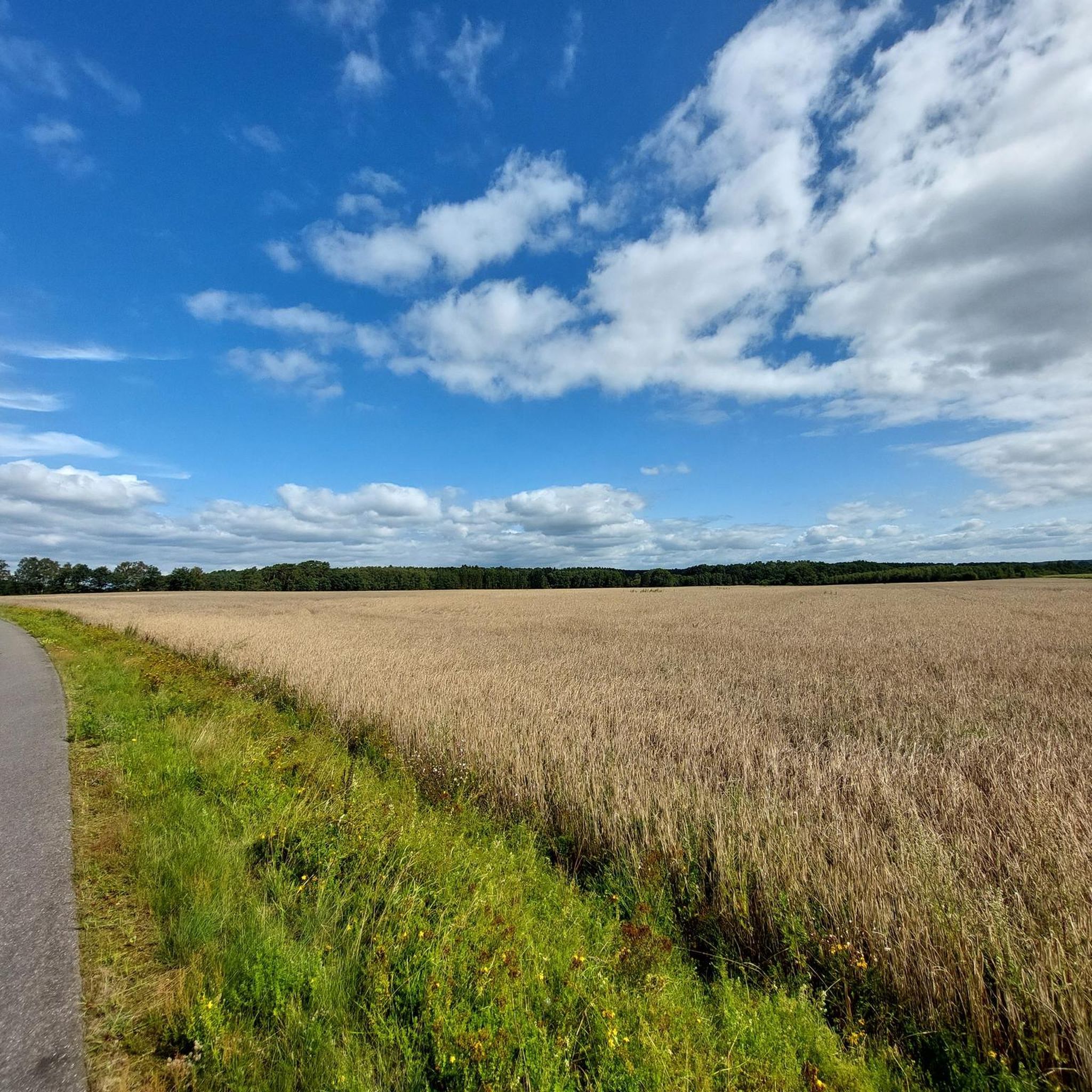
Road cycling routes around Jesteburg offer diverse terrain at the edge of the Lüneburg Heath Nature Park. The region features expansive heath areas, tranquil moors, and clear heathland streams, alongside serene forests and open meadows. Cyclists can expect mostly gentle elevations, with some routes following the course of the Seeve River. This varied environment provides a range of road cycling experiences on predominantly paved surfaces.
Best road cycling routes around Jesteburg
- The most popular road cycling route is St. Jakobi Church Hanstedt – St. Gertrude's Church, Pattensen loop from Jesteburg, a 38.8 miles (62.4 km) trail that takes 2 hours 37 minutes to complete. This moderate route connects historic churches through varied countryside.
- Another top favourite among local road cyclists is Book Café Undeloh – St. John's Church Buchholz loop from Jesteburg, an easy 13.4 miles (21.6 km) path. This route offers a pleasant ride through the landscape, often completed in about 1 hour.
- Local road cyclists also love the Seevestraße Scenic Road – Access to the Büsenbach Valley loop from Jesteburg, a 16.0 miles (25.8 km) trail leading through scenic areas and towards the Büsenbach Valley, often completed in about 1 hour 6 minutes.
- Road cycling around Jesteburg is defined by the Lüneburg Heath, the Seeve River, and a mix of forests and meadows. The network offers options for different ability levels, from easy rides to more challenging routes.
- The routes in Jesteburg are highly rated by the komoot community with an average score of 4.8 stars from more than 20 reviews. More than 200 road cyclists have used komoot to explore Jesteburg's varied terrain.
Last updated: July 26, 2026
4.5
(2)
37
riders
Moderate road ride. Good fitness required. Mostly well-paved surfaces and easy to ride.
4.2
(6)
44
riders
21.9km
01:02
130m
130m
Easy road ride. Great for any fitness level. Mostly well-paved surfaces and easy to ride.

Sign up for free
23
riders
Easy road ride. Great for any fitness level. Mostly well-paved surfaces and easy to ride.
5.0
(1)
18
riders
Easy road ride. Great for any fitness level. Mostly well-paved surfaces and easy to ride.
5.0
(1)
19
riders
31.5km
01:25
160m
160m
Moderate road ride. Great for any fitness level. Some segments of this route may be unpaved and difficult to ride.
Get access to more routes and recommendations from other explorers.
Sign up for free
Already have an account?
Our route recommendations are based on thousands of hikes, rides, and runs completed by other people on komoot.
Start today with a free account
Your next adventure awaits.
Login or Signup
Tips from the Community

I personally always find the term "Kriegsdenkmal" (war memorial), used (not only here) in the name of the highlight, a bit jarring. Although it is the literal translation of the English "War Memorial" and widely used in that language, in my subjective opinion, the term should not be used that way in German. After all, one commemorates not "the war" itself, but rather "the victims of the war(s)." For many decades, the term "Kriegerdenkmal" (war memorial) was common throughout the country; now, "Gefallenen-Denkmal" (fallen memorial) or "-Ehrenmal" (war memorial) is gaining ground. In my opinion, this term much better clarifies the current (dual) meaning—namely, on the one hand, to commemorate the victims of war and tyranny, and on the other, to understand this as a reminder to maintain peace.
0
0

Between Horst and Lindhorst - best road cycling conditions (apart from the visitor traffic at Horster Mühle perhaps)
1
0

A stretch of road you'd dream of: virtually no traffic, great asphalt, and an entertaining route with very, very gentle undulations. The only flaw: too short.
0
0

Children's King - Is there a connection with the Königsplatz, where the mausoleum is located?
0
0

Extremely bike-friendly owners. They cycle a lot themselves. Delicious cakes. Highly recommended!
0
0

An impressive building. Interesting that these small towns have such large churches.
0
1

The watermill in Holm is located directly on the Seeve Bridge. The first Holm watermill was probably built by the Winsen bailiff Christoph von Hodenberg, who created a manor from the farming village of Holm in 1567 and likely built a mill right away. The Holm Mill is first mentioned in 1615 in a dispute between the miller Tamke from Bendesdorf. During the Seven Years' War (1756-1763), the French probably burned down the Holm Mill in November 1757, but Baron Ludwig Schenk von Winterstedt, owner of the Holm manor, had it rebuilt in 1758. In the second half of the 19th century, the milling mechanism was completely renovated, so that nothing of the technology from 1758 remains. After the Second World War, the Holmer Mill served as a refugee camp, and grain was only milled occasionally until the mill lay empty and unused in the 1970s. Starting in 1977, after a usage agreement was signed between the mill owner and the History and Museum Association, the mill experienced new life and became the nucleus of our association. By Easter 1981, a new water wheel was installed, and a "demonstration" was held on milling days. By 1993, the water wheel was replaced for the second time in the association's history, this time with a more durable metal structure. Today, the Holmer Mill is used for lectures, art exhibitions, concerts, and monthly milling. https://www.gmv-buchholz.de/seite14.html
3
1

From 1254 to 1542, Pattensen was an archdeaconry (place of jurisdiction) of the diocese of Minden, to which the churches of Hanover also belonged. Until the Reformation, Pattensen was therefore more important than the current state capital. Before World War II, Catholic families were cared for by the parish of Ruthe near Sarstedt. Many displaced persons from the German eastern territories and evacuees from the Aachen area came to Pattensen after 1945, and the parish of St. Maria was founded. It consists of the towns of Pattensen, Harkenbleck, Hiddestorf, Hüpede, Koldingen, Oerie, Ohlendorf, Reden and Vardegötzen-Thiedenwiese.
1
0
Frequently Asked Questions
How many road cycling routes are available around Jesteburg?
There are over 15 road cycling routes around Jesteburg, catering to various skill levels. You'll find a good mix, with 10 easy routes and 5 moderate routes, ensuring options for both beginners and more experienced cyclists.
Are there easy road cycling routes suitable for beginners in Jesteburg?
Yes, Jesteburg offers several easy road cycling routes perfect for beginners. Many routes feature predominantly paved surfaces and gentle elevations. An excellent option is the Book Café Undeloh – St. John's Church Buchholz loop from Jesteburg, which is an easy 13.4-mile (21.6 km) path offering a pleasant ride through the landscape.
Are there challenging road cycling routes around Jesteburg for experienced cyclists?
For experienced cyclists seeking a moderate challenge, Jesteburg provides routes with varied terrain. The St. Jakobi Church Hanstedt – St. Gertrude's Church, Pattensen loop from Jesteburg is a moderate 38.8-mile (62.4 km) route that connects historic churches through diverse countryside, offering a good workout.
When is the best time of year for road cycling in Jesteburg?
The region around Jesteburg is beautiful for road cycling throughout much of the year. The Lüneburg Heath blooms vibrantly in August and September, offering stunning scenery. Spring and autumn also provide vibrant landscapes, making these seasons particularly appealing for rides.
What scenic viewpoints or attractions can I find along road cycling routes in Jesteburg?
Jesteburg's road cycling routes often pass through or near picturesque areas. You can enjoy views of the Lüneburg Heath Nature Park, the clear waters of the Seeve River, and serene forests. Notable viewpoints include the Brunsberg Summit and Heathland Panorama, or the Pferdekopf Viewpoint overlooking the Büsenbach Valley. Additionally, historical sites like Bendestorf Castle and the Kiekeberg open-air museum are nearby for cultural exploration.
Are there long-distance or loop road cycling routes available in Jesteburg?
Yes, Jesteburg is integrated into significant regional cycling networks, offering both long-distance and loop options. The Luhe Cycle Route and the Seeve Cycle Route are prominent examples, guiding cyclists through beautiful heath and geest landscapes, past quaint mills, and along riverbanks. Many local routes, like the Seevestraße Scenic Road – Access to the Büsenbach Valley loop from Jesteburg, are designed as convenient loops.
What do other road cyclists enjoy most about road cycling in Jesteburg?
The road cycling routes around Jesteburg are highly rated by the komoot community, with an average score of 4.8 stars from more than 20 reviews. Cyclists often praise the diverse terrain, the peaceful atmosphere of the Lüneburg Heath, and the well-maintained, predominantly paved surfaces that make for enjoyable rides.
Are there road cycling routes in Jesteburg with low traffic?
Many road cycling routes in Jesteburg are designed to take you through the Lüneburg Heath Nature Park and along riverbanks, often utilizing paths away from heavy traffic. The regional cycle routes like the Luhe and Seeve Cycle Routes are known for offering tranquil paths, providing a more relaxed cycling experience.
Can I find road cycling routes that pass by cafes or places to stop for refreshments?
Yes, several routes around Jesteburg offer opportunities to stop for refreshments. For instance, the Old Town Hall, Jesteburg – Café Alte Sägerei loop from Jesteburg suggests a route that includes a café, allowing you to combine your ride with a pleasant break. The region's charming towns and villages often have local cafes to discover.
What kind of landscapes can I expect to see while road cycling around Jesteburg?
Road cycling around Jesteburg offers a varied and appealing natural environment. You'll encounter expansive heath areas, tranquil moors, clear heathland streams, and a mix of natural deciduous and coniferous forests. The region is also characterized by open meadows and the picturesque Seeve River, providing a diverse visual experience throughout your ride.
Are there any specific natural features to look out for on the routes?
Absolutely. The region is home to the Lüneburg Heath Nature Park, known for its vast heathlands. You'll also cycle along the Seeve River, recognized as the coldest river in Northern Germany, with its clear, oxygen-rich waters. Elevated areas like Brunsberg within the heath offer unique natural habitats and panoramic views.
Are the road cycling routes around Jesteburg suitable for families?
Many of the easy road cycling routes in Jesteburg are suitable for families, especially those with older children. The predominantly paved surfaces and gentle elevations make for a comfortable ride. Routes like the Access to the Büsenbach Valley – Holmer Watermill loop from Samtgemeinde Jesteburg are generally considered easy and can be enjoyed by families looking for a pleasant outing.
Most popular routes around Jesteburg
Most popular attractions around Jesteburg

Get inspired with the komoot mobile app


Explore more
Browse the best Road cycling routes in other regions.
