Top 20 Castles around Bad Lauchstädt
Best castles around Bad Lauchstädt are situated in a region known for its historical significance and cultural heritage. The town is home to Schloss Bad Lauchstädt, a structure that evolved from a medieval moated castle into a Renaissance palace. This area offers a blend of historical architecture and natural landscapes, providing various points of interest for visitors. The town's identity as "Goethestadt Bad Lauchstädt" is further defined by sites like the Goethe-Theater and Kurpark, which are intrinsically linked to its…
Last updated: October 9, 2026
Merseburg Cathedral
Highlight • Religious Site
Translated by Google •
Tip by

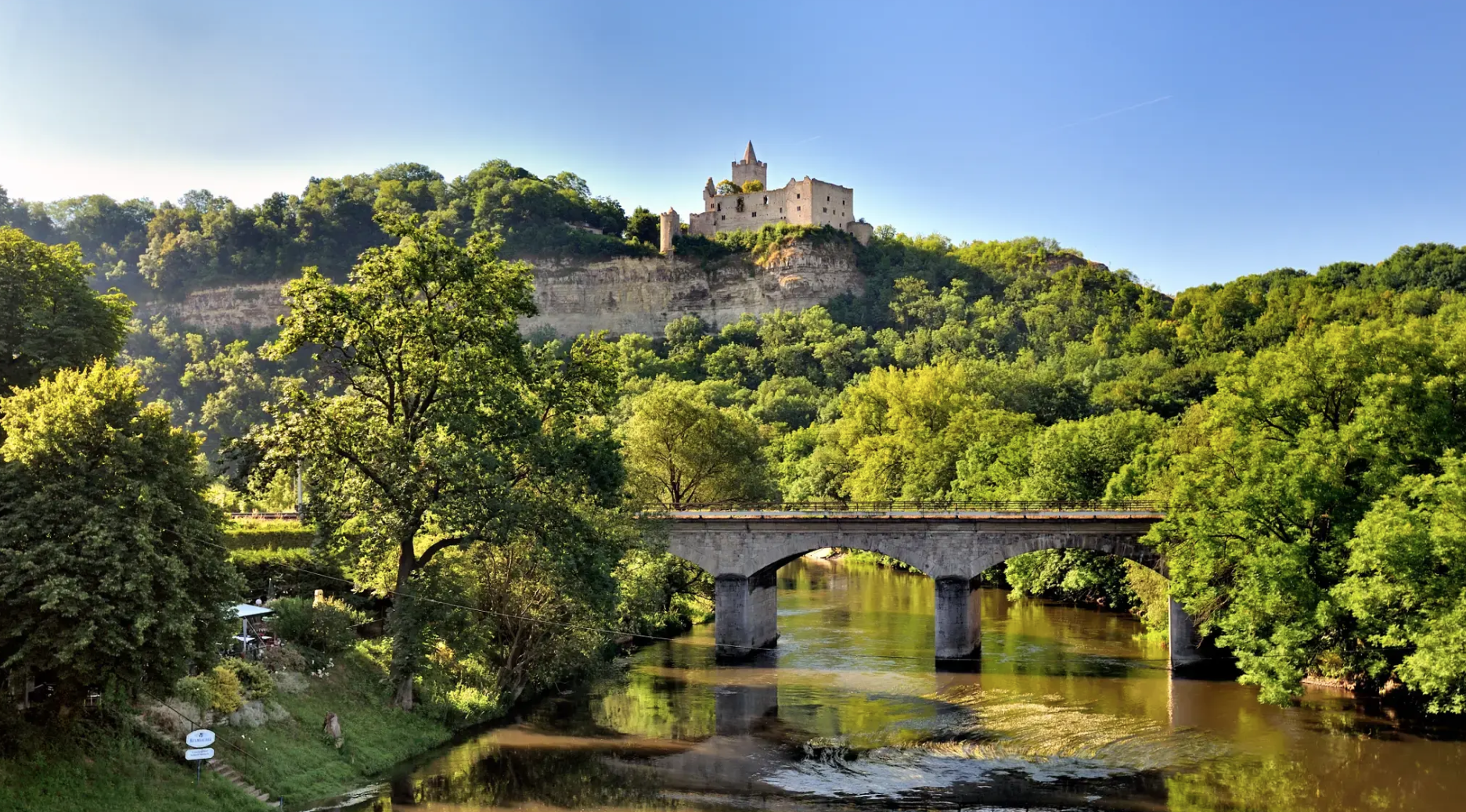
Neumarkt Bridge (Waterloo Bridge), Merseburg
Highlight • Bridge
Translated by Google •
Tip by

Sign up now to discover places like this
Get recommendations on the best single tracks, peaks, & plenty of other exciting outdoor places.
Dieskau Palace Park
Highlight • Historical Site
Translated by Google •
Tip by

Merseburg Palace Garden
Highlight • Historical Site
Translated by Google •
Tip by
Castle Park
Highlight • Structure
Translated by Google •
Tip by

Sign up for free to discover even more castles around Bad Lauchstädt.
Already have an account?
Start today with a free account
Your next adventure awaits.
Other adventures around Bad Lauchstädt

Tips from the Community

The castle garden and the castle garden salon are part of the historic castle ensemble. The castle garden was created in 1661 as a baroque pleasure garden. Today it is one of the 50 selected, historically most significant gardens in the "Garden Dreams" tourist network. The obelisks erected around 1690 are dedicated to the first ducal couples. The castle garden, which has been completely renovated with disabled access and made more attractive, is open all year round free of charge and offers peace and relaxation as the green heart in the middle of the city. Source:https://www.merseburg.de/de/touristische-ziele-merseburg/schlossgarten-und-schlossgartensalon.html
3
0

The old imperial cathedral in Merseburg is not only an outstanding place of German history, but also filled with numerous art objects worth seeing. The Langhans organ with well over 5000 pipes is another highlight.
11
3

The two-storey building was built in 1727 according to plans by Johann Michael Hoppenhaupt in the Baroque style by order of Duke Moritz Wilhelm von Sachsen-Merseburg and was intended to serve as a ballroom for garden parties. The building was completed between 1731 and 1735. The facade of the palace garden salon, which was built on a rectangular ground plan, has 13 axes and is oriented to the south towards the palace garden. Three axes each on the east and west sides protrude from the building as side projections. (Wikipedia)
16
3
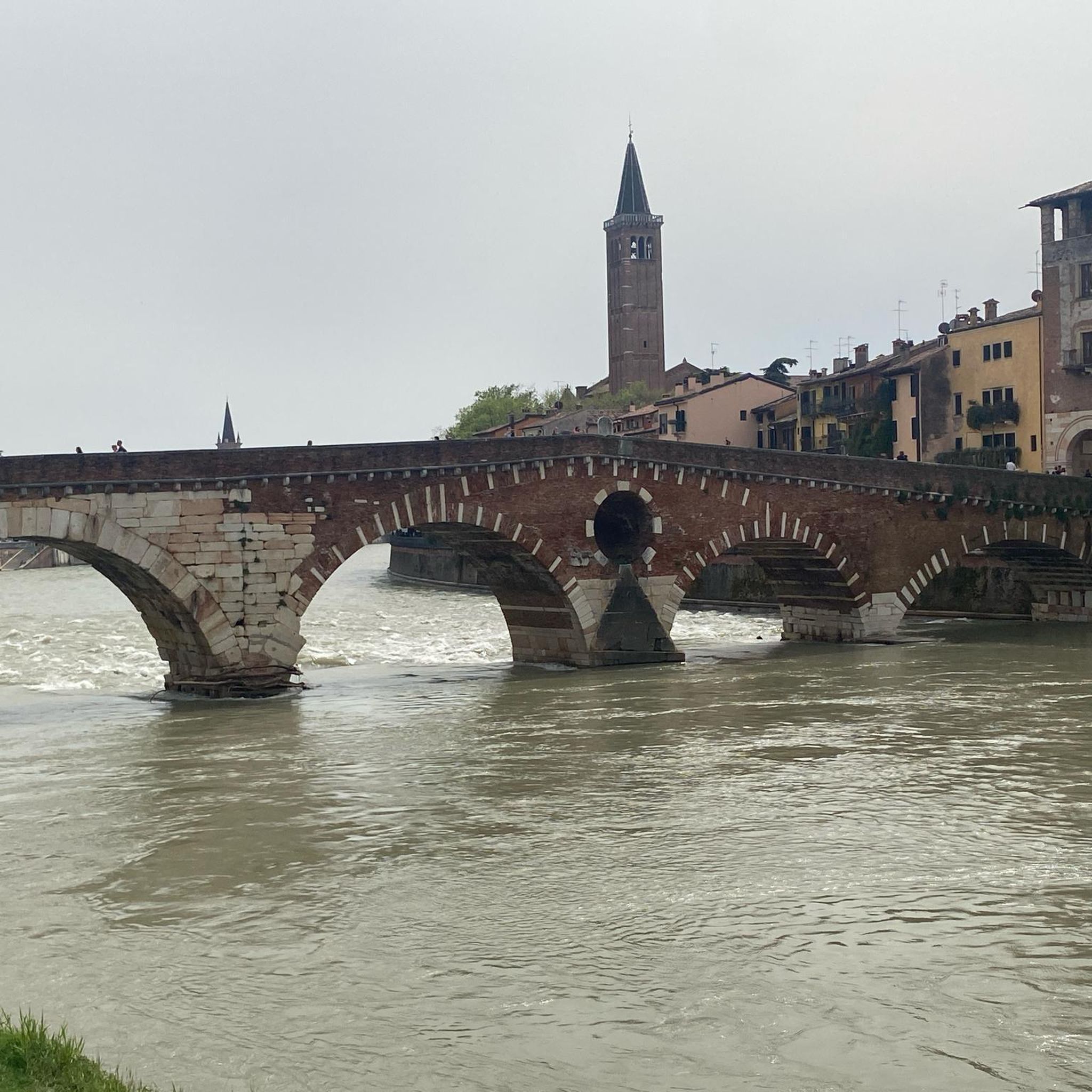
There is a commemorative plaque on the west side of the bridge that commemorates a special event. King Friedrich Wilhelm III is said to be on the bridge. received the news of the Battle of Waterloo and the victory over Napoleon in the presence of Princes Friedrich Wilhelm IV and Wilhelm I. The news was brought by Colonel Adolf Eduard von Thile.[2] The commemorative plaque was erected when the bridge was renamed Waterloo Bridge in 1891. After the Second World War, the commemorative plaque disappeared; but it was reattached in 1999. Source: Wikipedia
14
0
REGULAR OPENING HOURS Opening hours: April to October Monday to Saturday: 9:00 a.m. – 6:00 p.m. Sunday, public holidays: 11:00 a.m. – 6:00 p.m. November to March Monday to Saturday: 10:00 a.m. – 4:00 p.m. Sunday, public holidays: 12:00 p.m. – 4:00 p.m. December 24: 9:00 a.m. – 12:00 p.m. December 31: 9:00 a.m. – 2:00 p.m.
17
3

The Way of St. James goes over this bridge
3
0
Battle of Leipzig October 18, 1813
8
3
After the establishment of the ducal line of Saxony-Merseburg through the so-called Wettin division of inheritance in 1656, the castle garden was transformed from a vegetable garden into a pleasure park. Bounded to the south by the imposing palace complex, Duke Moritz Wilhelm (1688 - 1731) had a two-storey theater hall flanked by two orangeries built. Johann Michael Hoppenhaupt (1685 - 1751) was commissioned as master builder, who left important testimonies in Merseburg as a sculptor to the Princely Saxon court and master builder to the Princely Saxon court. The pavilion built between 1727 and 1730 served the Merseburg dukes as a summer venue. Even Neuberin is said to have performed here. Hoppenhaupt decorated the arcade arches with Greek mythological statues, which have not been preserved. In 1816 Merseburg became the capital of the administrative district of the same name in the Prussian province of Saxony. From 1825 the Provincial Estates Day met for the first time in the palace garden salon. During an inspection trip in 1833, Karl Friedrich Schinkel, head of the Prussian Oberbaudeputation, had to discover serious defects in the building, which is why it was even threatened with demolition. Frederick William III. personally decided in 1834 to repair it. Until the construction of the Merseburg Estates House in 1895, the palace garden salon remained a meeting place. Since then, the Schlossgartensalon has been used by the citizens of Merseburg as a concert and theater venue, even though it had to serve as a military hospital at the end of World War I. Important artists who made guest appearances here included: Johannes Brahms with musicians from the Meininger Hofkapelle (1895) and the Merseburg soprano Elisabeth Schumann (1888 - 1952). Today's palace garden salon, restored in 1995, lacks the western orangery, which was destroyed during Allied air raids in 1944. Nevertheless, the princely building in the ensemble of the palace and its moat, the estate house, the baroque residences and the high bank of the Saale forms a dreamlike conclusion to the palace garden. Source: https://www.merseburg-staendehaus.de/?id=166051000496
10
3
Frequently Asked Questions
What is Schloss Bad Lauchstädt and what can I see there?
Schloss Bad Lauchstädt is a historically significant structure that evolved from a medieval moated castle into a Renaissance palace. While parts were modernized, it retains significant historical elements, including the east wing and parts of the moats. Today, it houses a school and the voluntary fire brigade, and provides rooms for events. You can appreciate its historical architecture and its transformation from a defensive structure to a ducal residence. The exterior is accessible for viewing at any time, and it is recognized as a protected monument. It is located west of the town center, adjacent to the Kurpark and Goethe Theater.
Are there family-friendly castles or sites to visit around Bad Lauchstädt?
Yes, several sites are considered family-friendly. Merseburg Cathedral offers an inner courtyard and an aviary with castle ravens that children might enjoy. The Moritzburg Art Museum, Halle (Saale), while an art museum, is set within an imposing castle complex with information boards explaining its history. Additionally, the Merseburg Palace Garden is a well-kept historical garden offering attractive views and space for families to explore.
What historical or cultural landmarks are near the castles around Bad Lauchstädt?
Beyond the castles themselves, you can visit the Merseburg Cathedral, a religious building that is part of a larger castle ensemble. The Moritzburg Art Museum, Halle (Saale), a late Gothic complex, now houses an art museum. The Merseburg Palace Garden is a historical garden offering views of the cathedral, castle, and Saale river. The Neumarkt Bridge (Waterloo Bridge), Merseburg is a historic crossing over the Saale with a commemorative plaque.
Are there any accessible castles or sites for wheelchair users?
Yes, the Merseburg Palace Garden is noted as wheelchair accessible. Additionally, the exterior of Schloss Bad Lauchstädt is accessible for viewing at any time, and its accessibility for wheelchair users is also noted in regional information.
What outdoor activities can I do near the castles around Bad Lauchstädt?
The region offers various outdoor activities. You can find numerous road cycling routes, such as the 'Geiseltalsee Circular Route' or the 'Salziger Lake near Langenbogen' loop. For mountain biking, there are trails like the 'Geiseltal Lake Marina' loops. If you prefer hiking, you can explore easy hikes like the 'Town Church Bad Lauchstädt – Bad Lauchstädt Spa Park loop'. You can find more details on these routes in the Road Cycling Routes around Bad Lauchstädt, MTB Trails around Bad Lauchstädt, and Easy hikes around Bad Lauchstädt guides.
Are there easy walking routes or short hikes around the castles?
Yes, there are easy walking routes available. For instance, the 'Town Church Bad Lauchstädt – Bad Lauchstädt Spa Park loop' is an easy hike of about 4.5 km. You can also find other easy hikes around Klobikau and Schafstädt. These routes are detailed in the Easy hikes around Bad Lauchstädt guide.
What natural features or viewpoints can I find near the castles?
The Merseburg Palace Garden offers attractive views of the cathedral, castle, and the Saale river. The Neumarkt Bridge (Waterloo Bridge), Merseburg also provides a viewpoint over the Saale at the foot of Merseburg Castle. Schloss Bad Lauchstädt is adjacent to the Kurpark, which is another point of interest.
What do visitors enjoy most about the castles and sites in this region?
Visitors frequently appreciate the imposing architecture and historical significance of sites like Merseburg Cathedral, noting its power and calm. The Moritzburg Art Museum, Halle (Saale) is praised for its impressive complex and the information boards that explain its history. The well-kept grounds and attractive views at the Merseburg Palace Garden are also highly valued.
Are there cafes or places to eat near the castles?
Yes, the Moritzburg Art Museum, Halle (Saale) houses a café with covered seating. Additionally, Dieskau Palace Park is listed as having a cafe, providing options for refreshments during your visit.
Can I visit Schloss Bad Lauchstädt during winter or summer?
Schloss Bad Lauchstädt was historically a favored summer residence, and its exterior is accessible for viewing at any time, making it suitable for both winter and summer visits. The adjacent Kurpark and Goethe Theater also offer year-round appeal. For other castles and gardens, it's always advisable to check specific opening hours, especially for indoor exhibits, as these can vary seasonally.
Where can I find parking near the castles?
Parking is available at Dieskau Palace Park and the Merseburg Palace Garden. For Schloss Bad Lauchstädt, parking can typically be found in the vicinity of the town center, near the Goethe Theater, which is adjacent to the castle.
Most popular routes around Bad Lauchstädt
Most popular attractions around Bad Lauchstädt

Get inspired with the komoot mobile app


Explore more
Looking for the best castles somewhere else? Discover other guides around Bad Lauchstädt:
