Top 9 Castles around Barnstorf-Warle
Castles around Barnstorf-Warle offer a glimpse into the region's historical past, with structures ranging from medieval ruins to Rococo palaces. Situated in a landscape that includes the Elm hills, the area provides a backdrop for exploring these historical sites. The region is characterized by its historical significance, with evidence of early settlements and noble families. These places of interest around Barnstorf-Warle showcase diverse architectural styles and historical periods.
Best castles around Barnstorf-Warle
- The most popular castles is Old Castle Warberg…
Last updated: September 27, 2026
Elmsburg Church Ruins
Highlight • Historical Site
Translated by Google •
Tip by

Warberg Castle
Highlight • Castle
Translated by Google •
Tip by

Sign up now to discover places like this
Get recommendations on the best single tracks, peaks, & plenty of other exciting outdoor places.
Langeleben Castle Ruins
Highlight • Castle
Translated by Google •
Tip by
Plan of Warberg in Elm
Highlight • Historical Site
Translated by Google •
Tip by

Schliestedt Castle
Highlight • Castle
Translated by Google •
Tip by
Sign up for free to discover even more castles around Barnstorf-Warle.
Already have an account?
Start today with a free account
Your next adventure awaits.
Tips from the Community

Schliestedt Palace is a palace in Schliestedt, in the district of Wolfenbüttel, Lower Saxony. It was built between 1748 and 1760 in the Rococo style on the site of a castle belonging to the von Schliestedt family. The palace is considered the most significant example of Rococo architecture in the Brunswick region. The palace's predecessor was a castle whose construction date is unknown. It was the seat of the von Schliestedt family, whose line died out in 1613. A copper engraving by Merian from 1654 shows the complex, consisting of a main building with a half-timbered upper story and an annex with a stone gatehouse. According to his description, the castle was already very old at that time, had a square shape, and was surrounded by a moat. As early as 1449, the Lords of Schliestedt (landowners from approximately 1147 to 1562) relinquished the castle to the Duke of Brunswick. The castle was owned by four noble families until 1527, after which it was granted as a fief to a chancellor of the Duke of Brunswick. The castle came into the possession of the von der Streithorst family as a ducal fief in 1562. They were followed by the von Badendorff family (1663–1733), Lowisen (Luise) von der Planitz, widow of von Badendorff (1734–1741), and in 1747, Heinrich Bernhard Schrader von Schliestedt, with the permission of Duke Karl I, purchased the castle complex. He demolished it and, not far from the castle site, built the two-story Rococo palace that stands today, according to plans by Martin Peltier de Belfort. The owners subsequently included the von Bülow family (1777–1846), the von Schwicheldt family, and the von Adelebsen family (1846–1929). After various changes of ownership and different uses, Schliestedt Palace has been a retirement home since 1950.
0
0
Schliestedt Palace was built between 1748 and 1760 in the Rococo style on the site of a castle belonging to the von Schliestedt family. The palace is considered the most significant example of Rococo architecture in the Brunswick region. The palace's predecessor was a castle whose construction date is unknown. It was the seat of the von Schliestedt family, whose line died out in 1613. An engraving by Merian from 1654 depicts the complex, consisting of a main building with a half-timbered upper story and an annex with a stone gatehouse. According to his description, the castle was already very old at that time, had a square shape, and was surrounded by a moat. As early as 1449, the Lords of Schliestedt (landowners from approximately 1147 to 1562) relinquished the castle to the Duke of Brunswick. The castle was owned by four noble families until 1527, after which it was granted as a fief to a chancellor of the Duke of Brunswick. The castle came into the possession of the von der Streithorst family as a ducal fief in 1562. They were followed by the von Badendorff family (1663–1733), Lowisen (Luise) von der Planitz, widow of von Badendorff (1734–1741), and in 1747, Heinrich Bernhard Schrader von Schliestedt, with the permission of Duke Karl I, purchased the castle complex. He demolished it and, not far from the castle site, built the two-story Rococo palace that stands today, according to plans by Martin Peltier de Belfort. The owners subsequently included the von Bülow family (1777–1846), the von Schwicheldt family, and the von Adelebsen family (1846–1929). After various changes of ownership and different uses, Schliestedt Palace has been a retirement home since 1950.
0
0

Warberg Castle is situated in a very attractive landscape on the northern slope of the Elmes River. After the destruction of the first motte-and-bailey castle in 1199, the complex was probably replaced in the 13th century by a fortified moated castle on an artificially created hill in the valley. In a war waged by Duke Magnus the Elder of Brunswick in 1347 against Archbishop Otto of Magdeburg, the noblemen Gebhard and Burchard von Warberg fought as leaders of the duke, who was defeated that same year. As a result of these military events, Warberg Castle was severely damaged in 1356 but was subsequently restored. In 1552, Christoph von Warberg converted the castle into an impressive Renaissance palace, which is documented in a Merian engraving from 1654. The very beautiful and well-preserved niche portal on the side facing the courtyard dates from this period. The addition of a storey to the old upper castle building resulted in such an increase in load that the foundations could not adequately withstand the pressure, and the two upper floors had to be demolished. At the beginning of the 16th century, during the Thirty Years' War, the noble von Warberg family began to decline. The castle was gradually demolished except for the ground floor walls. A temporary roof, probably dating from the 19th century, made it possible to preserve the remaining structure, which from then on served to manage the domain. The present castle complex is divided into a renovated lower castle, used by the Bundeslehranstalt Burg Warberg e.V. as a seminar hotel, and the now also renovated upper castle, which was reopened to the public on April 25, 2004. The German Foundation for Monument Protection was involved in the renovation of Warberg Castle in 2000 and 2001.
0
2

I didn't know it until yesterday. Very beautiful castle with a bridge to the main entrance over the former moat. I found the gravestone of the house dog "Dame" from 1808 impressive.
1
2

A lock, I was quite surprised and was allowed to convince myself of the inner workings.
4
1

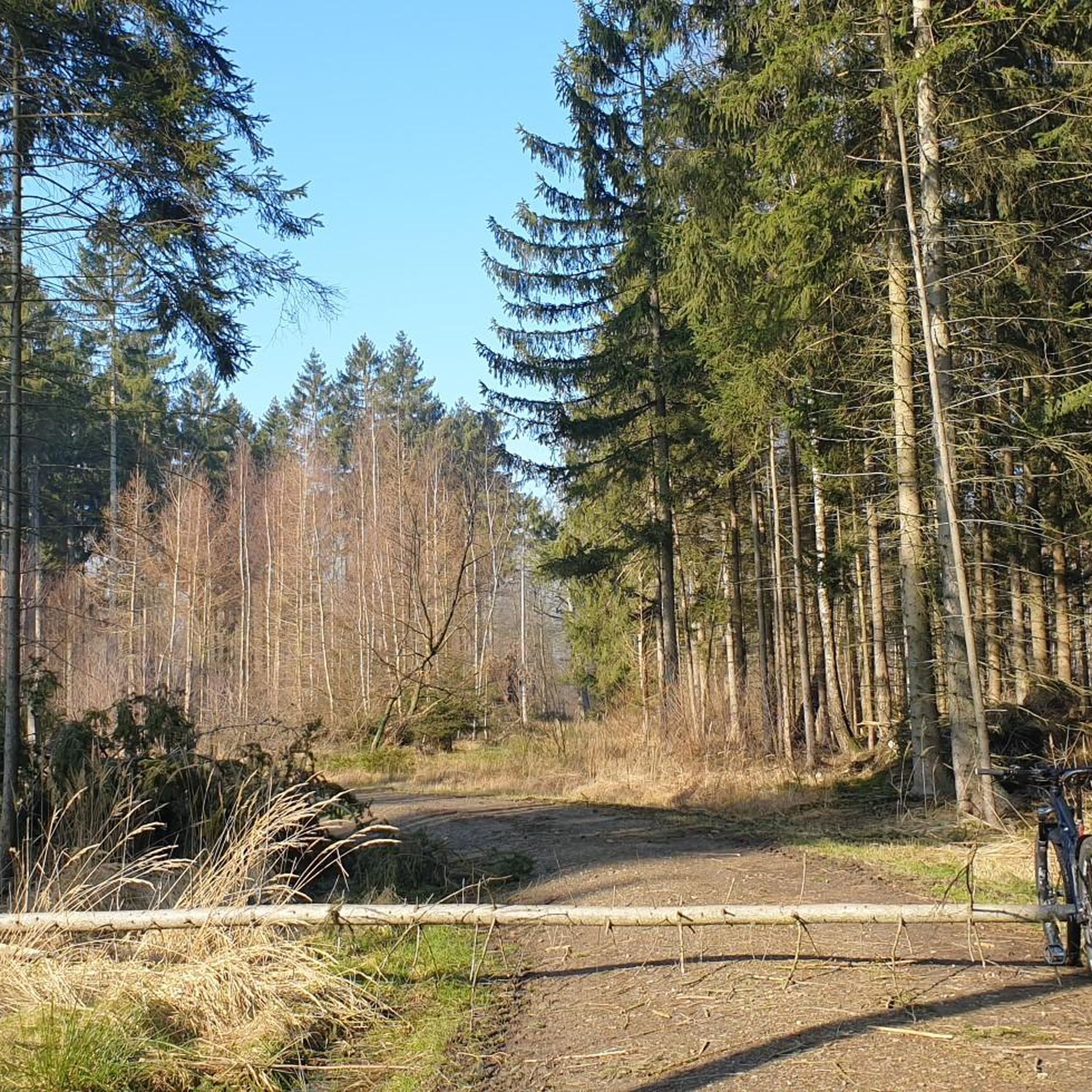
It's worth it in any season. In the leafless 🍁 state you have a nice view of the ruins.
7
0

Piece of history to touch, up close
8
1
Frequently Asked Questions
What kind of historical sites can I explore near Barnstorf-Warle?
The region offers a diverse range of historical sites, from medieval ruins to Rococo palaces. You can visit the foundations of the Elmsburg Church Ruins, which depict a chapel and altar, or explore the significant Rococo architecture of Schliestedt Castle, built between 1748 and 1760. The area also features sites like Old Castle Warberg, a high medieval hillfort with a history of violent destruction around 1200.
Are there any family-friendly castles or historical sites to visit?
Yes, several sites are suitable for families. The Langeleben Castle Ruins offer a rooty trail around the site, providing an interesting tour with 'hidden elves' for children to discover. Old Castle Warberg is also categorized as family-friendly, offering a glimpse into medieval history.
Which castles are known for their architectural style or unique features?
Schliestedt Castle is a prime example, showcasing the most significant Rococo architecture in the Braunschweig region. Its elegant design from the mid-18th century stands in contrast to the medieval origins of other sites. Diepholz Castle, though further afield, features a tower that houses a museum and offers unique views when climbed.
Can I find any castles that are wheelchair accessible?
Yes, Schliestedt Castle is noted as being wheelchair accessible, allowing more visitors to experience its Rococo architecture and historical significance.
What outdoor activities can I combine with a castle visit?
The region around Barnstorf-Warle offers various outdoor activities. You can find numerous running trails, such as the 'Running loop from Brunsleberfeld' (4.5 km), or explore gravel biking routes like the 'Reitlingstal Restaurant – Königslutter Imperial Cathedral loop' (18.5 km). For more relaxed options, there are easy hikes, including the 'Elm Edge Trailhead Parking – Elk Tree loop' (6.8 km). You can find more details on these activities in the Running Trails around Barnstorf-Warle, Gravel biking around Barnstorf-Warle, and Easy hikes around Barnstorf-Warle guides.
Are there any castles with significant medieval history?
Absolutely. Old Castle Warberg, also known as Alt-Warberg, was a high medieval hillfort that was violently destroyed around 1200 during a throne dispute. Its history is well-documented through archaeological findings. The original Burg Warberg, a fortified moated castle, was also built in the 13th century after the destruction of the earlier hillfort.
What do visitors particularly enjoy about the castles in this area?
Visitors appreciate the rich history and the opportunity to delve into the region's past. For instance, the Elmsburg Church Ruins are praised as a 'very beautiful place to delve into the early history of our region' and a 'well-restored cultural monument.' The trails around sites like Langeleben Castle Ruins are also popular for their interesting discoveries.
Are there any castles that offer unique viewpoints or scenic locations?
Burg Warberg is scenically situated on the northern slope of the Elm hills, offering picturesque views of the surrounding landscape. While not a castle, the Plan of Warberg in Elm, near the ruins, provides a viewpoint with considerable earth walls and historical information, allowing visitors to appreciate the area's topography.
Which castles are less crowded or offer a more tranquil experience?
While specific crowd levels can vary, exploring sites like the Elmsburg Church Ruins or the Langeleben Castle Ruins, especially during off-peak hours, can offer a more tranquil experience compared to larger, more commercialized attractions. These sites often provide a peaceful setting for historical exploration.
What is the best time of year to visit the castles around Barnstorf-Warle?
The spring and autumn months generally offer pleasant weather for exploring the castles and their surroundings, with comfortable temperatures and beautiful natural scenery. Summer can also be enjoyable, though it might be busier. Winter visits can provide a unique, serene atmosphere, especially if you enjoy crisp air and fewer crowds, but some facilities or trails might have limited access.
Are there any castles that are part of a larger estate or complex?
Yes, Schliestedt Castle, for example, now serves as a senior citizens' residence, indicating its integration into a larger functional complex. The original Burg Warberg was also part of a complex that included an earlier motte-and-bailey castle, 'Alte Burg Warberg,' before the moated castle was built in the valley.
Most popular attractions around Barnstorf-Warle

Get inspired with the komoot mobile app


Explore more
Looking for the best castles somewhere else? Discover other guides around Barnstorf-Warle:
