Attractions and Places To See in Parque Natural Do Fogo - Top 14
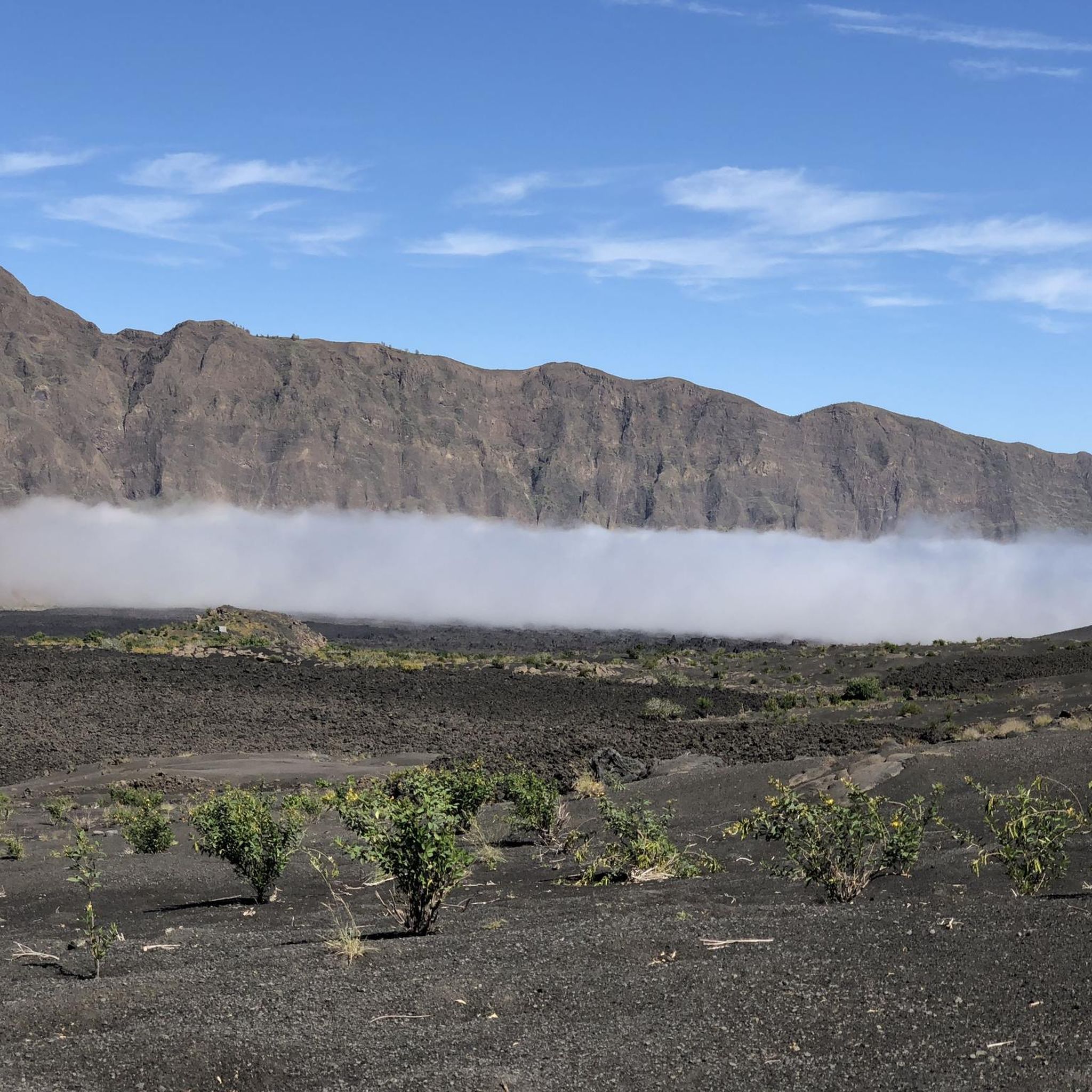
Best attractions and places to see in Parque Natural Do Fogo include its active stratovolcano, Pico do Fogo, which is the highest point in Cape Verde. The park features unique lunar landscapes, extensive lava fields, and the Chã das Caldeiras plateau, located within the volcano's ancient caldera. Resilient communities inhabit this area, rebuilding after volcanic eruptions and cultivating distinctive agricultural products like wine and coffee.
Best attractions and places to see in Parque Natural Do Fogo
- The most popular attraction…
Last updated: May 25, 2026
Pico do Fogo
Highlight • Volcano
Translated by Google •
Tip by

Pico do Fogo
Highlight • Volcano
Translated by Google •
Tip by

Sign up now to discover places like this
Get recommendations on the best single tracks, peaks, & plenty of other exciting outdoor places.
Sign up for free
Casa Marisa, Chã das Caldeiras
Highlight • Mountain Hut
Translated by Google •
Tip by
Portela Village
Highlight • Settlement
Translated by Google •
Tip by
Pico Pequeno Crater
Highlight (Segment) • Volcano
Translated by Google •
Tip by
Sign up for free to discover even more attractions in Parque Natural Do Fogo.
Sign up for free
Already have an account?
Start today with a free account
Your next adventure awaits.
Login or Signup
Popular around Parque Natural Do Fogo
Tips from the Community

The climb is definitely worth it. And in the crater, there's smoke and a sulphurous smell.
0
0

Wire rope installed by Mustafa (Casa Marisa) with really nice brackets (hand-twisted)
1
0

The Pico do Fogo is a stratovolcanic cone that rises about 1200 m above the east side of the Chã das Caldeiras. The Chã das Caldeiras is a semicircular rock basin at a height of between 1600 m and 1700 m above sea level with a diameter of about 9 km. The Chã das Caldeiras is not a classic collapse crater, but was created by an enormous landslide. After that, the Pico do Fogo was built up on the east side. To the south and west, the Chã das Caldeiras is dominated by almost vertical, 1000 m high rock walls, the Bordeira de Fogo. A massive eruption from the main crater of the Pico in 1680 gave the island, then called "São Filipe", the name Fogo (English: "fire"), which it still uses today. Further eruptions followed in 1785, 1799, 1847, 1852, 1857 and 1951. During the eruption on April 2, 1995, the lava flow of which was limited to the interior of the Chã das Caldeiras, a small secondary volcano (Pico Pequeno 1950 m) was formed at the western foot of the Pico. After the eruption of Pico Pequeno, large parts of the cultural landscape in the Caldeira were destroyed, and the 2000 inhabitants were temporarily evacuated. On the morning of November 23, 2014, there was another eruption with ash and lava ejection at the same location as the 1995 eruption. The ongoing eruption destroyed the southern and central part of Portela and about 70% of the neighboring municipality of Bangaeira by December 7, 2014. The eruption increased in intensity and covered most of the hamlet of Portela with a lava flow that destroyed all the inhabitants' belongings. On February 8, 2015, the volcano stopped erupting again after 77 days. Living conditions are still not easy, there is no public water or electricity supply. Emerging tourism and small-scale viticulture are the main sources of income. Pico is part of a nature reserve. For the strenuous but not particularly difficult hike to the summit, it is not necessary to be accompanied by a mountain guide. The town of Chã das Caldeiras is connected to São Filipe, the main town on the island of Fogo, by a road via Salto and Monte Largo and can be reached by taxi, car and shared taxis ("aluguer", once a day). Coffee, beans, oranges, bananas and corn, among other crops, are grown on the northeast slopes of the island. The eastern slope of Pico is not accessible. A road runs along the coastline past the volcano to Mosteiros through a very barren landscape. The volcano is clearly visible almost the entire way.
3
1
Good starting point for a mountain tour of the Pico do Fogo but also for other hikes. The complex itself has everything you need up here, after all the residents had to rebuild everything from the ashes. Don't expect a luxury resort. But you will meet friendly people and mountain guides who can tell you about the interesting history of the place and the island.
3
0

Sublime hike. The trace matches perfectly. Take a guide, it’s really important for them and to protect the natural park. In addition you will have the history of the Caldera. The ascent of the pico is now equipped with a via ferratta but remains impressive for those who are not used to climbing. Be careful, the beginning of the descent is a more dangerous part because there are a lot of unstable stones that can roll down on people below and the path is not very clear.
2
2

Great place to stay close to Fogo. Nice courtyard, good kitchen. And even wifi ...
1
0
The ascent of this picture-perfect volcano is highly recommended for those in good physical condition from guided tours. Above all, the view of the Caldeira is fantastic. The descent over ash fields is fun (more of a slide).
6
1
Nice little village in the Caldeira, where life has returned after the destruction by the volcano in 2014.
0
0
Frequently Asked Questions
What are the most popular hiking trails in Parque Natural Do Fogo?
The most popular and challenging hike is to the summit of Pico do Fogo, the active stratovolcano. After the ascent, many visitors enjoy the unique Ash Descent Trail, Parque Natural do Fogo. For those seeking a different perspective, the Pico Pequeno Crater offers fascinating views into the main crater's 'Hellmouth'.
How long does it take to climb Pico do Fogo and what is the difficulty?
The ascent to Pico do Fogo typically takes 3-4 hours. It is considered a challenging activity, requiring good physical condition. The terrain involves climbing to the crater rim at 2770 meters, with some sections potentially equipped with a via ferrata. The descent through ash fields is often described as fast and fun.
Is a guide mandatory for hiking Pico do Fogo?
Yes, it is highly recommended and often considered essential to hire a local guide for the ascent of Pico do Fogo. Guides provide crucial safety, navigation, and historical insights into the caldera and its resilient communities. They also help support the local economy.
What is the best time to visit Parque Natural Do Fogo?
The best time to visit Parque Natural Do Fogo is generally during the dry season, from November to June, when the weather is more stable and suitable for hiking. Clear days offer breathtaking panoramic views from the volcano summit.
Are there any family-friendly activities or trails in Parque Natural Do Fogo?
While the main volcano ascent is challenging, families can explore the unique volcanic landscapes around Chã das Caldeiras. There are easier walks around the villages like Portela Village, offering cultural insights into the resilient communities and their adaptive architecture. Sampling local wine and coffee can also be an enjoyable experience for older children and adults.
What cultural experiences can I find in Parque Natural Do Fogo?
Visitors can explore the resilient villages of Chã das Caldeiras, such as Portela Village, which have rebuilt after volcanic eruptions using lava rock. The fertile volcanic soil supports agriculture, allowing visitors to sample local 'Vinho do Fogo' (wine), locally grown coffee, and goat cheese. The capital, São Filipe, also offers well-preserved colonial architecture.
Where can I find accommodation and food near the attractions?
The Chã das Caldeiras plateau, located inside the ancient caldera, serves as a base for exploring the park. You can find accommodation and food options in villages like Casa Marisa, Chã das Caldeiras, which also serves as a starting point for volcano tours. These establishments often offer local Cape Verdean and French-inspired cuisine, along with Fogo wine and coffee.
What should I pack for hiking the Fogo volcano?
For hiking Pico do Fogo, it's advisable to pack sturdy hiking boots, layers of clothing (temperatures can vary significantly), sun protection (hat, sunscreen), plenty of water, snacks, and a headlamp if starting early. A camera is a must for the panoramic views.
Are there any alternative hikes to Pico do Fogo?
Yes, beyond the main volcano, you can explore the extensive lava fields, some still retaining warmth from past eruptions. The Pico Pequeno Crater offers a distinct hiking experience. Additionally, the Monte Velha Forests provide a contrasting green landscape for gentler walks. You can find various hiking routes in the region, including easy and moderate options, on the Hiking in Parque Natural Do Fogo guide.
What unique natural features can I expect to see in Parque Natural Do Fogo?
Parque Natural Do Fogo is dominated by its active stratovolcano, Pico do Fogo, and its unique lunar landscapes. You'll encounter extensive black lava fields, the impressive Bordeira crater rim, and the Chã das Caldeiras plateau. The Parque Natural do Fogo also features the smaller Pico Pequeno Crater and the contrasting Monte Velha Forests.
What do visitors enjoy most about Parque Natural Do Fogo?
Visitors consistently praise the spectacular climb to the crater rim of Pico do Fogo and the breathtaking panoramic views of Fogo Island. The unique experience of descending through ash fields on the Ash Descent Trail, Parque Natural do Fogo is also a highlight. Many appreciate the friendly locals and the interesting history shared by mountain guides.
Are there any easy hiking trails in Parque Natural Do Fogo?
Yes, while the volcano ascent is challenging, there are easier options available. For instance, you can find easy loop trails like the 'Portela Village – View of Pico do Fogo loop' or the 'Casa Marisa, Chã das Caldeiras – Santos' Funcos loop'. More details on these and other easy hikes can be found in the Easy hikes in Parque Natural Do Fogo guide.
Most popular routes in Parque Natural Do Fogo
Most popular attractions in Parque Natural Do Fogo

Get inspired with the komoot mobile app


Explore more
Still not found the Highlight you’re looking for? See guides of the top attractions in other regions:
