Attractions and Places To See in Reserva Natural De Puigventós - Top 9
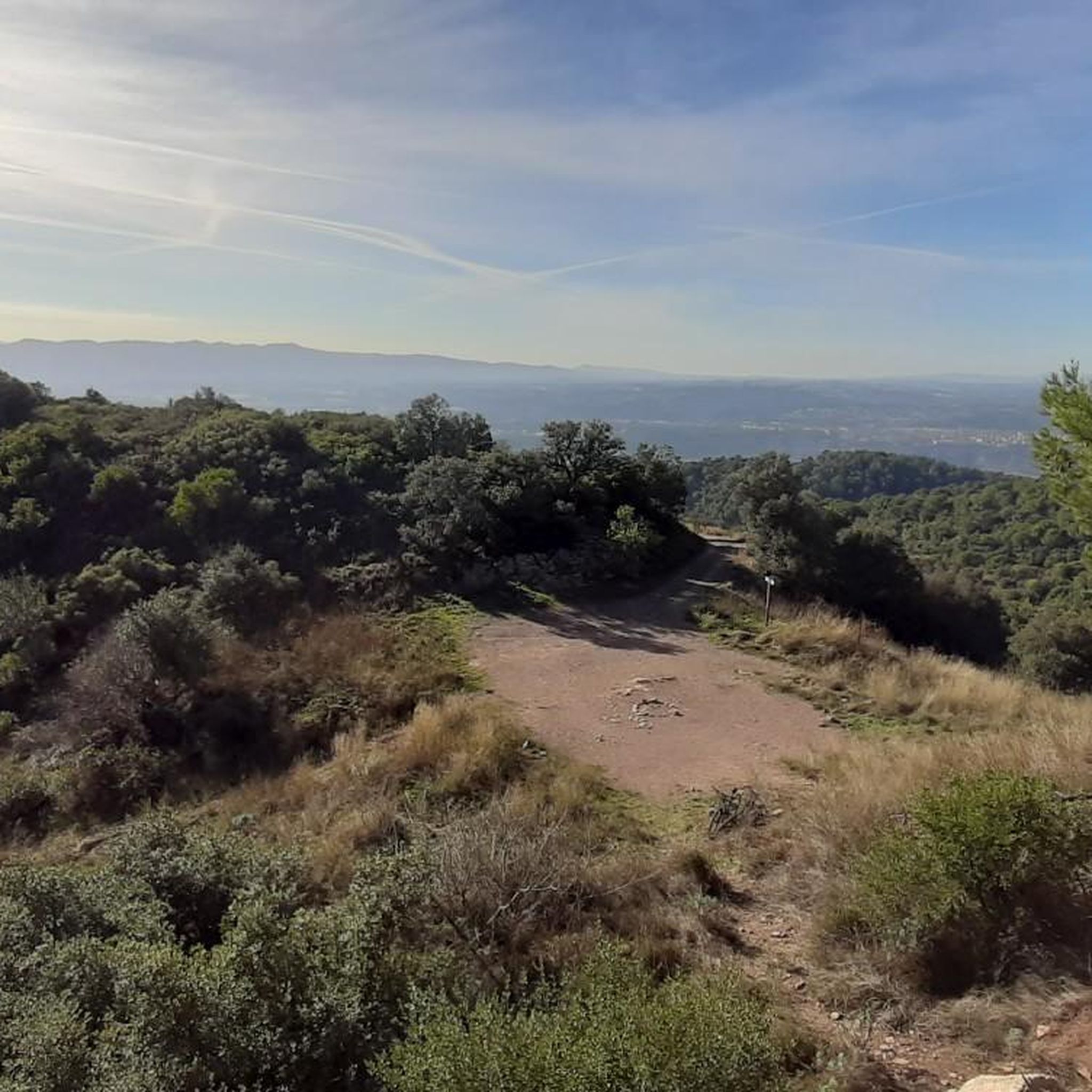
Best attractions and places to see in Reserva Natural De Puigventós include a rich blend of natural beauty and historical significance within the Catalan Pre-Coastal Range. This area features the prominent Puigventós Mountain, offering lookout points over the Llobregat River and Montserrat massif. Visitors can explore diverse Mediterranean plant life and historical sites, making it an ideal destination for nature and history enthusiasts. The reserve is recognized as an important biological corridor, part of the Natura 2000 network.
Best attractions…
Last updated: May 25, 2026
Sant Salvador de les Espases Hermitage
Highlight • Religious Site
Translated by Google •
Tip by

Puig Cendrós (100 Peaks)
Highlight • Summit
It is a non-essential 100 CiMS.
Translated by Google •
Tip by
Sign up now to discover places like this
Get recommendations on the best single tracks, peaks, & plenty of other exciting outdoor places.
Sign up for free
Turó de la Gronya
Highlight • Summit
Translated by Google •
Tip by
Sant Pere Sacama Hermitage
Highlight • Religious Site
Translated by Google •
Tip by

Pla del Fideuer
Highlight • Mountain Pass
Translated by Google •
Tip by

Sign up for free to discover even more attractions in Reserva Natural De Puigventós.
Sign up for free
Already have an account?
Start today with a free account
Your next adventure awaits.
Login or Signup
Popular around Reserva Natural De Puigventós
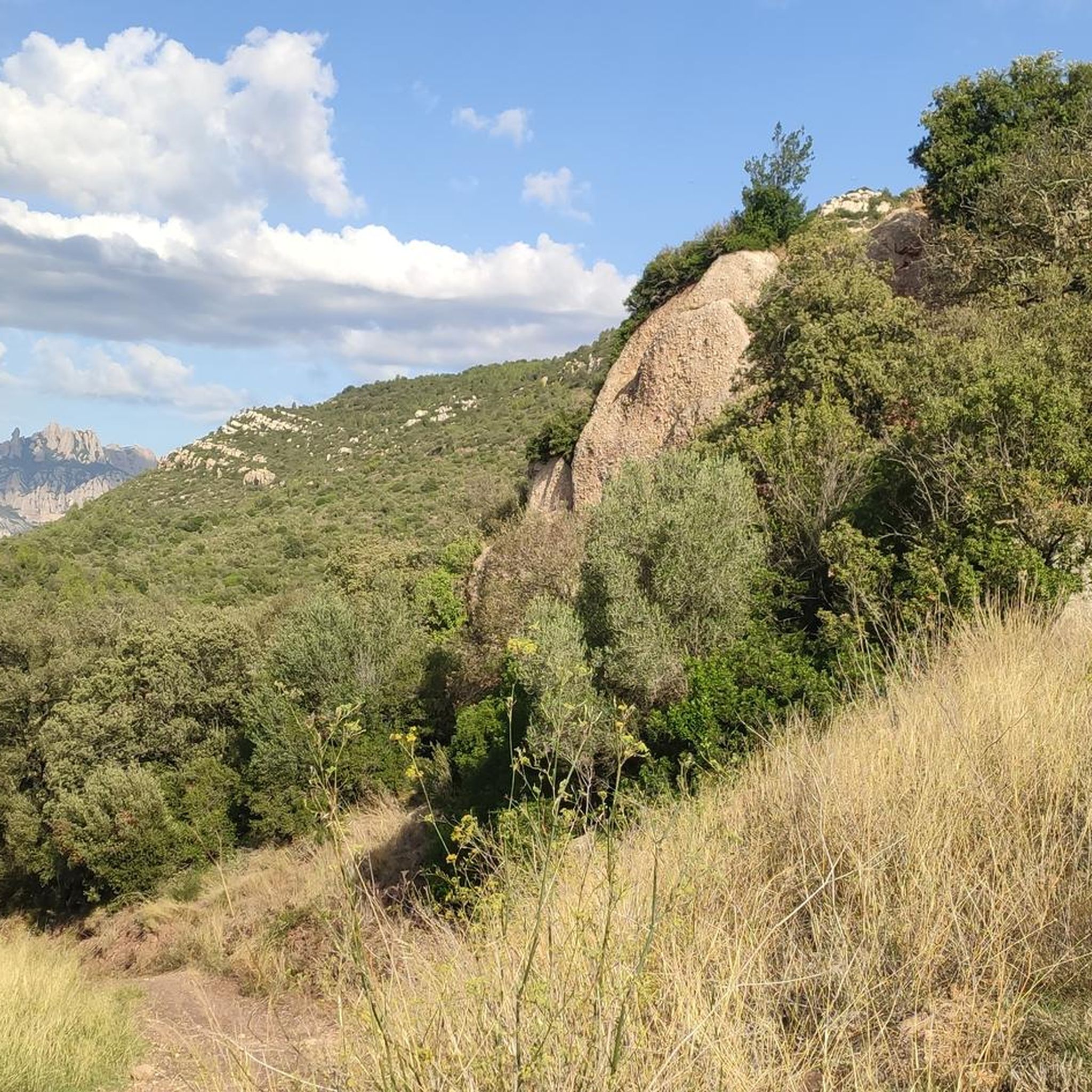
Hiking in Reserva Natural De Puigventós
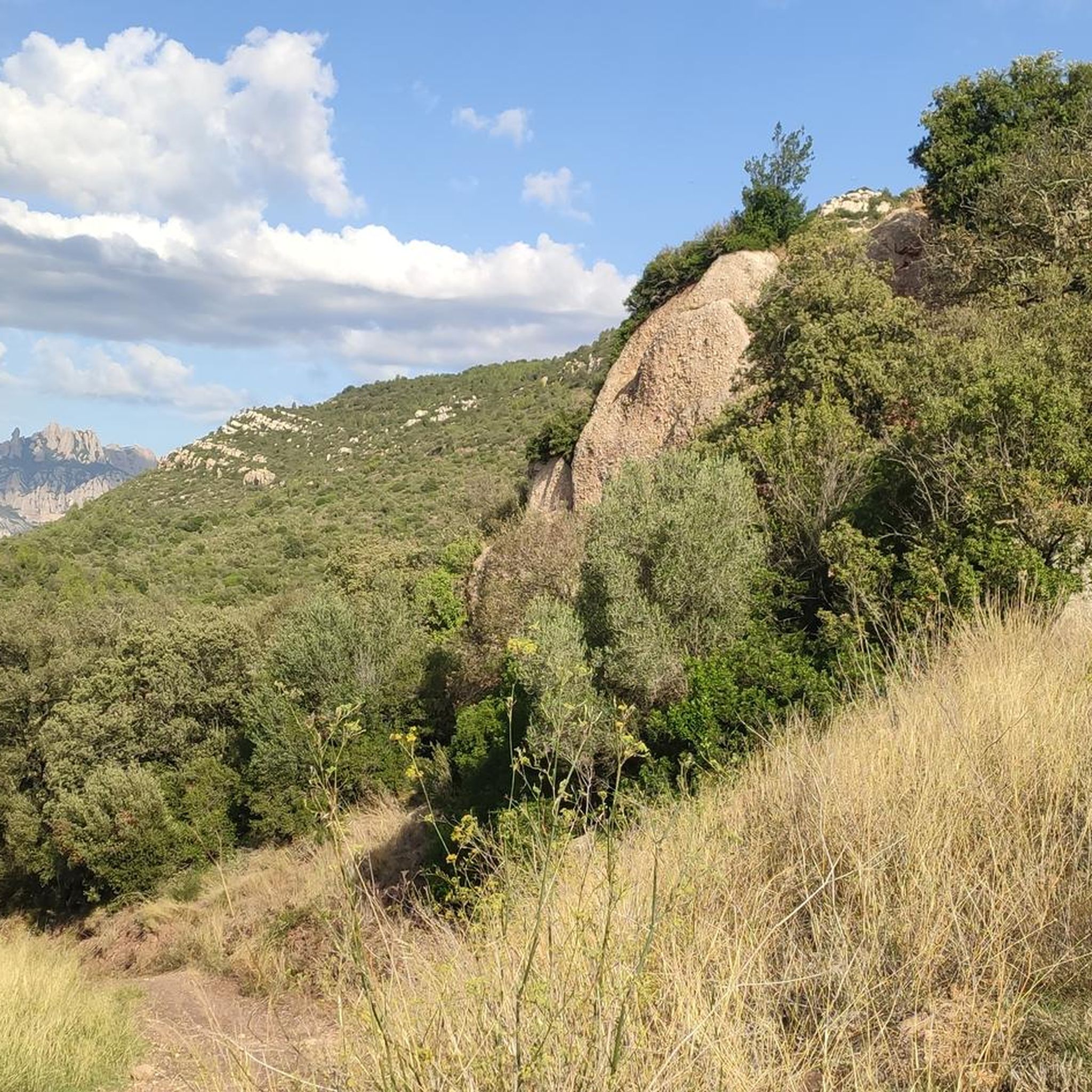
Road Cycling Routes in Reserva Natural De Puigventós
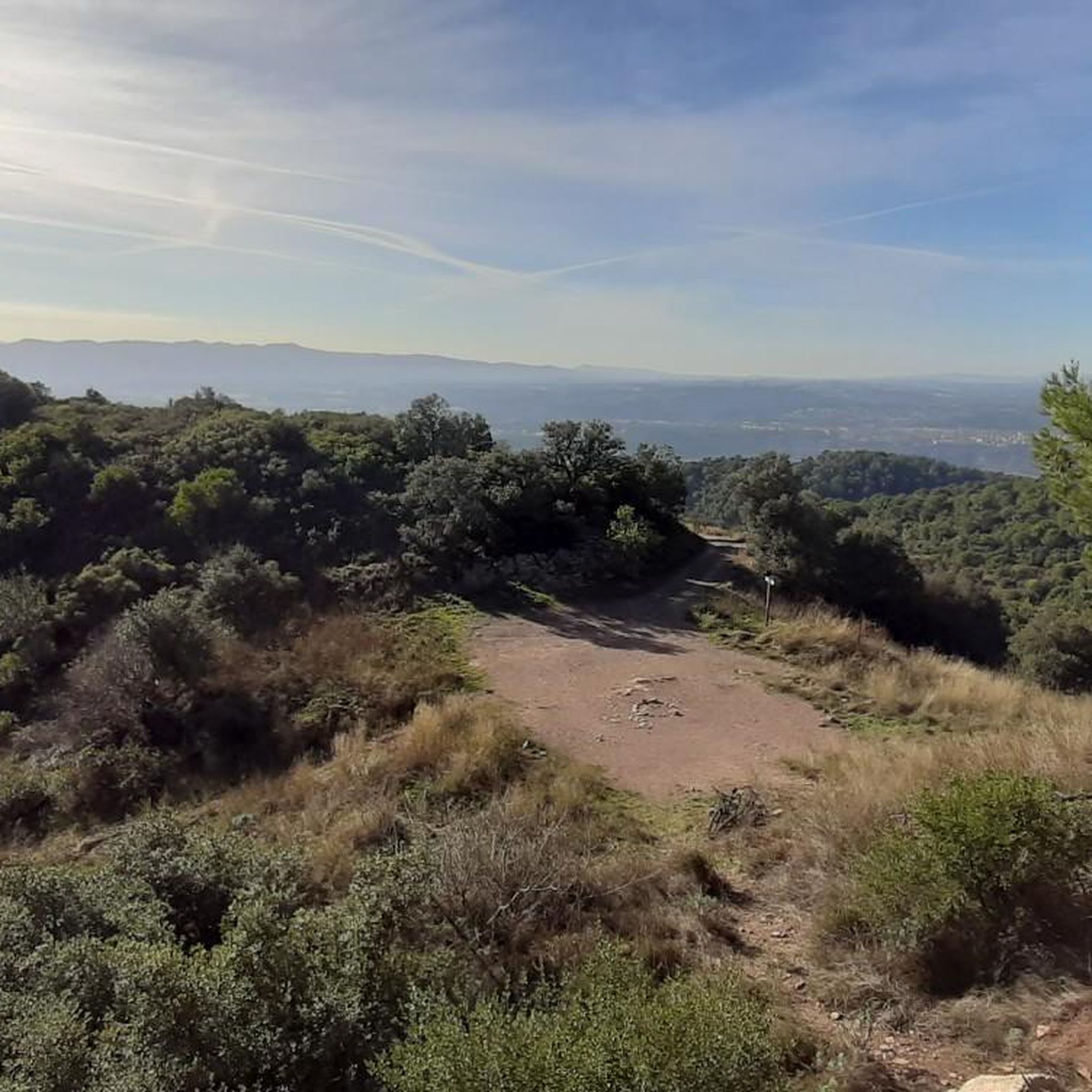
MTB Trails in Reserva Natural De Puigventós
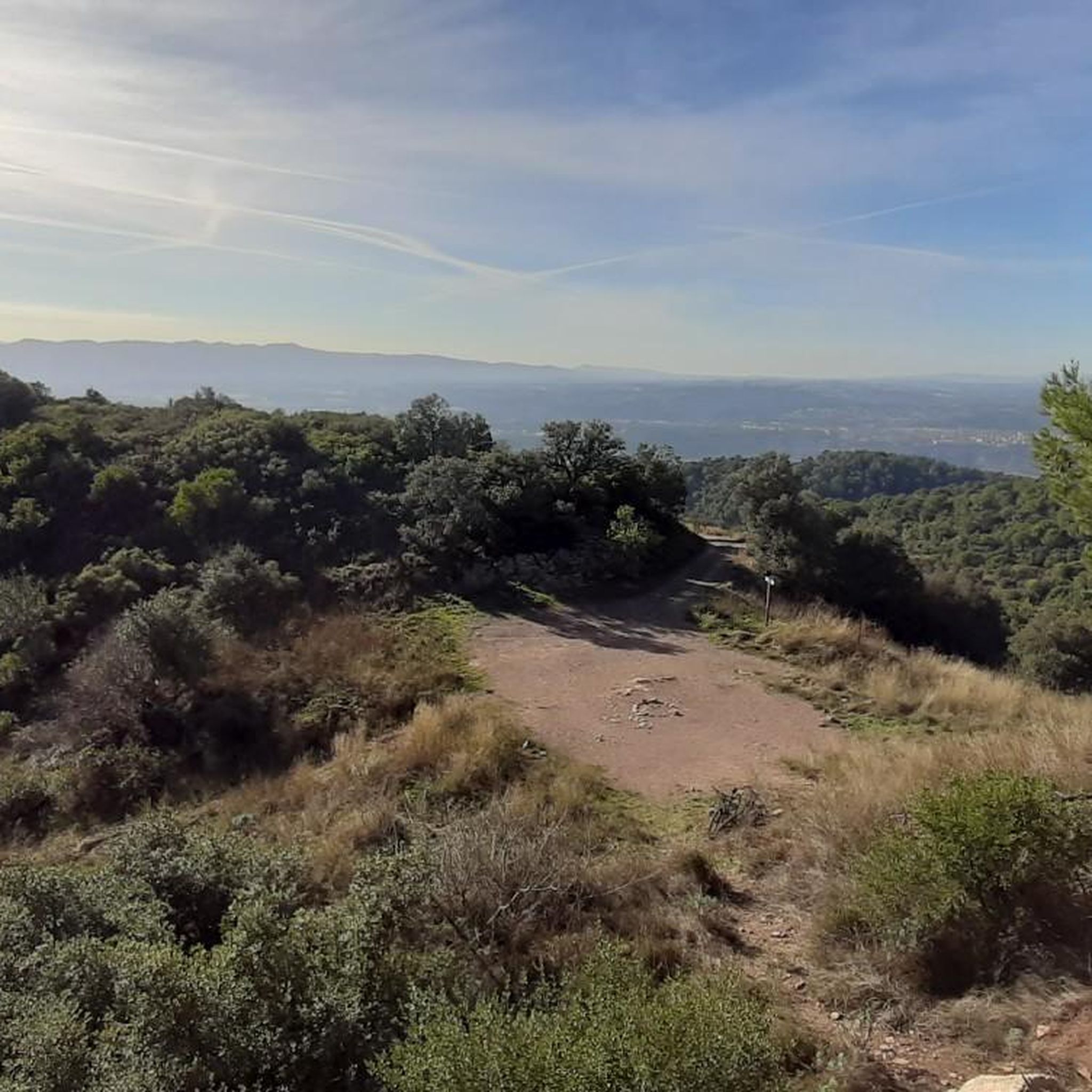
Cycling in Reserva Natural De Puigventós
Running Trails in Reserva Natural De Puigventós

Gravel biking in Reserva Natural De Puigventós

Mountain Hikes in Reserva Natural De Puigventós
Tips from the Community

Wonderful trail to reach it, very nice place and fantastic views. Really worth the way up !
0
0

The hermitage of Sant Pere is the old chapel of the Sacama (or Camba) castle and is dedicated to Saint Peter the Apostle. It is a single nave with a semicircular Lombard apse and a bell tower in the shape of a small chair. The apse is what remains of the old Romanesque chapel, built between 963 and 966, on the remains of a primitive Visigothic oratory. It has a magnificent appearance, with a clear stone work, Lombard arches and a small central semicircular window. The rest of the nave is the result of a later reconstruction. The door faces west and is linteled. During the years 1985 and 1986, the Center Muntanyenc i de Recerques Olesà carried out the last restoration of the chapel. In the course of the work, two small niches were discovered at both ends of the central window of the apse, in which fragments of Romanesque mural painting are still preserved. In the archaeological interventions that have been carried out, important vestiges have been found both inside and outside the hermitage: the presence of a site from the Iberian period from the 2nd century BC. C. and the remains of a house classified as Carolingian and a necropolis from the medieval period (14th-15th centuries). The chapel had a baroque altarpiece with the central image of Saint Peter and, on the sides, those of Saint Lucía and Saint Oliva, patron saint of Olesa. Separated from the wall, suggesting an ambulatory, was the space that was used as a sacristy, in which there is evidence that there was an old Gothic altarpiece. The carvings were burned during the Civil War. The Castle of Sant Pere Sacama was a small defensive construction from the Carolingian era that controlled the road from Olesa to Vacarisses and Terrassa. Currently, only pieces of stone wall left in a herringbone shape (opus spicatum). Under the chapel was the Sant Pere farmhouse, which was active until the 1970s. To the west of the castle and on a small hill, Mas Vilar stood, dating back to the 11th century. Currently, it is a pile of ruins from which you can distinguish the base of a circular tower and a couple of silos. Between 1996 and 1998, an archaeological excavation was carried out that has allowed us to document the architectural evolution of a medieval farmhouse from its beginning to its abandonment. During the work, the skeleton of an individual from medieval times was found, with signs of having been murdered and hidden inside one of these silos of the farmhouse. This discovery deserved special attention from the press and even appeared in an issue of National Geographic magazine. Although the hermitage can be seen from the outside, you have to ask the owner of the place for the keys to access it. It is said that this place was where Olesa de Montserrat began to be created, very close, is the "Creu de Saba", the highest place on the Puigventos mountain, on days without pollution, you can see the sea. You can also continue along the path that leads to Puigventos and reach the Hermitage of Sant Salvador de les Espases. We are facing what remains of an old castle of the Hispanic March, converted into a hermitage. In the past there was also a farmhouse right on the esplanade in front and nearby are the remains of Mas Vilar, with a gloomy history behind it. Architecturally and decoratively there are only two identical Romanesque churches in Catalonia, Sant Pere Sacama is one of them. You can also see vestiges of the old Camba castle, a very important fortress in Catalonia during the Catalan Counties. An important medieval necropolis was discovered in the region of the hermitage. Nearby we can also see Mas Vilar, the former house of the feudal lord of the castle.
1
0

The legend of Sant Salvador says that during a tough battle with the Saracens and the Christians, the latter were clearly inferior and asked God for help. Ramon Berenguer the Great on one side and Al-Mansur on the other faced each other in the contest. So, God threw them some great "swords of fire" that were stuck between the two sides protecting the Christians who gave thanks to God, the "Saviour". We see these swords turned into stone on the path that goes from La Puda to the hermitage and they are quartz conglomerate needles sculpted by water and wind.
2
0
El Puig Cendrós is a 499 m mountain included in the list of the 100 peaks of the F.E.E.C. https://www.feec.cat/activitatis/100-cims/cim/puig-cendros/ Not that it has wonderful views, but its flat top allows for a good stop and a bite. From the Pla del Fideuer you can access it without problems by what we can consider its normal ascent, but for the more daring you should know that on its west side there is a very entertaining ascent.
1
0
Turó de la Gronya is a mountain that dominates the town of Olesa de Montserrat. At its top we find a huge landmark that I imagine every person who passes adds another stone. We have a good panorama of the Baix Llobregat up to its mouth and the surroundings of Olesa and Esparraguera, as well as, as it could not be otherwise, the ubiquitous Mount Montserrat
1
0
The hermitage of Sant Salvador de les Espases, declared a cultural asset of national interest, is erected on top of a hill, in an isolated espadat, from where you can enjoy magnificent views of the surroundings and Montserrat. Former chapel of the Castle of Swords, it appears mentioned in 1351, and is linked to the legend that explains that during the battle between Christians and Muslims, the latter wanted to conquer the land where the castle was located. In clear inferiority, the Christians asked God for help, who sent a rain of fiery swords that forced the Saracens to retreat. In gratitude, the chapel dedicated to the Savior was erected. In reality, the name comes from the rugged terrain where the castle is located, in the shape of a sword. It has a single nave, low vault and quadrangular apse and currently has a Gothic appearance due to reforms in the 17th century. Over time, it has undergone some repairs, the last in 1989, when the altarpiece was restored. Apart from the chapel, there is an open room with benches and tables, a dining room and a kitchen that are open to the public on Thursdays and Sundays and on the day of the Gathering, the first Sunday in September. The maintenance and conservation tasks are in charge of the association Amics de Sant Salvador de les Espases. Since 1868, the chapel has belonged to the Parish of Santa Maria d'Olesa, although, as a curiosity, it should be noted that it is located at the point of confluence of the municipalities of Olesa, Esparreguera and Vacarisses. The Castle of Swords Documented in 985, it was built in a very strategic and impregnable location, isolated from the nearby ridges and quite high compared to the two streams that surround it. It acted as a border surveillance point for the Llobregat to ensure Christian rule, since the river was the border with Al-Andalus and the region suffered clashes with the Saracens. Currently, only the base of a circular tower remains as a vestige.
2
0

The Pla del Fideuer is a border pass between the municipalities of Olesa de Montserrat and Vacarisses. Roads branch out in all directions. If you don't want to walk a lot, you can leave your car relatively close and go on a pleasant outing with the family. There is a place with tables where you can have a picnic.
1
0
The hermitage of San Salvador de les Espases, declared a cultural asset of national interest, stands on top of a mountain, from where you can enjoy magnificent views of the surroundings and of Montserrat. The old chapel of the Castillo de les Espases is mentioned in 1351 and is linked to the legend that explains that during the battle between Christians and Muslims, the latter wanted to conquer the land where the castle was located. Clearly outmatched, the Christians called on God for help, who sent a rain of flaming swords that forced the Saracens to retreat. In gratitude, the chapel dedicated to the Savior was built. Actually, the name comes from the rugged terrain where the castle stands, in the shape of a sword. It has a single nave, a low vault and a quadrangular apse and currently has a Gothic appearance due to reforms in the 17th century. Over time, it has undergone some repairs, the last in 1989, when the altarpiece was restored. Apart from the chapel, there is an open room with benches and tables, a dining room and a kitchen that are open to the public on Thursdays and Sundays and on the day of the Encounter, the first Sunday in September. Maintenance and upkeep tasks are the responsibility of the Friends of San Salvador de les Espases association. Since 1868, the hermitage has belonged to the Santa Maria de Olesa Parish, although, as a curiosity, it should be noted that it is located at the point of confluence of the municipalities of Olesa, Esparreguera and Vacarisses.
2
0
Frequently Asked Questions
What natural features can I explore in Reserva Natural De Puigventós?
The Reserva Natural de Puigventós is rich in natural beauty. You can explore the rugged Puig Cendrós (100 Peaks) and Turó de la Gronya summits, which offer panoramic views. The area is also known for its diverse Mediterranean plant life, including various orchid species, and is part of an important biological corridor.
What historical and cultural sites are there to visit?
Reserva Natural De Puigventós boasts significant historical sites. The Sant Salvador de les Espases Hermitage, a religious building from the 14th century, stands on an isolated escarpment with magnificent views. Another notable site is the Sant Pere Sacama Hermitage, which was once the chapel of the Sacama castle and features Romanesque architecture and medieval vestiges.
Are there family-friendly spots in Reserva Natural De Puigventós?
Yes, Pla del Fideuer is a mountain pass that is particularly suitable for family outings. It offers various trail branches and has tables available for picnics, making it a great spot for a pleasant day outdoors with children.
What kind of outdoor activities can I do in Reserva Natural De Puigventós?
The region is ideal for outdoor enthusiasts. You can enjoy various activities such as hiking and mountaineering. For detailed routes, explore the Hiking in Reserva Natural De Puigventós guide or the Mountain Hikes in Reserva Natural De Puigventós guide.
Are there hiking trails of varying difficulty levels?
Yes, the trails in Reserva Natural De Puigventós offer varying levels of difficulty. For example, the 'Puig Cendrós, Coll de les Espases – Circular Route' is moderate, while the 'Puig Cendrós and Sant Salvador de les Espases Loop' is considered difficult. You can find more options in the Hiking in Reserva Natural De Puigventós guide.
Where can I find the best viewpoints in the reserve?
Many of the summits and historical sites double as excellent viewpoints. The Sant Salvador de les Espases Hermitage offers magnificent views of the surroundings and Montserrat. Similarly, Turó de la Gronya provides a good panorama of the Baix Llobregat and Montserrat.
What wildlife can I expect to see in Reserva Natural De Puigventós?
The reserve is part of the Natura 2000 network, indicating its ecological importance. It is home to diverse fauna, including the Bonelli's eagle (Hieraaetus fasciatus) and the roe deer (Capreolus capreolus). Keep an eye out for these species while exploring the trails.
Are there any circular walking routes available?
Yes, there are several circular walking routes. For instance, the 'Puig Cendrós, Coll de les Espases – Circular Route' and the 'Ascent to Sant Salvador de les Espases and to the hill of la Gronya — circular through the Puigventós Natural Reserve' are popular options. You can find these and more in the Hiking in Reserva Natural De Puigventós guide.
What is the best time of year to visit Reserva Natural De Puigventós?
The Reserva Natural de Puigventós can be enjoyed year-round, but spring and autumn offer pleasant temperatures for hiking and exploring. These seasons also showcase the diverse Mediterranean flora at its best. Summer can be warm, while winter provides a different, often quieter, experience.
Are there facilities or places to rest near the attractions?
Yes, some attractions offer facilities. Pla del Fideuer has tables for picnics. The Sant Salvador de les Espases Hermitage includes an open room with benches and tables, a dining room, and a kitchen that are open to the public on Thursdays and Sundays, and on the first Sunday of September.
Is public transport available to reach the Reserva Natural De Puigventós?
While the guide data does not specify direct public transport options to the heart of the reserve, it is located near the municipalities of Olesa de Montserrat and Vacarisses, which may have public transport connections. It is advisable to check local transport schedules for these towns.
What do visitors appreciate most about Reserva Natural De Puigventós?
Visitors highly appreciate the extraordinary and emblematic views, especially those overlooking the Llobregat River and the Montserrat massif. The blend of natural beauty, diverse flora, and significant historical sites like the hermitages also makes it a compelling destination for nature and history enthusiasts.
Most popular routes in Reserva Natural De Puigventós

Get inspired with the komoot mobile app


Explore more
Still not found the Highlight you’re looking for? See guides of the top attractions in other regions:
