The best running trails in Lsg-Ratinger Stadtwald Süd-West
4.1
(19)
334
runners
22
runs
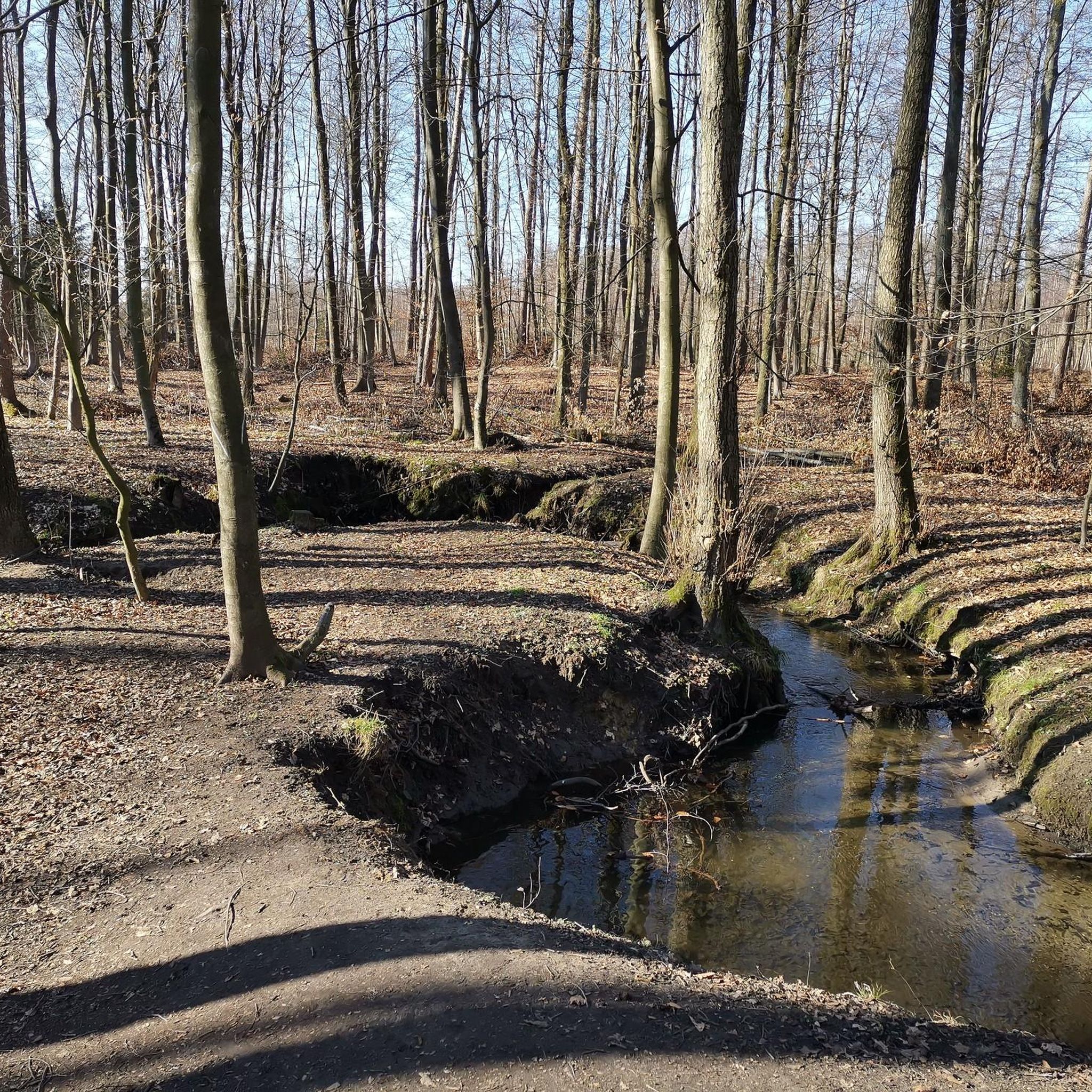
Jogging in Lsg-Ratinger Stadtwald Süd-West offers a diverse natural landscape with an extensive network of trails. The region is characterized by expansive mixed deciduous forests, featuring oaks, beeches, and maples, providing natural shade. The Dickelsbach river meanders through the area, creating picturesque stream valleys and near-natural riverbeds. Varied terrain includes woodlands, loess terraces, wetlands, and open meadows, suitable for different running preferences.
Best jogging routes in Lsg-Ratinger Stadtwald Süd-West
- The most popular jogging route is Stinkesberg Rock Carvings – Stinkesberg…
Last updated: May 25, 2026
3.5
(2)
47
runners
Moderate run. Good fitness required. Mostly paved surfaces. Suitable for all skill levels.
5.0
(1)
47
runners
5.12km
00:33
40m
40m
Moderate run. Good fitness required. Mostly paved surfaces. Suitable for all skill levels.

Sign up for free
3.0
(2)
38
runners
10.9km
01:09
60m
60m
Moderate run. Good fitness required. Mostly paved surfaces. Suitable for all skill levels.
4.1
(7)
32
runners
7.95km
00:51
80m
80m
Moderate run. Good fitness required. Mostly paved surfaces. Suitable for all skill levels.
29
runners
6.06km
00:39
40m
40m
Moderate run. Good fitness required. Mostly paved surfaces. Suitable for all skill levels.
Get access to more routes and recommendations from other explorers.
Sign up for free
Already have an account?
Our route recommendations are based on thousands of hikes, rides, and runs completed by other people on komoot.
Start today with a free account
Your next adventure awaits.
Login or Signup
Popular around Lsg-Ratinger Stadtwald Süd-West
Tips from the Community


In the course of the Reformation, Protestant Christians in Linnep gathered in the castle, the residence of their patron, until 1684. From 1684 onwards, the first services could be held in their own church on a property near the castle, which the then lord of the castle, Freiherr Vincent Schott von Isselstein, donated to the community. Frequent changes of ownership occurred from 1731 onwards. In 1855, the castle was bought by Ferdinand Reichsgraf von Spee, younger brother of the Count of Schloss Heltorf, and the associated forest area was expanded to over 300 hectares. Until the 1990s, the archive of the Mettmann district was located in the newest castle wing. The castle was the private residence of the farmer and long-time local CDU politician Clemens Graf von Spee (1929–2011) and his family. In 2008, Isabella and Wilderich Freiherr von Ketteler took over Schloss Linnep. Since 2010, it has been possible to get married there civilly. See: https://de.wikipedia.org/wiki/Schloss_Linnep
1
0
Southwest of the castle stands the simple hall church of Linnep Forest Church, consecrated in 1684 and one of the oldest Reformed churches in the Rhineland. Next to it is the half-timbered building of the former castle mill, built on the Hummelsbach stream, which served as an inn for many years and is now part of the riding stables behind it. Linnep House (or Lennep) was the core of the Linnep estate until 1802. The knights and lords of Linnep (Linepe, Lynepe) owned the castle until 1461. A bastard line developed into the still-flourishing Dutch noble family Van Lennep. Through the marriage on September 29, 1461, of Eva (born around 1420; died 1483), heiress of Dietrich von Linnep and Elisabeth von Sayn, to Friedrich von Neuenahr-Alpen, the estate passed to the Counts of Limburg. From 1582 onwards, the baronial family von Isselstein from the House of Egmond, who belonged to the Reformed confession, lived in Linnep House, initially as a pledge, then from 1643 hereditarily through purchase.
1
0
Linnep Castle, or more commonly called Linnep House, is a moated castle located south-southeast of the Breitscheid district of Ratingen in the Mettmann district of North Rhine-Westphalia. The knight's seat is first mentioned around 1090–1120 in a document from Kaiserswerth Abbey as "linepo," and again in 1093 in a document from Werden Abbey, referring to Wernherus de linepe. The construction of the older parts of the castle dates back to the 12th century. In 1769, a new building was erected on the site of the old castle, incorporating the round tower, likely 1000 years old, with its pointed roof, and the curtain wall from the original structure. Further additions were made after 1855. The very compact complex is surrounded by a large moat through which the small Hummelsbach stream flows. Access to the castle today is via a sweeping staircase over the moat. The courtyard in front is fortified as an outer bailey and consists of a gatehouse with outbuildings.
1
0
In the course of the Reformation, Protestant Christians in Linnep gathered in the castle, the residence of their patron, until 1684. From 1684 onwards, the first church services could be held in their own church on a property near the castle, which the then lord of the castle, Freiherr Vincent Schott von Isselstein, donated to the community. Frequent changes of ownership occurred from 1731 onwards. In 1855, the castle was bought by Ferdinand Reichsgraf von Spee, younger brother of the Count at Schloss Heltorf, and the associated forest area was enlarged to over 300 hectares. Until the 1990s, the archive of the Mettmann district was located in the newest castle wing. The castle was the private residence of the farmer and long-time local CDU politician Clemens Graf von Spee (1929–2011) and his family. In 2008, Isabella and Wilderich Freiherr von Ketteler took over Schloss Linnep. Since 2010, it has been possible to get married there civilly. See: https://de.wikipedia.org/wiki/Schloss_Linnep
2
0
Southwest of the castle stands the simple hall church of Linnep Forest Church, consecrated in 1684 and one of the oldest Reformed churches in the Rhineland. Next to it is the half-timbered building of the former castle mill, built on the Hummelsbach stream, which served as an inn for many years and is now part of the riding stables behind it. Linnep House (or Lennep) was the core of the Linnep estate until 1802. The knights and lords of Linnep (Linepe, Lynepe) owned the castle until 1461. A bastard line developed into the still-flourishing Dutch noble family Van Lennep. Through the marriage on September 29, 1461, of Eva (born around 1420; died 1483), heiress of Dietrich von Linnep and Elisabeth von Sayn, to Friedrich von Neuenahr-Alpen, the estate passed to the Counts of Limburg. From 1582 onwards, the baronial family von Isselstein from the House of Egmond, who belonged to the Reformed confession, lived in Linnep House, initially as a pledge, then from 1643 hereditarily through purchase.
2
0
Linnep Castle, or more commonly called Linnep House, is a moated castle located south-southeast of the Breitscheid district of Ratingen in the Mettmann district of North Rhine-Westphalia. The knight's seat is first mentioned around 1090–1120 in a document from Kaiserswerth Abbey as "linepo," and again in 1093 in a document from Werden Abbey, referring to Wernherus de linepe. The construction of the older parts of the castle dates back to the 12th century. In 1769, a new building was erected on the site of the old castle, incorporating the round tower, likely 1000 years old, with its pointed roof, and the curtain wall from the original structure. Further additions were made after 1855. The very compact complex is surrounded by a large moat through which the small Hummelsbach stream flows. Access to the castle today is via a sweeping staircase over the moat. The courtyard in front is fortified as an outer bailey and consists of a gatehouse with outbuildings.
2
0

Beautiful signal box at Poensgenpark.
0
0
Frequently Asked Questions
How many running routes are available in Lsg-Ratinger Stadtwald Süd-West?
Lsg-Ratinger Stadtwald Süd-West offers a comprehensive network of over 20 running routes. These trails cater to various fitness levels, including easy, moderate, and difficult options, ensuring there's a suitable path for every runner.
What kind of terrain can I expect when running in Lsg-Ratinger Stadtwald Süd-West?
You can expect a diverse natural landscape primarily characterized by expansive mixed deciduous forests with oaks, beeches, and maples, providing natural shade. The terrain also features picturesque stream valleys along the Dickelsbach river, unique loess terraces, wetlands, and open meadows, offering a varied and engaging running experience.
Are there any easy running routes suitable for beginners or a relaxed jog?
Yes, Lsg-Ratinger Stadtwald Süd-West includes easy running routes perfect for beginners or those seeking a more relaxed pace. For example, the Poensgen Park – Haus zum Haus moated castle loop from Ratingen is a moderate 3.2-mile (5.1 km) path that offers a pleasant mix of parkland and historical sights, suitable for a comfortable run.
Can I find challenging running trails in Lsg-Ratinger Stadtwald Süd-West?
Absolutely. The region offers a few more challenging routes for experienced runners. The Stinkesberg Rock Carvings – Stinkesberg loop from Ratingen, for instance, is a 7.0-mile (11.3 km) trail that traverses dense forest and presents a moderate challenge, including some elevation changes.
Are there any specific natural features or landmarks to look out for while jogging?
Yes, the area is rich in natural beauty and interesting spots. You can enjoy the scenic Dickelsbach Stream, cross charming Wooden Bridges Over the Dickelsbach, and explore the unique Stinkesberg. Other notable features include Carved Quartzite Boulders at Stinkesberg and the tranquil Poensgen Park.
Are the running routes in Lsg-Ratinger Stadtwald Süd-West suitable for families with children?
Many of the trails in Lsg-Ratinger Stadtwald Süd-West are suitable for families, especially the easier and moderate routes that wind through the shaded forests and along the Dickelsbach. The varied terrain and natural features provide an engaging environment for children to explore while parents enjoy a run or walk.
Is Lsg-Ratinger Stadtwald Süd-West dog-friendly for runners?
Yes, Lsg-Ratinger Stadtwald Süd-West is generally dog-friendly. The extensive network of trails through mixed deciduous forests and along the Dickelsbach river provides ample space for you and your canine companion to enjoy a run. Please ensure your dog is kept on a leash and that you clean up after them to maintain the natural environment for everyone.
What do other runners say about the trails in Lsg-Ratinger Stadtwald Süd-West?
The running routes in Lsg-Ratinger Stadtwald Süd-West are highly rated by the komoot community, with an average score of 3.9 stars from over 18 reviews. Runners often praise the diverse natural landscapes, the well-maintained trails, and the peaceful atmosphere provided by the mixed deciduous forests and the scenic Dickelsbach river.
Are there circular running routes available in the area?
Yes, many of the running routes in Lsg-Ratinger Stadtwald Süd-West are designed as circular paths, allowing you to start and finish at the same point. Examples include the Stinkesberg – Oberbusch Forest loop from Ratingen, which is a 7.9 km route, and the Haus zum Haus moated castle – Poensgen Park loop from Ratingen, covering 6.1 km.
How long are the typical running routes in this area?
The running routes in Lsg-Ratinger Stadtwald Süd-West vary in length. You can find shorter paths around 5 kilometers, such as the Poensgen Park – Haus zum Haus moated castle loop from Ratingen (5.1 km), as well as longer trails extending up to 11 kilometers, like the Haus Linnep – Schloss Linnep Scenic Road loop from Ratinger Waldsee (10.9 km). This variety allows you to choose a route that fits your desired distance and duration.
Where can I park when visiting Lsg-Ratinger Stadtwald Süd-West for a run?
While specific parking locations are not detailed in the route information, recreational areas like Lsg-Ratinger Stadtwald Süd-West typically offer designated parking areas at key access points or trailheads. It's advisable to check local maps or komoot route details for parking suggestions near your chosen starting point.
Is Lsg-Ratinger Stadtwald Süd-West accessible by public transport?
The region is generally well-connected, and local public transport options in Ratingen can provide access to various entry points of the Stadtwald. For detailed information on bus or train connections to specific trailheads, it is recommended to consult local public transport schedules.
What is the best time of year to go running in Lsg-Ratinger Stadtwald Süd-West?
Lsg-Ratinger Stadtwald Süd-West offers a pleasant running experience year-round. Spring and autumn are particularly beautiful with vibrant foliage and comfortable temperatures. The mixed deciduous forests provide natural shade, making summer runs enjoyable, while winter offers a serene, crisp atmosphere, though some paths might be muddy or icy depending on conditions.
Most popular routes in Lsg-Ratinger Stadtwald Süd-West
Most popular attractions in Lsg-Ratinger Stadtwald Süd-West

Get inspired with the komoot mobile app


Explore more
Browse the best Running Trails & Routes in other regions.
