The best road cycling routes in Crassensee
4.6
(141)
2,139
riders
114
rides
Road cycling in Crassensee offers a diverse landscape for cyclists, characterized by a mix of open countryside, gentle hills, and routes alongside water features. The region, situated around Wittenberg, provides varied terrain suitable for different skill levels. Cyclists can expect routes that traverse agricultural areas, pass through small villages, and explore the edges of a natural park. The elevation changes are generally moderate, with some longer, flatter sections and occasional gentle climbs.
Best road cycling routes in Crassensee
- The most…
Last updated: May 30, 2026
11
riders
Moderate road ride. Good fitness required. Some segments of this route may be unpaved and difficult to ride.
5.0
(4)
113
riders
47.7km
02:09
100m
100m
Moderate road ride. Good fitness required. Some segments of this route may be unpaved and difficult to ride.

Sign up for free
7
riders
Moderate road ride. Great for any fitness level. Some segments of this route may be unpaved and difficult to ride.
5.0
(2)
7
riders
Moderate road ride. Great for any fitness level. Some segments of this route may be unpaved and difficult to ride.
48
riders
Moderate road ride. Good fitness required. Mostly well-paved surfaces and easy to ride.
Get access to more routes and recommendations from other explorers.
Sign up for free
Already have an account?
Our route recommendations are based on thousands of hikes, rides, and runs completed by other people on komoot.
Start today with a free account
Your next adventure awaits.
Login or Signup
Tips from the Community

Wonderful garden realm, always worth a stop.
0
0

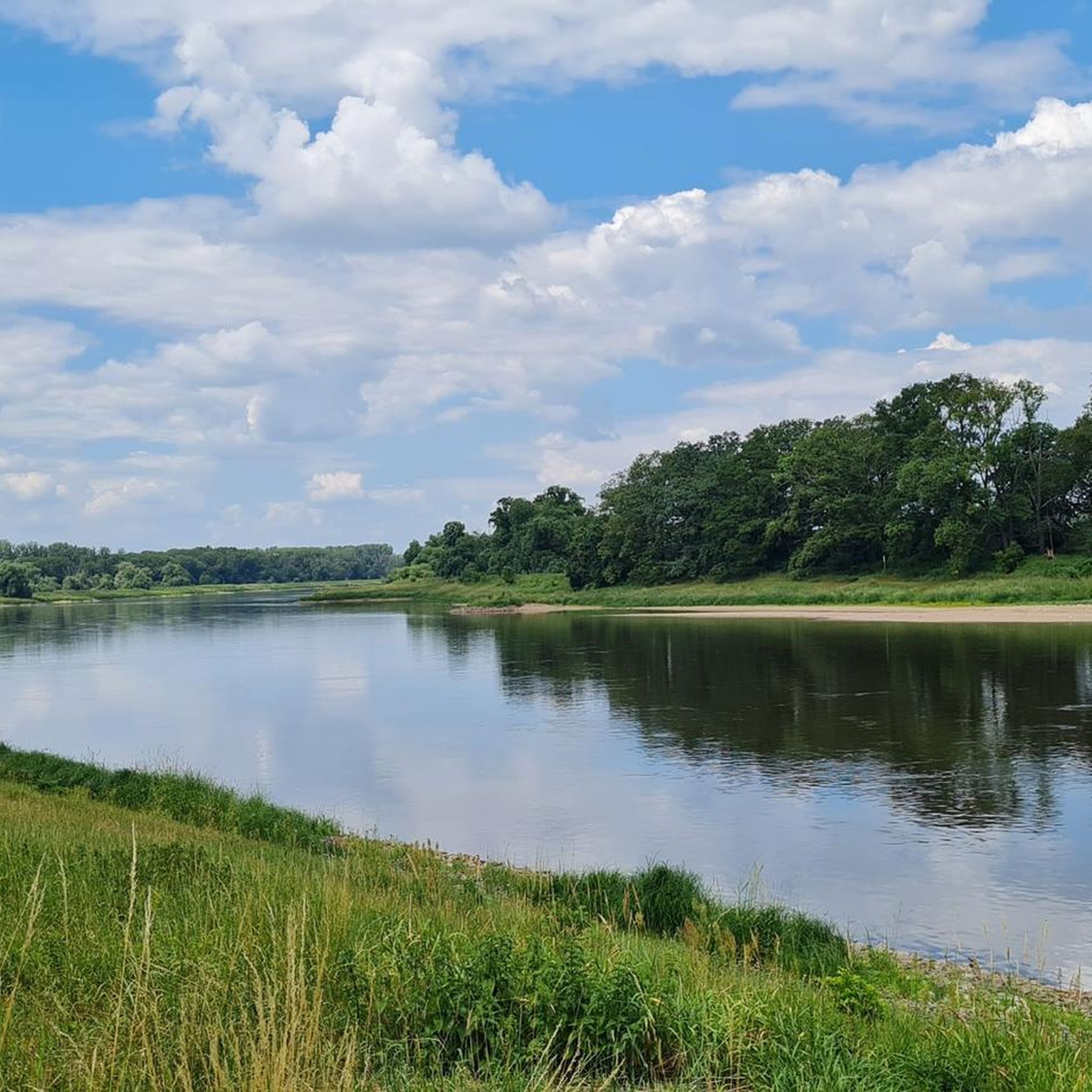
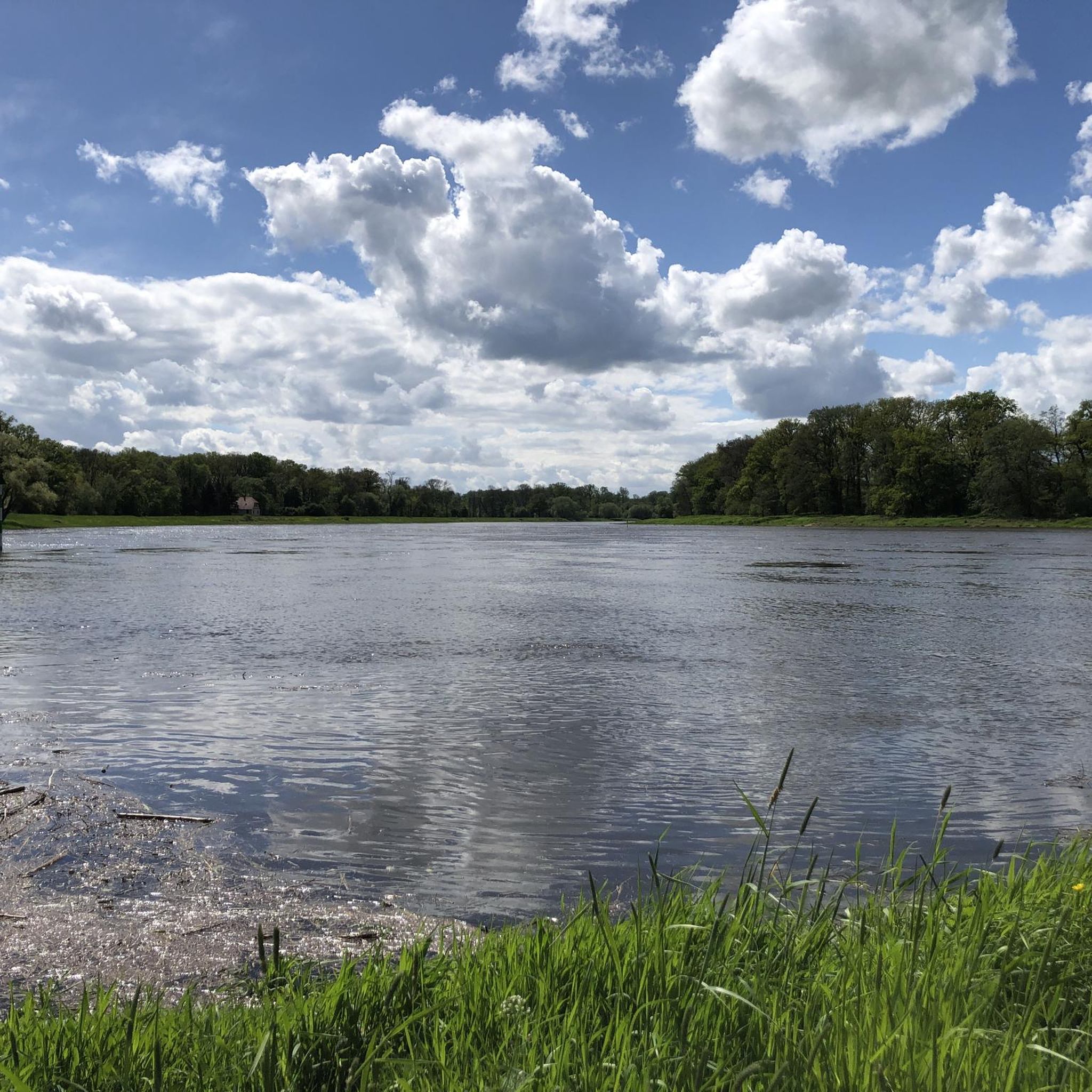
Great view from the bridge of the Mulde weir
1
0
The Mulde River flows entirely within the North German Plain, initially through the Saxon Hills and past Grimma, Nerchau, and Trebsen. Near Wurzen, along whose western edge it runs, the Mulde reaches the Elbe-Mulde Lowland. It then flows through Eilenburg and Bad Düben and shortly thereafter leaves Saxony. The Mulde completes the remaining course of its journey to its confluence with the Elbe in Saxony-Anhalt. Until 1975, the Mulde flowed west of the towns of Pouch and Friedersdorf in the area of what is now Lake Goitzsche. Since then, it has been dammed east of these towns to form the Mulde Reservoir – a former open-cast mine. The Mulde then flows past Muldenstein, Jeßnitz, Raguhn, and Dessau, emptying into the Elbe between Dessau and Roßlau after a course of 147 km.[2] [2] The "Wild Mulde" revitalization project for the lower reaches of the Mulde River in Dessau was recognized as an official project of the UN Decade on Biodiversity in November 2018.[11][12] Source: https://de.wikipedia.org/wiki/Mulde_(Fluss)
4
0
Although the confluence of the two source streams occurs at approximately half the total length of the Mulde River, the Freiberger Mulde and the Zwickauer Mulde already contribute over 80% of its total water volume. This is due, firstly, to the shape of the catchment area, which is very wide in the Ore Mountains and narrows towards the Elbe River, and secondly, to the higher precipitation and correspondingly higher runoff volumes in the mountains. The shape of the catchment areas also means that the longer Zwickauer Mulde is the smaller of the two source streams at the confluence. The Zschopau is the dominant hydrological branch of the Freiberger Mulde river system. In its upper catchment area, the Flöha, a named tributary, contributes the largest volume of water and is thus the actual source stream of the Mulde. The Mulde is approximately 267 kilometers long via this main route and over 314 kilometers via its longest route (the Zwickauer Mulde).[3] [3] The Mulde's catchment area has a total gradient of 600 to 900 meters for many of its major channels, resulting in exceptionally high flow velocities for northern Germany. The Mulde is sometimes even described as the fastest-flowing river in Central Europe.[10] Source: https://de.wikipedia.org/wiki/Mulde_(Fluss)
4
0
The Mulde, also known as the United Mulde or Vereinte Mulde, is a left, non-navigable tributary of the Elbe. It originates southeast of Leipzig near Sermuth (Saxony) from the confluence of two large headstreams: the longer Zwickauer Mulde and the Freiberger Mulde, which drains a larger catchment area due to its greater discharge. The river's catchment area encompasses large parts of Saxony and, in particular, the vast majority of the northern slopes of the Ore Mountains. With a discharge of approximately 73 m³/s at its mouth,[8] it is the fourth largest tributary of the Elbe. The old name for the Mulde, Milda, is translated by onomasticians as "the water-rich one."[9] The word element "Mel," referring to grinding, is sometimes associated with the name due to the numerous mills that once operated along the river. This overlooks the fact that river names represent the oldest, often Slavic or Celtic, layer of geographical names. The Mulde's name is sometimes linked to the numerous mills that once operated along its banks, but this connection overlooks the fact that river names represent the oldest, often Slavic or Celtic, layer of geographical names. Source https://de.wikipedia.org/wiki/Mulde_(Fluss)
4
0

If the Elbe River is carrying enough water and the ferry is running, everything's fine. Ferry cancellations on cycling trips can result in several kilometers of detour.
0
0

I can only recommend Wörlitz Park with reservations...Why? I either ride my bike or go for a walk. The latter is only possible in the park (bicycles are prohibited).
0
0
Frequently Asked Questions
What kind of terrain can I expect when road cycling in Crassensee?
Crassensee offers a diverse landscape for road cyclists, characterized by a mix of open countryside, gentle hills, and routes alongside water features. You can expect varied terrain that traverses agricultural areas, passes through small villages, and explores the edges of a natural park. The elevation changes are generally moderate, with some longer, flatter sections and occasional gentle climbs.
How many road cycling routes are available in Crassensee?
There are over 100 road cycling routes in Crassensee, with a total of 118 tours available on komoot. This includes options for various skill levels, from easy to moderate.
Are there road cycling routes suitable for beginners in Crassensee?
Yes, Crassensee has several routes perfect for beginners. There are 15 easy road cycling routes, such as the Blumenwinkel loop from Seegrehna, which is 19.3 miles (31.1 km) long and takes about 1 hour 17 minutes.
What about more challenging road cycling routes in Crassensee?
For those seeking a greater challenge, Crassensee offers 102 moderate routes and 1 difficult route. A good example of a moderate route is the Vockerode Northern Bypass – View of the Mulde Weir loop from Rehsen, which covers 42.5 miles (68.4 km) with moderate elevation changes.
Are there any circular road cycling routes in Crassensee?
Yes, many of the road cycling routes in Crassensee are designed as loops, allowing you to start and finish in the same location. For instance, the popular Lake in Wörlitzer Park – Limes Tower Himmelsturm loop from Seegrehna is a moderate 29.6 miles (47.7 km) path that winds through scenic parkland.
What do other road cyclists enjoy most about road cycling in Crassensee?
The komoot community highly rates road cycling in Crassensee, with an average score of 4.6 stars from over 130 reviews. Cyclists often praise the diverse landscape, which includes open countryside, routes along water features, and scenic parkland, offering varied terrain for different ability levels.
Are there any notable landmarks or points of interest along the road cycling routes?
While specific attractions are not detailed in the route data, the region around Wittenberg offers routes that pass through small villages and explore the edges of a natural park. The Lake in Wörlitzer Park – Limes Tower Himmelsturm loop from Seegrehna, for example, winds through scenic parkland and past historical landmarks, suggesting opportunities to see interesting sights.
How long do road cycling routes in Crassensee typically take to complete?
Route durations vary depending on length and difficulty. For example, the Blumenwinkel loop from Seegrehna, an easy 19.3 miles (31.1 km) route, typically takes about 1 hour 17 minutes. Longer, moderate routes like the Village Church Klein Marzehns – Village Church of Weddin loop from Coswig (Anhalt), at 68.3 miles (110 km), can take around 2 hours 45 minutes.
Are there family-friendly road cycling options in Crassensee?
Yes, with 15 easy routes available, Crassensee offers several options suitable for families. These routes typically feature gentler terrain and shorter distances, making them enjoyable for cyclists of all ages. The Blumenwinkel loop from Seegrehna is a good example of an easy route that families might enjoy.
What is the best time of year for road biking in Crassensee?
While specific seasonal details for Crassensee are not available, road cycling is generally best enjoyed in spring, summer, and early autumn when the weather is mild and conditions are favorable. These seasons typically offer pleasant temperatures and less precipitation, making for more comfortable rides through the open countryside and along water features.
Are there any routes that offer views of water features in Crassensee?
Yes, many road cycling routes in Crassensee are characterized by their proximity to water features. The Vockerode Northern Bypass – View of the Mulde Weir loop from Rehsen, for instance, offers scenic views of the Mulde Weir and open landscapes, highlighting the region's connection to its waterways.
Most popular routes in Crassensee

Get inspired with the komoot mobile app


Explore more
Browse the best Road cycling routes in other regions.
