The best mountain hikes in Fichtelberg
4.3
(3)
24
hikers
9
hikes
Mountaineering in Fichtelberg offers diverse terrain within the Fichtelgebirge mountain range, characterized by dense forests, granite formations, and expansive plateaus. The region features prominent peaks like Schneeberg (1,051 meters) and Ochsenkopf (1,024 meters), providing varied elevation challenges. Mountaineering routes often traverse these natural features, including romantic rock formations and valleys. The landscape is shaped by ancient granite, offering a unique environment for outdoor activities.
Best mountaineering routes in Fichtelberg
- The most popular mountaineering route is Fichtelberg Nature Reserve – Fichtelberg Mountain Lodge loop from Oberwiesenthal, a 6.8 miles (10.9 km) trail that takes 4 hours 1 minute to complete. This moderate route offers scenic views around the Fichtelberg Nature Reserve.
- Another top favourite among local mountaineers is Klinovec Summit Buildings – Old luge track on Fichtelberg loop from LSG Fichtelberg, a difficult 10.6 miles (17.1 km) path. This route includes significant elevation gain and traverses varied terrain between prominent summits.
- Local mountaineers also love the Fichtelberg – Klinovec Summit Buildings loop from Loučná pod Klínovcem, a 9.0 miles (14.4 km) trail leading through forested slopes and open areas, often completed in about 4 hours 38 minutes.
- Mountaineering in Fichtelberg is defined by dense forests, granite rock formations, and significant peaks. The network offers options for various ability levels, from moderate ascents to more challenging climbs.
- The routes in Fichtelberg are highly rated by the komoot community with an average score of 4.0 stars from a few reviews. More than 20 mountaineers have used komoot to explore Fichtelberg's varied terrain.
Last updated: July 10, 2026
5.0
(1)
9
hikers
10.1km
03:48
630m
630m
Moderate mountaineering route. Good fitness required. Mostly accessible paths. Sure-footedness required.
2
hikers
Hard mountaineering route. Very good fitness required. Mostly accessible paths. Sure-footedness required.

Sign up for free
Moderate mountaineering route. Good fitness required. Mostly accessible paths. Sure-footedness required.
11.2km
03:28
410m
410m
Moderate mountaineering route. Good fitness required. Easily-accessible paths. Suitable for all skill levels.
5.0
(1)
1
hikers
15.2km
04:32
460m
460m
Moderate mountaineering route. Good fitness required. Easily-accessible paths. Suitable for all skill levels.
Get access to more routes and recommendations from other explorers.
Sign up for free
Already have an account?
Our route recommendations are based on thousands of hikes, rides, and runs completed by other people on komoot.
Start today with a free account
Your next adventure awaits.
Login or Signup
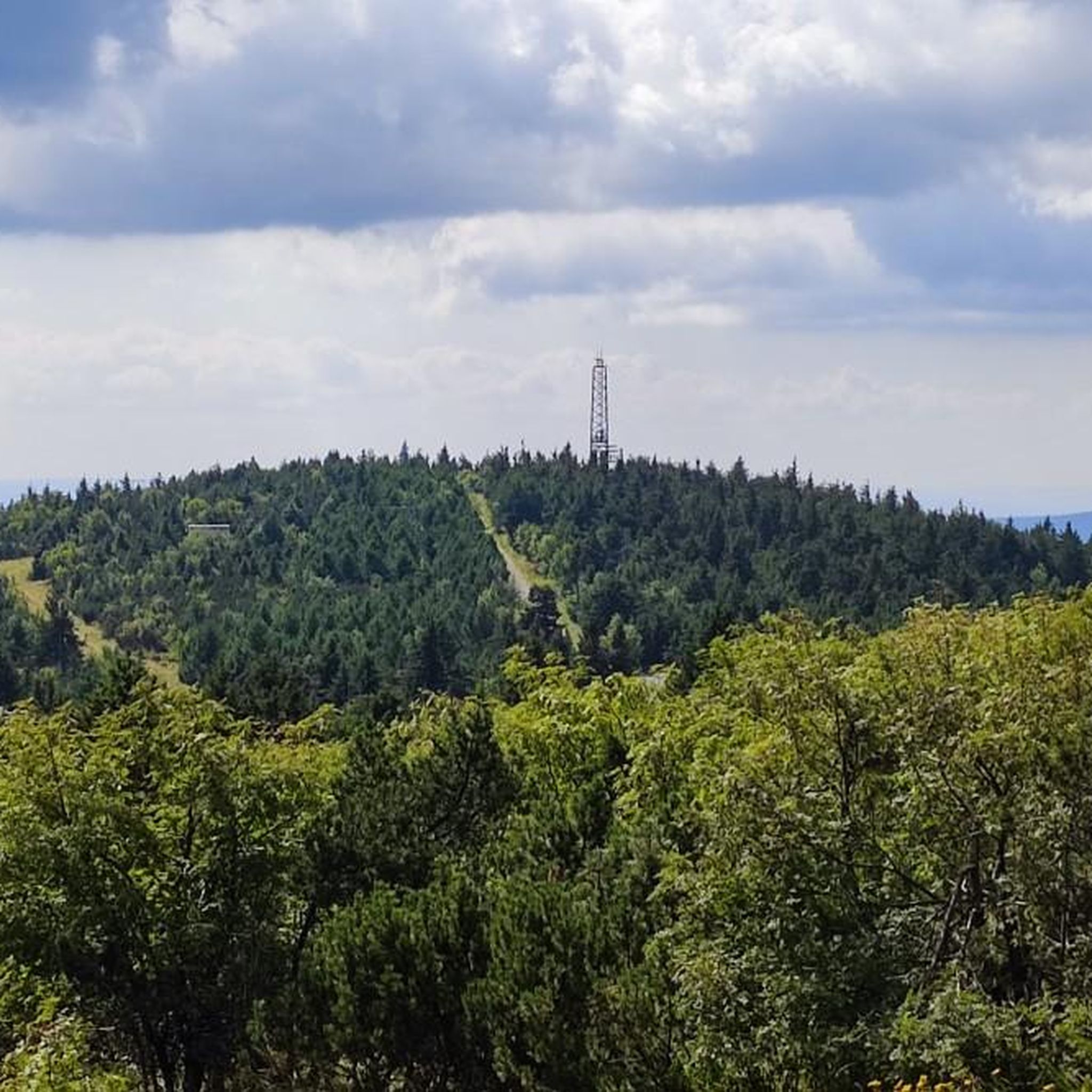
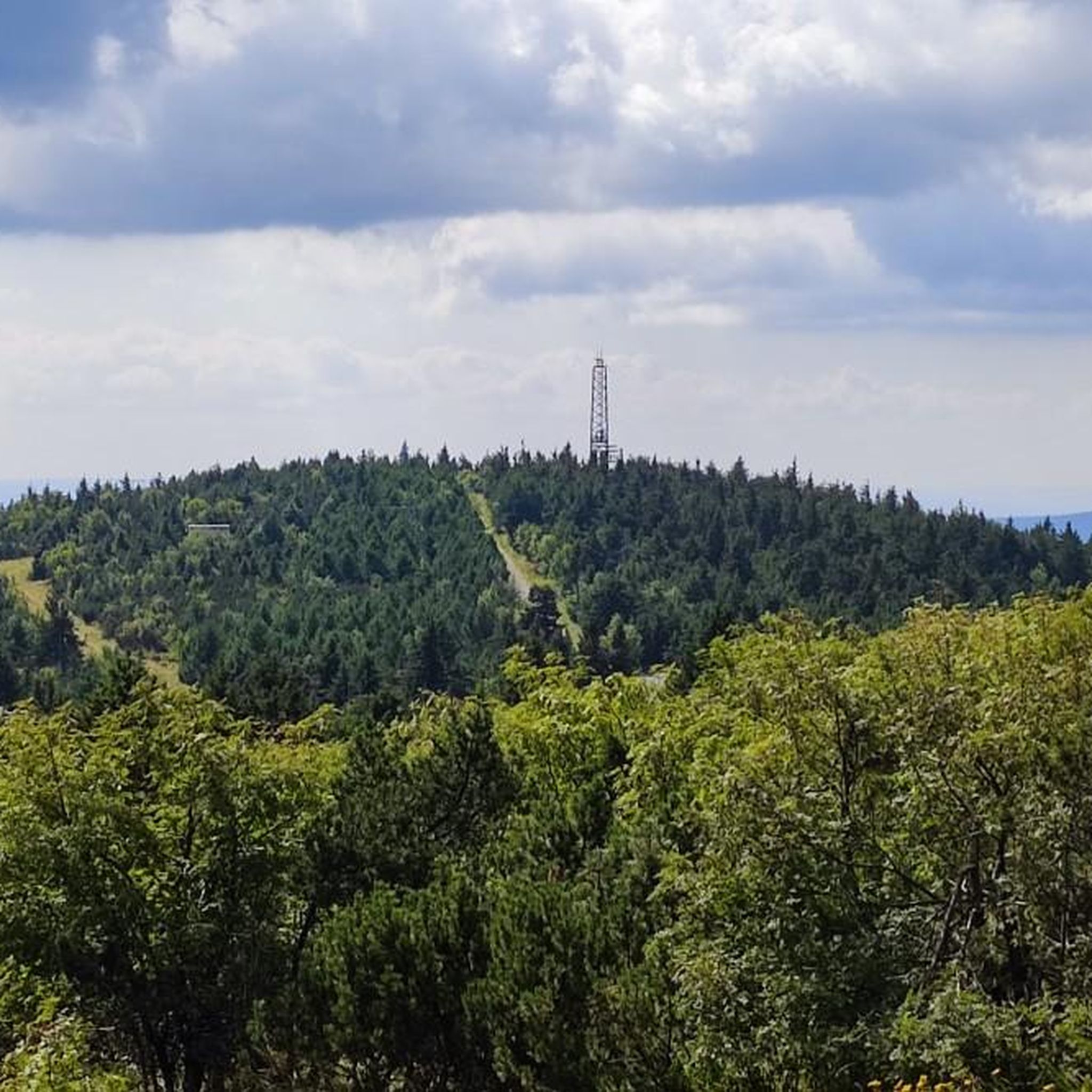
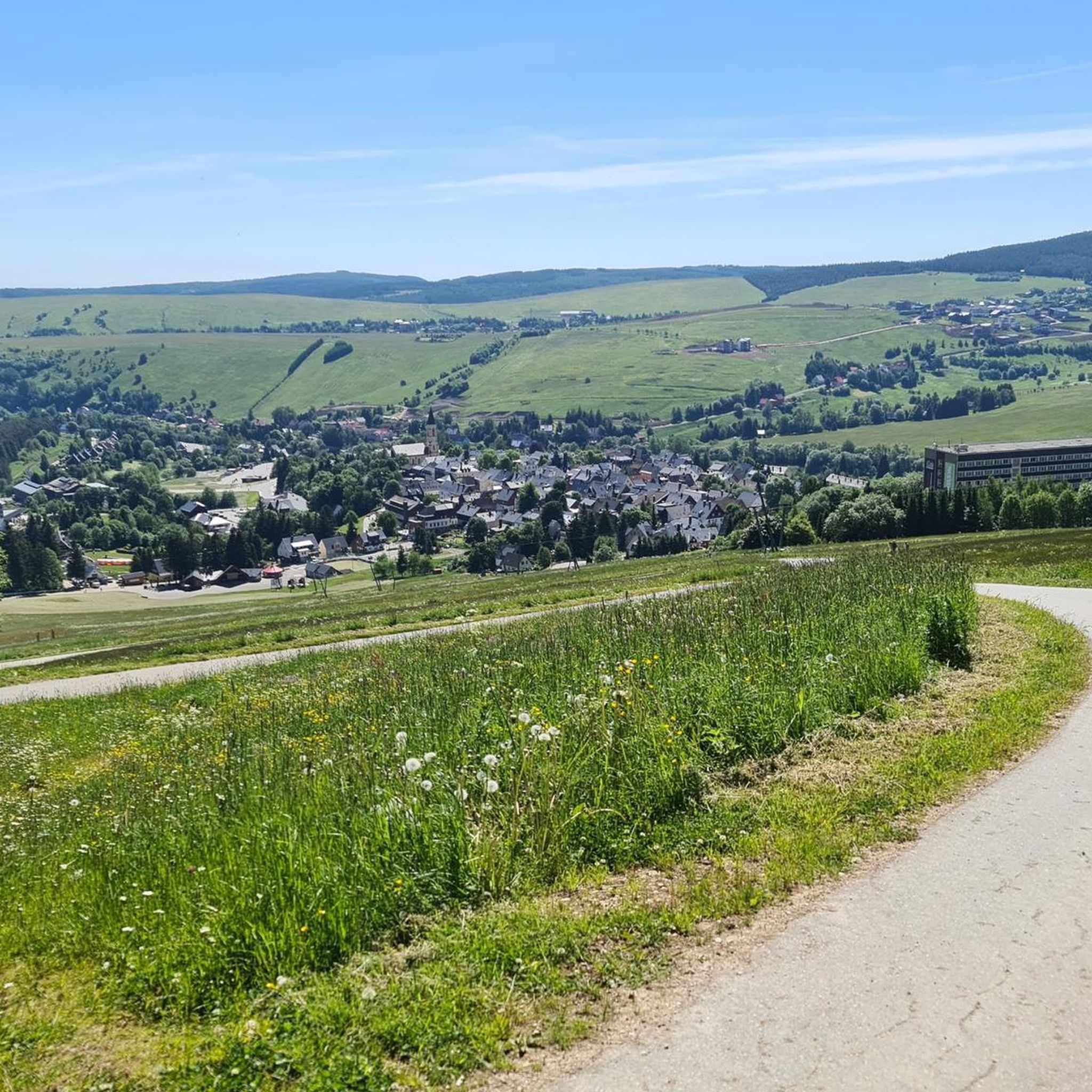



Tips from the Community

A beautiful region in summer as well as in winter, whether on foot, by bike or by ski.
0
0

The absolute motivation jackpot for kids tired of running! 🎅 The Christkindweg in Boží Dar is a real hit for families. Our most important parent hack: Before you start, be sure to get the small notebook at the info center for 50 CZK (approx. 2 Euros). The kids can solve tasks at the numerous great game and puzzle stations and even get a small reward at the info center at the end! The route is lined with beautiful wooden figures, shelters, and playgrounds – boredom stands no chance here. A particularly lovely detail: the distances are often indicated along the way in "Kroku" (child steps). The short loop (5.6 km) is perfect for families and easily doable with a buggy or balance bike. 🎒🎁 Checked by @wanderfamilie.erzgebirge
0
0

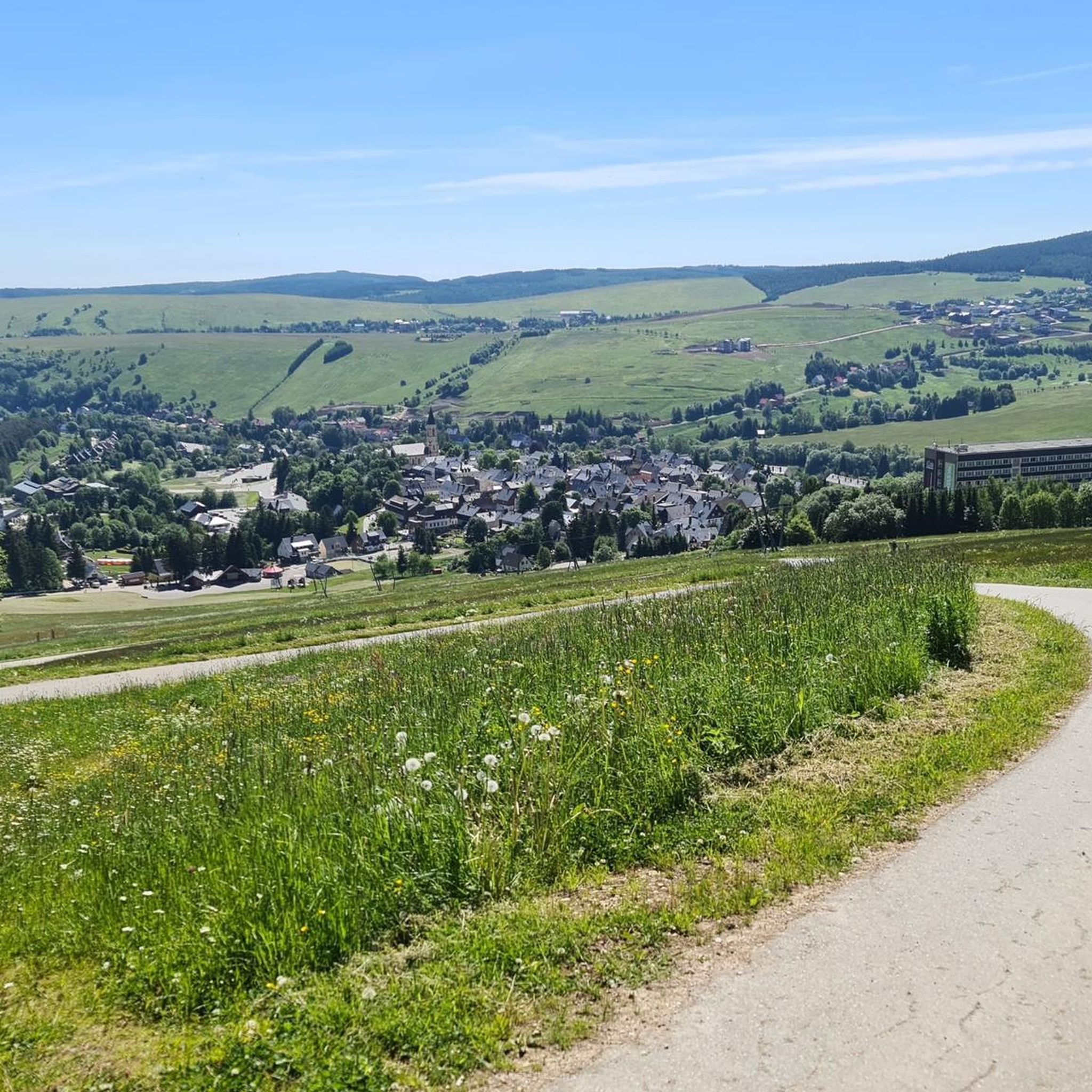
The Fichtelberg near Oberwiesenthal in the Erzgebirge district is, at 1214.79 m above sea level, the highest mountain in Saxony. It was also the highest mountain in East Germany (GDR). Together with the nearby Klínovec (Keilberg; 1243.7 m above sea level) on the Czech side, it forms the most important winter sports center in the Erzgebirge. Source and further information: https://de.m.wikipedia.org/wiki/Fichtelberg_(Erzgebirge)
3
0

The Traktor Oberwiesenthal sports club's luge track has been out of use for 35 years. Founded in 1955, the club was dissolved in 1990, and its successor, the Oberwiesenthaler SV 1990, saw itself as its successor. The naturally iced luge track, constructed from concrete elements and opened in the winter of 1969/1970 for the GDR luge training center, has been deteriorating since 1990 and is overgrown with vegetation. However, you can still walk the entire 1,100-meter-long track with its 18 curves and admire the buildings that enrich this lost place, such as the scoring booths and observation bridge. At the first Olympic luge competitions in Innsbruck in 1964, SC Traktor athletes dominated the field. Ortrun Enderlein and Ilse Geisler won gold and silver medals in the women's race, and Thomas Köhler and Klaus-Michael Bonsack won silver in the men's race.
17
2
The large peace bell on the Fichtelberg had to remain silent for six months in 2024. Stone throwing in May 2022 had so badly damaged the bell that its sound suffered. It was decided to stop ringing it and replace it with a new one. The old bell rang for the last time on Easter Monday 2024. Just in time for the mountain service on German Unity Day on October 3, the new bell was officially rung for the first time in the fall of 2024. The idea of using a peace bell to commemorate the peaceful revolution of 1989 in the GDR and German reunification in 1990 came from watchman Gerd Schlesinger and night watchman Jörg Eller from the Ore Mountains town of Schwarzenberg. The bell was also intended to be heard in neighboring Czechia and thus ring for a united Europe. The cast steel bell, already ninety years old at the time, was rung for the first time in 2010. The new bell was cast in Innsbruck by the Grassmayr company. At 2,700 kilograms, it is about 1,100 kilograms heavier than the old bell.
17
1
Since 1977, a 3.2-kilometer-long nature trail on wooden planks has led through the Božídarské rašeliniště peat bog nature reserve. It features twelve stations with information panels. The 11.61-square-kilometer area has been protected since 1965. It encompasses a series of raised bogs with spruce, pine, Scots pine, dwarf birch, heaths, and meadows. A carnivorous plant characteristic of peat bogs, the round-leaved sundew, also grows here. The largest peat bog in the Ore Mountains lies at an elevation of 940 to 1116 meters; its specific mountain climate creates challenging conditions for animals and plants.
13
2
The third church building in the history of the mining town of Boží Dar (Gottesgab) was built in 1771 in the late Baroque style according to plans by the Prague architect Filip Heger. Previously, a wooden early Renaissance church had stood here since the 1630s, followed by a stone late Renaissance church from 1593 onwards. This church burned down in the mid-18th century and was replaced by the current church building. By the end of the 1960s, the church was in such poor condition that it had to be closed to the public for safety reasons. A fundraising campaign made the necessary repairs and the reopening of St. Anne's Church possible in 2016. Located at an altitude of 1,020 metres above sea level, it is not only the highest church in the Ore Mountains, the third highest church in the Czech Republic, and one of the highest town churches in all of Central Europe.
16
1
The Zelený dům (Green House) Hotel is a late Classicist building dating back to 1917. In that year, the original inn, which had stood on this site since 1542, was again expanded and modernized. A typical element of the then-popular Heimat style was the wooden cladding of the facades. In this house, the wood has always been painted green. This is likely where the hotel gets its name from.
11
0
Frequently Asked Questions
What kind of terrain can I expect on mountaineering routes in Fichtelberg?
Mountaineering in Fichtelberg, part of the Fichtelgebirge mountain range, features diverse terrain. You'll encounter dense forests, distinctive granite rock formations, and expansive plateaus. The routes often traverse romantic rock formations and valleys, offering varied elevation challenges across peaks like Schneeberg and Ochsenkopf.
Are there any easy mountaineering routes suitable for beginners in Fichtelberg?
Yes, Fichtelberg offers routes suitable for various ability levels. While many are moderate, there is at least one easy mountaineering route available. These trails provide a good introduction to the region's landscape without overly strenuous climbs.
What are some notable landmarks or viewpoints to look out for on Fichtelberg's mountaineering trails?
Along the mountaineering routes, you can discover several interesting landmarks and viewpoints. Highlights include the Fichtelberg Peace Bell, the Fichtelberg Triangulation Column, and the View of the Fichtelberg Cable Car. These spots offer unique insights into the area's history and provide scenic vistas.
Are there any circular mountaineering routes in Fichtelberg?
Yes, Fichtelberg offers several circular mountaineering routes. For example, the moderate Fichtelberg Nature Reserve – Fichtelberg Mountain Lodge loop from Oberwiesenthal is a popular choice, taking about 4 hours to complete. Another option is the Fichtelberg – Klinovec Summit Buildings loop from Loučná pod Klínovcem, which is also a moderate circular trail.
What do other mountaineers say about the routes in Fichtelberg?
The mountaineering routes in Fichtelberg are highly regarded by the komoot community, with an average rating of 4.0 stars. Users often praise the diverse terrain, the scenic views, and the well-maintained trails that cater to various skill levels.
Can I reach the Fichtelberg summit without a strenuous climb?
Yes, for those seeking a less strenuous ascent, the Fichtelberg cable car and a four-seater chairlift provide convenient access to the summit. This allows you to enjoy the panoramic views without a long hike.
What kind of wildlife might I encounter in the Fichtelgebirge mountains?
The Fichtelgebirge Nature Park is home to diverse wildlife. Its untouched forests, protected moors, and swamps serve as habitats for endangered species such as the lynx, black woodpecker, and capercaillie. Rivers originating in the mountains also support aquatic wildlife like otters, beavers, and kingfishers.
Are there any challenging mountaineering routes for experienced climbers in Fichtelberg?
Yes, for experienced mountaineers seeking a challenge, there are difficult routes available. An example is the Klinovec Summit Buildings – Old luge track on Fichtelberg loop from LSG Fichtelberg, a 17.1 km path with significant elevation gain that traverses varied terrain between prominent summits.
Where can I find places to rest or get refreshments along the trails?
You'll find several spots to rest and get refreshments. The Fichtelberg Mountain Lodge is a notable hut, and other facilities like Hotel Sachsenbaude and the Fox farm hut are also available in the area.
What are the best seasons for mountaineering in Fichtelberg?
The Fichtelgebirge offers outdoor activities year-round. While summer and autumn provide ideal conditions for hiking and climbing with pleasant temperatures and vibrant foliage, winter transforms the area into a popular destination for snow sports. Always check local weather and trail conditions, especially during shoulder seasons.
Are there opportunities for sports climbing in Fichtelberg?
Beyond hiking, Fichtelberg offers diverse options for sports climbing. The rugged rock formations of the Fichtelgebirge provide a stunning backdrop for both beginners and experienced climbers, with various climbing spots including multi-pitch walls and boulder gardens.
Most popular routes in Fichtelberg
Most popular attractions in Fichtelberg

Get inspired with the komoot mobile app


Explore more
Browse the best Mountain Hikes & Routes in other regions.
