Attractions and Places To See around Langenlonsheim - Top 20
Attractions and places to see around Langenlonsheim are situated in a region characterized by the Rhine Valley, offering diverse landscapes from forests like the Binger Wald to historical sites. The area features prominent viewpoints overlooking the Rheingau and the Nahe estuary. Visitors can explore a mix of natural monuments and man-made structures. This region provides numerous opportunities for outdoor activities and cultural discovery.
Best attractions and places to see around Langenlonsheim
- The most popular attractions is Niederwald monument, a viewpoint that commemorates the unification of Germany in 1871. It offers expansive views of the Rheingau and the Rhine.
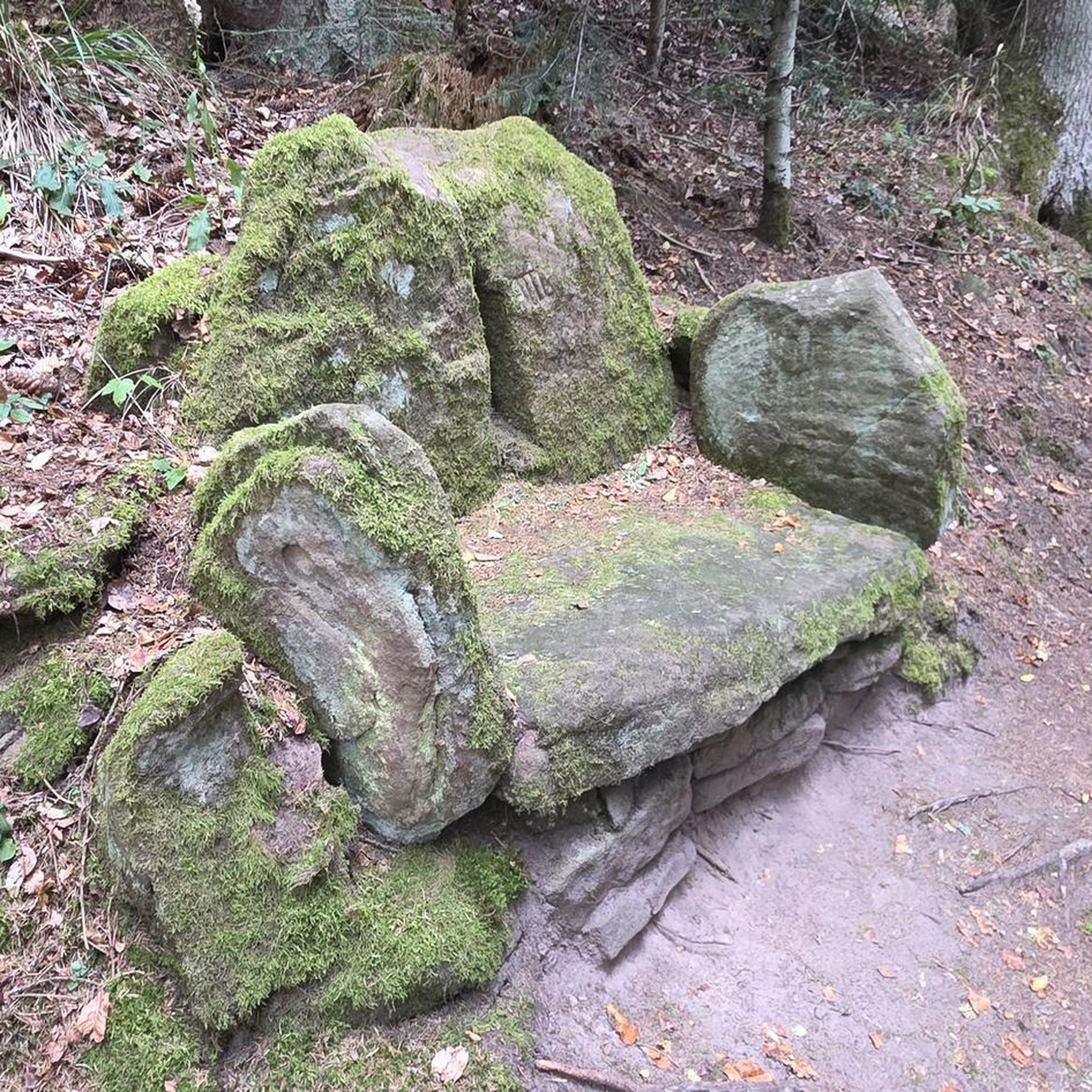
- Another must-see spot is Steckeschlääferklamm — Tree Spirits (Baumgeister) Trail, a gorge known for its numerous carved tree spirits along the Hasselbach creek. This trail is a highlight for families exploring the Binger Wald.
- Visitors also love Kreuzbach Suspension Bridge, a well-maintained bridge spanning a valley. It serves as a notable feature on the RheinBurgenWeg.
- Langenlonsheim is known for its viewpoints, historical sites, and natural trails. The region offers a variety of attractions to see and explore, from monuments to unique natural formations.
- The attractions around Langenlonsheim are appreciated by the komoot community, with more than 5000 upvotes and over 4000 photos shared by visitors.
Last updated: September 26, 2026
Niederwald monument
Highlight • Viewpoint
Translated by Google •
Tip by

Kreuzbach Suspension Bridge
Highlight • Bridge
Translated by Google •
Tip by

Sign up now to discover places like this
Get recommendations on the best single tracks, peaks, & plenty of other exciting outdoor places.
Steckeschlääferklamm — Tree Spirits (Baumgeister) Trail
Highlight (Segment) • Gorge
Translated by Google •
Tip by

View of Burg Reichenstein
Highlight • Castle
Translated by Google •
Tip by

Rossel Ruins
Highlight • Castle
Showing Translation
Tip by

Sign up for free to discover even more attractions around Langenlonsheim.
Already have an account?
Start today with a free account
Your next adventure awaits.
Tips from the Community

The first documented mention of the hilltop castle dates back to 1213, when the Imperial Abbey of Kornelimünster near Aachen appointed Philipp III von Bolanden as "castellanus" and governor. Experts partly doubt or reject the first conquest in 1253. What is certain is the siege, conquest and destruction by King Rudolph of Habsburg in 1282. The castle was banned from being rebuilt. From 1290 onwards, the ruins were owned by the Counts Palatine, who gave them up in favour of the Electorate of Mainz in 1344. A new building was then quickly constructed. A double ring wall enclosed a rectangular residential tower and an inner courtyard of the main castle. A forecourt was located to the north. In 1397, after the Pope had appointed John II of Nassau Archbishop of Mainz, ignoring the election of the Mainz Cathedral Chapter the previous year, Archbishop Gottfried von Leiningen, elected in 1396, barricaded himself in the castle. Only after tough negotiations did he give up the bishop's seat and was instead given the office of provost of Mainz Cathedral. His concession prevented another attack on the castle and possible further destruction. The castle had been left to decay since the 16th century. The remains were blown up in 1689 during the War of the Palatinate Succession. In 1834 Franz Wilhelm von Barfus bought the ruins and converted a tower into his residence. His heirs sold the castle to Baron von Rehfuß in 1877 and he sold it to Consul Chosodowsky in 1889. The castle was given its current appearance by Baron Nikolaus von Kirsch-Puricelli, a wealthy industrialist and owner of the Rheinböllerhütte. From 1899 to 1902, Kirsch-Puricelli had the castle rebuilt into a neo-Gothic residential castle in the Tudor style according to plans by the Regensburg architect Strebel. Additional residential buildings and an observation tower were built on the site of the outer castle. Reichenstein was the last castle in the Upper Middle Rhine Valley to be rebuilt in the spirit of Rhine Romanticism. After the castle was sold by the family in the 1990s, media entrepreneur Lambert Lensing-Wolff, a descendant of the Kirsch-Puricelli family, acquired Reichenstein Castle in 2014 as a weekend residence and also runs a museum and a hotel with a restaurant here.
5
0

Beautiful view from the bike path up to the castle
7
1

Great view of the castle which is still well preserved.
4
0

A very impressive castle complex. Reichenstein Castle, also known as Falkenburg, is a castle in the UNESCO World Heritage Upper Middle Rhine Valley. It stands on a ledge on the eastern slope of the Binger Forest above the Rhineland-Palatinate municipality of Trechtingshausen.
8
0

The artificial castle ruin Rossel was built in 1774 by Count Ostein on the highest elevation of the Niederwald. It is a popular destination, especially because of its magnificent view of the Nahe estuary and the Binger Loch.
14
1

Great castles, ruins and palaces can be discovered everywhere along the cycle path along the Rhine.
8
0

You have a great view from the Rossel :)
10
1

Suspension bridge near the marble run. Be careful and hold on tight when it's wet ...
17
0
Frequently Asked Questions
What kind of natural attractions can I find around Langenlonsheim?
The region offers diverse natural landscapes, including forests like the Binger Wald. You can explore unique natural formations such as the Steckeschlääferklamm — Tree Spirits (Baumgeister) Trail, a gorge known for its carved tree spirits along the Hasselbach creek. There are also numerous viewpoints offering expansive vistas of the Rhine Valley and the Nahe estuary.
Are there historical sites to visit in the Langenlonsheim area?
Yes, the area is rich in historical sites. A prominent example is the Niederwald monument, which commemorates the unification of Germany in 1871. You can also explore historical ruins like the Rossel Ruins, which offer a wonderful view of the Nahe estuary.
What are some family-friendly activities or attractions near Langenlonsheim?
Many attractions are suitable for families. The Steckeschlääferklamm — Tree Spirits (Baumgeister) Trail is a particular highlight for families, with its engaging tree carvings. The Kreuzbach Suspension Bridge is also considered a small highlight for kids and is part of an adventure trail.
Are there good hiking opportunities around Langenlonsheim?
Absolutely. The region provides numerous hiking trails for various skill levels. For easy walks, consider routes like the 'Guldenbach – Rock Hermitage Bretzenheim loop' or the 'Forest Xylophone – Langenlohnsheim Forest loop'. You can find more options and details on the Hiking around Langenlonsheim guide.
What kind of outdoor activities are available besides hiking?
Beyond hiking, you can enjoy running and gravel biking. There are several running trails, including an 'Langenlonsheim Airfield loop' for a moderate run. For gravel biking, explore routes like the 'Rhine-Nahe-Eck – View of the Niederwalddenkmal loop'. More details are available in the Running Trails around Langenlonsheim and Gravel biking around Langenlonsheim guides.
Can I find viewpoints with scenic vistas in the region?
Yes, Langenlonsheim is known for its viewpoints. The Niederwald monument offers fantastic, expansive views of the Rheingau and the Rhine. The Rossel Ruins also provide a beautiful perspective of the Nahe estuary and the Binger Loch.
What do visitors particularly enjoy about the attractions near Langenlonsheim?
Visitors frequently praise the stunning views, especially from the Niederwald monument and Rossel Ruins. The unique experience of the Steckeschlääferklamm — Tree Spirits (Baumgeister) Trail, with its carved figures, is also highly appreciated by families and nature lovers.
What is the best time of year to visit the attractions around Langenlonsheim?
The attractions around Langenlonsheim, with their mix of natural and historical sites, can be enjoyed throughout the year. Spring and autumn offer pleasant temperatures for hiking and exploring the outdoor monuments and trails. Summer is ideal for longer outdoor activities, while winter can provide a unique, serene atmosphere, especially in forested areas.
Are there any notable bridges in the area?
Yes, the Kreuzbach Suspension Bridge is a well-maintained and notable feature. It spans a valley and is part of the RheinBurgenWeg, offering a small highlight for hikers and families.
Are there any challenging routes for experienced hikers or cyclists?
For more experienced adventurers, there are indeed more challenging routes. Hikers can tackle the 'Langenlohnsheim Forest – Sonnenberg Hut, Guldental loop' which is a moderate 16 km trail. For gravel biking, the 'Nahe River at Rheingrafenstein – Bridge Houses in Bad Kreuznach loop' is a difficult 75 km route. You can find these and other challenging options in the respective hiking and gravel biking guides.
What kind of monuments can I explore in the Langenlonsheim area?
The region features significant man-made monuments. The most prominent is the Niederwald monument, a grand structure commemorating German unification. Additionally, historical ruins like the Rossel Ruins and the distant Burg Reichenstein offer glimpses into the area's past.
Most popular routes around Langenlonsheim
Most popular attractions around Langenlonsheim

Get inspired with the komoot mobile app


Explore more
Still not found the Highlight you’re looking for? See guides of the top attractions in other regions:
