Top 20 Castles around Bindlach
Castles around Bindlach are situated within the picturesque Landkreis Bayreuth, an area rich in historical significance and natural beauty. The region offers a diverse landscape, from rolling hills to the edge of the Fichtelgebirge, providing scenic backdrops for its historical sites. Visitors can explore a variety of castles, ranging from medieval ruins to elaborate Rococo palaces, reflecting centuries of regional history. This makes the area around Bindlach a notable destination for those interested in historical architecture and outdoor exploration.
Best…
Last updated: May 25, 2026
🏛️ Hohenberneck castle ruins
Highlight • Castle
Translated by Google •
Tip by

New Palace (Bayreuth Hermitage)
Highlight • Castle
Translated by Google •
Tip by

Sign up now to discover places like this
Get recommendations on the best single tracks, peaks, & plenty of other exciting outdoor places.
Sign up for free
New Palace Bayreuth
Highlight • Castle
🏛️ Schloss Fantaisie
Highlight • Castle
It was built as a further summer residence (after the Hermitage) for the Margrave couple Friedrich and Wilhelmine of Brandenburg-Bayreuth. …
Translated by Google •
Tip by
Altes Schloss Bayreuth with Cour d'Honneur
Highlight • Castle
Translated by Google •
Tip by

Sign up for free to discover even more castles around Bindlach.
Sign up for free
Already have an account?
Start today with a free account
Your next adventure awaits.
Login or Signup

Tips from the Community

An impressive building. Napoleon is said to have cursed it. He apparently saw a ghost in the night.
6
1

"Ce maudit château!" - "This cursed castle!" is what Napoleon Bonaparte is said to have said in horror after he spent the night of May 15-16, 1812 in the New Palace. The ghost of the "White Lady of Himmelkron" had appeared to him there. It is also possible that the castellan had played a joke on the Emperor of the French. Relevant items such as chains, rattles and a white robe were later found in his estate.
19
1
For around six centuries it has been one of the festival city's landmarks: the Old Palace with its courtyard in the historic city center of Bayreuth on Maximilianstrasse. Until the middle of the 18th century it served as the residence of the Margraves of Brandenburg-Bayreuth. Today the building is the seat of the tax office.
14
2

A fire destroyed the residence in January 1753,[1] whereupon on behalf of Frederick III. (Margrave 1735–1763) and his wife Wilhelmine built the New Palace with an attached courtyard garden on Ludwigstrasse.[2] Apparently the Margrave had forgotten to put out a candle when he left a painting cabinet after 8 p.m. The fire spread in no time; Since only primitive syringes were available and the extinguishing water froze quickly, he finally brought in artillery and created a breach between the area of the castle that was on fire and the still intact western part. That night, the older castle area with tower and chapel, which formed a closed square, was destroyed by flames. The former main hall, which had been used for musical theater, opera and ballet since the early 17th century, as well as the ceiling painting there by Johann Oswald Harms, were also lost. The template for this ceiling painting, signed “1684” by Harms, is in the Herzog Anton Ulrich Museum in Braunschweig.[15][16] While Friedrich lost almost all of his personal belongings, Wilhelmine was able to have most of her most valuable furniture, books, sheet music and instruments brought to safety.
6
0
The “Italian Building” was built after 1759 for the Margrave's second wife, Sophie Caroline Marie of Braunschweig-Wolfenbüttel, as a stand-alone building south of the castle and only later structurally connected to the New Palace through a connecting wing. The architect was Rudolf Heinrich Richter, who, unlike Saint-Pierre, allowed the formal splendor of the interior decoration created by Giovanni Battista Pedrozzi to spill over onto the outer walls. The young Carl von Gontard succeeded in uniting the two fundamentally different buildings using a discreetly projecting connecting link with a round balcony.[1] At the beginning of the 1990s, the facades of the Italian building were renovated and its courtyard area was redesigned To the north of the main building, across Glasenappweg, is the former kitchen building, a single, two-story house with a hipped roof. From 1867 to 1908 the secondary school for girls was housed there,[4] later the municipal auxiliary school. When it was founded on October 1, 1920, the municipal commercial school moved into the building that the Bavarian Crown Estate Administration had given it. Although the location was only approved as a temporary arrangement, the business school remained until 1938.[5] Today a shopping arcade leads through the building to Richard-Wagner-Straße. Source: Wikipedia
7
1

A very beautiful old castle.
4
2

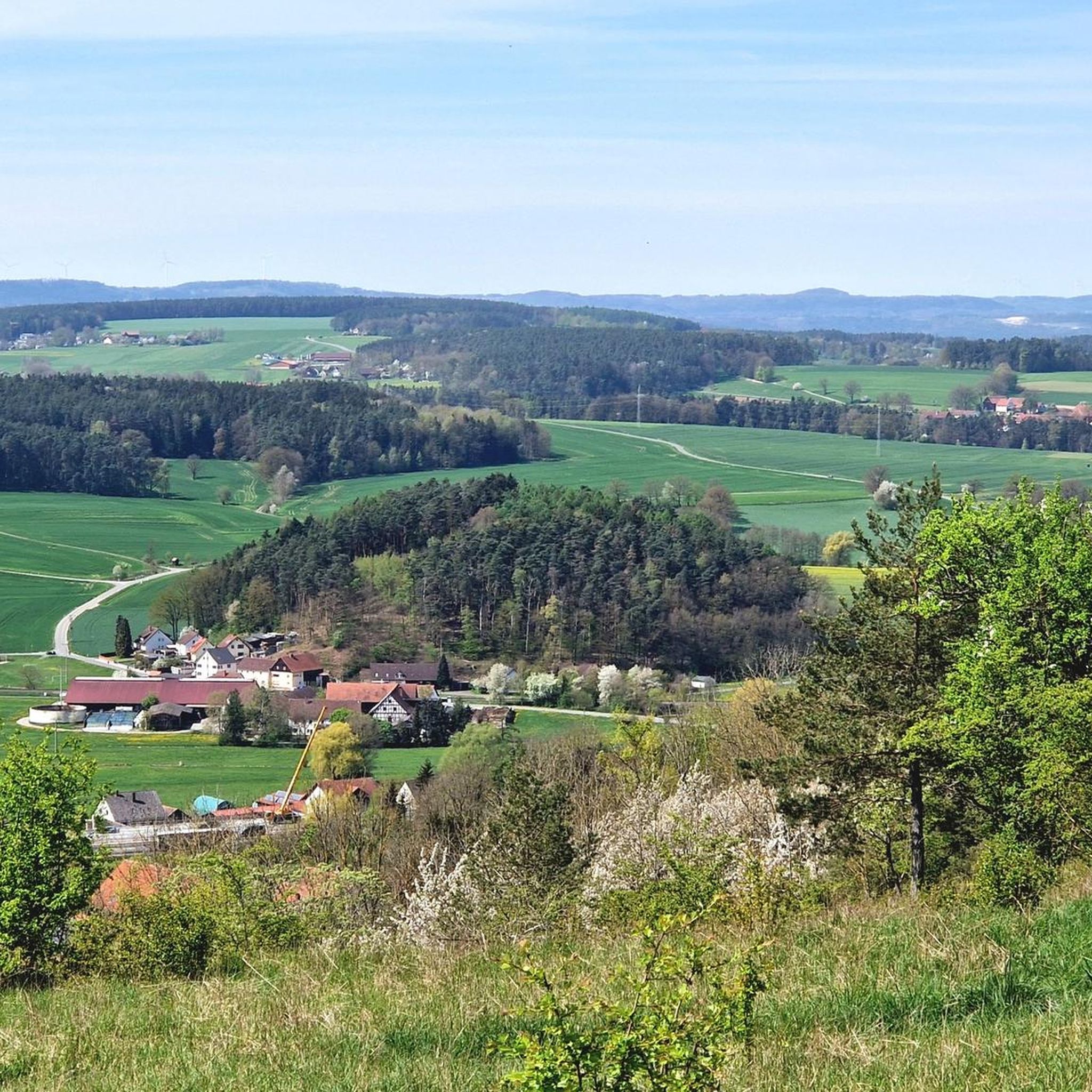
Very nicely prepared castle with a beautiful view of Bad Berneck.
4
0

The new castle with the court garden is one of the castles from the Margrave era in Bayreuth. It is located right in the city center and can be visited.
6
1
Frequently Asked Questions
Which castles near Bindlach offer historical insights and scenic views?
The region around Bindlach features several historically significant sites. The Burgruine Hohenberneck, a medieval castle ruin, stands atop a hill in Bad Berneck im Fichtelgebirge and offers stunning panoramic views. It provides a glimpse into late Gothic architectural design and defensive elements. The Eremitage Bayreuth, with its Neues Schloss and Altes Schloss, showcases Baroque and Rococo design within extensive landscaped parks.
Are there family-friendly castles to visit near Bindlach?
Yes, several castles and their surrounding areas are suitable for families. The Eremitage Bayreuth, including the New Palace and Old Palace, is listed as family-friendly, offering extensive parks, grottoes, and fountains for exploration. Fantaisie Castle also features a beautifully landscaped garden and is considered family-friendly.
What kind of outdoor activities can I do near these castles?
The area around Bindlach and its castles is excellent for outdoor activities. You can find numerous cycling routes, such as those listed in the Cycling around Bindlach guide, or explore gravel biking trails in the Gravel biking around Bindlach guide. For mountain biking enthusiasts, the MTB Trails around Bindlach guide offers various routes, including those near Goldkronach and Ramsenthal.
Are there hiking trails that lead to or are near the castles?
Yes, the Burgruine Hohenberneck is accessible via marked hiking trails, making it an ideal destination for hikers. The uphill hike is considered manageable and offers scenic views. The extensive parks of the Eremitage Bayreuth are also perfect for leisurely strolls and walks.
What is the best time to visit the castles around Bindlach?
The parks and gardens, especially at the Eremitage Bayreuth and Fantaisie Castle, are particularly beautiful between May and October when the flowers are in bloom and the trick fountains are active. This period generally offers pleasant weather for exploring both the historical sites and the surrounding natural landscapes.
Can I bring my dog to the castles or their grounds?
The hike to Burgruine Hohenberneck is dog-friendly, allowing you to enjoy the ruins and views with your canine companion. For other sites like the Eremitage Bayreuth or Fantaisie Castle, it's advisable to check specific dog policies for indoor areas or formal gardens before your visit, as rules can vary.
What makes the Eremitage Bayreuth unique among the castles?
The Eremitage Bayreuth is unique for its extensive complex of well-landscaped parks and gardens, featuring two palaces (Altes Schloss and Neues Schloss), fountains, grottoes, and an open-air Roman theater. The Neues Schloss, in particular, is a Rococo masterpiece with a symbolic Sun Temple, designed to appear ethereal with colored glass and rock crystals.
Is there parking available at the castles?
Yes, for Fantaisie Castle, parking is available. For other locations like Burgruine Hohenberneck and the Eremitage Bayreuth, parking is generally available nearby, though it's always good to check local signage for specific parking areas and any potential fees.
What can I expect to see at Fantaisie Castle?
Fantaisie Castle is a well-maintained complex featuring a beautifully landscaped garden. It houses Germany's first garden art museum, which vividly presents the history of garden art from the 17th to the 19th centuries with numerous valuable exhibits. The White Hall and a replica of the famous Spindler Cabinet are highlights of the museum tour.
Are there cafes or restaurants near the castles?
Yes, the east wing of the Neues Schloss at the Eremitage Bayreuth currently houses a café and a museum shop. Additionally, the areas surrounding these popular attractions, such as Bad Berneck and Bayreuth, offer various cafes, pubs, and accommodation options.
What historical period do the castles around Bindlach represent?
The castles around Bindlach span several historical periods. Burgruine Hohenberneck is a medieval ruin from the late Gothic period (15th century). The Eremitage Bayreuth, with its Altes Schloss (early 18th century) and Neues Schloss (mid-18th century), represents the Baroque and Rococo eras, reflecting the tastes of Margrave Georg Wilhelm and Margravine Wilhelmine.
How accessible are the castles by public transport from Bindlach?
While Bindlach itself is a smaller town, the larger city of Bayreuth, where the Eremitage Bayreuth and Fantaisie Castle are located, is well-connected by public transport. From Bayreuth, local buses can take you to the vicinity of these sites. For Burgruine Hohenberneck in Bad Berneck, public transport options might involve a combination of train and bus, followed by a hike.
Most popular routes around Bindlach
Most popular attractions around Bindlach

Get inspired with the komoot mobile app


Explore more
Looking for the best castles somewhere else? Discover other guides around Bindlach:
