Attractions and Places To See around Schönthal - Top 20
Best attractions and places to see around Schönthal, a municipality in Bavaria, Germany, offer a blend of natural landscapes and historical sites. The region features dense forests, rolling hills, and clear lakes, providing opportunities for outdoor activities. Schönthal is also home to notable landmarks such as medieval castle ruins and cultural sites. This area provides a diverse range of experiences for visitors interested in history and nature.
Best attractions and places to see around Schönthal
- The most popular attractions is…
Last updated: July 20, 2026
Schwarzenburg Castle Ruins
Highlight • Castle
Translated by Google •
Tip by

Stone Wall (Schwarzwihrberg)
Highlight (Segment) • Natural Monument
Translated by Google •
Tip by

Sign up now to discover places like this
Get recommendations on the best single tracks, peaks, & plenty of other exciting outdoor places.
Sign up for free
Lighthouse of Humanity at Tannenriegel
Highlight • Monument
The lighthouse of humanity has been on this summit since 2007. A symbol of peace: around 10 tons of stones were …
Translated by Google •
Tip by

Glass summit cross on the Reiseck
Highlight • Summit
Translated by Google •
Tip by

Kürnburg Castle Ruins
Highlight • Castle
Translated by Google •
Tip by

Sign up for free to discover even more attractions around Schönthal.
Sign up for free
Already have an account?
Start today with a free account
Your next adventure awaits.
Login or Signup
Other adventures around Schönthal

Tips from the Community

A beautiful and well-preserved ruin. Signs on the walls indicate its former function. From the palace there is a beautiful view of the complex and the surrounding area.
7
0

Kürnberg Castle Ruins The Kürnberg ruins are hidden on a wooded hill about a kilometer northeast of Stamsried. The Kürners originally come from the town of Kürn, which lies between Regensburg and Nittenau. In 1346, Dietrich II received Stamsried as a fief from Count Palatine Ruprecht II and subsequently shifted the focus of his rule there. The land probably originally belonged to the Bishop of Bamberg, whose bailiffs were the Palatines in this area. In 1354, Dietrich received permission to build Kürnberg Castle on the Heitberg near Stamsried, and from then on he and his descendants called themselves Kürner von Kürnberg. They sold their home castle to the Paulsdorfers in 1394. Other Kürners subsequently appeared again and again as cathedral canons in Regensburg. In 1422, Hans Kürner was the last person to live in Kürnberg. He sold the castle to Ulrich Warberger in 1423. In 1499, the castle came to Ludwig von Habsberg, who had it expanded once again for the use of firearms. In 1532, the Murachers took over, but they later stopped living in Kürnberg. In 1634, during the Thirty Years' War, the Swedes conquered Stamsried and besieged and destroyed the castle. Since then, it has been abandoned, and the seat of power has moved to Strahlfeld. At the end of the 1970s, extensive security measures were taken on the castle ruins. Kürnberg is one of the most recently founded castles in the wider area. Its state of preservation is rare in the Upper Palatinate: extensive remains of the walls of the gate tower, battery tower, wall, chapel, wall towers and palace have been preserved. There is no keep, which is typical of a castle of the late Middle Ages. The tower-like palace took over the role of the last point of refuge. The beautiful location, the unique view from the palace and the good state of preservation make Kürnberg an ideal destination. The area is ideal for hikes, and a forest adventure trail leads around the castle hill. There is a fireplace in the courtyard of the outer bailey. Source: www.burgenseite.de
6
0

The Kürnberg castle ruins, also known as Kürnburg or Kirnberg, are the ruins of a hilltop castle at 571 m above sea level. NN high Haidberg about 1000 meters northeast of the market town of Stamsried in the district of Cham in Bavaria. The castle ruins with viewing platform are freely accessible.
8
0

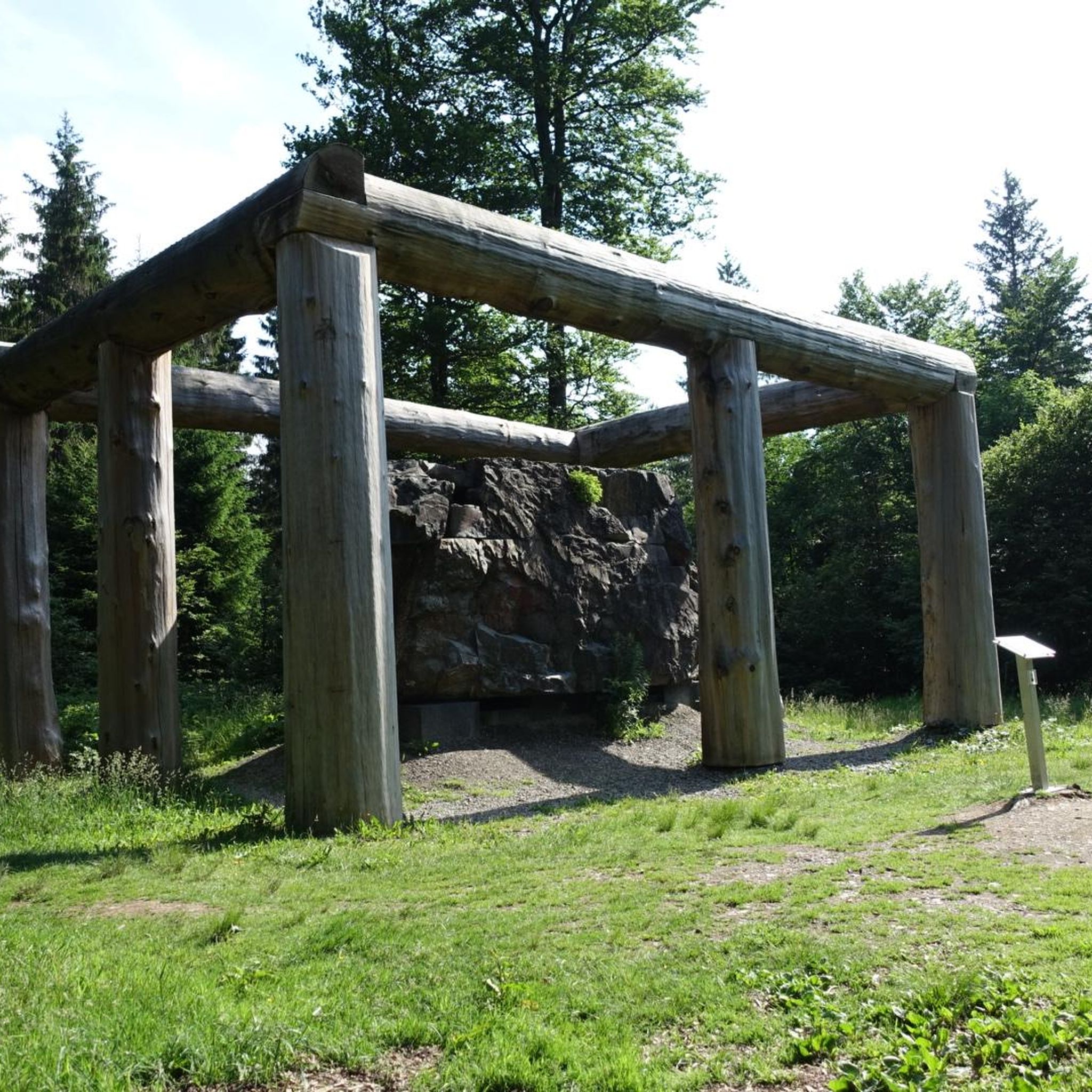
Thanks to the great commitment of many voluntary helpers and sponsors, this building, based on an idea by Ralph Wenzel, could be realized on the Tannenriegel (Gibacht, Waldmünchen). About 10 tons of stones, some of which come from the most diverse regions and countries of the world, were laid in painstaking hard work. In the western direction, 4 hand-cast glass elements were used, which glow at night using solar technology. So, next to a disc of the world - an Islamic crescent, a Christian cross and a Star of David - send light signals into the world to call people to more peace and understanding among themselves.
13
0
Nice resting place and nice view from the tower
8
0

The medieval castle ruin Kürnberg is one of the largest and best preserved castle ruins in Eastern Bavaria. The former castle was built in 1354. Extensive wall remains of the gate tower, battery tower, chapel, wall towers and palas have been preserved, making this castle ruin an ideal excursion destination. From the main hall, where a lattice framework was erected, you have a unique view of the surrounding area.
12
0
Frequently Asked Questions
What historical sites can I explore in Schönthal?
Schönthal is rich in history, offering several fascinating sites. You can visit the impressive Kürnburg Castle Ruins, one of the largest castle complexes in the Upper Palatinate, offering fantastic views from its observation tower. Another significant site is the Schwarzenburg Castle Ruins, which features a renovated keep providing panoramic views. The former Augustinian Hermits monastery, Schönthal Monastery, dating back to around 1250, also holds significant historical value.
Are there any notable natural attractions or viewpoints in the Schönthal area?
Yes, Schönthal boasts several natural attractions and scenic viewpoints. The Stone Wall (Schwarzwihrberg) is a natural monument with a scenic path, well-secured with ropes, offering great views. You can also find the Lighthouse of Humanity at Tannenriegel, a unique symbol of peace built from stones from various regions, which also serves as a viewpoint. The Glass summit cross on the Reiseck provides stunning views of the Bavarian Forest mountains. Additionally, Perlsee Lake is considered one of the most beautiful places, offering breathtaking views of the surrounding landscape.
What outdoor activities are available around Schönthal?
The region around Schönthal is ideal for various outdoor activities. You can explore numerous hiking trails within the Naturpark Oberer Bayerischer Wald, which also offers opportunities for climbing and mountain biking. For those interested in cycling, there are routes like the 'Perlsee – Klostermühle Thurau loop' or the 'View of the Schwarzach – Field Chapel Gmünd loop'. Mountain hiking enthusiasts can tackle routes such as the 'Three Coats of Arms – Kreuzfelsen Summit (Gibacht) loop'. You can find more details on specific routes for MTB Trails, Cycling, and Mountain Hikes around Schönthal.
Are there family-friendly attractions in Schönthal?
Yes, Schönthal offers several family-friendly options. The Kürnburg Castle Ruins are easily accessible even for children, making it a great historical outing. The Felsenlabyrinth Luisenburg is a fascinating rock labyrinth suitable for explorers of all ages. For animal lovers, the Tierfreigelände Neuschönau allows visitors to observe native animals like lynxes, bears, and wolves up close. During summer, the Schönthal Swimming Lake provides a public swimming area surrounded by greenery, perfect for families.
What kind of trails can I find for hiking near Schönthal?
Near Schönthal, you'll find a variety of hiking trails catering to different preferences. The Stone Wall (Schwarzwihrberg) offers an adventurous yet safe path with ropes. There's also the Schönthal Waterfall Trail in a nearby nature reserve, leading to a series of waterfalls. For those seeking panoramic views, the Schönthal Vineyard Walk provides marked paths through lush vineyards. You can explore various Mountain Hikes around the area, including challenging routes like the 'Summit Cross at Schwarzenburg – Eixendorfer Reservoir loop'.
What is the 'Lighthouse of Humanity' and where is it located?
The 'Lighthouse of Humanity' is a unique symbol of peace located at the Tannenriegel summit (910 m). Built from approximately 10 tons of stones sourced from various regions and countries, it features four individually manufactured glass elements that glow at night. These elements represent a world disc, a Christian cross, an Islamic crescent, and a Star of David, sending light signals to promote peace and understanding. It also offers a wonderful view over the 'Upper Palatinate hill country'.
Can I visit a monastery in Schönthal?
Yes, the Schönthal Monastery (Kloster Schönthal) is a significant historical site in the area. This former Augustinian Hermits monastery, dedicated to the Blessed Virgin Mary and Saint Michael, dates back to around 1250. While the original church was rebuilt after a fire, it underwent extensive restoration in 1989. For more information on its history, you can visit its Wikipedia page.
What is the best time of year to visit Schönthal for outdoor activities?
Schönthal offers outdoor activities throughout the year. Spring and autumn are ideal for hiking and cycling, with pleasant temperatures and vibrant scenery. Summer is perfect for enjoying the Schönthal Swimming Lake and exploring the Felsenlabyrinth Luisenburg. The region also hosts a traditional Schönthal Christmas Market, offering a festive experience during winter, and some trails may be suitable for winter hiking, though conditions should always be checked.
Are there any unique cultural experiences in Schönthal?
Beyond its historical sites, Schönthal offers unique cultural experiences. The Schönthal Village Square provides a charming atmosphere with cafes and shops, often hosting local events. The Schönthal Historical Society offers guided tours and talks for deeper insights into the region's past. During the festive season, the Schönthal Christmas Market is a traditional German market with decorations, local crafts, and seasonal treats.
What do visitors enjoy most about the attractions around Schönthal?
Visitors particularly appreciate the blend of well-preserved historical sites and stunning natural landscapes. The panoramic views from places like the Kürnburg Castle Ruins and the Schwarzenburg Castle Ruins are highly rated. Many also enjoy the adventurous yet safe trails, such as the Stone Wall (Schwarzwihrberg), which is well-secured with ropes. The overall appeal lies in the diverse range of experiences, from exploring medieval ruins to enjoying serene natural monuments.
Can I find places for swimming in Schönthal?
Yes, Schönthal offers options for swimming. The Schönthal Swimming Lake is a public swimming lake surrounded by greenery, making it an ideal spot for families during the summer months. Additionally, Perlsee Lake is a beautiful location that might offer opportunities for water activities, though it's primarily known for its scenic views.
Most popular routes around Schönthal
Most popular attractions around Schönthal

Get inspired with the komoot mobile app


Explore more
Still not found the Highlight you’re looking for? See guides of the top attractions in other regions:
