Top 6 Castles around Denklingen
Best castles around Denklingen offer a glimpse into medieval German architecture and history. Located in North Rhine-Westphalia, the region features several historic fortifications, including moated castles. Visitors can explore 6 castles, each with its own historical significance and architectural details. The area provides opportunities to discover structures that once served as defensive strongholds and administrative centers.
Best castles around Denklingen
- The most popular castles is Pöring Castle Church of Mary of Reconciliation, a religious building and castle featuring a…
Last updated: June 3, 2026
Pöring Castle Church of Mary of Reconciliation
Highlight • Religious Site
Translated by Google •
Tip by

Pilgrimage Church of St. Ottilia
Highlight • Religious Site
Sign up now to discover places like this
Get recommendations on the best single tracks, peaks, & plenty of other exciting outdoor places.
Sign up for free
Former Schongau Castle (Now District Office)
Highlight • Castle
Translated by Google •
Tip by

View of Unterdießen Castle
Highlight • Castle
Translated by Google •
Tip by
Schlossberg Cross and Viewpoint (Schongau)
Highlight • Viewpoint
Translated by Google •
Tip by

Start today with a free account
Your next adventure awaits.
Login or Signup
Popular around Denklingen



Tips from the Community

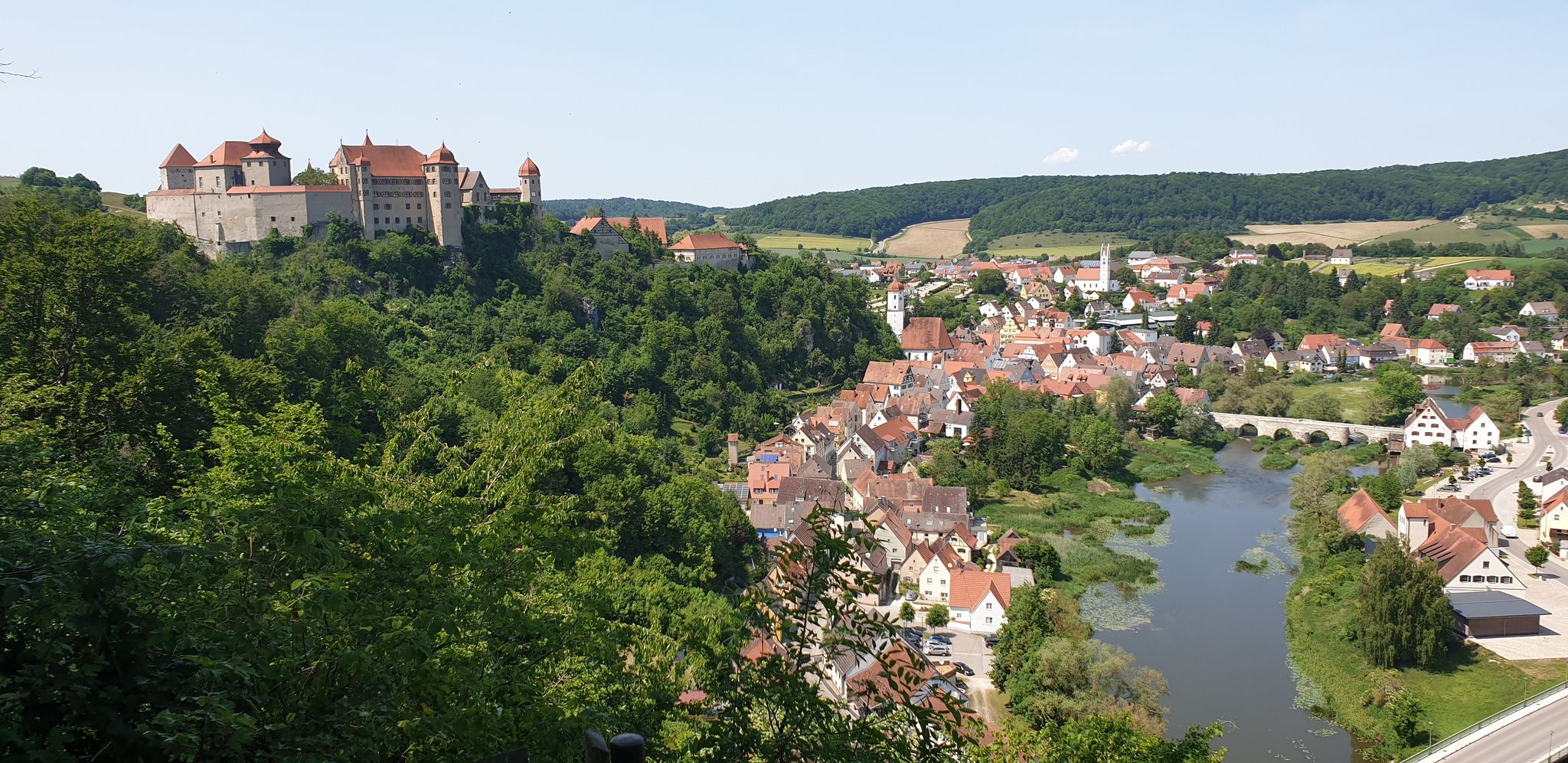
The former Schongau Castle is now used as the district office - in front of the building there is a bust of Franz Josef Strauß, who was also a district administrator here
2
1

Two- and three-story three-wing complex with half-hipped roofs, the core of which was rebuilt after a fire in 1493, expanded and renovated in the second half of the 18th century and in 1938. Old castle garden wall on Bauerngasse, probably 16th century
3
0
Mighty saddle roof building with two round corner towers in the west and two polygonal corner bays in the east, rebuilt after a fire in 1589, extended in the first half of the 17th century
3
0

The St. Ottiliae Church on a hill on the south side of Hörmanshofen near Biessenhofen is a small but beautifully decorated pilgrimage church. If you walk up the long steps you will find yourself in front of a locked door. So go around the church to the south side and take the entrance here, but be careful because it is easy to miss the step down when entering the somewhat dim church.
0
0

easily visible from the cycle path.
1
2

Pöring Castle is a castle in the north of today's Pitzling, a district of Landsberg am Lech. It contains Gothic elements, but was restored in the 19th century in a neo-Gothic style. The castle was built in the 9th or 10th century in the village of Pöring (1140 Peringin) and was the property of the Wessobrunn monastery and also a fief. It had been owned by the von Peringen family since the 14th century. The von Holdingen family lived in the castle from 1546 to 1694. They owned the "Mother of God on the ship", a statue of Mary from the 15th century, which prompted the Marian pilgrimage in Pöring from 1731. Since the pilgrims came in large numbers, the small castle chapel was replaced by the castle church. The Castle Church of Pöring Maria von der Versöhnung was built between 1764 and 1766. The stucco work was made by Dominikus Zimmermann. After the onslaught of pilgrims died down, Zimmermann had to simplify the church and eventually even paint the church himself. In 1844 Karl Freiherr von Leoprechting acquired the castle and lived there until 1857. Frequently changing owners followed. Since 1920 the castle has been owned by the Baltic German von Nolcken family. Source: https://www.pfaffen-winkel.de/pois/poi/schlosskirche-poering-maria-von-der-versoehnung/poi.html
1
1

Nice little cap on the Lechhöhenweg
1
1
Nice, cute little castle on the Lechhöhenweg
1
1
Frequently Asked Questions
What kind of historical significance do the castles around Denklingen hold?
The castles in the Denklingen region, such as the historic Denklingen Castle itself, often date back to the medieval period, serving as defensive fortifications, administrative centers, or religious sites. They showcase various architectural styles, from moated castles to structures rebuilt after fires, reflecting centuries of regional history and changes in ownership and function.
Are there any castles around Denklingen that offer notable views?
Yes, several sites provide excellent views. The Pöring Castle Church of Mary of Reconciliation offers beautiful views over the Lech river. Similarly, the Pilgrimage Church of St. Ottilia, situated on a hill, provides scenic vistas. For a broader panorama, the Schlossberg Cross and Viewpoint (Schongau) is well-known for its beautiful outlook.
Which castles are family-friendly to visit?
The Former Schongau Castle (Now District Office) is considered family-friendly. Additionally, the Schlossberg Cross and Viewpoint (Schongau) is also a family-friendly spot, offering both historical context and views.
Can I easily see the castles from nearby paths or roads?
Yes, some castles are easily visible. For instance, the View of Unterdießen Castle, with its mighty saddle roof and corner towers, is easily visible from the cycle path, making it convenient for cyclists and walkers.
What kind of architecture can I expect to see at these castles?
The castles around Denklingen display a range of architectural styles. Denklingen Castle itself is a notable example of medieval German architecture, originally a moated castle with features from the 16th to 18th centuries. Other sites, like the Pöring Castle Church of Mary of Reconciliation, feature baroque architecture.
Are there hiking or cycling routes near the castles around Denklingen?
Yes, the region offers various outdoor activities. You can find numerous road cycling, gravel biking, and general cycling routes around Denklingen. For example, there are routes like 'View of Zugspitze – Bayertor Landsberg am Lech loop' for road cycling, or 'Lech River Near Kinsau – View of the Lech River loop' for general cycling. You can explore more options on the Road Cycling Routes around Denklingen guide, the Gravel biking around Denklingen guide, or the Cycling around Denklingen guide.
What do visitors particularly enjoy about the castles and historical sites in this area?
Visitors appreciate the tangible link to medieval German history and architecture. Many enjoy the well-preserved historic buildings, the beautiful views from elevated sites, and the peaceful atmosphere. The castle chapels, like the one at Pöring Castle Church, are often highlighted for their beauty and historical significance.
Is there parking available at Denklingen Castle?
Yes, Denklingen Castle is accessible to the public year-round, and parking is available at its main entrance, making it a convenient destination for visitors.
What is the best time of year to visit the castles around Denklingen?
The castles are generally accessible year-round. However, spring and autumn offer pleasant weather for exploring the grounds and enjoying the views without extreme temperatures. Summer is also popular, though it can be busier. Winter visits can offer a unique, serene experience, especially if there's snow, but some paths might be less accessible.
Are there any religious buildings associated with the castles in the region?
Yes, the region features several religious buildings with castle connections. The Pöring Castle Church of Mary of Reconciliation is a prominent example, known for its historic chapel and baroque architecture. The Pilgrimage Church of St. Ottilia is another significant religious site that was formerly a castle location.
Can I learn about the administrative history of the region through its castles?
Absolutely. Denklingen Castle, for example, evolved from a defensive fortification to an administrative center for the Windeck region in 1672. Similarly, the Former Schongau Castle now serves as the district office, illustrating how these historic structures have adapted to modern administrative roles while retaining their historical essence.
Most popular routes around Denklingen
Most popular attractions around Denklingen

Get inspired with the komoot mobile app


Explore more
Looking for the best castles somewhere else? Discover other guides around Denklingen:
