Attractions and Places To See around Neenton - Top 20
Best attractions and places to see around Neenton include a blend of natural beauty and historical sites within Shropshire, England. The area is characterized by the Shropshire Hills Area of Outstanding Natural Beauty, featuring prominent hills that provide expansive views. Neenton itself contains several historically significant structures, including listed buildings. The region offers opportunities for exploring both natural landscapes and local heritage.
Best attractions and places to see around Neenton
- The most popular attractions is Abdon Burf Summit (Highest Point…
Last updated: November 17, 2026
Abdon Burf Summit (Highest Point of Brown Clee Hill)
Highlight • Viewpoint
Tip by

Titterstone Clee Hill summit
Highlight • Natural Monument
Tip by
Sign up now to discover places like this
Get recommendations on the best single tracks, peaks, & plenty of other exciting outdoor places.
Bridgnorth Castle Ruins
Highlight • Monument
Tip by

Bridgnorth Cliff Railway Top Station
Highlight • Structure
Tip by

Dudmaston Hall
Highlight • Forest
Tip by
Sign up for free to discover even more attractions around Neenton.
Already have an account?
Start today with a free account
Your next adventure awaits.

Tips from the Community

These picturesque ruins are well worth seeing, and the back story concerning the destruction of the castle during the Civil War is fascinating.
0
0

There is the bracket of the original Trig Point cemented into the path that leads to the Toposcope.
0
0

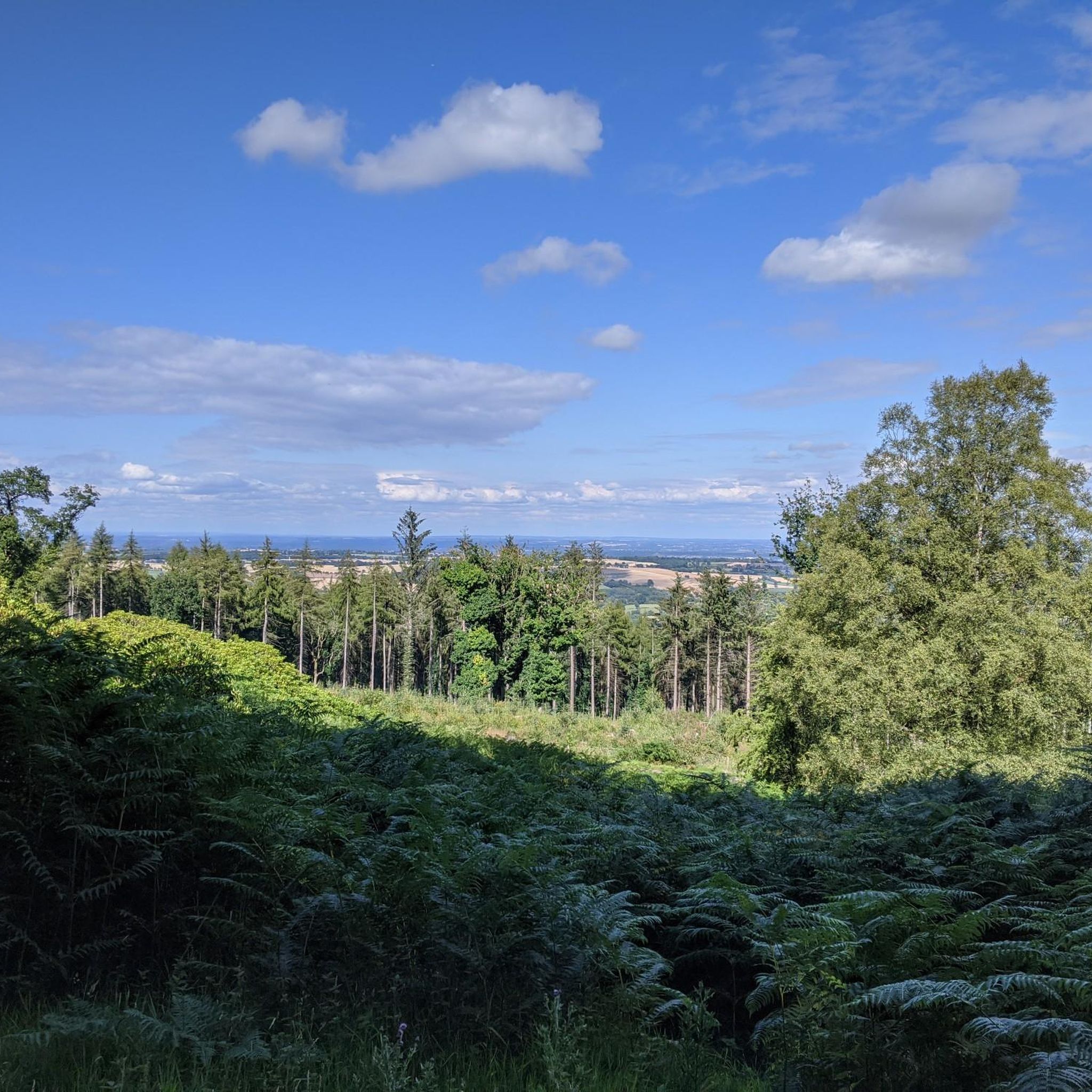
Incredible 360 views all around. A great muddy descent from the top.
0
0


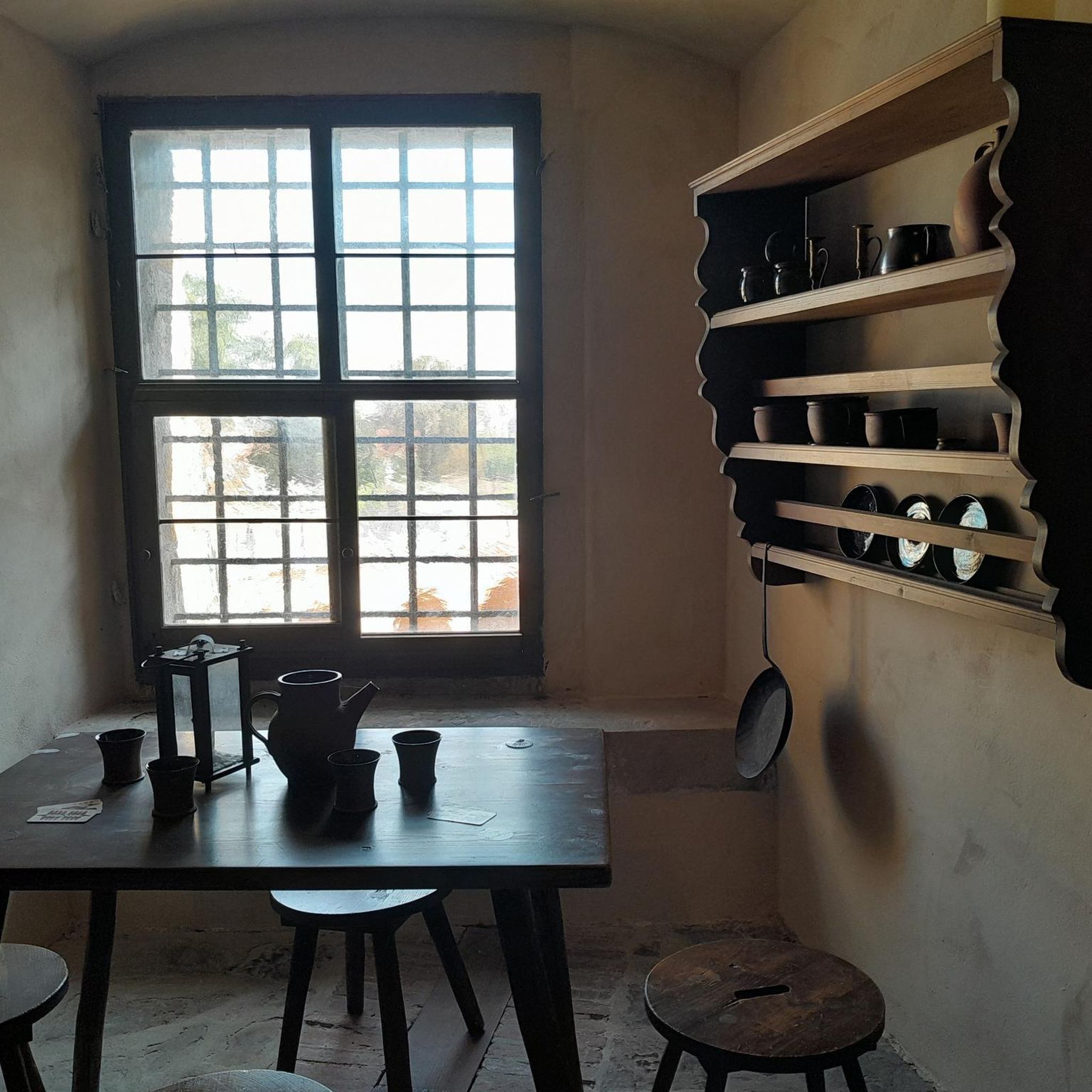
Dudmaston Hall is a 17th-century country house in the care of the National Trust in the Severn Valley, Shropshire, England. Parliament and was one of the few royalists not to recover his money at the Restoration in 1660. Sir Thomas's eldest son, Francis (1627–89), the second baronet, was declared a lunatic. It was his fifth son, John Wolryche, who took over the estate in 1668. He began building a new house at Quatt, now the dower house, but died in 1685, before work was finished. John's son, Sir Thomas Wolryche (1672–1701) inherited his uncle's baronetcy and his father's determination to rebuild. However, he embarked on a much more ambitious project, replacing the old manor house with a new sandstone building, the core of the present Dudmaston Hall. The architect appears to have been Francis Smith of Warwick, who provided a substantial, well-built, but not grand residence. Modelled on Belton House in Lincolnshire, it has an H-plan lay-out, a large central entrance hall, backed by a saloon, and flanked by three-roomed wings. Construction probably began before 1700, but Thomas died in 1701 before it was complete. Management of the estate passed to Sir Thomas's widow, Elizabeth Weld. However, their son, Sir John Wolryche (1691–1723), the fourth baronet, came to maturity in 1712 and took over the reins. For a decade he spent heavily on gambling, horses and hunting. In 1723, attempting to ford the Severn after attending races at Chelmarsh, directly opposite Dudmaston, he drowned, leaving no male heir. The estate was burdened by heavy debts and was passed to Sir John's sister, Mary, only on payment of £14,000. She, her mother Elizabeth, and her uncle, Colonel Thomas Weld, resided at Dudmaston, and over the next half century, largely restored it to a sound financial footing by frugal management.
0
0
Most passenger cliff railways were built at seaside resorts and the first appeared at Scarborough in 1875. The zenith of cliff railway construction was in the 1890s and 1900s. The pre-eminent of the cliff railway engineers during this period was George Croydon Marks. In 1890 a public meeting was called to discuss a new means of communication between the High Town and Low Town of Bridgnorth, avoiding the need to scale the 200 or so steps. The meeting was reported in the local press, and the matter came to the attention of Mr. George Croydon Marks. Marks and Mr. George Newnes, M.P. subsequently laid a proposal before the town council for the erection of a Patent Cliff Railway, or inclined lift. Plans were finally accepted for a route from the bottom of the Stoneway Steps to the end of the Castle Walk and consequently a company entitled The Bridgnorth Castle Hill Railway Company Ltd was registered in 1891. The actual start of the construction work began on 2nd November 1891. Initial work was much hindered by the discovery of caves set into the cliff-face – one cave was so large it was necessary to support the roof to avoid slippage and subsidence. Another problem facing the construction work were the many houses built into the cliff face around the site – in some cases, the effect of excavating the cutting was to remove supporting walls from the poorly constructed dwellings. At either end of the track station buildings were constructed. The original patented design of the railway was for a single track with two cars, with a crossing point mid-way between top and bottom, but this was abandoned in favour of a double track. When finished, the track measured 201 ft long, with a vertical rise of 111ft. This gave the railway an incline of 1:81, or 33.52°, the steepest in inland Britain. The rails were secured to sleepers which were themselves bolted into solid rock. At the upper end of the track, the hauling pulley was built on solid concrete foundations, the supporting buttresses of which carried a considerable distance down the track. Flat bottomed rails were used and the entire line was ballasted with concrete to avoid any slippage. Horizontal rollers were set into the track at regular intervals to support the steel ropes. Each car was mounted on a triangular frame of steel girders which housed a 2,000 gallon water tank. The method of power was simple – the tank on the car at the top was filled with water from a 30,000 gallon tank mounted on the roof of the top station. When the tank was full, the total weight of the car was more than 9 tons, easily enough to counterbalance the bottom car with its 18 passengers. As the top car was being filled, the tank on the bottom car was being emptied, and the water pumped directly up to the top station tank by means of a pair of pumps driven by independent Forward Gas Engines. The cars were linked by a pair of steel ropes, the breaking strain of which was calculated to be 15 times the normal working load of the cars. In addition, the cars were fitted with rapid gripper brakes which automatically engaged should the rate of descent become too great. A second manually operated brake was the responsibility of the brakeman who rode on the bottom platform of each car. The railway opened on 7th July 1892. The ceremony was performed by the Mayor, John Anderson, a boot and shoe dealer born in Paisley, and in celebration the local townspeople enjoyed a public holiday. Between July and September 1892 over 50,000 passengers used the railway. The railway ran continuously for the next 41 years, until April 1933. In May, 1934 it was re-opened by Frank Myatt, a brewer and hotelier who had been Mayor of Wolverhampton. His family continued to own the cliff railway for another sixty-two years. The drivers were eventually dispensed with, in favour of a hand operated brake operated from the top station. The brake on the cars were made to operate only in the event of a rope failure. In 1943, the gas engines were reaching the end of their working life, and this prompted a major rebuild of the railway. The hydraulic system of counterbalanced cars was replaced with an electrically operated mining type motor of 32 hp. The haulage system consists of 2 main ropes – one winds onto the one drum as the other winds off. In addition, a safety rope connects the 2 cars via the original head wheel. The original emergency brake was retained, hence in the event of a rope break the car would grip the rails until they came to a halt. The speed of the cars was regulated by air brakes acting on the haulage drums, and proximity devices which would act to slow the cars as they approached either end of the track. In addition, further safety improvements included interlocked loading doors at top and bottom, and a dead man’s pedal speed controller. The conversions were carried out by Messrs. Francis & J.S. Lane, with electrical gear supplied by Metropolitan-Vickers Electrical Co. Ltd. The effect of the conversion was to double the speed of the railway, up to a maximum speed of 250 feet per minute. The railway reopened in December 1944, and showed an immediate increase in traffic. In 1955, the passenger cars were replaced with a more modern type, with improved lighting. In 1996 the entire share capital of the company was acquired by Jean and Allan Reynolds, who spent the next fifteen years investing vast sums of money in restoring and improving the cliff railway. By a strange twist of fate, the cliff railway has come full circle and is now owned by cousins of George Croydon Marks. George had been born into engineering at the Woolwich Arsenal, where his father had worked. His parents had moved there from Somerset in their early twenties to escape rural poverty. His father had been the son of a poor farm labourer in the Blackdown Hills adjacent to Exmoor. They had family bonds with the north Devon Jones family. Bridgnorth Cliff Railway was purchased by the Tipping family in 2011. Two years later it was discovered that one of their maternal great-grandfathers, who came from Parracombe, north Devon, had been third cousin to George Croydon Marks. Marks was also a distant cousin of the branch of the Jones family which had founded another cliff railway at Lynton four miles from Parracombe. George Croydon Marks, who was knighted in 1911 and ennobled as Baron Marks of Woolwich in 1929, was Bridgnorth Cliff Railway’s first managing director from 1891 until 1901. His brother, Edward, another engineer, became its second managing director from 1901 until 1924. The cliff railway remains a constant in the town of Bridgnorth. Its current owners and staff are very aware of that and its proud heritage.
0
0
Frequently Asked Questions
What natural features can I explore around Neenton?
Neenton is nestled within the Shropshire Hills Area of Outstanding Natural Beauty, offering a wealth of natural beauty. You can visit prominent hills like Abdon Burf Summit, the highest point in Shropshire, or Titterstone Clee Hill summit, known for its expansive views and unique radar dome. Clee Burf also offers fantastic vistas of the AONB.
Are there good walking trails near Neenton?
Yes, the area around Neenton is excellent for walking, with numerous paths providing glorious views. You can enjoy a delightful stroll from the Picnic Area up to Five Springs on Brown Clee, with views extending into Wales. The 136-mile Shropshire Way also has loops around South Shropshire. For specific routes, explore our guides for easy hikes or more general hiking trails around Neenton.
What historical sites are there in Neenton itself?
Neenton parish is home to seven listed buildings, showcasing its rich architectural heritage. These include a church designed in the Gothic Revival style from red sandstone, as well as historic timber-framed structures like Bank Farm House and Brook Cottage, some retaining original features and even remains of wall paintings. You can find more information about these listed buildings on Wikipedia.
What historical attractions are within a short drive of Neenton?
Within a short drive, you can explore the historic town of Bridgnorth, featuring the Bridgnorth Bridge and the unique Bridgnorth Cliff Railway. The UNESCO Ironbridge Gorge World Heritage Site, with the iconic Iron Bridge and Blists Hill Victorian Town, is also nearby. Other notable sites include Stokesay Castle, the best-preserved fortified manor house in England, and the Roman city remains at Wroxeter.
Are there family-friendly activities or attractions near Neenton?
Absolutely! The Bridgnorth Cliff Railway offers a fun experience for all ages, connecting Bridgnorth's High Town and Low Town. Blists Hill Victorian Town, part of the Ironbridge Gorge World Heritage Site, is an open-air museum where families can step back in time. Severn Valley Country Park also provides opportunities for outdoor recreation suitable for families.
What is the best time of year to visit Neenton and the surrounding area?
The Shropshire Hills AONB and surrounding areas are beautiful year-round, but for the best walking conditions and expansive views, late spring to early autumn (May to October) is ideal. During these months, the weather is generally milder, making outdoor activities more enjoyable.
Are there dog-friendly walks around Neenton?
Many of the walking trails in the Shropshire Hills AONB are dog-friendly, provided dogs are kept under control, especially around livestock. The open heathland on hills like Brown Clee and Titterstone Clee offers great spaces for walks. Always check local signage for specific restrictions.
Where can I find accommodation or places to eat in Neenton?
The Pheasant at Neenton is a well-regarded establishment within the village, recognized as a suitable base for visitors exploring south Shropshire. For more options, nearby towns like Bridgnorth offer a wider selection of pubs, cafes, and accommodation.
What other outdoor activities are available besides hiking?
Beyond hiking, the region offers opportunities for mountain biking. You can find various routes and trails in our MTB Trails around Neenton guide, including routes that explore areas like Nordy Bank Hillfort and Clee Burf.
What do visitors particularly enjoy about the attractions near Neenton?
Visitors frequently praise the stunning panoramic views from the hill summits, especially from Abdon Burf and Clee Burf, often describing them as magnificent snack stops on a clear day. The blend of natural beauty with historical elements, such as Iron Age hillforts and unique geological features like quarrying activity, also captivates many.
Are there any unique or 'hidden gem' attractions near Neenton?
While not exactly hidden, the sheer scale of the historical quarrying activity on hills like Clee Burf, which has produced extraordinary collapsed bell pits, offers a unique and intriguing landscape often overlooked. Additionally, the numerous listed buildings within Neenton itself provide a quiet glimpse into local heritage away from more bustling tourist spots.
Most popular attractions around Neenton

Get inspired with the komoot mobile app


Explore more
Still not found the Highlight you’re looking for? See guides of the top attractions in other regions:
