Top 8 Castles around Breitenbrunn/Erzgebirge
Castles around Breitenbrunn/Erzgebirge offer insights into the region's history and architectural heritage. The area is characterized by its forested landscapes and historical settlements. Visitors can explore various historical sites, from medieval ruins to former hunting lodges. These landmarks provide opportunities to connect with the past while enjoying the natural surroundings of the Erzgebirge.
Best castles around Breitenbrunn/Erzgebirge
- The most popular castles is Ruins of Königsmühle (Králův Mlýn), a historical site that consists of the remains of a disused settlement.…
Last updated: October 11, 2026
Ruins of Königsmühle (Králův Mlýn)
Highlight • Historical Site
Translated by Google •
Tip by

Schwarzenberg Castle
Highlight • Castle
Translated by Google •
Tip by

Sign up now to discover places like this
Get recommendations on the best single tracks, peaks, & plenty of other exciting outdoor places.
St. George's Church (Schwarzenberg)
Highlight • Religious Site
The church history in Schwarzenberg is probably almost as old as the castle, which was built around …
Translated by Google •
Tip by

Ruins of Freudenstein Castle
Highlight • Castle
Translated by Google •
Tip by

Balcony of the Ore Mountains (Frankonia Cable Car Mountain Station Viewpoint)
Highlight • Viewpoint
Showing Translation
Tip by

Sign up for free to discover even more castles around Breitenbrunn/Erzgebirge.
Already have an account?
Start today with a free account
Your next adventure awaits.
Popular around Breitenbrunn/Erzgebirge
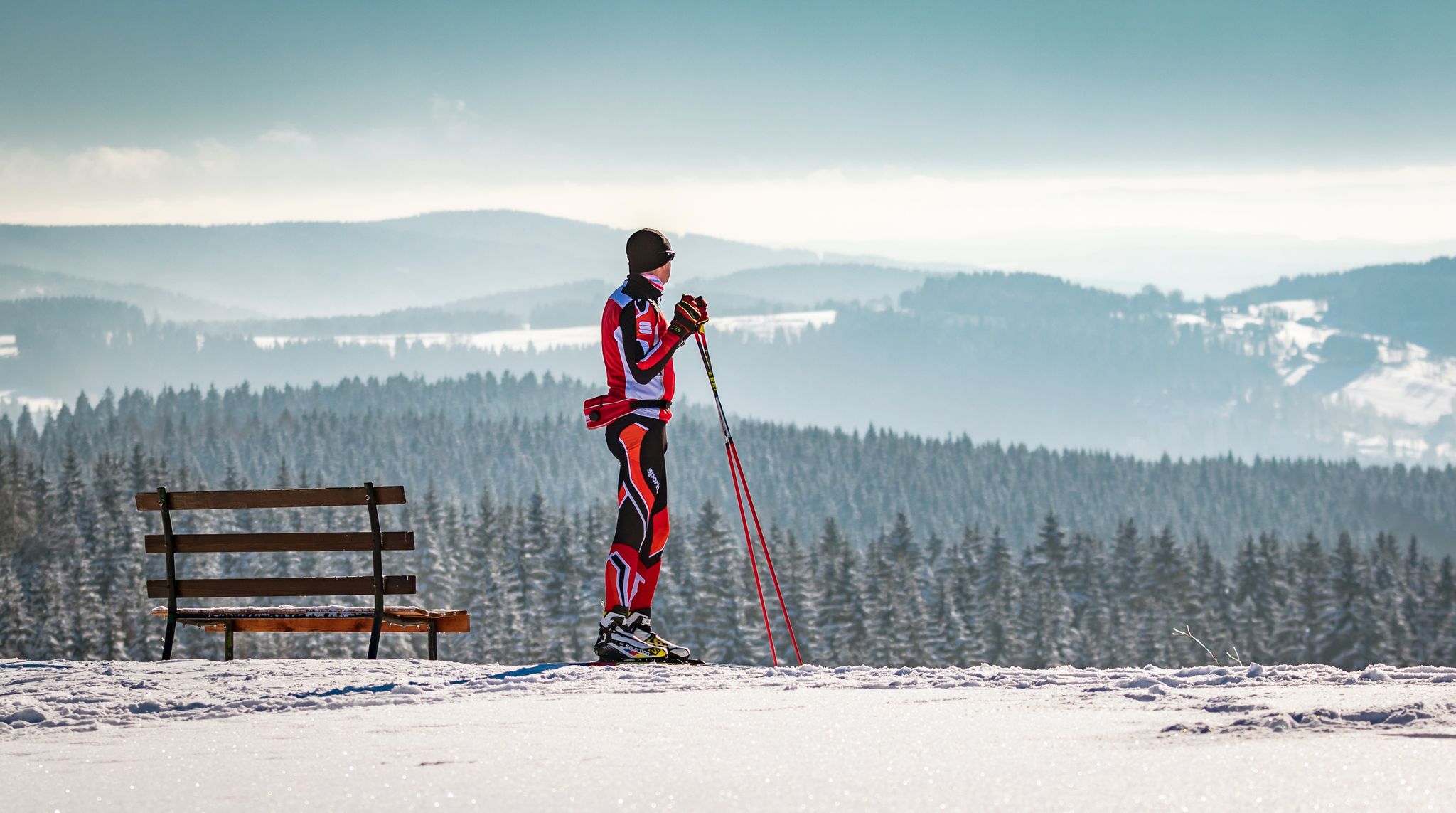
Let it flow! Cross-country skiing in the Ore Mountains
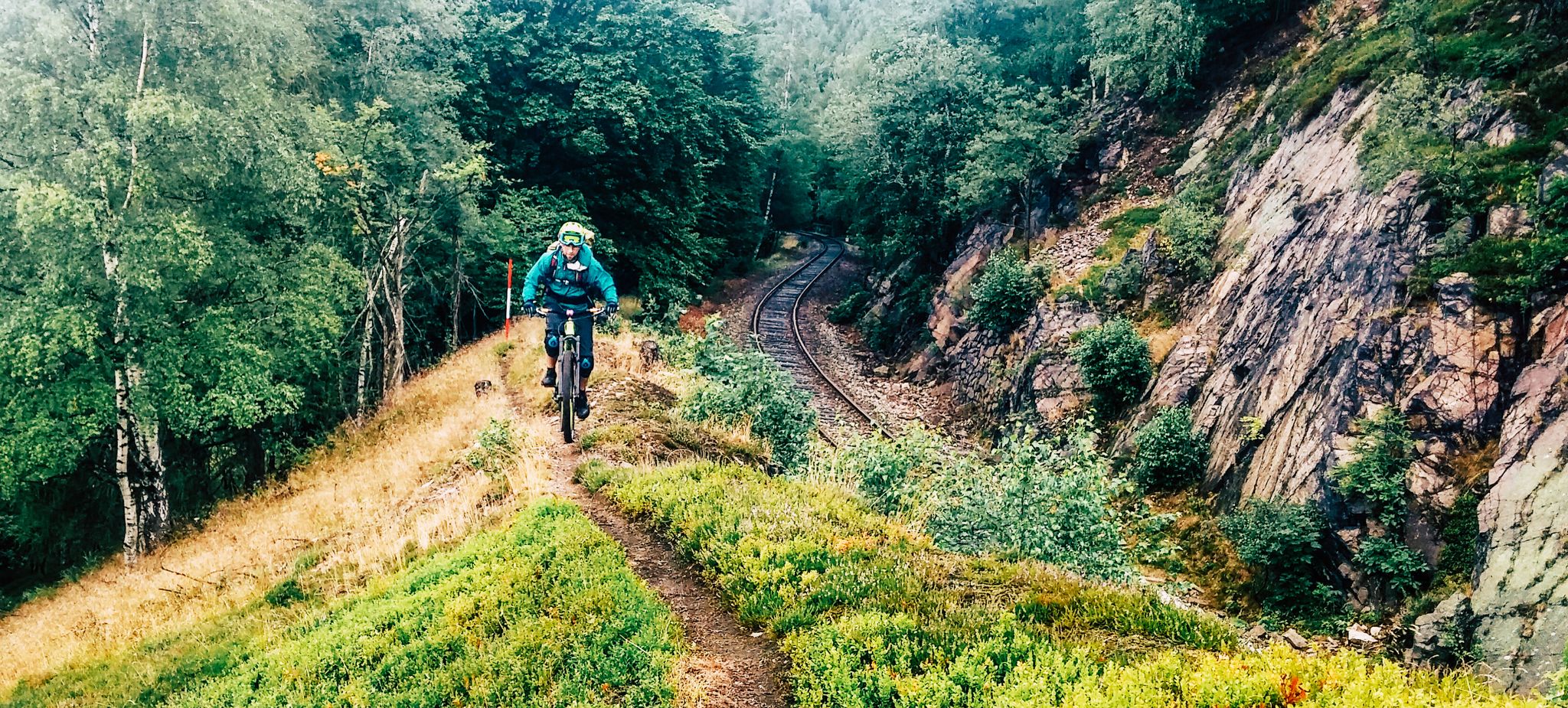
Kammweg Erzgebirge – Border adventure along the Ridgeway

The Stoneman Trail in the Ore Mountains
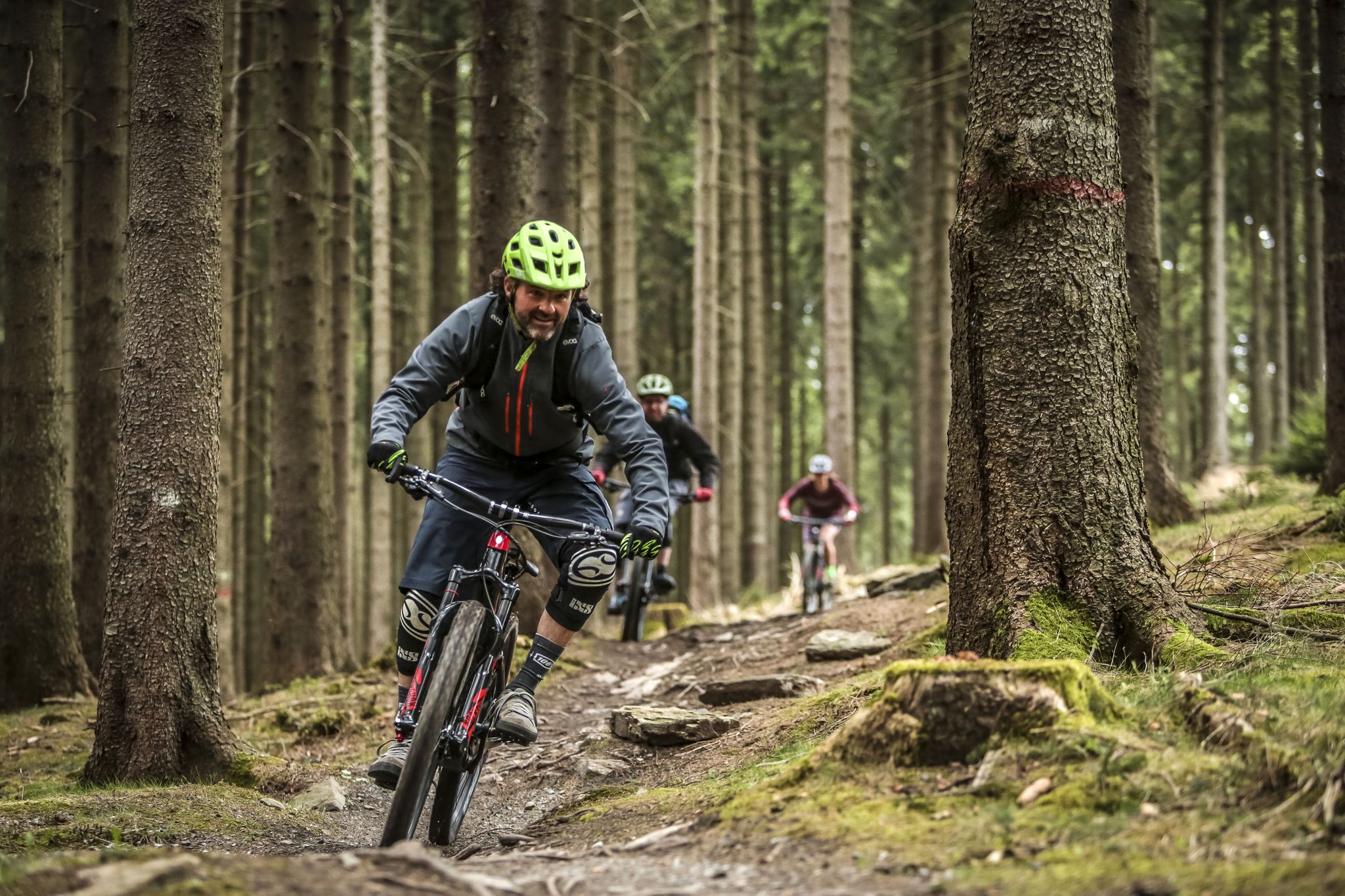
MTB adventures in Saxony
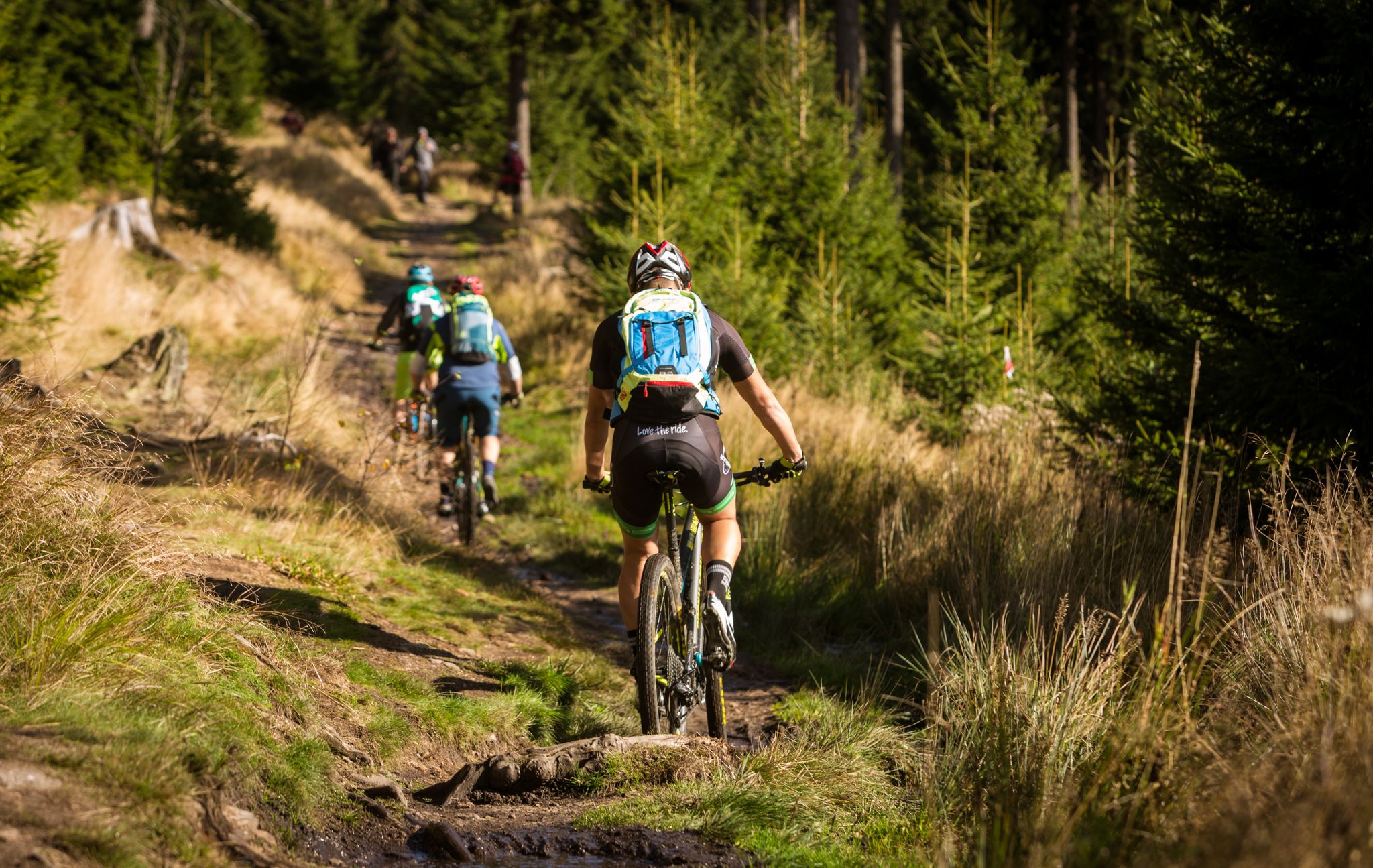
Stoneman Miriquidi MTB Gesamtstrecke (2 Tage -Silber)
History meets nature – Erzgebirge-Vogtland Ridge Trail
The Anton-Günther-Trail — a long weekend in the Ore Mountains
Bike parks in the heart of Germany
Wandertouren - Eisenbahn & Wanderstock
Wandertouren - Gipfelglück
Other adventures around Breitenbrunn/Erzgebirge


Tips from the Community

The abandoned settlement of Königsmühle (Königův Mlýn) is only one and a half kilometers from the village of Háj (Stolzenhain), but is shielded by a hill between them. Until their expulsion in the fall of 1946, 57 Sudeten Germans lived here in six houses, five of which were used as homes for the Fohrmann, Siegel, Giebert, Pöschl, and Siegel families. The sixth building was the mill. Grain from Bohemia was milled in Königsmühle, and the flour was then transported further to Saxony. This trade route (also for ore and timber) has sunk into the landscape about three meters deep due to centuries of heavy wagon traffic. After the end of the war, the ethnic German population was expelled from Czechoslovakia; approximately three million people were forced to flee, and around 3,000 communities, villages, and hamlets disappeared. Königsmühle is one of the few sites that can serve as a memorial to this aftermath of World War II. At the initiative of Czech cultural scientist and photographer Petr Mikšíček, the DoKrajin association has conserved the remains of the buildings, created informative display panels, and decorated the grounds with land art. The decline of Königsmühle has been halted, and the memory of its former residents is now kept alive.
27
5

The Evangelical Lutheran St. George's Church in Schwarzenberg/Erzgebirge is an outstanding example of Baroque sacred architecture and, together with the neighboring castle, dominates the cityscape of the old town. **History and Construction** The origins of the parish date back to the 12th century. The present church was built between 1690 and 1699 according to plans by the Lößnitz master builder Johann Georg Roth, as the previous church on the lower market square had become too small and dilapidated. Half of the building site was donated by the Saxon Elector Johann Georg III and the other half by Balthasar Lehmann, the Schwarzenberg Oberzehnder. Construction was carried out by master mason Johann Georg Pauli and master carpenter Samuel Georg. The church, designed as a transverse church, was consecrated on October 22, 1699. **Architecture and Furnishings** The interior of the church impresses with its cantilevered wooden ceiling, added in 1728 and considered a technical masterpiece with a clear width of 34 × 18 meters. The Baroque furnishings include a magnificently carved altar, an artfully wrought choir screen from 1721, crafted by the Schwarzenberg master blacksmith Zacharias Georgi, as well as a Baroque pulpit and a surrounding gallery with numerous boxes. **Music and Organ** St. George's Church is an important center of sacred music. In 1993, a new organ by the Hermann Eule company from Bautzen was installed. It has 39 stops on slider chests and is based on historical models. Concerts are held here regularly, including the "Music Summer in St. Georgen" concert series and the internationally renowned Erzgebirge Music Festival. **Current Condition** Despite its structural integrity, the church is showing signs of age-related damage. Cracks in the masonry and leaky windows are endangering the building's structure. Parts of the gallery had to be closed off in 2018 due to the risk of falling. A comprehensive renovation is necessary to preserve the church as a spiritual and cultural center.
3
0

very beautiful. Always worth a trip
0
2

you can take a stop here
0
2

The Frankonia-Seilbahn was a cable car solely for freight transport in Beierfeld. It connected the Zwönitz–Scheibenberg railway line with Frankonia AG, which was by far the largest industrial enterprise in Beierfeld at the time. The location of Beierfeld station on the Zwönitz–Scheibenberg line, opened in 1900, was extremely unfavorable for Beierfeld. Due to the steep gradient of the access road to the town, the dispatch of goods in particular proved difficult. Therefore, among other things, the construction of an trackless railway or a pure freight railway to Schwarzenberg station was considered, but these variants failed as early as the planning phase. Due to the First World War, there was a shortage of horses for freight purposes. The situation became increasingly difficult, especially for Frankonia AG, which produced military supplies, as urgently needed goods deliveries accumulated at Beierfeld station. (https://www.wikiwand.com/de/Frankonia-Seilbahn)
2
0

A landmark of the city of Schwarzenberg, visible from afar.
8
0

It's worth a trip here, but it's very busy on the Advent weekends🙈
4
0

Here you will receive a point for the digital hiking pin at SummitLynx. The church history in Schwarzenberg is probably almost as old as the castle, which was built around 1150, because it was common to build a chapel when establishing a settlement. The current church building of St. Georgen, which together with the castle forms Schwarzenberg's landmark, was built between 1690 and 1699 after the little church on the lower market had become dilapidated and too small. The Reformation had already arrived in Schwarzenberg in 1529. https://www.st-georgen-schwarzenberg.de/
5
0
Frequently Asked Questions
What historical sites can I explore around Breitenbrunn/Erzgebirge?
Beyond the well-known castles, the region offers a rich history. You can visit the Jagdhaus Breitenbrunn, a former hunting lodge with a moated ruin, or explore the poignant Ruins of Königsmühle (Králův Mlýn), a disused settlement that serves as a memorial. Other significant sites include Schwarzenberg Castle, a former defensive structure turned hunting lodge, and the Ruins of Freudenstein Castle, built to protect silver mining operations.
What is the best time to visit castles in the Breitenbrunn/Erzgebirge region?
The best time to visit is generally during the warmer months, from late spring to early autumn (May to October), when the weather is pleasant for exploring ruins and walking around castle grounds. This period also offers ideal conditions for combining castle visits with outdoor activities like hiking. Winter visits can be picturesque, especially after snowfall, but some areas might be less accessible, and trails could be challenging.
Are there any hidden gem castles or lesser-known historical sites worth visiting?
While not a hidden gem in the traditional sense, the Rittergut Schloss Sachsenfeld, first mentioned in the 13th century, offers a glimpse into the region's manorial history. It's privately owned but has been extensively renovated and is located in Schwarzenberg. The Jagdhaus Breitenbrunn, with its moated ruin, also provides a unique historical experience away from larger, more restored castles.
Are there family-friendly castles around Breitenbrunn/Erzgebirge?
Yes, several sites are suitable for families. Schwarzenberg Castle, which houses a city museum, can be engaging for children. The Ruins of Königsmühle (Králův Mlýn), with its informative display panels and land art, offers a thought-provoking outdoor experience for all ages. Many castle ruins are set in natural surroundings, providing space for children to explore.
Are the castles and trails around Breitenbrunn/Erzgebirge dog-friendly?
Many outdoor areas, including trails leading to castle ruins like the Ruins of Königsmühle (Králův Mlýn) and the Jagdhaus Breitenbrunn, are generally dog-friendly, provided dogs are kept on a leash. For specific castle interiors or museums, it's best to check individual site regulations beforehand. Always ensure you clean up after your dog to preserve the natural environment.
How can I get to the castles around Breitenbrunn/Erzgebirge by public transport?
Public transport options exist, though they may require some planning. Larger towns like Schwarzenberg, home to Schwarzenberg Castle, are typically well-connected by bus or train. For more remote ruins like the Ruins of Königsmühle (Králův Mlýn), you might need to combine public transport with a hike or a shorter taxi ride from the nearest stop. It's advisable to check local bus and train schedules in advance.
Where can I park when visiting castles in the Breitenbrunn/Erzgebirge area?
Parking availability varies by location. For prominent sites like Schwarzenberg Castle, designated parking areas are usually available in the nearby town. For ruins such as the Ruins of Freudenstein Castle or the Jagdhaus Breitenbrunn, you might find smaller parking lots or roadside parking options close to trailheads. Always look for official signage and respect local parking regulations.
What kind of terrain can I expect on trails near these castles?
The terrain around the castles in Breitenbrunn/Erzgebirge is typical of the Ore Mountains, featuring forested landscapes with varying elevations. Trails can range from easy, well-maintained paths around sites like the Jagdhaus Breitenbrunn to more moderate or difficult routes, especially when hiking to remote ruins like the Ruins of Königsmühle (Králův Mlýn). Expect a mix of forest paths, gravel tracks, and potentially some rocky or uneven sections, particularly on longer hikes.
What outdoor activities can I do near the castles around Breitenbrunn/Erzgebirge?
The region is excellent for various outdoor activities. You can find numerous running trails, including routes like the "St. John of Nepomuk Chapel – Rabenberg Sports Park loop," which is a moderate 13 km run. Gravel biking is also popular, with routes such as the "Rabenberg Sports Park – St. John of Nepomuk Chapel loop" offering a moderate 25 km ride. For more challenging adventures, explore mountain hikes like the "Fichtelberg Nature Reserve – Fichtelberg Mountain Lodge loop." Find more details on these activities in the Running Trails, Gravel Biking, and Mountain Hikes guides for Breitenbrunn/Erzgebirge.
Are there hiking trails near the castles around Breitenbrunn/Erzgebirge?
Yes, many castles and ruins are integrated into or accessible via hiking trails. For instance, the Ruins of Königsmühle (Králův Mlýn) are located in a beautiful mountain valley, making them a popular hiking destination. You can find various hiking routes, including mountain hikes, that pass by or lead to these historical sites. Explore options like the "Fichtelberg Nature Reserve – Fichtelberg Mountain Lodge loop" for scenic trails. More hiking routes are detailed in the Mountain Hikes around Breitenbrunn/Erzgebirge guide.
What do visitors appreciate most about the castles in this region?
Visitors frequently appreciate the blend of historical exploration with the natural beauty of the Erzgebirge. The opportunity to connect with the past, whether through the preserved architecture of Schwarzenberg Castle or the poignant atmosphere of the Ruins of Königsmühle (Králův Mlýn), is a major draw. The scenic views, especially from viewpoints like the View of Schwarzenberg, the castle and St. George's Church from Galgenberg, are also highly valued.
Are there cafes, pubs, or accommodation options near the castles?
Yes, you'll find various options for refreshments and overnight stays. Towns like Schwarzenberg, where Schwarzenberg Castle is located, offer cafes, pubs, and hotels. Even smaller communities near other sites often have guesthouses or local eateries. For example, the Rittergut Schloss Sachsenfeld previously housed an inn and guesthouse. It's always a good idea to check local listings for current operating hours and availability.
Most popular routes around Breitenbrunn/Erzgebirge
Most popular attractions around Breitenbrunn/Erzgebirge

Get inspired with the komoot mobile app


Explore more
Looking for the best castles somewhere else? Discover other guides around Breitenbrunn/Erzgebirge:
