The best cycling routes around Općina Orehovica
4.4
(22)
353
riders
24
rides
Touring cycling around Općina Orehovica offers routes through the flat plains of Međimurje, characterized by agricultural fields and riverine landscapes. The region is situated near the Drava and Mur rivers, providing opportunities for routes along waterways. Elevation changes are generally minimal, making it suitable for various cycling abilities. The area features a network of roads and paths connecting smaller towns and villages.
Best touring cycling routes around Općina Orehovica
- The most popular touring cycling route is King Tomislav Square, Varaždin – Varaždin loop from Općina Trnovec Bartolovečki, a 26.3 miles (42.3 km) trail that takes 2 hours 38 minutes to complete. This route explores the area around Varaždin, offering views of the city and its surroundings.
- Another top favourite among local touring cyclists is Čakovec Town Center – Goričanec Recreation Area loop from Čakovec-Buzovec, a moderate 29.9 miles (48.1 km) path. This route connects urban areas with a recreation zone, featuring a mix of developed and natural scenery.
- Local touring cyclists also love the Little Church – Čakovec Town Center loop from Čakovec-Buzovec, a 18.2 miles (29.3 km) trail leading through local settlements and open countryside, often completed in about 1 hour 47 minutes.
- Touring cycling around Općina Orehovica is defined by river valleys, agricultural plains, and connections between local towns. The network offers options for different ability levels, including easy touring bike trails Općina Orehovica.
- The routes in Općina Orehovica are highly rated by the komoot community with an average score of 4.4 stars from over 20 reviews. More than 360 touring cyclists have used komoot to explore Općina Orehovica's varied terrain.
Last updated: May 8, 2026
2.0
(2)
16
riders
Moderate bike ride. Good fitness required. Mostly paved surfaces. Suitable for all skill levels.
15
riders
48.0km
02:54
370m
370m
Moderate bike ride. Good fitness required. Mostly paved surfaces. Suitable for all skill levels.

Sign up for free
4.5
(2)
8
riders
29.3km
01:47
190m
190m
Moderate bike ride. Good fitness required. Mostly paved surfaces. Suitable for all skill levels.
10
riders
38.4km
02:19
210m
210m
Moderate bike ride. Good fitness required. Mostly paved surfaces. Suitable for all skill levels.
4.5
(2)
6
riders
82.3km
04:53
480m
480m
Hard bike ride. Very good fitness required. Mostly paved surfaces. Suitable for all skill levels.
4
riders
26.2km
01:28
20m
20m
Easy bike ride. Great for any fitness level. Mostly paved surfaces. Suitable for all skill levels.
6
riders
28.9km
01:43
30m
30m
Easy bike ride. Great for any fitness level. Mostly paved surfaces. Suitable for all skill levels.
3
riders
Easy bike ride. Great for any fitness level. Mostly paved surfaces. Suitable for all skill levels.
5.0
(1)
2
riders
52.2km
03:17
560m
560m
Hard bike ride. Very good fitness required. Mostly paved surfaces. Suitable for all skill levels.
2
riders
Moderate bike ride. Good fitness required. Mostly paved surfaces. Suitable for all skill levels.
Get access to more routes and recommendations from other explorers.
Sign up for free
Already have an account?
Our route recommendations are based on thousands of hikes, rides, and runs completed by other people on komoot.
Start today with a free account
Your next adventure awaits.
Login or Signup

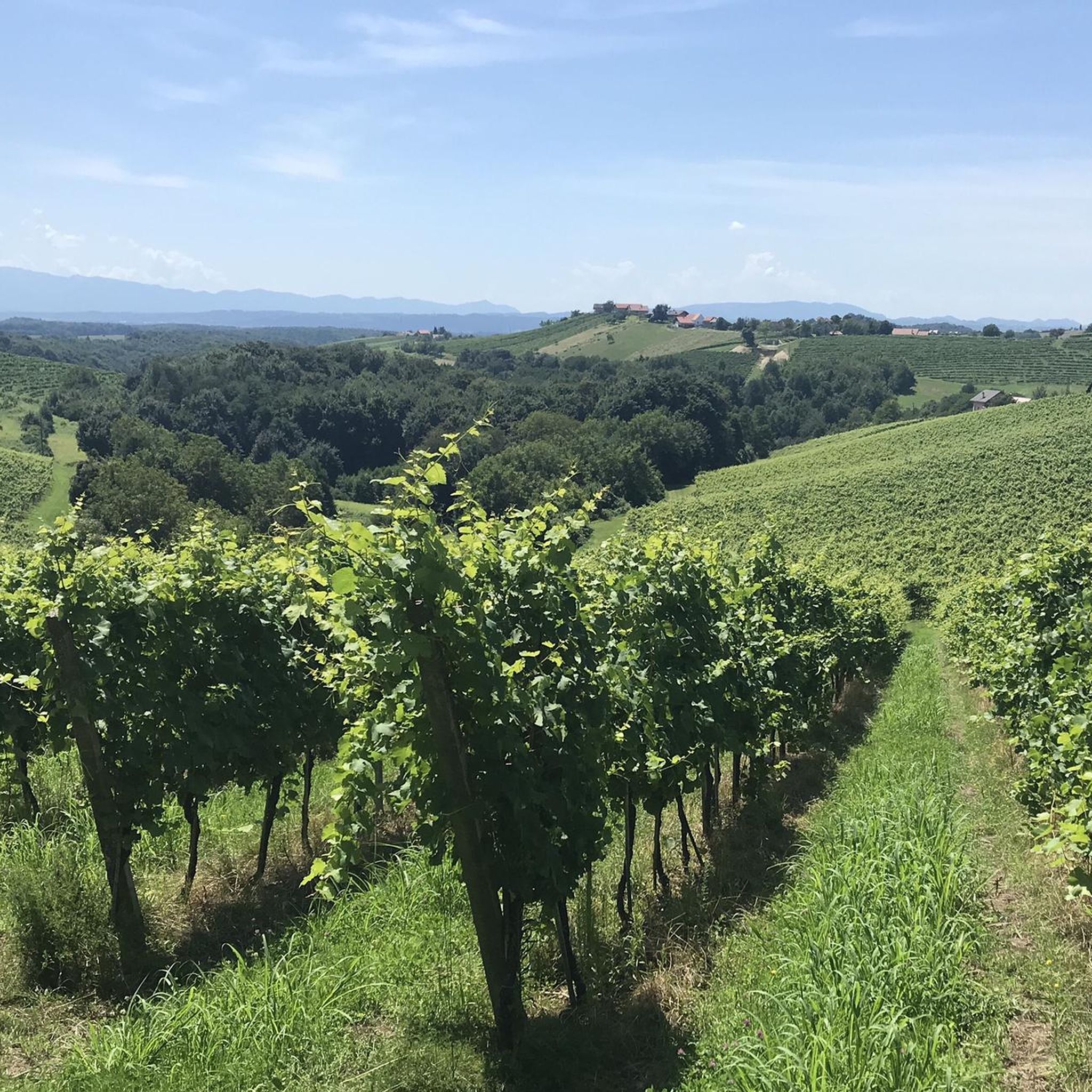
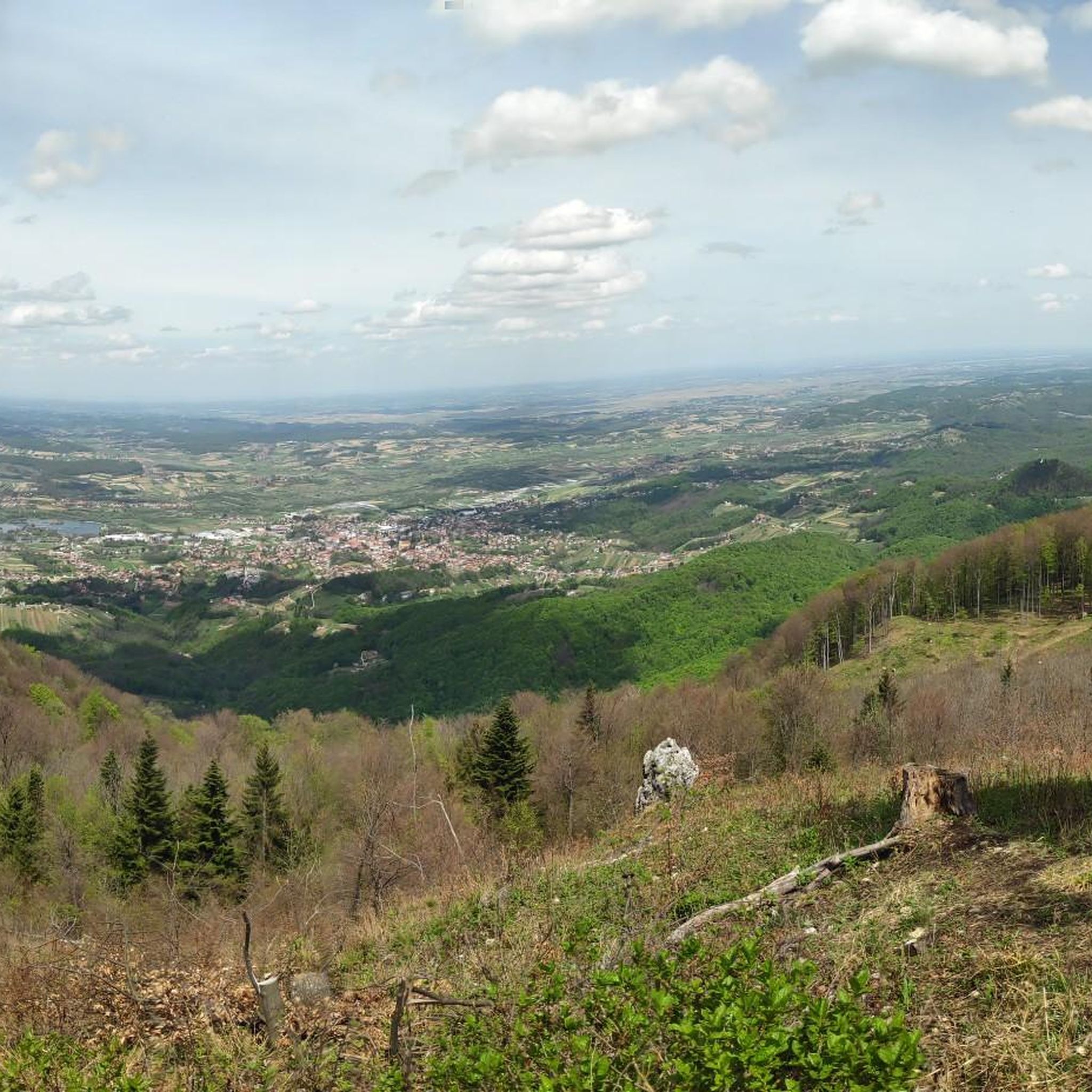

Tips from the Community

The Mura is a very wide river in Mursko Središće. What's immediately noticeable is that the community has adapted to the river. A beautiful bay was built on the right bank of the Mur, and a very inviting restaurant area was created in this area. It's inviting.
0
0

There it turns southwest and runs through almost uninhabited territory a few kilometers east, past the Carniolan Sneznik (Slovene: Snežnik, Italian: Monte Nevoso). Between the Croatian Rupa and the Slovenian Jelšane, the Croatian A7 motorway, coming from Rijeka, leads to the border. It continues on the Slovenian side via the Glavna cesta 6 to Ljubljana; on the Croatian side it is part of the European route E65. The Pivka–Rijeka railway line also crosses the border here. Just a little further west, the Slovenian Glavna cesta 7, coming from Trieste, crosses the border, forming an extension of the E65; in Croatia it continues via the Državna cesta D8 to the A7 motorway. The border continues through the Karst along the northern edge of the Ćićarija (Chichen Bottom) and turns south at the Podgorski Kras. Between Rakitovec (Slovenia) and Buzet (Italian: Pinguente) in Croatia, the Divača–Pula railway line leading to the Istrian peninsula crosses the border. From there, the border runs generally westward, in the westernmost section along the Dragonja River, and merges into the (disputed) Croatian-Slovenian maritime border at the Gulf of Piran.
1
0
It follows the Sava River for about 2 km to the southeast, then leaves it to the southwest and follows the Bregana River. In the Sava valley, it crosses the former Bratstvo i jedinstvo highway (now Avtocesta A2 in Slovenia, Autocesta A3 in Croatia, and also European route E70). The border continues westward and then largely along the heights of the Uskok Mountains (Croatian: Žumberak, Slovene: Gorjanci), but leaves these north of the Novo mesto (German: Rudolfswerth) – Metlika road in Bela krajina, although the border line north of Metlika is extremely complicated (see map on the right). Via the Kamenica Stream, the border then reaches the Kupa River (Slovene: Kolpa), which it follows upstream for about 100 km and which forms the historical border between Carniola and Croatia (and thus part of the border of the Holy Roman Empire). Near Jurovski Brod, the Croatian Državna cesta D6, coming from Karlovac and continuing on the Slovenian side as Glavna cesta 105, crosses the Kupa and thus the border. At the latitude of Karlovac, its course abandons its predominantly north-south direction and follows the river in an east-west direction. The Karlovac–Ljubljana railway line also crosses this area. Near Vinica (in Slovenia), there is a small border crossing, not far from the Croatian A1 motorway. The next border crossing is to the west at the Slovenian Glavna cesta 106 between the Slovenian Kočevje, the center of the former German-speaking island of Gottschee, and the Croatian Delnice. The border follows the Kupa further upstream in a northwesterly direction to the confluence of the Čabranka, along which it continues to run northwest, and has a bulge to the northeast east of Babno Pole (with border crossing).
1
0
The border connects to the Croatian-Hungarian border in the area where the Ledava River joins the Mura River and then roughly follows the course of the Mura River to the Slovenian village of Šafarsko (Hungarian: Ligetfalva). However, the exact border line in this section is disputed (see Croatia-Hungary border). There, it separates from the Mura River and runs along the edge of the Mursko Polje. Southeast of Ljutomer (German: Luttenberg), it takes a south-southeast direction and reaches the Drava River near Središče ob Dravi (German: Polstrau). The railway line leading from Pragersko (German: Pragerhof) to the Croatian Čakovec (German: Czakathurn) (see Pragersko–Budapest railway line) and the Slovenian Glavna cesta 2 leading from Ptuj (German: Pettau) towards Čakovec cross here. It follows the course of the Drava roughly upwards via Ormož (German: Friedau) to the Croatian Dubrava Križovljanska, where there is a crossing of the Croatian Državna cesta D2, which continues in Slovenia as regional road 228 to Ptuj. Here, the border leaves the Drava River and follows the historic border line between Styria (Štajersko) and the former Kingdom of Croatia and Slavonia, a former tributary of the Kingdom of Hungary, where it reaches the Donji Macelj border crossing on the Croatian A4 motorway, which here merges with the Slovenian A4 motorway (both part of European route E59). To the west, the border runs over the Macelj mountain range (718 m) and then follows the Sotla River (Sattelbach), the historic eastern border of Styria, to its confluence with the Sava River (with minor deviations in the southernmost section), crossing the railway line from Krsko (German: Gurkfeld) to Zagreb (see Zidani Most–Novska railway line).
1
0
The most important economic sector today is industry. The textile industry (Modeks, MTČ), trade, and gastronomy (18 restaurants in M.S.) are the most developed; only a few people are still engaged in agriculture. The town houses the tax office, a post office, a branch of the Međimurje Bank, an INA gas station, a clinic, a veterinary clinic, a city library, and one of the largest elementary schools in the region.
1
0
The beginning of the 19th century was very important for the development of the town, as the railway line was built in 1889, followed by the first road between Čakovec and Lendava. Since 1850, the residents of Selnica and Peklenica were engaged in oil drilling, and after World War II, they began working in the coal mines. The first coal mine in Međimurje was called Hrastinka 1. From its establishment in 1925 until its closure in 1972, miners extracted 4,593,961 tons of coal from Hrastinka 1. At that time, the coal mines were the driving force behind the economic development of Mursko Središće.
1
0
Since 1638, Mursko Središće, along with Podturen, Čakovec, Prelog, Nedelišće, and Štrigova, has been one of the most important towns in Međimurje. The town is one of the oldest settlements. The present-day Church of St. Martin was first mentioned in 1334 under the name Sancti Martini in Zredysche. Historians claim that a settlement called Halicanum existed here during the times of the Old Roman Empire. This settlement played an important role as a stop on the Roman road from Poetovio (Ptuj) to Carnuntum (Petronell). Later, the settlement was known as Mura Zerdahel.
1
0
The Mur Cycle Path, often referred to as the Murradweg (Mur Cycle Route), is one of the most beautiful and diverse cycle paths in Europe. The Mur River accompanies you along a 460-kilometer stretch from its source in the Austrian Alps to its confluence with the Drava River in Legrad, Croatia.
1
0
Frequently Asked Questions
How many touring cycling routes are available around Općina Orehovica?
There are over 20 touring cycling routes around Općina Orehovica, catering to various skill levels. The komoot community has explored these routes over 360 times, contributing to an average rating of 4.4 stars.
Are there easy touring cycling routes suitable for beginners or families in Općina Orehovica?
Yes, Općina Orehovica offers several easy touring cycling routes. For instance, the Nedelišće – Pušćine loop from Čakovec-Buzovec is an easy option, covering 16.2 miles (26.1 km) with minimal elevation changes. Another easy route is the Drava Bridge at Varaždin – Varaždin loop from Savska Ves, which is 18.2 miles (29.3 km) long.
What kind of terrain can I expect on touring cycling routes in Općina Orehovica?
The region is characterized by flat plains of Međimurje, agricultural fields, and riverine landscapes along the Drava and Mur rivers. Elevation changes are generally minimal, making it suitable for relaxed touring cycling. You'll find a network of roads and paths connecting smaller towns and villages.
Are there any longer or more challenging touring cycling routes for experienced cyclists?
Yes, for those seeking a longer challenge, the Along the Mur – Goričanec Recreation Area loop from Čakovec-Buzovec is a difficult route spanning 51.2 miles (82.3 km). Another demanding option is the Čakovec Town Center – Prekopa loop from Čakovec-Buzovec, which is 32.4 miles (52.2 km) and features more significant elevation changes.
What is the best season for touring cycling in Općina Orehovica?
Given the flat terrain and agricultural landscapes, spring and autumn are generally ideal for touring cycling in Općina Orehovica, offering pleasant temperatures and scenic views of the changing seasons. Summer can also be enjoyable, though it might be warmer.
Are there circular touring cycling routes available?
Many of the touring cycling routes in Općina Orehovica are designed as loops, allowing you to start and end at the same point. Examples include the Varaždin Hydroelectric Dam – Rode Prelog Lakeside Campsite loop from Prelog and the Nedelišće – Čakovec Town Center loop from Čakovec-Buzovec.
Can I find places to eat or drink along the touring cycling routes?
The routes often connect smaller towns and villages, providing opportunities to find local cafes, restaurants, or shops for refreshments. Planning your route in advance can help identify suitable stops, especially in areas like Čakovec Town Center or near recreation areas.
What are some scenic highlights or points of interest I might encounter?
The routes offer views of the flat plains, agricultural fields, and riverine landscapes along the Drava and Mur rivers. You'll also pass through local settlements, offering glimpses into rural life. Routes like the Little Church – Čakovec Town Center loop from Čakovec-Buzovec lead through open countryside and local settlements.
How long do the touring cycling routes typically take to complete?
Route durations vary depending on length and your cycling pace. For example, the King Tomislav Square, Varaždin – Varaždin loop from Općina Trnovec Bartolovečki is estimated to take about 2 hours 38 minutes, while the Čakovec Town Center – Church of Podturen loop from Čakovec-Buzovec typically takes around 2 hours 10 minutes.
Is parking available near the starting points of the touring cycling routes?
Many routes start from or pass through towns and villages such as Čakovec-Buzovec, Općina Trnovec Bartolovečki, or Prelog, where public parking facilities are generally available. It's advisable to check specific starting points for detailed parking information.
What makes touring cycling in Općina Orehovica unique?
Touring cycling in Općina Orehovica is defined by its gentle, mostly flat terrain, making it accessible for a wide range of cyclists. The region's character comes from its agricultural plains, the proximity to the Drava and Mur rivers, and the charming connections between local towns and villages, offering a peaceful and scenic experience.
Most popular routes around Općina Orehovica

Get inspired with the komoot mobile app


Explore more
Browse the best Cycling routes in other regions.
