Attractions and Places To See around Grad Bakar - Top 10
Attractions and places to see around Grad Bakar encompass a historic town on the Kvarner Bay, featuring a blend of coastal charm and mountainous hinterland. The region is characterized by its unique karstic phenomena, ancient cultural heritage, and significant natural landscapes. Visitors can explore a diverse range of sites, from historic castles to expansive national parks. This area offers varied experiences for those interested in history, nature, and outdoor activities.
Best attractions and places to see around Grad Bakar
- The most popular attractions is Tuhobić Peak, a summit that offers enchanting views of the surrounding mountains of Gorski Kotar and the sea of Kvarner Bay. It provides panoramic views towards both the land and the sea.
- Another must-see spot is Cajtige Trail Junction, an important intersection of three forest roads and several hiking trails. This junction serves as a meeting point for paths connecting areas like Platka, Snježnik, Lazac, Risnjak, and Vilje deep within Risnjak National Park.
- Visitors also love Vilje Entrance – Risnjak National Park, one of the primary entrances to Risnjak National Park. From here, visitors can access hiking trails leading to areas like Medvjeđa vrata or forest roads to Cajtiga.
- Grad Bakar is known for its historic castles, diverse natural viewpoints, and access to national park trails. The area offers a variety of sites, from ancient ruins to mountain summits and significant natural phenomena.
- The attractions around Grad Bakar are appreciated by the komoot community, with 16 upvotes and 12 photos shared by visitors.
Last updated: June 4, 2026
Vilje Entrance – Risnjak National Park
Highlight • Parking
You can park at Villa, and Schlosser's house in Risnjak is about a 1:30-hour walk.
Translated by Google •
Tip by

Cajtige Trail Junction
Highlight • Trail
Translated by Google •
Tip by
Sign up now to discover places like this
Get recommendations on the best single tracks, peaks, & plenty of other exciting outdoor places.
Sign up for free
Tuhobić Peak
Highlight • Summit
Tip by

Hreljin Castle Ruins
Highlight • Castle
Translated by Google •
Tip by

Beech Forest Trail to the Hut Before the Summit
Highlight (Segment) • Trail
Translated by Google •
Tip by

View of the Adriatic Sea from the mountains
Highlight • Viewpoint
Translated by Google •
Tip by

Bakar Underwater Tunnel Entrance
Highlight • Monument
The tunnel is actually a living monument to Koksar, the infamous factory that enveloped Bakar in black smoke and gave the city a bad reputation. The invisible giant, as it was called, was built in 1978 and was the fastest connection, transporting coal and coke from one side of Bakar Bay to the other using a conveyor belt. The concrete behemoth is 395 meters long and—believe it or not—could fit up to 30 buses inside! From the outside, only the entrances, protected by rusty grilles, are visible, but in the dark interior, the ghost of the industrial past that has shaped the entire city and its surroundings can still be felt. The infamous coking plant, with its tall red and white chimney, which allegedly poisoned the environment as far afield as Slovenia and beyond, was closed in the mid-1990s, and today the only reminder is this underwater giant, a giant caterpillar that will soon transform into a butterfly. The tunnel consists of nine concrete tubes that literally float in the middle of the sea. They are neither laid on the ground nor float on the surface. They are supported by several pillars, and the deepest point of the tunnel is at a depth of ten meters. Transporting coal and coke through the entire city was an unacceptable option.
And even before the bridge was even built, consideration was given to building a bridge to transport the material. However, it was decided that it would obstruct the passage of ships and spoil the view of the beautiful bay, so the idea was quickly abandoned. The second option was to transport coal and coke through the entire city, which would not only cause unbearable noise but also destroy the historical beauty of Bakar and its surroundings. And so the choice fell on an underwater tunnel with a diameter of three and a half meters, which would connect the bulk terminal with the coking plant. Today, nothing remains of this heavy industry, and the sleeping concrete giant beneath the sea is the only reminder of the dark days that led to Bakar being described as a twilight zone and a city without prospects. Fortunately, there are now plans to convert the tunnel into an interpretation center where visitors can learn about Bakar's industrial past through photos and animations. We learned that after the redesign, it will be attractively lit, and a walk through the building will be accompanied by a special video projection.
Translated by Google •
Tip by

Railway Crossing on the Mountain Pass Road
Highlight • Structure
Translated by Google •
Tip by

Perilo Viewpoint, Bakar
Highlight • Viewpoint
Translated by Google •
Tip by

Ascent to Hreljin with Panoramic View of Krk Island
Highlight (Segment) • Viewpoint
Translated by Google •
Tip by

Start today with a free account
Your next adventure awaits.
Login or Signup

Tips from the Community

THE DARK TUNNEL PRESERVES THE SPIRIT OF THE INDUSTRIAL PAST THAT SHAPED THE CITY The tunnel is actually a living monument to Koksar, the infamous factory that enveloped Bakar in black smoke and gave the city a bad reputation. The invisible giant, as it was called, was built in 1978 and was the fastest connection, transporting coal and coke from one side of Bakar Bay to the other using a conveyor belt. The concrete behemoth is 395 meters long and—believe it or not—could fit up to 30 buses inside! From the outside, only the entrances, protected by rusty grilles, are visible, but in the dark interior, the ghost of the industrial past that has shaped the entire city and its surroundings can still be felt. The infamous coking plant, with its tall red and white chimney, which allegedly poisoned the environment as far afield as Slovenia and beyond, was closed in the mid-1990s, and today the only reminder is this underwater giant, a giant caterpillar that will soon transform into a butterfly. The tunnel consists of nine concrete tubes that literally float in the middle of the sea. They are neither laid on the ground nor float on the surface. They are supported by several pillars, and the deepest point of the tunnel is at a depth of ten meters. Transporting coal and coke through the entire city was an unacceptable option. And even before the bridge was even built, consideration was given to building a bridge to transport the material. However, it was decided that it would obstruct the passage of ships and spoil the view of the beautiful bay, so the idea was quickly abandoned. The second option was to transport coal and coke through the entire city, which would not only cause unbearable noise but also destroy the historical beauty of Bakar and its surroundings. And so the choice fell on an underwater tunnel with a diameter of three and a half meters, which would connect the bulk terminal with the coking plant. Today, nothing remains of this heavy industry, and the sleeping concrete giant beneath the sea is the only reminder of the dark days that led to Bakar being described as a twilight zone and a city without prospects. Fortunately, there are now plans to convert the tunnel into an interpretation center where visitors can learn about Bakar's industrial past through photos and animations. We learned that after the redesign, it will be attractively lit, and a walk through the building will be accompanied by a special video projection.
1
0

The combination of green meadows and the golden sun make the peak magical.
0
0


This is a meeting of several paths deep in the Risnjak National Park. A short hike to the north east are the mighty Veliki Risnjak and the Schlosser hut, while the path to the north west heads towards Snježnik and Guslica, fine peaks in their own right. The path to the west descends to the Platak ski area, while to the south is the car park at Vilje.
0
0

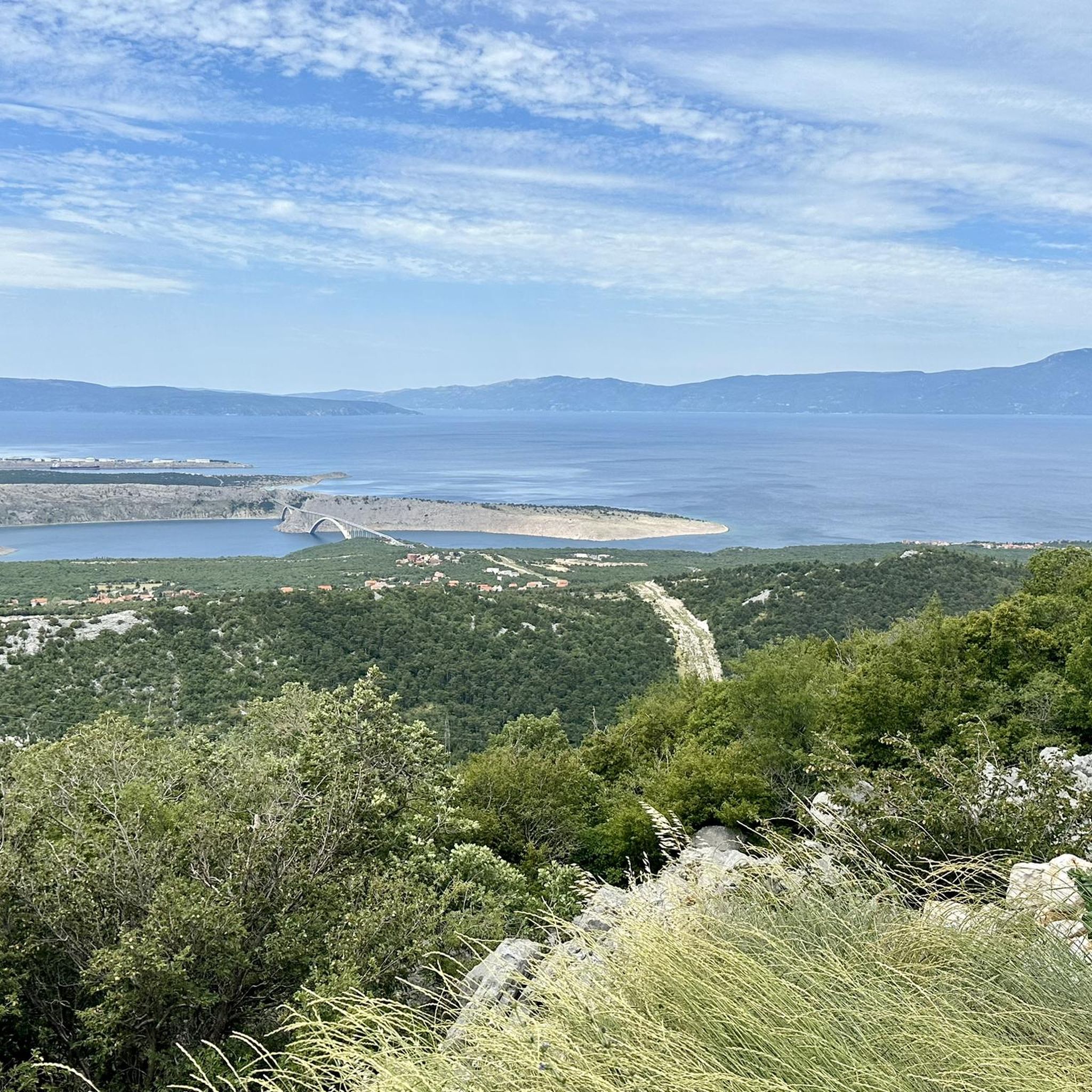
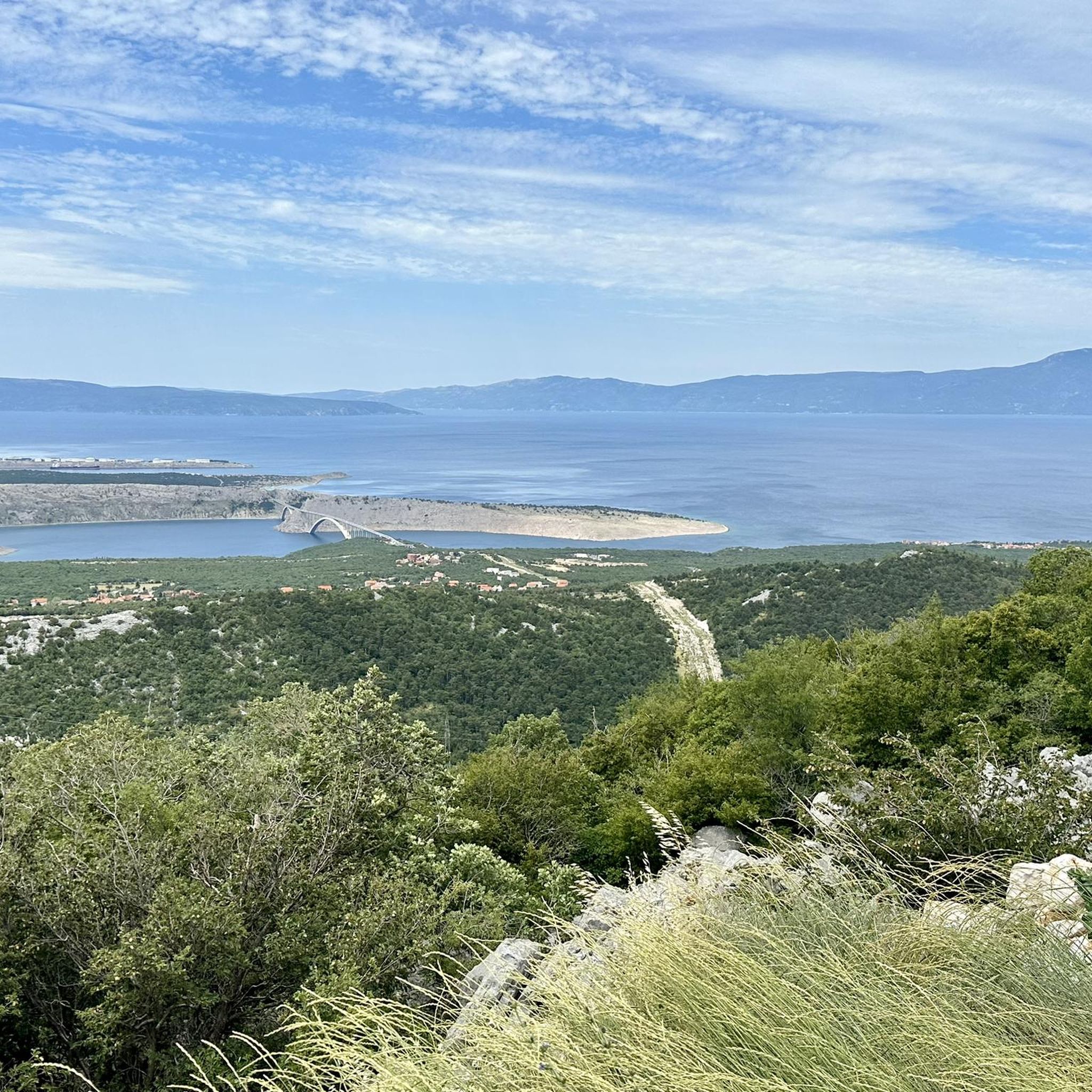
Nice view over the bay and the bridge to Krk
3
0

Three forest roads and several hiking trails meet at Cajtiga. An important intersection between Platka, Snježnik, Lazac, Risnjak and Vilje.
2
0
One of the entrances to Risnjak National Park. The road from Gornji Jelenje leads to Vilje (the road goes towards Platko, and one part separates towards Vilje and Cajtiga). One part is paved, the other part is macadam. Although bad in some places, it is passable by car. You can park at Villa, and Schlosser's house in Risnjak is about a 1:30-hour walk.
1
0
On the road from Gornji Jelenj to Cajtiga, one of the entrances to Risnjak National Park. The hiking trail leads from here to Medvjeđa vrata, and the forest road to Cajtiga, from where you can either go to Lazac, or to Platko. The road is good for MTB or gravel with slightly thicker tires.
0
0
Frequently Asked Questions
What historical sites can I explore in Grad Bakar?
Grad Bakar is rich in history. You can visit the impressive Frankopan Castle (Bakarska Gradina) which dominates the old town. Nearby, the Hreljin Castle Ruins offer beautiful vistas and are part of the 'Routes of the Frankopans'. The historic Church of St. Andrew, one of Croatia's largest, also features catacombs that can be visited with advance notice. Don't miss the unique architecture of the Turkish House and Roman House within the old town.
Where can I find the best panoramic views around Grad Bakar?
For breathtaking panoramas, head to Tuhobić Peak, which offers enchanting views of the Gorski Kotar mountains and the Kvarner Bay. Another excellent spot is the Viewpoint above the Bakar Dry-Stone Walls, providing a beautiful perspective of the entire bay. The Hreljin Castle Ruins also provide a nice view over the bay and towards the bridge to Krk.
Are there natural attractions or unique phenomena to see in Grad Bakar?
Yes, Grad Bakar boasts several unique natural features. The Ponikve Area is a peculiar karstic phenomenon with a 'now you see me, now you don't' lake, where you can sometimes walk on the lakebed. A significant portion of Risnjak National Park, including Risnjak peak, lies within Grad Bakar's administrative area, offering stunning natural beauty. You can also explore the historic Bakarske Prezidi Vineyards, magnificent terraced vineyards declared a protected landscape.
What outdoor activities can I do near Grad Bakar's attractions?
The area around Grad Bakar is excellent for outdoor activities. You can access Risnjak National Park from the Vilje Entrance, leading to various hiking trails. For cycling, there are routes like the 'Panoramic view of Bakar Bay' or 'Paradiesweg Swimming Bay' loops. If you prefer hiking, consider easy trails such as the 'View of the Island of Krk – Hreljin Castle Ruins loop'. You can find more details on these activities in the cycling guide, road cycling guide, and easy hikes guide for Grad Bakar.
Can I access Risnjak National Park from Grad Bakar?
Yes, a significant part of Risnjak National Park is within Grad Bakar's administrative area. You can access the park via the Vilje Entrance, which serves as a primary entry point to trails leading to areas like Medvjeđa vrata or the forest roads to Cajtige Trail Junction, a key intersection for paths within the park.
Are there family-friendly activities or attractions in Grad Bakar?
Grad Bakar offers several family-friendly options. Exploring the romantic old streets and coastal promenade is enjoyable for all ages. The Tuna Fishing Park and 'Nets of Memory' in Banj Park provide an engaging outdoor educational exhibition about Bakar's unique fishing tradition. The Perilo Viewpoint is also noted as family-friendly. Additionally, the peculiar Ponikve Area, with its 'now you see me, now you don't' lake, can be a fascinating experience for children.
What unique cultural experiences or local specialties does Grad Bakar offer?
Grad Bakar is known for its unique cultural heritage. You can discover the mystery of the Façade Heads adorning old buildings or explore the restored public fountains (Špinas) with a tourist map. The town celebrates 'Margaretino Leto,' a large cultural and entertainment event from mid-June to July, featuring historical walks, a Naval Battle, and fireworks. Don't forget to try the traditional dry biscuit, Bakar 'Baškot,' and the famous sparkling wine, Bakarska Vodica.
What do visitors enjoy most about the attractions around Grad Bakar?
Visitors particularly enjoy the stunning panoramic views from spots like Tuhobić Peak, which offers vistas towards both the land and the sea. The historical significance of sites like the Hreljin Castle Ruins and the unique natural phenomena like the Ponikve Area are also highly appreciated. The blend of coastal charm and mountainous landscapes provides a diverse and engaging experience for those interested in history, nature, and outdoor activities.
When is the best time of year to visit Grad Bakar?
The best time to visit Grad Bakar largely depends on your interests. For hiking and exploring natural features like Risnjak National Park and Tuhobić Mountain, spring and autumn offer pleasant temperatures. Summer (mid-June to end of July) is ideal if you want to experience the 'Margaretino Leto' cultural event and enjoy the coastal atmosphere, though it can be warmer. The 'now you see me, now you don't' lake in Ponikve also offers different experiences depending on the season's rainfall.
Are there any industrial heritage sites to visit in Grad Bakar?
Yes, Grad Bakar has an interesting industrial heritage site. The Bakar Underwater Tunnel, a 395-meter-long concrete tunnel built in 1978, once transported materials across the bay. It is now recognized as an industrial heritage monument and is slated to become a tourist attraction, offering a unique perspective of the bay.
Where can I find fresh water springs in Grad Bakar?
Grad Bakar is home to several springs of drinking water. The roaring Jaz spring plunges directly into the sea, and nearby, Perilo is a historical laundry site where freshwater also emerges. Additionally, several old public fountains (Špinas) are being restored to their original function throughout the town, offering both historical interest and access to fresh water.
Most popular routes around Grad Bakar

Get inspired with the komoot mobile app


Explore more
Still not found the Highlight you’re looking for? See guides of the top attractions in other regions:
