Attractions and Places To See around Piotrków - Top 20
Best attractions and places to see around Piotrków include a variety of historical landmarks, cultural sites, and natural features. The city, rich in history, offers a blend of medieval urban layouts and significant religious monuments. Visitors can explore remnants of 14th-century city walls and discover sites reflecting its multicultural heritage. The surrounding area also provides natural recreational opportunities, including reservoirs and parks.
Best attractions and places to see around Piotrków
- The most popular attraction is Footbridges by Sulejów Reservoir,…
Last updated: August 11, 2026
Cistercian Abbey Complex in Sulejów
Highlight • Religious Site
Translated by Google •
Tip by

Cieszanowice Reservoir
Highlight • Lake
Translated by Google •
Tip by

Sign up now to discover places like this
Get recommendations on the best single tracks, peaks, & plenty of other exciting outdoor places.
Sign up for free
Małpi Most (Monkey Bridge) over the Pilica River
Highlight • Bridge
Translated by Google •
Tip by
St. Alexius Roman Catholic Church in Przedbórz
Highlight • Religious Site
Translated by Google •
Tip by

Sulejów Reservoir
Highlight • Lake
Translated by Google •
Tip by

Wooden bridges on the Luciąża River
Highlight (Segment) • Bridge
Translated by Google •
Tip by
St. Anne Cemetery Chapel and Cemetery in Wolbórz
Highlight • Religious Site
Translated by Google •
Tip by
Bykowski Castle in Byki
Highlight • Castle
Translated by Google •
Tip by
Footbridges by Sulejów Reservoir
Highlight • Bridge
Translated by Google •
Tip by

St. Nicholas Collegiate Church in Wolbórz
Highlight • Religious Site
Translated by Google •
Tip by
Sign up for free to discover even more attractions around Piotrków.
Sign up for free
Already have an account?
Start today with a free account
Your next adventure awaits.
Login or Signup

Tips from the Community

Beautiful place. Access from Dąbrówka/ Szarbka is sandy in places - but it's worth overcoming these inconveniences 😃
0
0

The Cistercian abbey complex in Sulejów (in the Podklasztorze district) is the best-preserved post-Cistercian complex in Europe and a Monument of History. Founded in 1176 by Casimir II the Just, it has retained its unique character thanks to Romanesque-Gothic architecture and powerful defensive walls. The facility combines sacred functions with a historic accommodation and gastronomic base. The monastery is open to visitors and offers an insight into the Cistercian order's heritage. It is worth paying attention to specific elements of the complex: - St. Thomas the Apostle Church: A Romanesque temple from the 13th century with characteristic Gothic details. - Museum in the chapter house: A place exhibiting old monastic memorabilia and historical artifacts. - Fortifications: 15th-century walls with bastions and gates, surrounding the entire complex.
1
0
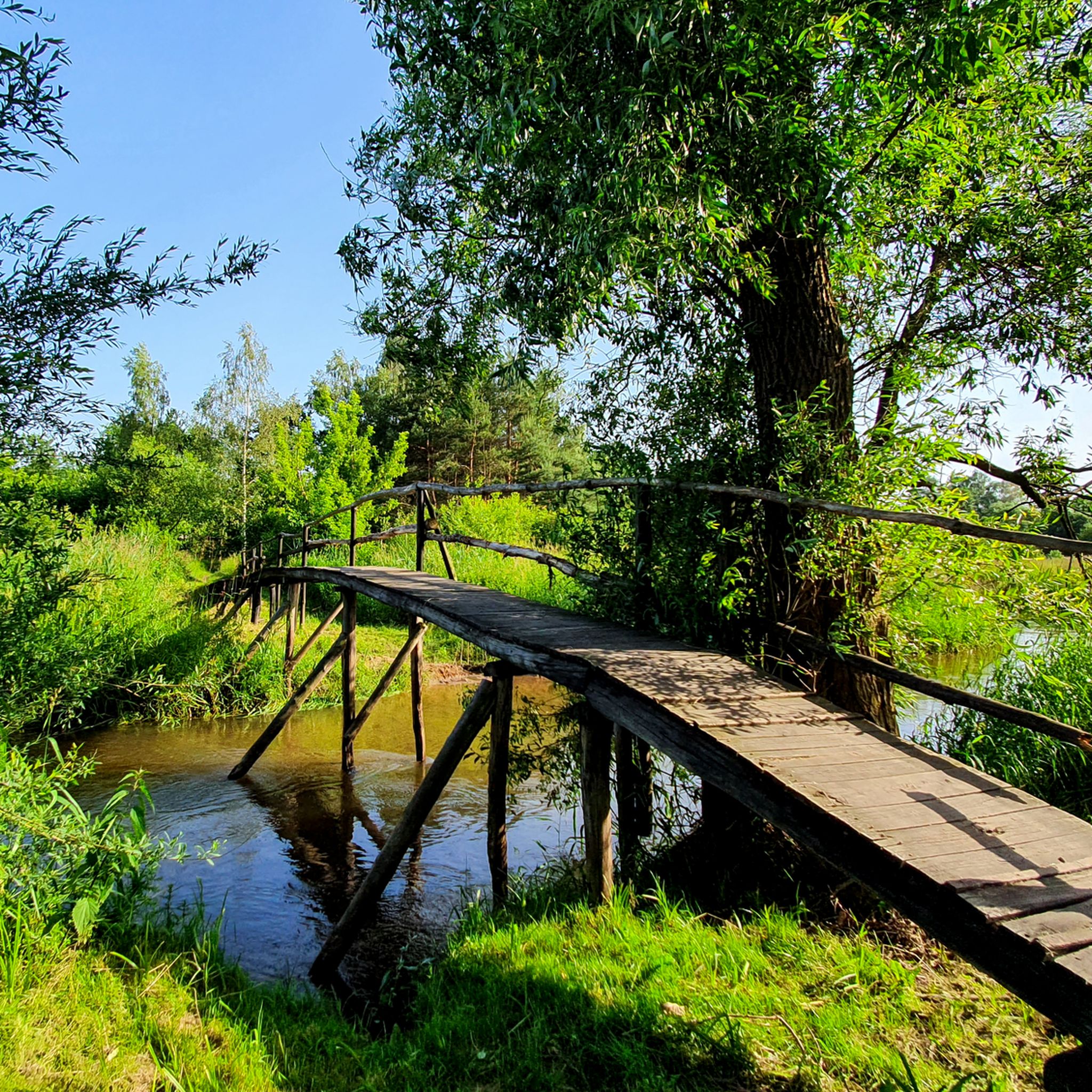
The footbridges over the Luciąża (the longest left tributary of the Pilica) are located in the vicinity of the former Murowaniec mill settlement, just before the river flows into the Pilica. They are a popular spot on the hiking and cycling trail and often serve as a finish line for kayak trips.
1
0
new footbridges over the Luciąża river
1
0

In May 2026, 2 planks are missing but it is passable.
1
0
It is possible to ride, although in May 2026, 2 planks were missing.
1
0

It is better to arrive from Stobnica, because from the east you have to cross a long section of forest sand.
0
0

You can test your skills and cross the rope bridge to the other side of the Pilica River... with your bike.
0
0
Frequently Asked Questions
What historical landmarks can I explore in Piotrków Trybunalski?
Piotrków Trybunalski is rich in history. You can visit the well-preserved medieval
Old Town and Market Square, explore the remnants of the 14th and 15th-century City Walls, and see the Royal Castle, which now houses a museum. Other notable historical structures include the distinctive Water Tower and the Red Brick Factory Tower.
Are there any significant religious sites to visit in the area?
Yes, Piotrków Trybunalski has several important religious sites. These include the 13th-century St. Jacob Church (Farny Church), the Gothic Visitation Church (Old Church), and the Saint Hyacinth and Dorothy Church. The Church of St. Francis Xavier (Jesuit Church) near the Market Square is also notable. Additionally, the 19th-century All Saints' Orthodox Church on Sieradzka Street is a significant sacral monument. Further afield, the Cistercian Abbey Complex in Sulejów is one of Poland's best-preserved Romanesque Cistercian complexes.
Where can I find natural attractions and recreational areas near Piotrków?
For natural beauty and recreation, you can visit Cieszanowice Reservoir, the second largest reservoir in Piotrków County, offering water equipment rentals and fishing. The Sulejów Reservoir is another large body of water with recreational opportunities, including the Footbridges by Sulejów Reservoir. Within the city, Słoneczko Beach at Lake Bugaj provides a sandy beach, water sports, and a running path. Park Belzacki features protected natural monuments, including ancient trees.
What unique cultural experiences does Piotrków Trybunalski offer?
Piotrków Trybunalski offers several unique cultural experiences. You can explore the city's multicultural heritage through the Trakt Wielu Kultur (Route of Many Cultures), which highlights sites important to various communities. The Great Synagogue, now the Public Library, and the Small Synagogue reflect the city's significant Jewish history. The Brewing Museum provides insights into local brewing traditions. For film enthusiasts, the Movies City Route guides visitors to locations featured in various productions, and the Piotrkowska Aleja Gwiazd Sportu (Avenue of Sports Stars) celebrates Polish athletes.
Are there family-friendly attractions suitable for children?
Many attractions around Piotrków are suitable for families. Recreational areas like Cieszanowice Reservoir and Sulejów Reservoir offer beaches and water activities. The Słoneczko Beach at Lake Bugaj is also a great spot for families. Historical sites such as the Royal Castle and the Old Town can be engaging for older children interested in history. The Cistercian Abbey Complex in Sulejów and Bykowski Castle in Byki are also listed as family-friendly.
What kind of outdoor activities, like cycling or MTB, can I do around Piotrków?
The area around Piotrków offers diverse outdoor activities. For cycling, you can explore routes like the 'Sulejów Reservoir – Sulejów Reservoir Dam loop' or the 'Wierzeje Reservoir – View of Bugaj loop'. Mountain biking enthusiasts can try routes such as the 'Wooden Bridge Over Stream – World War II German Bunker loop' or the 'Lakeside View – German WWII Bunker loop'. There are also gravel biking options, including the 'Sulejów Reservoir Dam – Wooden Bridge Over Stream loop'. You can find more details on these routes in the MTB Trails around Piotrków, Cycling around Piotrków, and Gravel biking around Piotrków guides.
Can I find hiking trails near Piotrków Trybunalski?
Yes, there are opportunities for hiking. The Recreational Trail of the Pilica is a 122-km-long trail showcasing monuments along the Pilica River. While not explicitly listed as hiking, the paths around Słoneczko Beach at Lake Bugaj are suitable for Nordic Walking. For more adventurous walks, you might encounter unique features like the Małpi Most (Monkey Bridge) over the Pilica River, though it can be challenging to cross.
What is the Cistercian Abbey Complex in Sulejów, and why is it significant?
The Cistercian Abbey Complex in Sulejów, located in Podklasztorze, is one of Poland's best-preserved Cistercian complexes and a significant monument of Romanesque architecture. It was built in the 12th century and was entered on the list of Historic Monuments in 2012. It's a must-see for those interested in historical and religious architecture.
Are there any unique bridges or river crossings to experience?
Yes, the area features some interesting river crossings. The Małpi Most (Monkey Bridge) over the Pilica River is a notable, albeit often challenging, crossing. There are also Wooden bridges on the Luciąża River that connect paths leading to the Sulejowski Reservoir, offering scenic views.
What is the best time of year to visit Piotrków Trybunalski for outdoor activities?
The best time to visit Piotrków Trybunalski for outdoor activities is generally during the warmer months, from late spring to early autumn (May to September). During this period, the weather is most favorable for exploring historical sites, enjoying recreational areas like the reservoirs and beaches, and engaging in cycling, mountain biking, or walking along trails. The natural features are at their most vibrant, and water activities are available.
Are there any hidden gems or lesser-known outdoor spots worth discovering?
While not widely publicized, the Niebieskie Źródła Nature Reserve (Blue Springs Nature Reserve) and the Nagórzyckie Caves (Groty Nagórzyckie) are unique natural features located in the vicinity that offer a different kind of outdoor exploration away from the main attractions. These spots provide opportunities to experience the region's natural geology and unique spring formations.
What is the significance of the Great Synagogue in Piotrków Trybunalski?
The Great Synagogue, built between 1791 and 1793, is a historically significant site in Piotrków Trybunalski. It reflects the city's once-thriving Jewish community and its poignant history, including being the location of the first ghetto in Europe during World War II. Today, the building serves as the Public Library, preserving its architectural heritage while serving a new community purpose.
Most popular routes around Piotrków
Most popular attractions around Piotrków

Get inspired with the komoot mobile app


Didn’t find what you were looking for?
Are you keen on exploring more awesome places nearby? Browse our guides:
Explore more
Still not found the Highlight you’re looking for? See guides of the top attractions in other regions:
