Attractions and Places To See around powiat krośnieński - Top 20
Best attractions and places to see around powiat krośnieński encompass historical landmarks and natural features, primarily along the Neisse river. This border region offers a variety of sites, including remnants of medieval city fortifications and significant bridges. The area provides insights into its historical past and scenic river landscapes. Visitors can explore numerous points of interest that reflect the region's unique character.
Best attractions and places to see around powiat krośnieński
- The most popular attractions is Ruins of the Parish…
Last updated: August 11, 2026
Old Railway Bridge on the Oder–Neisse Cycle Path (Guben)
Highlight • Bridge
Translated by Google •
Tip by

City Bridge Guben-Gubin over the Neisse
Highlight • Bridge
More information: de.wikipedia.org/wiki/Guben#Verkehr
Translated by Google •
Tip by

Sign up now to discover places like this
Get recommendations on the best single tracks, peaks, & plenty of other exciting outdoor places.
Sign up for free
Neißewelle Bridge (Coschen–Zytowan)
Highlight • Bridge
Translated by Google •
Tip by
Neisse Bridge at Groß Gastrose (Albertinenaue)
Highlight • Bridge
Translated by Google •
Tip by

Ruins of the Parish Church of Gubin
Highlight • Historical Site
Translated by Google •
Tip by

Historic Guben Harbour and Warehouse on the Neisse
Highlight • Historical Site
Translated by Google •
Tip by

Monastery Church Guben
Highlight • Religious Site
Translated by Google •
Tip by

Rest Area at the Old Harbor Guben
Highlight • Rest Area
Translated by Google •
Tip by
Werderturm and Remains of the City Wall
Highlight • Historical Site
Translated by Google •
Tip by
Ruins of the Nordbrücke (North Bridge) in Guben
Highlight • Monument
Translated by Google •
Tip by

Sign up for free to discover even more attractions around powiat krośnieński.
Sign up for free
Already have an account?
Start today with a free account
Your next adventure awaits.
Login or Signup
Tips from the Community

Great resting place on a rail bike.
0
0

The ruins of Guben's town and main church are among the most remarkable buildings in Gubin. It was first documented in 1324 as a late Gothic town church. In 1945, it was destroyed by fighting and burned down. Since then, the ruins have stood as a memorial against war. A Gubin foundation and the Guben Friends' Association, led by Günter Quiel, are committed to rebuilding the church as a German-Polish meeting center. Security measures and the clearing of the interior have been completed. Presumably due to a lack of funds and political support, reconstruction is progressing slowly.
2
0

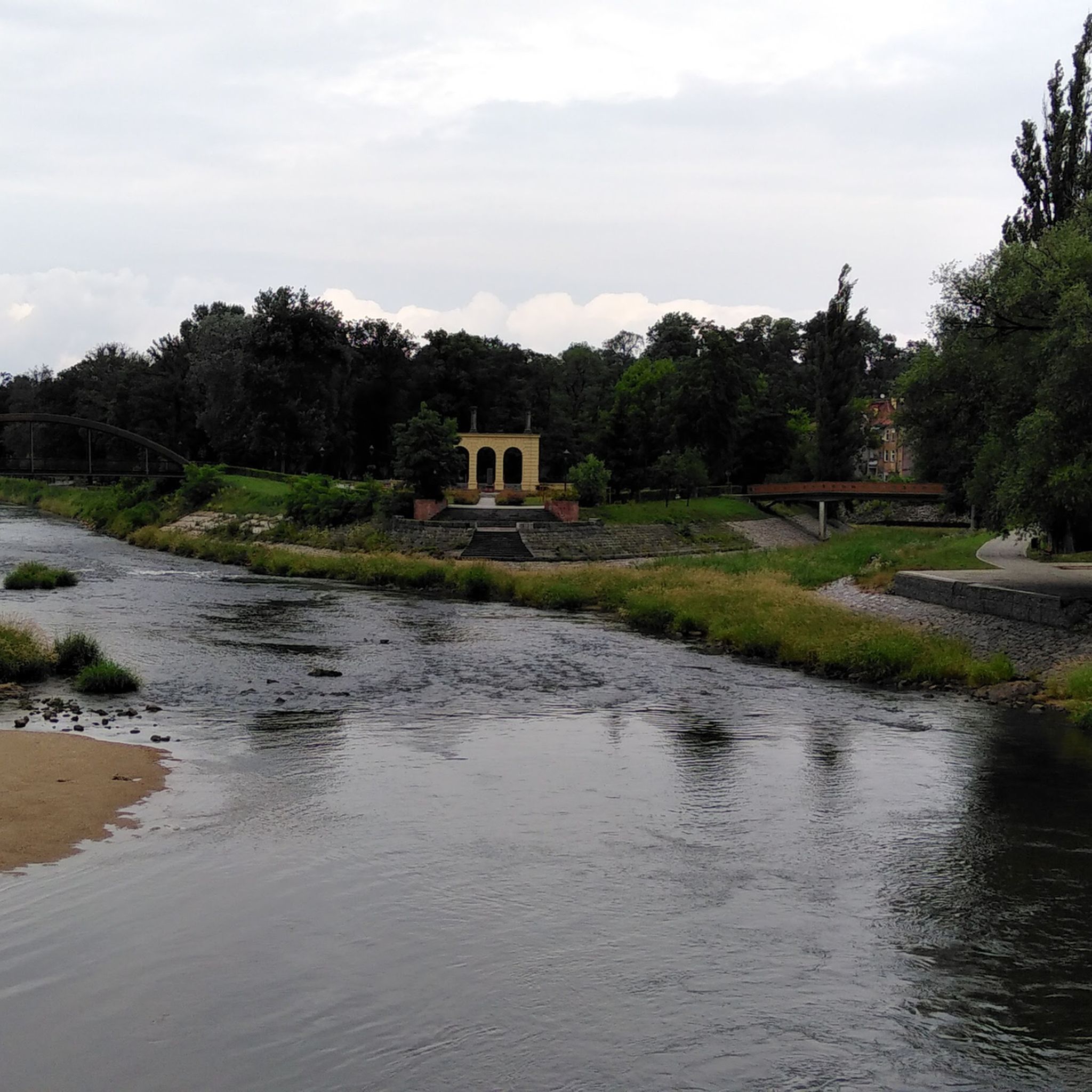
I recommend avoiding this section, as there are a lot of young people there in the evenings, and then there are a lot of broken bottles on the path.
0
0
The city and main church was destroyed during the fighting for the Neisse town from February to April 1945. Since then, its walls and tower have risen into the sky as ruins. It thus shared the fate of the churches along the Oder-Neisse border.
3
0

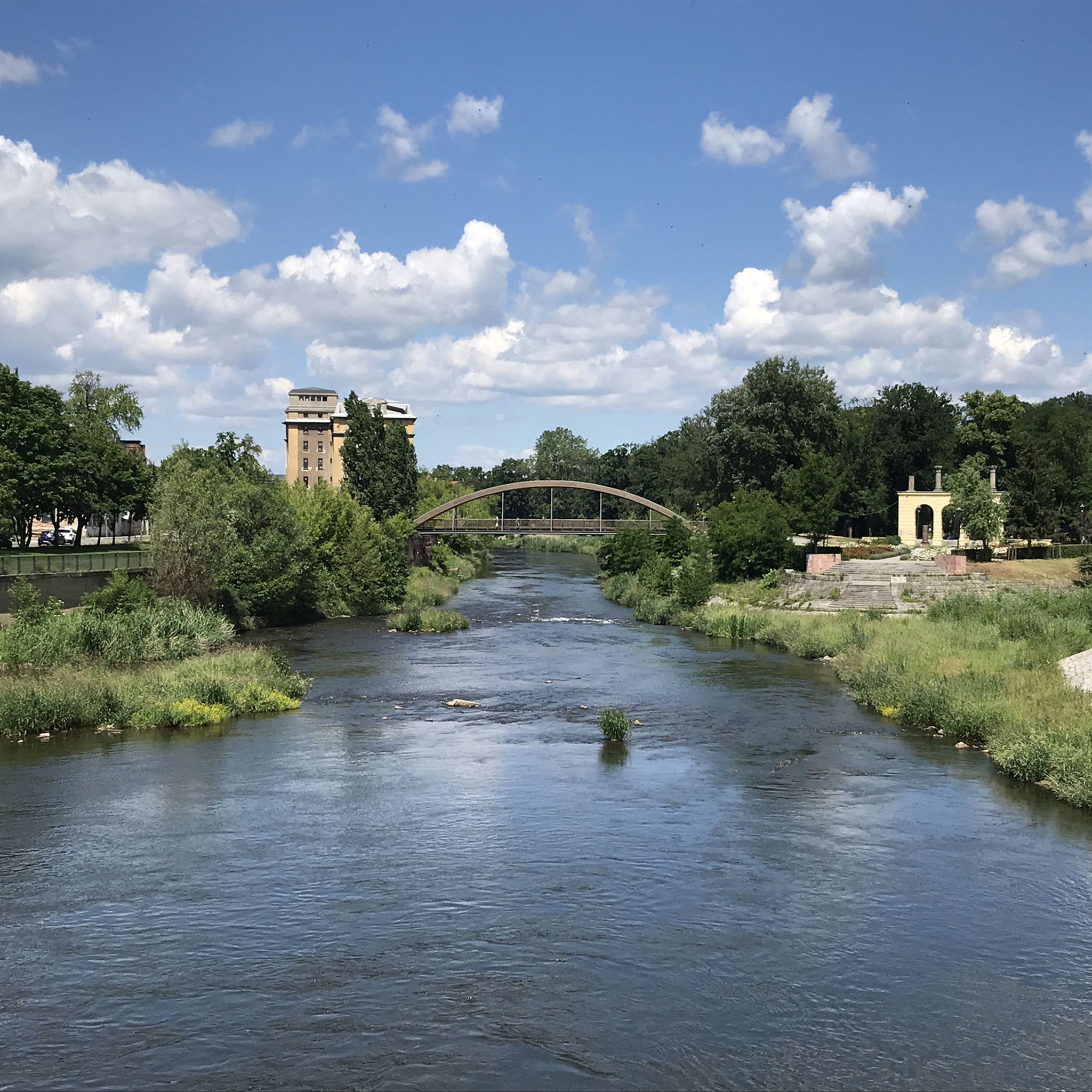
Unfortunately, I fell into the same trap today and planned my return trip over the bridge, only to discover with horror that the stairs no longer existed... which unfortunately meant another significant detour via Gubinek... It's a shame it's no longer there.
2
0

The Neisse Bridge near Coschen is a modern structure that has connected Poland and Germany since 2014. Rebuilt with EU funding, it is a symbol of European unity. Its futuristic design is a striking eye-catcher that leads not only pedestrians and cyclists, but also cars across the river. Despite its practical use, the bridge remains quiet, ideal for a break or a photo on the Neisse cycle path. For many Eisenhüttenstadt residents, it is a popular crossing to get cheap fuel or buy cigarettes in neighboring Poland, which sparked some discussion on the German side when it reopened
2
0
The old port of Guben was brought back to life in 2014 and is now an idyllic place to linger. A historic trolley invites you to take a leisurely break or have a picnic. The elevated warehouse and the long edge of the port are reminiscent of the times when ships docked here until the beginning of the 20th century. A replica of an old mooring brings the history of the port to life. Located directly on the Oder-Neisse cycle path, the port offers an interesting stopover for cyclists and walkers.
0
0

As the Lausitzer Wandersmann already wrote in 2022, but just as a reminder...the Red Stairs no longer exist.
3
0
Frequently Asked Questions
What historical sites can I explore around powiat krośnieński?
The region is rich in history, particularly around Gubin. You can visit the Ruins of the Parish Church of Gubin, a powerful memorial against war, or see the Werderturm and Remains of the City Wall, remnants of medieval fortifications. The Gubin Town Hall, rebuilt in Renaissance style, also offers a glimpse into the area's past.
Are there any notable bridges or viewpoints in the area?
Yes, the region, particularly along the Neisse river, features several interesting bridges. The Old Railway Bridge on the Oder–Neisse Cycle Path (Guben) is a historic structure that once linked Berlin with Wroclaw. You can also visit the Neißewelle Bridge (Coschen–Zytowan), which offers good views of the Neisse river and surrounding fields. The Ruins of the Parish Church of Gubin and the Werderturm also serve as viewpoints.
What kind of outdoor activities can I do near these attractions?
The area around powiat krośnieński is excellent for outdoor enthusiasts. You can enjoy cycling along the Oder-Neiße Cycle Path. For more specific routes, there are numerous options for MTB Trails, Gravel Biking, and Hiking, including easy to moderate trails like the 'Gryżyńskie Uroczyska Educational Trail' or loops around 'Jezioro Wielkie w Dąbiu'.
Are there family-friendly attractions in powiat krośnieński?
Many of the historical sites and natural areas are suitable for families. The Ruins of the Parish Church of Gubin and the Werderturm and Remains of the City Wall are interesting for all ages. Additionally, the Oder-Neiße Cycle Path offers accessible sections for family bike rides, and many of the nearby hiking and cycling routes are rated as easy or moderate.
What do visitors enjoy most about the attractions in powiat krośnieński?
Visitors appreciate the historical significance of sites like the Ruins of the Parish Church of Gubin, which stands as a powerful memorial. The scenic views from bridges like the Neißewelle Bridge and the opportunity to explore the region's past through its preserved structures are also highly valued. The accessibility of cycle paths and the natural river landscapes are frequently mentioned highlights.
Are there any natural features or parks to visit?
While the guide focuses on man-made attractions, the region is characterized by its scenic river landscapes, particularly along the Neisse and Oder rivers. The Gryżyński Landscape Park, mentioned in regional research, is known for its rare plant and animal species, offering opportunities for nature observation.
Can I find places to eat or rest near the attractions?
Yes, for example, near the Ruins of the Parish Church of Gubin, there's a restaurant in the historic yellow house next to the Gubin Town Hall. The Gubin Town Hall itself houses the 'Tercet' restaurant in its Ratskeller, offering regional dishes. There are also rest areas, such as the Rest Area at the Old Harbor Guben, which are convenient for visitors.
What is the best time of year to visit powiat krośnieński?
The region's attractions, particularly the outdoor cycle paths and historical sites, are generally best enjoyed during the warmer months, from spring through early autumn (April to October), when the weather is pleasant for exploring and outdoor activities.
Are there any specific cycling routes recommended in the area?
Absolutely. The Oder-Neiße Cycle Path is a popular choice, connecting Guben to Forst. For more varied cycling, you can explore MTB Trails or Gravel Biking routes, such as the 'Kokno – Jezioro Młyńskie loop from Krosno Odrzańskie' or the 'Fieldstone Church Grießen – Weir at the Mühlenhof loop from Guben'.
Can I find wheelchair-accessible paths or attractions?
Yes, some areas are designed for accessibility. The Neißewelle Bridge (Coschen–Zytowan) is noted as wheelchair accessible, as is the Oder-Neiße Cycle Path in certain sections, and the Rest Area at the Old Harbor Guben.
Are there any lesser-known or 'hidden gems' to discover?
Beyond the main highlights, exploring the smaller villages around Krosno Odrzańskie can reveal charming historical churches and manors, such as the 13th-century Gothic church in Chlebowo or the late Gothic church in Czetowice, as mentioned in regional research. These offer a quieter, more local experience.
What are the main historical periods reflected in the attractions?
The attractions primarily reflect periods from the medieval era through to the 20th century. You'll find remnants of 13th-century Gothic architecture, 14th-15th century city fortifications, and Renaissance-style buildings like the Gubin Town Hall. The impact of World War II is also evident in sites like the Ruins of the Parish Church of Gubin and the Old Railway Bridge.
Most popular routes around powiat krośnieński
Most popular attractions around powiat krośnieński

Get inspired with the komoot mobile app


Didn’t find what you were looking for?
Are you keen on exploring more awesome places nearby? Browse our guides:
Explore more
Still not found the Highlight you’re looking for? See guides of the top attractions in other regions:
