Attractions and Places To See around powiat prudnicki - Top 15
Best attractions and places to see around powiat prudnicki include a diverse range of natural beauty and historical landmarks. Located in the Opole Voivodeship, this region features the Opawskie Mountains, offering extensive hiking and cycling trails. Visitors can explore historic towns, ancient castles, and significant natural monuments. The area provides opportunities to experience both the natural landscape and its rich cultural heritage.
Best attractions and places to see around powiat prudnicki
- The most popular attraction is Żabie Oczko Pond,…
Last updated: July 29, 2026
Żabie Oczko Pond
Highlight • Lake
Translated by Google •
Tip by

Church of the Assumption of the Blessed Virgin Mary in Biała
Highlight • Religious Site
Translated by Google •
Tip by

Sign up now to discover places like this
Get recommendations on the best single tracks, peaks, & plenty of other exciting outdoor places.
Sign up for free
Zamek Castle Głogówek
Highlight • Castle
Translated by Google •
Tip by
Olszak Hill (453 m)
Highlight • Summit
Translated by Google •
Tip by
Pruszkowskich Castle
Highlight • Castle
Showing Translation
Tip by
Statue of St. John of Nepomuk in Biała
Highlight • Monument
Translated by Google •
Tip by
Sanctuary of St. Joseph
Highlight • Religious Site
Translated by Google •
Tip by

Biała Town Square
Highlight • Settlement
pl.wikipedia.org/wiki/Bia%C5%82a_(city)
Translated by Google •
Tip by

Olszak Nature Reserve
Highlight (Segment) • Natural Monument
Translated by Google •
Tip by
Frog's Eye and the Eichendorff Monument
Highlight • Monument
Translated by Google •
Tip by

Sign up for free to discover even more attractions around powiat prudnicki.
Sign up for free
Already have an account?
Start today with a free account
Your next adventure awaits.
Login or Signup
Popular around powiat prudnicki
The Main Sudeten Route – a great Polish mountain adventure
Hiking around powiat prudnicki
Cycling around powiat prudnicki
Road Cycling Routes around powiat prudnicki
Running Trails around powiat prudnicki
MTB Trails around powiat prudnicki

Gravel biking around powiat prudnicki
Mountain Hikes around powiat prudnicki
Other adventures around powiat prudnicki

Tips from the Community

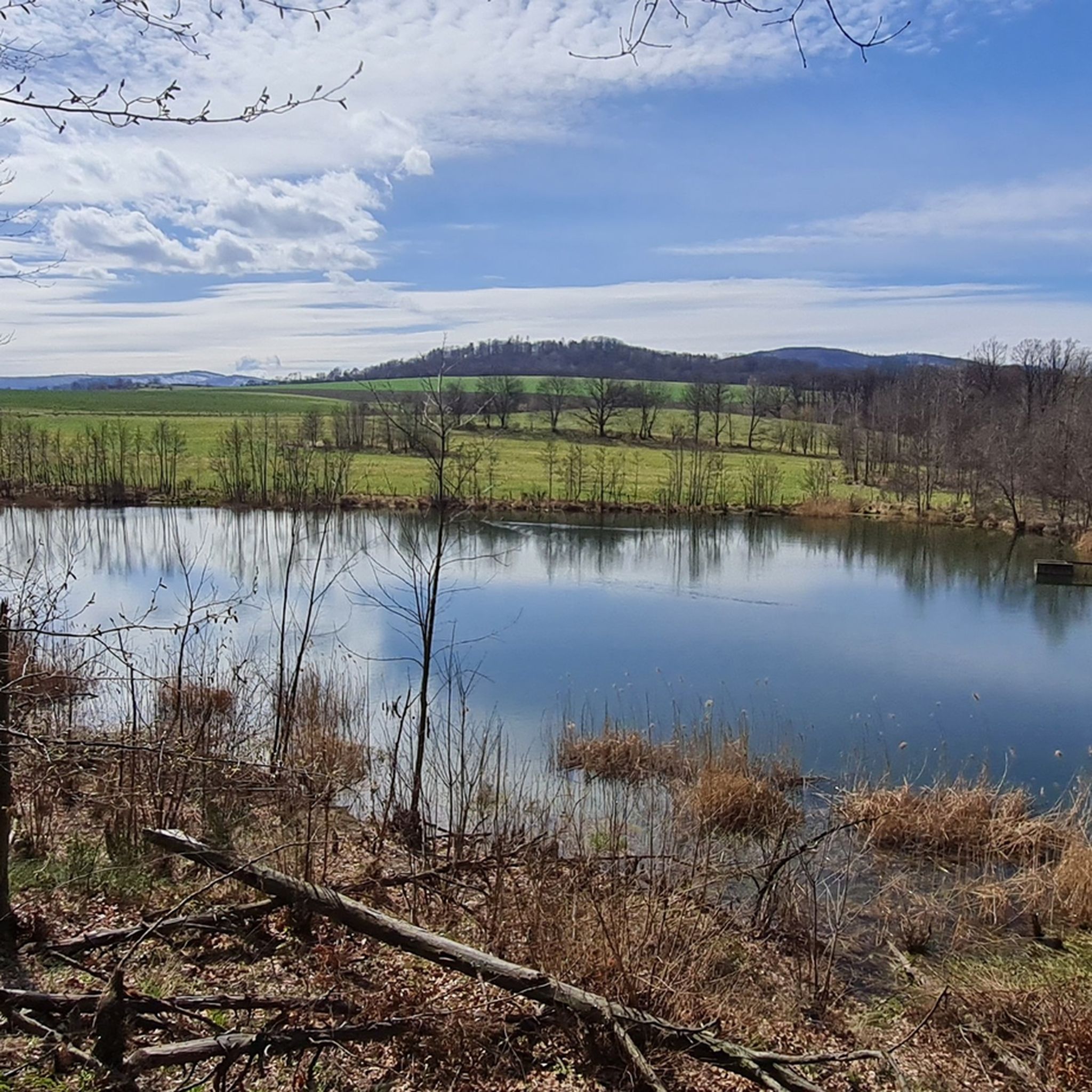
Żabie Oczko Pond is a former quarry, flooded by rainwater, likely dating back to 1869. Above the quarry stands a monument to Joseph von Eichendorff, a great poet of the Romantic era, considered by many to be the German equivalent of Adam Mickiewicz. He frequently visited this area, and a monument to him was erected here in 1911.
1
0

The facility is not open to visitors, it is a pity that the State is not able to take care of it and it is slowly falling into ruin.
0
0

The Sanctuary of St. Joseph in Prudnik-Las is a unique place combining history, spirituality, and the beauty of nature. Situated on the edge of the Prudnik Forest, surrounded by greenery, it forms part of the Franciscan monastery complex. St. Joseph's Church was built in 1866 and is a destination for numerous pilgrimages. A particularly important period in the sanctuary's history was the years 1954–1955, when the interned Primate of Poland, Cardinal Stefan Wyszyński, was imprisoned here. Today, visitors can see the cell where he was imprisoned and learn about its history.
2
0

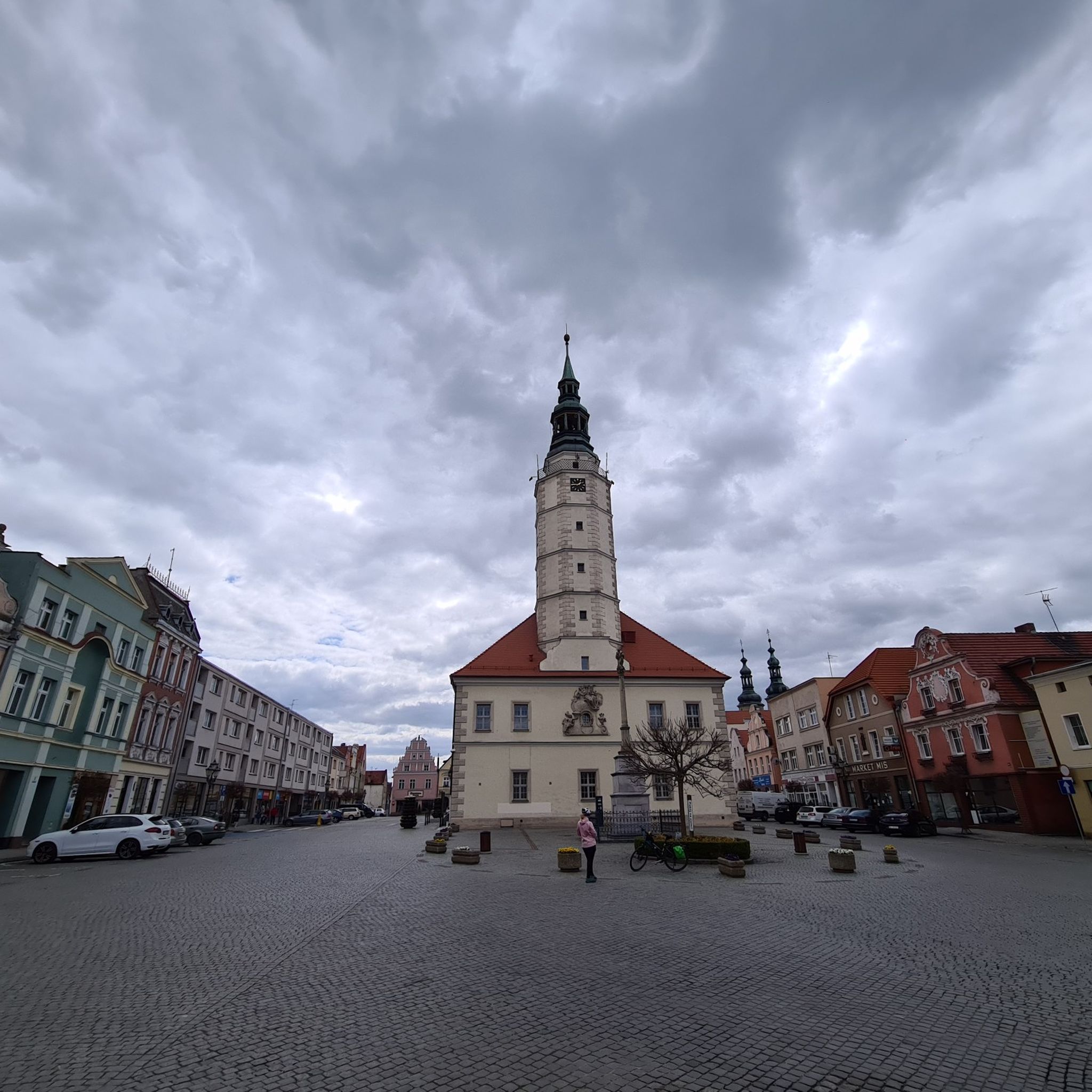
The Baroque sculpture of St. John of Nepomuk was created in the second half of the 19th century, in a local Silesian workshop. The year of its creation dates back to 1867. The monument is located on the Biała market square. The whole was made of two types of stone: sandstone and granite. The monument consists of two parts - a pedestal and a full-plastic sculpture of the Saint. The height of the object is about 4.5 m, while the figure itself is 190 cm high, 90 cm wide, 65 cm deep. Granite was also used to make the structural elements of the ground floor, i.e. the profiles of the steps and the cuboid base under the figure of the Saint. The architectural pedestal of the over-life-size sculpture of St. John of Nepomuk was made of sandstone. The individual stone blocks of the pedestal were connected with each other with lime-sand mortar. The figure of the Saint was carved in a large-sized sandstone monopole, as mentioned earlier. A simple pedestal, framed by volutes. The figure of St. John of Nepomuk is shown on a contrapposto, deeply modeled robes introduce the sculpture into a dancing movement. Wide shoulders. The saint stands on a pedestal. The figure is dressed in liturgical attire – a cassock, surplice and a cape reaching the knees. In the lower part, the cassock adheres to the legs, the left leg bent at the knee is clearly visible. A biretta on the head. The head is tilted towards the left shoulder. The face of a youth, temples surrounded by hair. In his hand, the saint holds a cross – a symbol of martyrdom. The representation is consistent with the iconography popularized in numerous sculptures found in Silesia, the Czech Republic, Moravia and Lesser Poland.
0
0
It is a baroque figure from 1865. The figure of the Immaculate Conception of the Blessed Virgin Mary shows Mary with her hands folded in prayer. She has neither a crown nor a characteristic scarf on her head, only a wreath of twelve stars - such a representation was popular after the announcement of the dogma of the Immaculate Conception of the Blessed Virgin Mary by Pope Pius IX. She stands on the globe, trampling with one foot a snake - a symbol of Satan, known from the biblical Book of Genesis. This is a direct reference to the vision of the Woman from the Apocalypse of St. John. On the pedestal of the figure there is an inscription-call in German, addressed to Mary: ,,O Maria ohne Erbsiinde empfangen, Mutter des Weltheilandes, bitte fur uns I 1865", which can be translated: ,,Mary, conceived without original sin, Mother of the Savior of the world, pray for us! 1865.
0
0
It is a temple built after a fire in 1544 as a brick one. The church was built in the Gothic style and is oriented, under the presbytery there is a burial crypt. It contains tombstones: Paweł Kozłowski (1595) - starost of Biała Podlaska and an unknown woman (around 1600). The building has three naves and has a chapel of St. John of Nepomuk, where you can see frescoes from the 16th century. The presbytery and side naves are covered with a barrel-cross vault. The main nave has two bays and represents the Gothic style. Under the choir there is a hand-forged grille made in 1631 and a figure of Christ the Sorrowful. The main altar represents the Rococo style and was created in 1773. The side altars represent the Baroque style and were created in 1700. At the pillar between the naves there is a painting of Our Lady of Częstochowa placed in a metal dress, extruded in the 18th century. The church tower in the lower storeys has a square plan, in the upper storeys it has an octagonal plan. The external walls are covered with sgraffito decoration in the form of diamond rustication created in the 16th century.
0
0
In Biała, two crosses stand to this day, the third comes from Frącki (a hamlet of Pogórze), but is currently located on private property in Brzeźnica. Penitential crosses are "relics of medieval law". Each of these objects has its own interesting history documented in court records or passed down in folk legends. At the turn of the 13th and 14th centuries, judicial law was introduced, among other places, in Silesia. Earlier, the principle was simple: for the victim's death, the killer paid with their life. The new law led to a detailed examination of the causes of murder, e.g., acting in a fit of passion was taken into account. This allowed some perpetrators to avoid the death penalty and reach an agreement with the victim's family, the so-called "penitential treaty". The perpetrator had to fulfill many obligations set by the court and the family. Basic ones included, among others: covering the costs of the victim's funeral, supporting the deceased's children until they came of age, transferring a specified sum of money to the family, ordering and paying for a specified number of memorial masses, undertaking a pedestrian pilgrimage to the then places of religious worship, e.g., Jerusalem, Rome, Aachen, or later Częstochowa and St. Anne's Mount. One of the perpetrator's most important obligations was to personally or commission the creation of a penitential cross from stone and its erection at the scene of the crime. The crosses were made of stone characteristic of the given area (sandstone, conglomerate, limestone, or granite). The height ranged from 30 to 250 cm, the width from 30 to 120 cm, the thickness from 9 to 60 cm. The Biała crosses are among the oldest preserved in the Opolszczyzna region. One: by the south wall of the castle has a shape similar to a clover leaf; with dimensions of 97 cm (height), 20 cm (thickness), 33 cm (arm span). It is carved in granite, belongs to the group of the oldest, which is why time has blurred the image of the murder weapon. An interesting story is associated with its origin and discovery. It was the only "missing" cross in the inventory of these objects in the Prudnik region. It was only known that it should be somewhere on the Biała-Wasiłowice-Śmicz route. In 1976, after six days of searching, Komarnicki with a group of Biała high school students found the stone cross. It lay in a roadside ditch about 400m from the town limits. It was covered with earth and barely visible. Komarnicki decided to move the cross to a safer place so that it would not disappear again. The chosen location was next to the Prószków Castle, where a primary and secondary school was located at the time. However, the Provincial Conservator of Monuments in Opole ordered that the cross be returned to its place or handed over to the museum in Prudnik. Komarnicki did not want to agree to this. Eventually, the commotion subsided, and the cross did not change its location until the castle was taken over by a new owner – the company "Moda Polska". The object began to be renovated, and the construction crew wanted to use the cross as building material. It was managed to be saved again, though not without losses: the cross was broken into two parts. Fearing destruction, it was then moved to the intersection of today's streets: Opolskiej and Moniuszki. It stood there until one of the broken parts disappeared. The missing part was found at the municipal landfill. Then, the local stonemason master Jan Gacki took up the renovation of the cross, joining the two broken parts. In this way, this stone cross was saved for the third time and moved again under the castle wall, where it stands to this day. Next to the cross, on a granite slab, there is a barely visible inscription "PENITENTIAL CROSS, 16TH C., CARE BTKO". The second cross is located at the intersection of Szynowice and Opolskiej streets, under a votive cross, surrounded by white pebbles and enclosed by a low metal fence. According to folk legends, a crime occurred at this spot where a merchant died while going to the market in Biała. The cross has a broken arm – it was probably a sign for travelers about the plague that raged in Biała in 1633. Its dimensions are: 80 cm (height), 45 cm (arm span), 18 cm (thickness).
0
0
From the 13th century, Biała was the seat of a castellany. The current brick castle was built in the Renaissance style, probably on the initiative of the Opole line of the Piasts before 1532. Originally, it had two single-tract wings - the current eastern and southern ones - which enclosed a small courtyard and had semicircular arcades on that side. From 1564, it belonged to the Prószkowscy family, first as a pledge, and from 1606 as their property. Around 1640, the Prószkowscy family expanded the complex in the Baroque style, adding a new double-tract wing from the west, with a tower built on its corner. In this form, only renovated, it has survived to this day. In 1747, Antoni Prószkowski's widow sold the castle and estates to Bartłomiej Oderfeld, and after nine years, it came into the hands of Rudolf Matuschek from Bohemia. The next owner from 1841 was Ferdinand Rudolf von Gersdorff. In 1872, the castle became the property of the town and from 1878, for the next half-century, it was used for educational purposes, housing a teacher training college. In the 19th century, during a renovation, the arcades were bricked up, creating an additional communication corridor along the 16th-century wings. After World War II, the buildings were used as warehouses for the Moda Polska company, and since the end of the 20th century, they have not been in use. Unfortunately, it is falling into ruin.
0
0
Frequently Asked Questions
What natural attractions can I explore in Powiat Prudnicki?
Powiat Prudnicki is rich in natural beauty, particularly within the Opawskie Mountains Landscape Park. You can visit Żabie Oczko Pond, a unique former quarry now filled with water and surrounded by rock walls, offering a peaceful spot to rest. Another notable natural feature is Olszak Hill (453 m), a wooded summit providing occasional views of the surrounding hills. The region also features the Olszak Nature Reserve, which has educational trails.
Are there historical sites or castles to visit in the area?
Yes, the region has a rich history reflected in its landmarks. You can see Zamek Castle Głogówek, a historical castle currently under renovation, where you can view its renovated facade and portal. Another historical castle is Pruszkowski Castle. In Prudnik itself, you'll find the oldest monument, Wok's Tower, a remnant of a 14th-century Gothic castle, and the historic Main Town Hall in the Market Square.
What religious sites are worth visiting in Powiat Prudnicki?
The area offers several significant religious buildings. The Sanctuary of St. Joseph is a notable site, known for its historical significance as a place where Archbishop Stefan Wyszyński was imprisoned. You can also visit the Church of the Assumption of the Blessed Virgin Mary in Biała, and the beautiful Baroque Saint Michael Archangel Church in Prudnik.
What kind of outdoor activities can I do near these attractions?
The Opawskie Mountains Landscape Park offers an extensive network of hiking and cycling trails. You can explore various routes for gravel biking, such as the challenging 'Emperor Franz Josef Observation Tower – View from Biskupia Kopa loop from Głuchołazy Miasto' or the 'Zlaté Hory town centre – Rejvíz Village loop'. For general cycling, there are routes like 'Prudnik Town Hall – Camping Osada Chmielaki loop'. Road cyclists can enjoy routes like 'Lovers' Bridge – View of Kopa Biskupia loop'. Find more details on these activities in the Gravel biking around powiat prudnicki, Cycling around powiat prudnicki, and Road Cycling Routes around powiat prudnicki guides.
Are there any family-friendly attractions in Powiat Prudnicki?
Yes, several attractions are suitable for families. Żabie Oczko Pond is a pleasant spot for a family outing, with benches for resting. The Sanctuary of St. Joseph and the Church of the Assumption of the Blessed Virgin Mary in Biała are also listed as family-friendly. Exploring the historic Biała Town Square or the Town Park in Prudnik can also be enjoyable for all ages.
What is the highest point in the Opawskie Mountains and what does it offer?
The highest peak in the Opawskie Mountains is Biskupia Kopa (890 m above sea level). It's a popular hiking destination and part of the Crown of Polish Mountains. From its summit, you can enjoy spectacular panoramic views, including the Czech Jeseníky Mountains and, on clear days, even the Karkonosze Mountains. There's an observation tower at the top for even more expansive vistas.
Where can I find accommodation or a place to rest while hiking in the Opawskie Mountains?
While exploring the Opawskie Mountains, you can find respite at the Górski Dom Turysty "Pod Biskupią Kopą" mountain hut. Situated at an altitude of 850 m, it's the only mountain hut in the Opawskie Mountains, offering accommodation and dining options. It serves as an excellent base for hikers, located at the intersection of numerous trails.
What are some unique historical monuments in Prudnik town?
Beyond the castles, Prudnik offers several unique historical monuments. The Wok's Tower, dating back to the 1350s, is the oldest monument in town. You can also see the historic Main Town Hall in the Market Square, built in the Classical style. The Town Park, founded in 1880, features a decorated arbour and a replica of the Diana of Versailles statue. Don't miss the Lower Gate, a Gothic tower from 1481, and Fränkel's Villa, considered one of Poland's most precious villas.
Are there any museums in the area to learn about the local history?
Yes, to delve into the local history, you can visit the Museum of Prudnik Region (Muzeum Ziemi Prudnickiej). It offers insights into the history of Prudnik and the surrounding area, providing context to the various historical sites you might encounter.
What is the best time to visit Powiat Prudnicki for outdoor activities?
The Opawskie Mountains are beautiful year-round. Spring and autumn offer pleasant temperatures for hiking and cycling, with vibrant foliage in autumn. Summer is ideal for longer treks and enjoying the natural landscapes. In winter, the region also offers opportunities for cross-country skiing, particularly in the Opawskie Mountains Landscape Park.
Can I find any unique natural features or viewpoints besides Żabie Oczko Pond?
Beyond Żabie Oczko Pond, the region boasts other interesting natural spots. The scenic Gwarkowa Perć trail in the Opawskie Mountains features former quarries, offering a unique geological experience. Additionally, there's an observation tower at Klasztorne Wzgórze (Kozia Góra) providing further views of the area.
What is the significance of the Frog's Eye and Eichendorff Monument?
The Frog's Eye and the Eichendorff Monument refers to the same location as Żabie Oczko Pond, highlighting its dual significance. The 'Frog's Eye' is the former quarry, flooded by rainwater. Above it stands a monument dedicated to Joseph von Eichendorff, a renowned Romantic poet who frequently visited this area. The monument was erected in 1911, honoring his connection to the region.
Most popular routes around powiat prudnicki
Most popular attractions around powiat prudnicki

Get inspired with the komoot mobile app


Didn’t find what you were looking for?
Are you keen on exploring more awesome places nearby? Browse our guides:
Explore more
Still not found the Highlight you’re looking for? See guides of the top attractions in other regions:
