Attractions and Places To See around Lesko - Top 20
Best attractions and places to see around Lesko include a blend of historical landmarks, cultural sites, and natural features. Situated in southeastern Poland, Lesko is often considered the gateway to the Bieszczady Mountains. The area offers diverse points of interest, from scenic mountain passes to unique geological formations and historical structures. It is located on the edge of the Słonne Mountains Landscape Park, providing views of the San Valley.
Best attractions and places to see around Lesko
- The most popular attractions is Orłowicz Pass, a mountain pass that serves as a junction for multiple trails in the Bieszczady Mountains. It is named after Mieczysław Orłowicz, a notable tourist activist and author of guides.
- Another must-see spot is Smerek, a summit and the westernmost peak of the Połonin Range. It offers extensive views of the Bieszczady Mountains.
- Visitors also love Kamień Leski, a natural monument consisting of an impressive 20-meter-high sandstone rock outcrop. This site is considered a symbol of Lesko and is accessible via a green tourist trail.
- Lesko is known for its historical sites, natural monuments, and religious buildings. The region provides a variety of attractions to explore, from mountain passes and summits to unique rock formations and cultural landmarks.
- The attractions around Lesko are appreciated by the komoot community, with more than 200 upvotes and over 60 photos shared across 163 highlights.
Last updated: August 11, 2026
Orłowicz Pass
Highlight • Mountain Pass
Translated by Google •
Tip by

Greater Jaslo
Highlight • Summit
The mountain is cleared here and uncrowded, offering a beautiful panorama in every direction.
Translated by Google •
Tip by

Sign up now to discover places like this
Get recommendations on the best single tracks, peaks, & plenty of other exciting outdoor places.
Sign up for free
Paportna
Highlight • Summit
Translated by Google •
Tip by

Memorial to the Victims of the 1991 Helicopter Crash
Highlight • Monument
The three crew members and 7 accompanying police officers were killed in the crash.
pl.m.wikipedia.org/wiki/Katastrofa_lotnicza_w_okolicach_Cisnej
Translated by Google •
Tip by

Rabia Skała (1199 m)
Highlight • Summit
Translated by Google •
Tip by
Charcoal Kiln in Ciśniańsko-Wetliński Landscape Park
Highlight • Structure
Translated by Google •
Tip by
Siekierezada Regional Inn, Cisna
Highlight • Restaurant
Disabled people in wheelchairs have no chance here - stairs, narrow passages, a long queue of people to the window with orders, customers pushing each other with plates in both directions, narrow and winding access to the toilet (2 cabins and a claustrophobic corridor with a sink).
We ordered pancakes in the style of Zbójnicka and they turned out to be delicious, and the portions were very generous. Tea is served in large glass cups (approx. 300 ml) for PLN 10 (not 150 ml as in some restaurants). The drawback is the long waiting time, which consists of waiting in the queue to place an order and then waiting for it to be fulfilled. In our case, it was an hour and 20 minutes (1h 20'). As for the end of the season - the second half of October, and not the middle of the holidays, is definitely too long.
WW
Translated by Google •
Tip by

Kamień Leski
Highlight • Natural Monument
This one of the most recognizable natural peculiarities of the region is located at the beginning of the village of Glinne, on the route from Lesko to Ustrzyki Dolne, approximately 5 km from Lesko. You can also get here along the green trail from Lesko (Lesko - Krysowa), or from Zwierzyń through Czulnia and the Baszta bicycle path. The place is marked, there is a small parking lot next to it.
Kamień Leski (approx. 410-420 m above sea level) - is an extremely original monument of inanimate nature built of Krosno sandstone. It owes its bizarre shape to nature (erosive atmospheric influences) and the inhabitants of the surrounding area. In the 19th century, stone was mined at its foot. Two deep gaps with a vertical rock wall from the side of Glinne are still visible after the former quarry. Today, overgrown with a young forest, they add a special charm to this corner.
Source and more:
twojebieszczady.net/warto/kleski.php
Translated by Google •
Tip by
Church of the Transfiguration (Former Greek Catholic Church, 1820), Manasterzec
Highlight • Religious Site
Construction and equipment. A wooden orthodox church of carcass construction. Oriented. Tripartite, built in the neoclassical style. The presbytery is smaller than the nave, closed rectangular with two side sacristies. Single-ridge roof, covered with sheet metal. The nave with an apparent dome mounted on an octagonal drum with a tin bulbous cupola with a lantern. A small turret above the presbytery. The tower from the front of the post-frame structure. Topped with a tent roof with a spherical cupola with a lantern. Inside, mirror vaults in the women's gallery and presbytery, and an octagonal dome in the nave. music choir. Folk crucifix from the 19th century on a rainbow arch from Haczów. Contemporary figural and ornamental polychrome. Presentation of the Eye of Providence. Original equipment not preserved.
Source:
m.fotopolska.eu/Cerkiew_Przemienienia_Panskiego_Manasterzec
Translated by Google •
Tip by
Chatka Wariatka (Uherce Mineralne)
Highlight • Structure
The house on the roof in question stood on its "head" and is turned upside down. The inside of the cottage, on the other hand, is governed by gravity, making almost every visitor dizzy.
The recently built attraction is very popular with visitors of all ages. The children scream with joy and the elders clutch their heads. We note unrestrained laughter in very large quantities :-)
Chatka Wariatka is an interesting alternative for visitors whose aura has thwarted plans for hiking and rest by the famous Bieszczady "sea".
The madhouse is located 8 km from Lesko, 17 km from Solina and 18 km from Ustrzyki Dolne. We invite visitors of all ages and we have prepared special places for those in love :-)
Source:
chatkawariatka.pl
Translated by Google •
Tip by
Sign up for free to discover even more attractions around Lesko.
Sign up for free
Already have an account?
Start today with a free account
Your next adventure awaits.
Login or Signup
Popular around Lesko
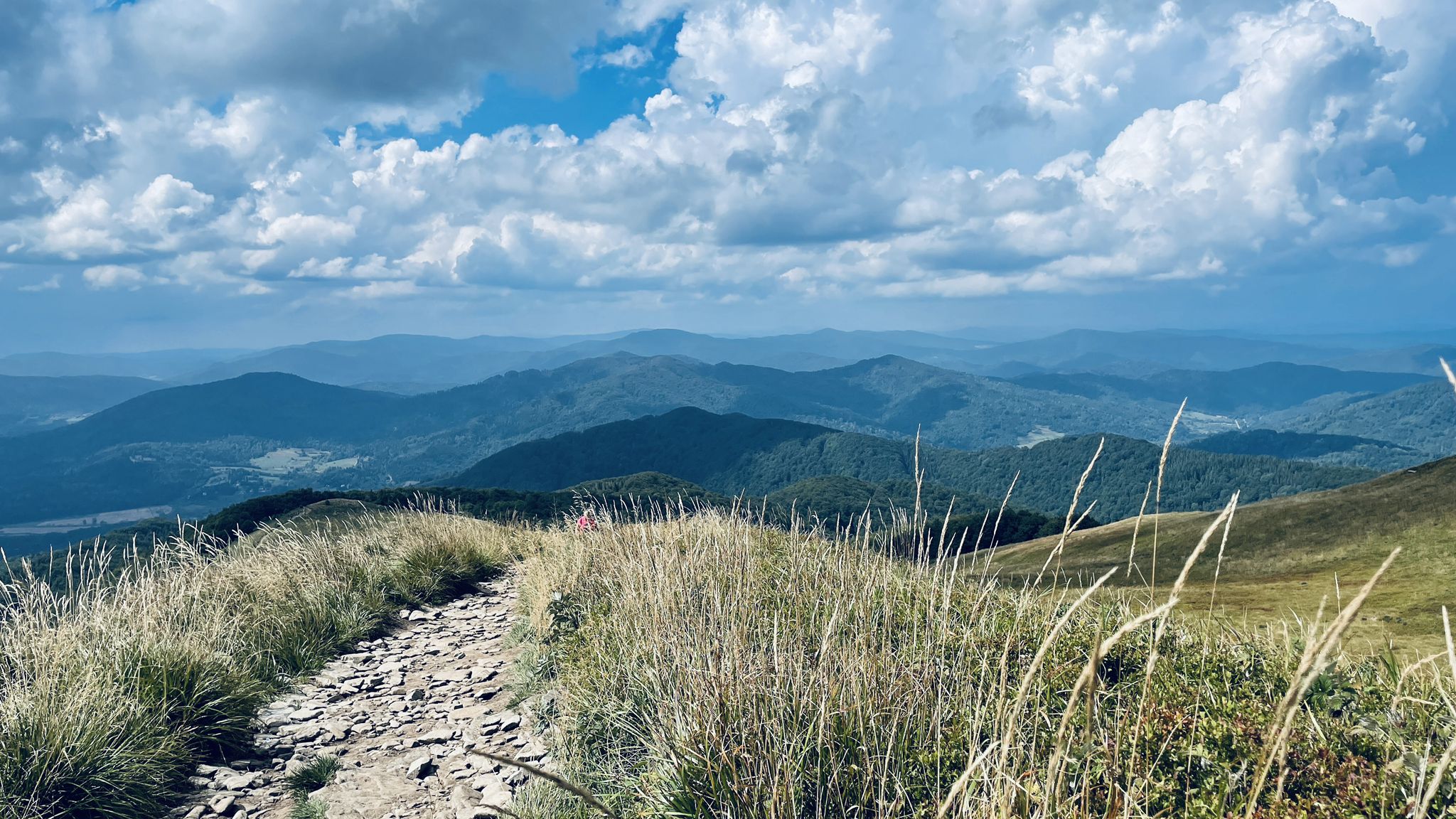
Main Beskids Trail — the longest Polish Mountain Trail
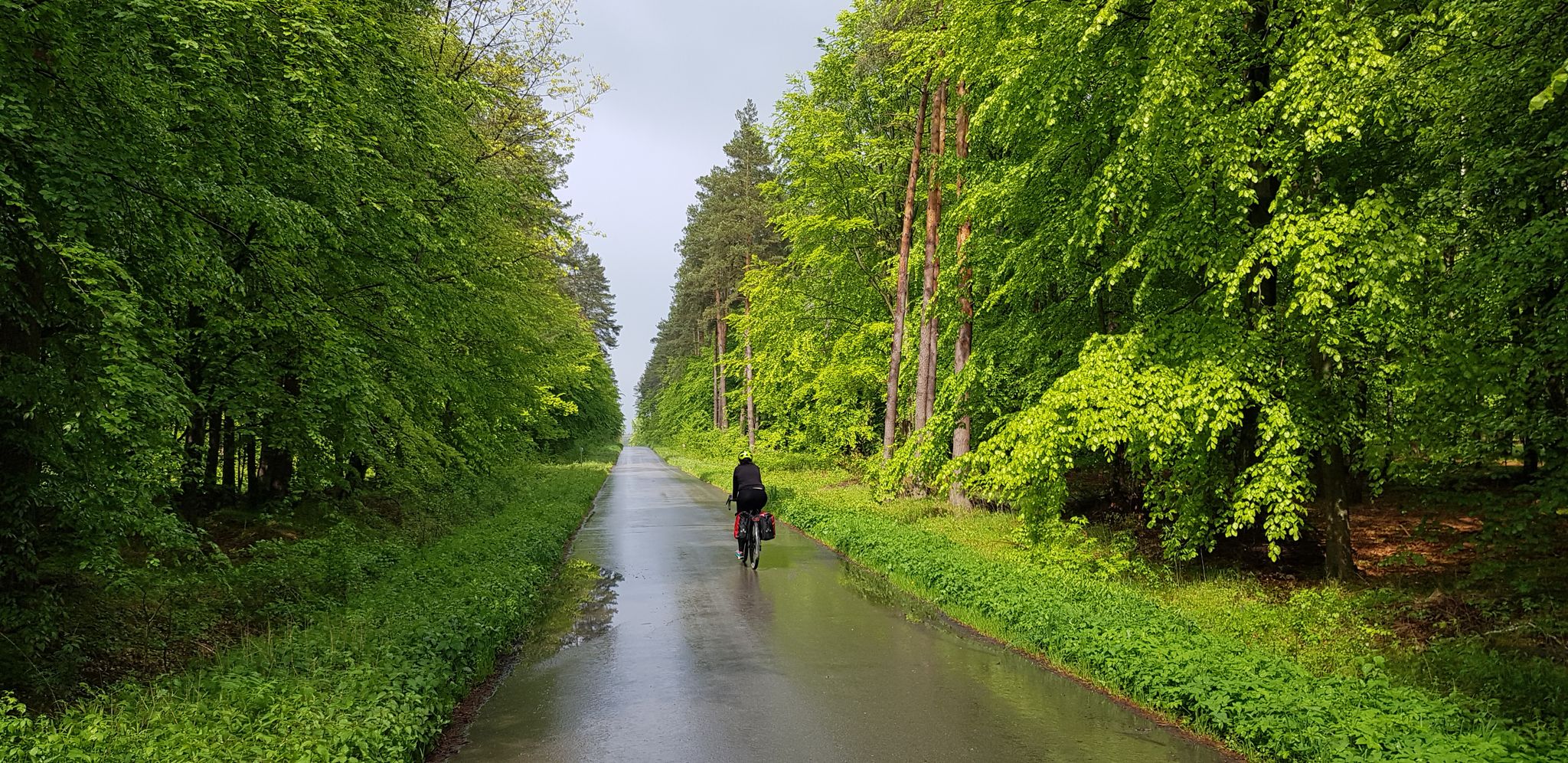
To the east, Eden – La Green Velo Szlak (part one)
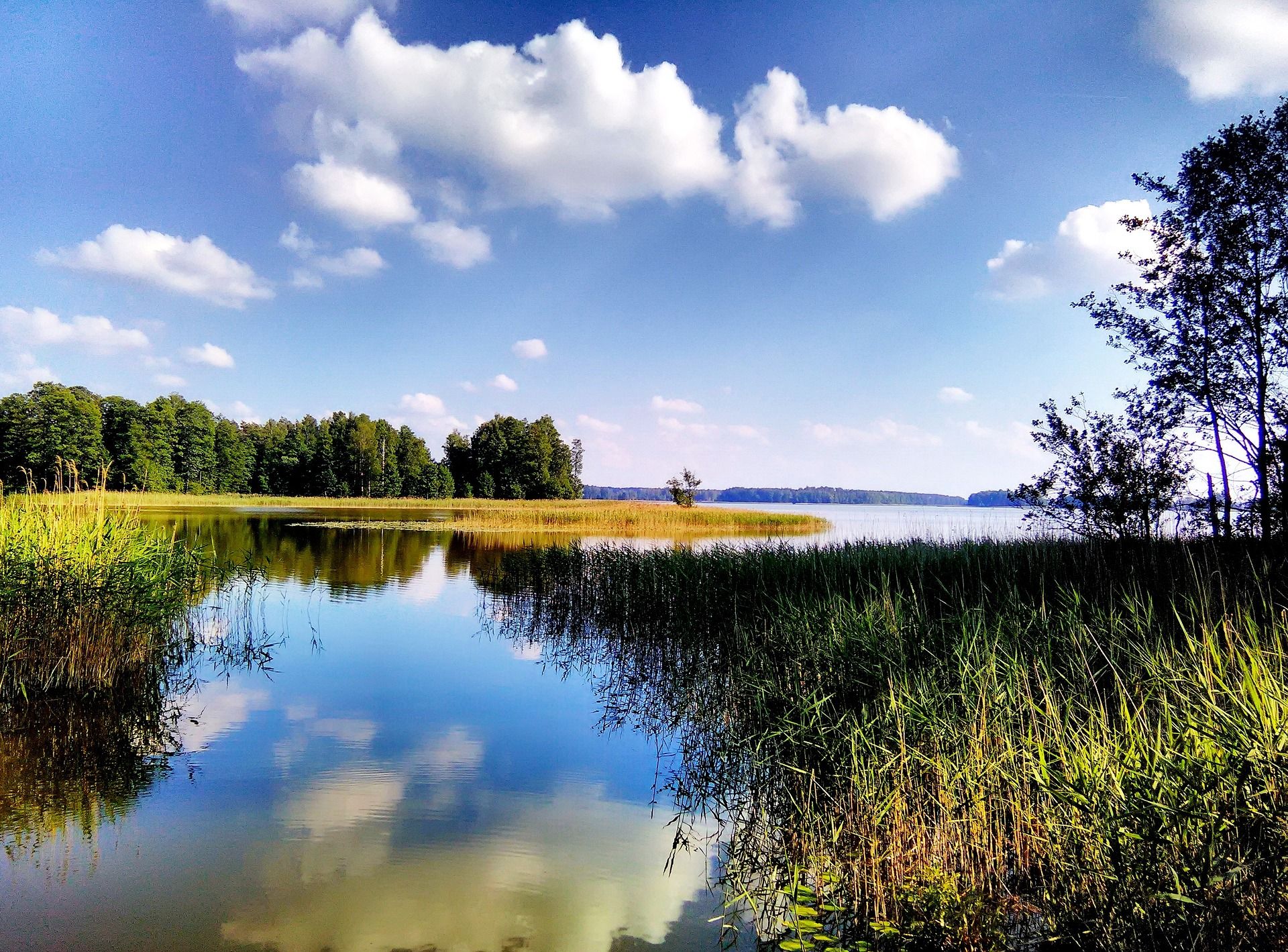
Where Poland's wild soul lives – explore five regions by bike
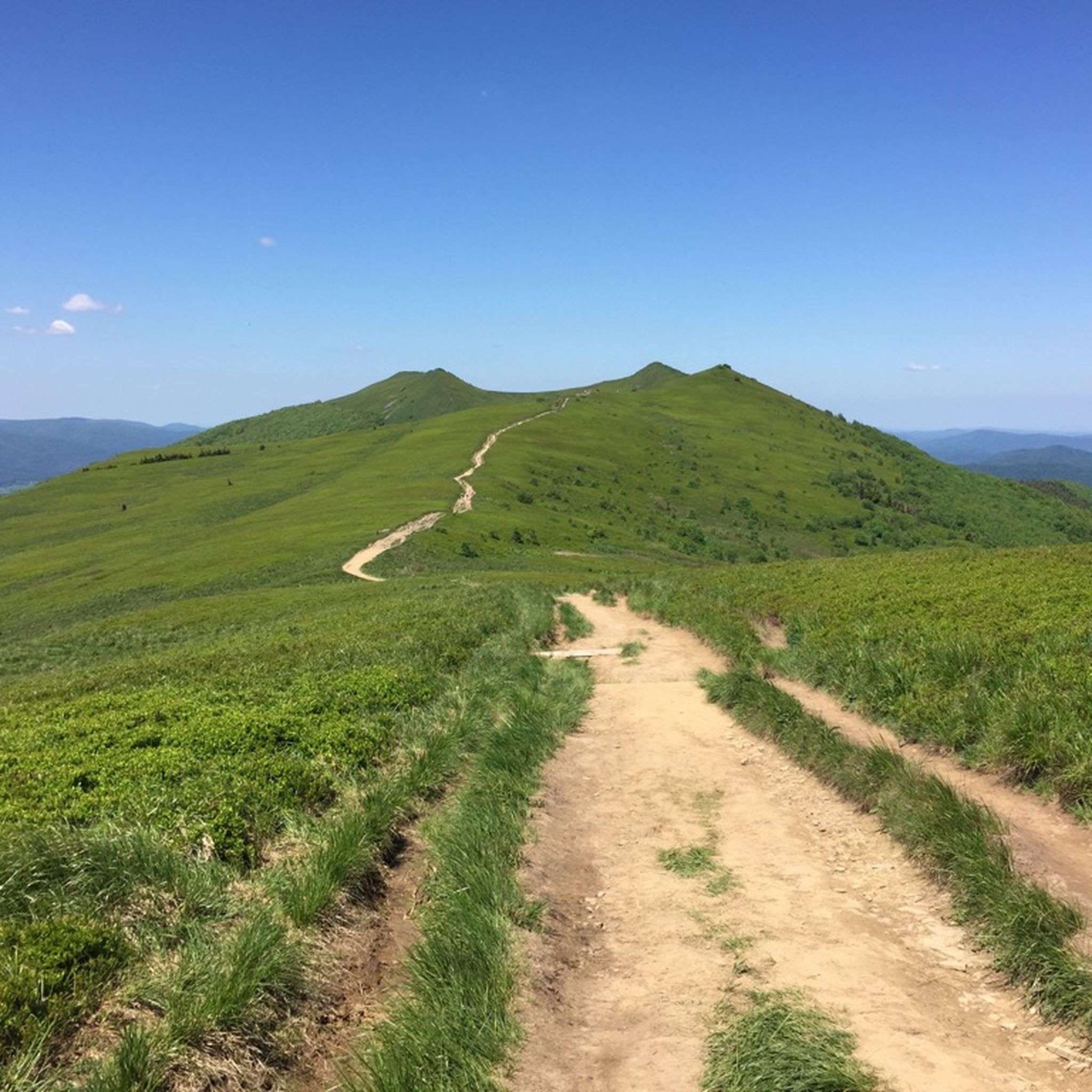
Hiking around Lesko
Running Trails around Lesko
Road Cycling Routes around Lesko
Cycling around Lesko
MTB Trails around Lesko
Gravel biking around Lesko
Mountain Hikes around Lesko


Tips from the Community

More information: https://gdziebytudalej.pl/na-widokowe-jaslo-i-graniczny-stryb/ https://www.twojebieszczady.net/piesze/przyslup_jaslo.php https://magazynnaszczycie.pl/artykul/skiturowa-klasyka-bieszczadow-n1510246
1
0
Jasło (1153 m a.s.l.[1]) – a mountain in the Western Bieszczady Mountains, also called Wielki Jasłem in contrast to the nearby Mały Jasłem. Located within the Cisna commune in the Lesko county. This mountain, formerly called Jasiel or Wasiel, constitutes the highest culmination of the ridge stretching from Okrąglik in the border range north-westwards, towards Cisna. At the summit, there is a geodetic tower, and below it, a plaque marking the peak. The mountain slopes are covered with Carpathian beech forest and beech-fir forests, a significant part of which are old-growth stands. The clearings occurring in the summit areas were likely formed as a result of human activity. This is evidenced by the lack of stunted beech growth at the forest edge, as well as individual trees growing among the alpine meadows. The presence of these clearings provides views in all directions, including towards Slovakia. Many rare animal species live in this area, including: wolves, bears, lynxes, capercaillies. This area is an important link in the "Carpathian" ecological corridor. The Jasło mountain area is protected as part of the Ciśniańsko-Wetliński Landscape Park, it lies in the buffer zone of the Bieszczady National Park, the International Biosphere Reserve "Eastern Carpathians" and is protected within the European network of protected areas Natura 2000 Bieszczady (PLC 180001). Since 1998, successive mayors of the Cisna commune have promoted the construction of ski lifts on the slopes of Jasło, seeing it as an opportunity for economic development of the commune and for generating additional income for its residents. The planned construction of a large winter sports center in the form of three lifts 2 km long, a half-pipe for snowboarders, a summer pedestrian lift and a mountain bike lift contradicts national and EU environmental protection law. In 1998, the Provincial Commission for Nature Protection and the Scientific-Social Council of the Carpathian Landscape Parks Complex in Krosno gave a negative opinion on the possibility of locating the investment on the slopes of the mountain, which lies in the II usage zone, where such investments are not permitted, in accordance with the protection plan of the Ciśniańsko-Wetliński Landscape Park. Furthermore, investments significantly impacting the environment are not permitted in Natura 2000 areas. Information source: https://pl.wikipedia.org/wiki/Jas%C5%82o_(g%C3%B3ra)
1
0
More information: https://www.podkarpackahistoria.pl/artykul/48,katastrofa-smiglowca-pod-cisna-tragiczne-kulisy-magazynu-kryminalnego-997 https://dziejesienapodkarpaciu.pl/katastrofa-smiglowca-w-cisnej-zgineli-policjanci-i-zolnierze-na-planie-997/ https://wbieszczady.pl/aktualnosci/katastrofa-lotnicza-w-bieszczadach-czyli-dramat-posrod-ciszy-lasu/tOgbSO1fDb3Bk1xABmML
1
0
An air disaster near Cisna took place on January 10, 1991. History A Mi-8T helicopter from the 103rd Aviation Regiment of the Internal Troops of the Ministry of Internal Affairs was transporting a film crew of the "Magazyn Kryminalny 997" television program to Cisna (it was supposed to cover the case of the discovery of the body of a woman involved in currency trading in Rzeszów in Dołżyca). During the accident, there was strong wind. The aircraft crashed to the ground between Cisna and Majdan, followed by a fire. During the accident, the television crew was on the ground. The disaster killed people from the Police (officers and one civilian employee; passengers) and the crew of soldiers of the aviation of the Internal Troops of the Ministry of Internal Affairs. According to the presenter of "Magazyn Kryminalny 997", Michał Fajbusiewicz, the flight that ended in disaster was intended to circle Cisna and serve the television crew to film the area with the helicopter's camera from the air, after which the television crew was supposed to fly to Rzeszów. After takeoff, the pilot mistakenly caused a helicopter malfunction and crashed onto a forested mountainside. During the disaster, snow lay in the area. The program's crew recorded the accident with a video camera. The video tapes with previously produced television material for the program were destroyed in the disaster. The recovery of bodies from the wreckage was completed on January 11, with the participation of GOPR rescuers and soldiers of the Armed Forces of the Republic of Poland. A monument was erected at the crash site in 1992. Causes of the disaster The helicopter was flying at an altitude of about 40 meters above the Solinka riverbed. The pilot initiated a climb too late and too energetically, which caused the helicopter to stall. The helicopter hit the treetops with its tail boom, lost controllability, and consequently crashed to the ground. source of information: https://pl.wikipedia.org/wiki/Katastrofa_lotnicza_w_okolicach_Cisnej
1
0
More information: https://www.twojebieszczady.net/piesze/koronka.php https://dzikie-bieszczady.com/5-najpiekniejszych-szlakow-w-bieszczadach/
1
0
Paportna (1198 m a.s.l.) – a peak in the Western Bieszczady Mountains, located on a side ridge of the border range. This ridge connects to the main one at Riaba Skała, located about 1200 m to the south. Northeast of the main summit is a second one, with a height of 1175 m a.s.l. Steep western and eastern slopes descend to the valleys of the Chomów and Wielki Lutowy streams, respectively; the sources of the Rybnik stream are to the north. The yellow tourist trail Wetlina Stare Sioło – Riaba Skała runs through the summit. information source: https://pl.wikipedia.org/wiki/Paportna
1
0
More information: https://goryaktywnie.pl/rabia-skala https://andrzej-banach.eu/w-gorach/bieszczadzkie-poloniny/rabia-skala/ https://wbieszczady.pl/szlaki-sciezki-bezdroza/bieszczady-maja-szczyt-o-ktorym-malo-kto-wie-zobacz-co-na-ciebie-czeka/ObXdATtphNa3nUtsm1wB https://www.twojebieszczady.net/piesze/koronka.php https://bieszczady.land/rabia-skala-dla-prawdziwych-wedrowcow/#google_vignette
1
0
Riaba Skała (1199 m a.s.l.) – a peak in the border range of the Western Bieszczady Mountains, on the Polish-Slovak border. The name comes from the Ukrainian word рябий – motley. In the literature, the most commonly encountered distorted name is Rabia Skała, appearing on 19th-century Austrian maps. An alternative, correct form is Raba Skała. East of the main culmination, there is a lower (1169 m a.s.l.) summit (border marker 1/15). From the highest point, a side ridge of Paportna and Jawornik branches off to the north. From the section of the ridge between the two summits, a very steep, in places precipitous slope descends to the south, above which is a small metal viewing platform. From it, a view (approx. 145° angle) opens up to the south and southeast, onto the Slovak and partly Ukrainian part of the Bieszczady Mountains (up to Pikuj). The shortest route to Riaba Skała leads from the village of Wetlina (2.55 h). The southern slopes of the Riaba Skała ridge lie within the borders of the Slovak National Park "Połoniny", and their upper parts, down to approximately the 930 m contour line, are additionally covered by the Jarabá skala nature reserve. The northern slopes, up to the side arm of Paportna and Jawornik in the west, lie within the borders of the Polish Bieszczady National Park. The northwestern slopes of the higher (western) summit of Riaba Skała, between the main ridge running towards Dziurkowiec and the arm of Paportna and Jawornik, lie within the borders of the Ciśniańsko-Wetliński Landscape Park, and their upper parts are covered by the Dziurkowiec nature reserve. Among the rare plant species in Poland, Spiraea media, Veronicastrum longifolium, and Potentilla carpatica have been found. Information source: https://pl.wikipedia.org/wiki/Riaba_Ska%C5%82a
1
0
Frequently Asked Questions
What natural attractions and viewpoints can I explore around Lesko?
The Lesko region offers several impressive natural attractions and viewpoints. You can visit Kamień Leski, a unique 20-meter-high sandstone rock outcrop considered a symbol of Lesko, accessible via a green tourist trail. For panoramic views of the Bieszczady Mountains, head to Smerek, the westernmost peak of the Połonin Range. Another popular spot is Orłowicz Pass, a mountain pass that serves as a junction for multiple trails and offers extensive views. Additionally, a wooden viewing terrace on Tower hill provides scenic vistas of the San valley and the town.
Are there any historical sites or cultural landmarks to visit in Lesko?
Lesko is rich in history and culture. You can explore the 16th-century Kmita Castle, which now houses a hotel and restaurant, or visit the historic Town Square with its eclectic Town Hall. The Parish Church of the Visitation of the Blessed Virgin Mary, founded in 1539, is the oldest Roman Catholic church in the Bieszczady Mountains. A significant cultural site is the Former Synagogue in Lesko, a well-preserved 17th-century monument of Jewish culture that now hosts a tourist office and art gallery. Nearby, you can also find the ancient Jewish Cemetery, one of Poland's oldest.
What activities are available for families with children in the Lesko area?
Families visiting Lesko have several engaging options. The Bieszczady Forest Railway – Majdan Station offers a scenic narrow-gauge train ride through the forest, which is a memorable experience for all ages. For water fun, the Aquarius Pool provides an indoor swimming pool with slides, a jacuzzi, and a children's area. During summer, pontoon trips on the San River offer a safe and guided adventure suitable for children. You might also enjoy visiting Chatka Wariatka (Uherce Mineralne), another family-friendly attraction.
Where can I go hiking near Lesko?
The Lesko area, being the gateway to the Bieszczady Mountains, offers numerous hiking opportunities. You can find a variety of trails, from moderate to difficult, including the popular Smerek and Orłowicz Pass Loop or the Sine Wiry Nature Trail. For more options, explore the hiking routes around Lesko, which include trails like the Smerek Trail from Wetlina via Orłowicz Pass and the Wetlina - Rabia Skała - Wielka Rawka Loop.
Are there options for cycling around Lesko?
Yes, Lesko is a great base for cycling enthusiasts. You can find various routes catering to different difficulty levels. Popular cycling tours include scenic loops like the View of Volkowyja and Solinka – Ustrzyki Dolne loop or the Forest above Solina – Solina Resort and Marina loop. For a comprehensive list of routes, check out the cycling guide for Lesko.
What unique natural features are there to see in the Lesko region?
Beyond the well-known Kamień Leski, the region boasts the Słonne Mountains Landscape Park, offering stunning views of the San Valley. You can also discover nearby mineral springs. The San River itself, with its gorge below the Myczkowce power plant, is known for its wildlife, including beavers and various bird species, making it a unique natural observation spot, especially near the San River Bridge in Zwierzyń.
Can I visit any religious historical sites in the area?
Absolutely. The Parish Church of the Visitation of the Blessed Virgin Mary in Lesko, founded in 1539, is a significant late Gothic church with a Baroque interior. You can also visit the Bell tower in Terka, another historical religious structure. Further afield, the Church of the Transfiguration (Former Greek Catholic Church, 1820) in Manasterzec offers insight into the region's diverse religious heritage.
What are some popular day trips from Lesko?
Lesko serves as an excellent base for exploring the wider Bieszczady region. Popular day trips include visiting the Solina Dam and Lake Solina, often called the 'Bieszczady sea,' where you can enjoy sailing or kayaking. Another recommended trip is to Sanok, approximately 20 km away, to see the Open-air Museum of Folk Architecture and the Royal Castle, which houses Zdzisław Beksiński's painting gallery.
What is the best time of year to visit Lesko for outdoor activities?
The best time to visit Lesko for outdoor activities is generally from late spring through early autumn (May to October). During these months, the weather is most favorable for hiking, cycling, rafting on the San River, and exploring natural attractions. The Bieszczady Forest Railway also operates regularly during this period. Autumn offers particularly beautiful scenery with changing foliage.
What do visitors particularly enjoy about the attractions around Lesko?
Visitors frequently highlight the stunning panoramic views from mountain passes and summits like Orłowicz Pass and Smerek. The unique geological formation of Kamień Leski is also a favorite for its beauty and local legends. Many appreciate the historical charm of the town itself, including the well-preserved Former Synagogue. The opportunity to experience the Bieszczady Forest Railway is often cited as a delightful and nostalgic experience.
Are there any historical industrial sites or unique structures to see?
Yes, you can visit the Charcoal Kiln in Ciśniańsko-Wetliński Landscape Park, which offers a glimpse into the region's past industrial practices. Additionally, the ruins of Sobień Castle, a medieval Gothic building from the 13th-14th centuries located on Góra Sobień, provide an interesting historical structure to explore within a nature reserve.
Most popular routes around Lesko
Most popular attractions around Lesko

Get inspired with the komoot mobile app


Didn’t find what you were looking for?
Are you keen on exploring more awesome places nearby? Browse our guides:
Explore more
Still not found the Highlight you’re looking for? See guides of the top attractions in other regions:
