Attractions and Places To See around gmina gmina Mogilno - Top 20
Attractions and places to see around gmina gmina Mogilno, a municipality in central Poland, offer a blend of historical significance and natural beauty. The region features ancient religious sites, archaeological wonders, and historic architecture. Visitors can explore serene natural landscapes, including Mogilno Lake and Pakość Lake, alongside various hiking and cycling trails. This area provides opportunities to discover both cultural heritage and outdoor recreation.
Best attractions and places to see around gmina gmina Mogilno
- The most popular attractions is Leszek the White Monument, a man-made monument that commemorates Leszek the White, a historical figure murdered in 1227. This monument, originally erected in 1927, was reconstructed in 1973.
- Another must-see spot is Wooden Church, a religious building. This branch church, dedicated to St. Martin, was founded in 1749 and features log construction with a mansard roof and an octagonal bell tower.
- Visitors also love Biskupin Archaeological Museum, a historical site often referred to as the "Polish Pompeii." It contains the remains of a fortified settlement from the Lusatian culture, dating back approximately 2700 years, offering insight into life during the Bronze and Iron Ages.
- Gmina gmina Mogilno is known for its historical sites, religious buildings, and natural landscapes. The area offers a variety of attractions to see and explore, from ancient settlements to historic architecture and scenic lakes.
- The attractions around gmina gmina Mogilno are appreciated by the komoot community, with 18 highlights, 23 photos, and 21 upvotes.
Last updated: July 15, 2026
Leszek the White Monument
Highlight • Monument
This monument was originally erected in 1927 - on the site that is believed to be the place where Leszek the White died. The monument was destroyed during the war, but was reconstructed in 1973.
Translated by Google •
Tip by

Wooden Church
Highlight • Religious Site
🪵 History and Construction
- The church was founded in 1749 by the village owner, Sebastian Cząstkowski.
- Built using log construction on a stone foundation, it is timbered and oriented – in keeping with tradition, the chancel faces east.
- The church has a hall-like layout, without a separate chancel, and is enclosed on three sides.
- The mansard roof, covered with sheet metal, is topped by an octagonal bell tower with an onion-shaped dome and a lantern.
🎨 Interior and Furnishings
- The interior is covered with a flat ceiling with a coving, and the choir loft, supported by two columns, houses the organ case. - The main altar comes from the Reformed Friars Minor monastery in Pakość – Baroque, from the first quarter of the 18th century, with sculptures of adoring angels and a painting of the Marriage of the Blessed Virgin Mary to Joseph – a rare motif in church iconography.
- At the top of the altar is an oval painting of St. Martin.
- The side altar and pulpit represent the Baroque-folk style, from the turn of the 18th and 19th centuries.
- Remnants of polychrome paintings have survived, as well as a granite stoup and a processional cross with the date "1756."
Translated by Google •
Tip by

Sign up now to discover places like this
Get recommendations on the best single tracks, peaks, & plenty of other exciting outdoor places.
Sign up for free
Kruchowo Manor House
Highlight • Historical Site
Built in the Classicist style, it captivates with its simple form and peaceful harmony with the landscape.
For years, it was the center of social and economic life on the surrounding estates.
Today, although somewhat forgotten, it still exudes an atmosphere of bygone times and aristocratic tranquility.
A stroll around the manor house is a journey back in time – into the world of tradition and history of the Greater Poland countryside.
Translated by Google •
Tip by

Grochowiska Szlacheckie Palace and Restaurant
Highlight • Historical Site
Around 1780, Teofila Korytowska erected a new, brick residence building in the classicist style in place of the old manor house. It was built partly on the old basement, but was significantly enlarged. It was built on a rectangular plan, with the front elevation oriented to the south. Its central part, slightly avant-gardened, was preceded by a portico with four Tuscan columns. These columns support a triangular pediment, in which a cartouche was placed – the head of a Negro, the coat of arms of the "Mohra" - Korytowski family.
At the end of the 19th century, the manor house was rebuilt and enlarged again, adding two projections on both sides of the rear elevation. The reconstruction of the manor house was also associated with changes in the spatial layout of the park.
Currently, the palace is private property, and houses, among other things, a restaurant.
/pojezierze24.pl/
Translated by Google •
Tip by

Grave of the Napoleonic Soldier (1812)
Highlight • Historical Site
For 200 years, the nameless grave has been looked after by the inhabitants of the villages of Gołąbki and Ochodza. The memory is passed down from generation to generation, the grave has been tidied up over the years, thanks to which it has survived. Throughout all these years, the grave with the cross has been preserved, on it a plaque with the inscription: "Here lies a Napoleonic soldier of French nationality. He died in 1812."
In 2012, a stone boulder with a commemorative plaque in Polish and French was placed next to the symbolic tombstone, dedicated to commemorate the march of Napoleon's troops on Moscow.
(golabki.torun.lasy.gov.pl)
Translated by Google •
Tip by
Sign up for free to discover even more attractions around gmina gmina Mogilno.
Sign up for free
Already have an account?
Start today with a free account
Your next adventure awaits.
Login or Signup

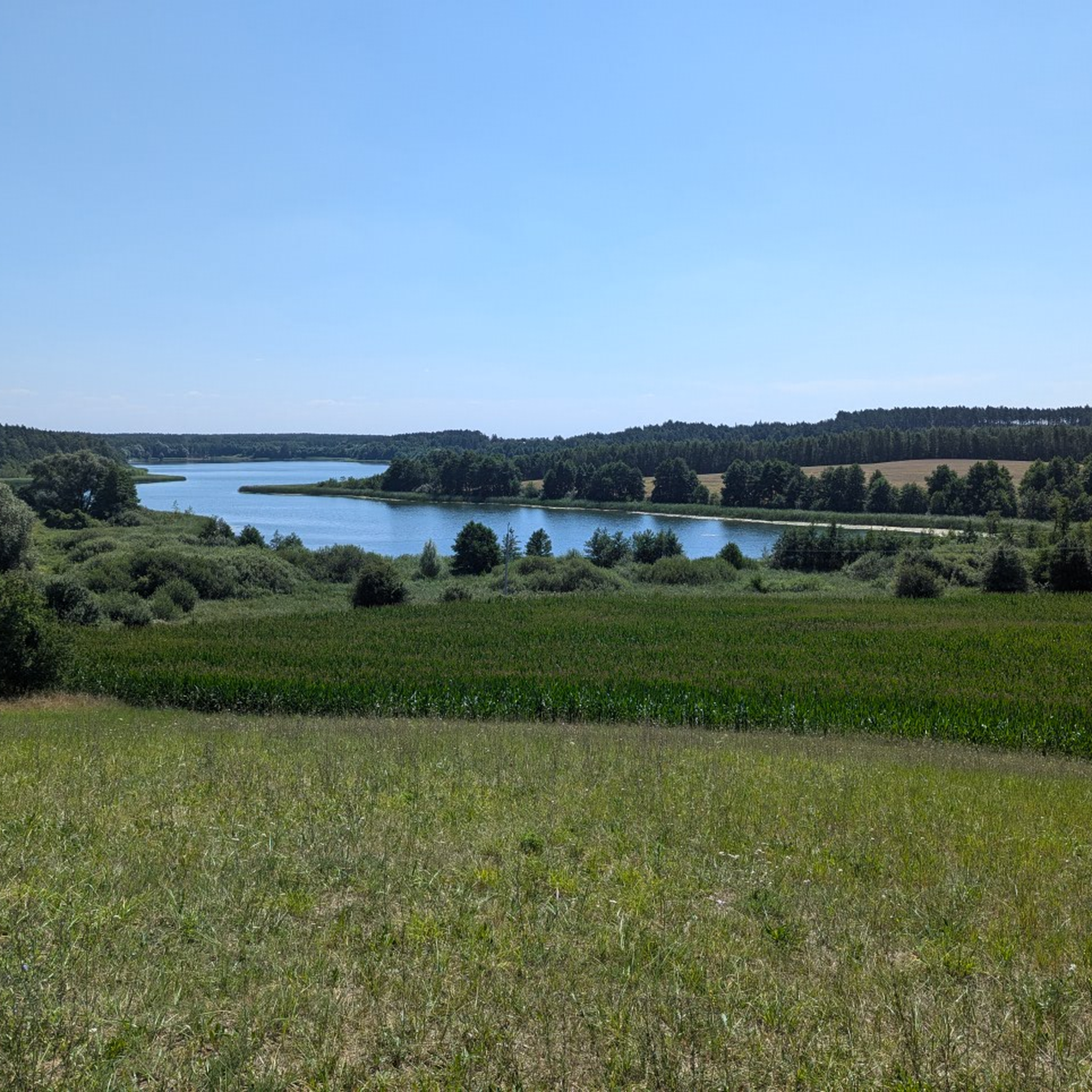
Tips from the Community

The manor house in Kruchów is an elegant 19th-century landed gentry residence nestled in a picturesque setting of fields and ancient trees. Built in the Classicist style, it captivates with its simple form and peaceful harmony with the landscape. For years, it was the center of social and economic life on the surrounding estates. Today, although somewhat forgotten, it still exudes an atmosphere of bygone times and aristocratic tranquility. A stroll around the manor house is a journey back in time – into the world of tradition and history of the Greater Poland countryside.
1
0

St. Martin's Church in Linówiec – a wooden branch church dedicated to St. Martin. 🪵 History and Construction - The church was founded in 1749 by the village owner, Sebastian Cząstkowski. - Built using log construction on a stone foundation, it is timbered and oriented – in keeping with tradition, the chancel faces east. - The church has a hall-like layout, without a separate chancel, and is enclosed on three sides. - The mansard roof, covered with sheet metal, is topped by an octagonal bell tower with an onion-shaped dome and a lantern. 🎨 Interior and Furnishings - The interior is covered with a flat ceiling with a coving, and the choir loft, supported by two columns, houses the organ case. - The main altar comes from the Reformed Friars Minor monastery in Pakość – Baroque, from the first quarter of the 18th century, with sculptures of adoring angels and a painting of the Marriage of the Blessed Virgin Mary to Joseph – a rare motif in church iconography. - At the top of the altar is an oval painting of St. Martin. - The side altar and pulpit represent the Baroque-folk style, from the turn of the 18th and 19th centuries. - Remnants of polychrome paintings have survived, as well as a granite stoup and a processional cross with the date "1756."
0
0

The court is inaccessible from the inside. On the tympanum there is a Latin sentence: he who watches does not sleep.
0
0

Access from the outside. The manor house is inhabited. The library that was located inside is currently being demolished. Very friendly local people and residents, with whom you can talk :)
0
0

A monument erected in memory of one of the most famous Piasts: Leszek the White. Known mainly - unfortunately? - for being murdered during the princes' meeting in Gąsawa (1227), and also while escaping from the baths! This monument was originally erected in 1927 - on the site that is believed to be the place where Leszek the White died. The monument was destroyed during the war, but was reconstructed in 1973.
0
0

Monument in Grochowiska szlachta near Gąsawa
0
0

A symbolic mound with a wooden cross, made of earth, is located by a forest path, in the forest near the villages of Gołąbki and Gościeszyn. A soldier of Napoleon's infantry who died in 1812 was buried here. For 200 years, the nameless grave has been looked after by the inhabitants of the villages of Gołąbki and Ochodza. The memory is passed down from generation to generation, the grave has been tidied up over the years, thanks to which it has survived. Throughout all these years, the grave with the cross has been preserved, on it a plaque with the inscription: "Here lies a Napoleonic soldier of French nationality. He died in 1812." In 2012, a stone boulder with a commemorative plaque in Polish and French was placed next to the symbolic tombstone, dedicated to commemorate the march of Napoleon's troops on Moscow. (golabki.torun.lasy.gov.pl)
0
0
A symbolic mound with a wooden cross, made of earth, is located by a forest path, in the forest near the villages of Gołąbki and Gościeszyn. A soldier of Napoleon's infantry who died in 1812 was buried here. For 200 years, the nameless grave has been looked after by the inhabitants of the villages of Gołąbki and Ochodza. The memory is passed down from generation to generation, the grave has been tidied up over the years, thanks to which it has survived. Throughout all these years, the grave with the cross has been preserved, on it a plaque with the inscription: "Here lies a Napoleonic soldier of French nationality. He died in 1812." In 2012, a stone boulder with a commemorative plaque in Polish and French was placed next to the symbolic tombstone, dedicated to commemorate the march of Napoleon's troops on Moscow. (golabki.torun.lasy.gov.pl)
1
0
Frequently Asked Questions
What historical sites can I explore in Gmina Mogilno?
Gmina Mogilno is rich in history. You can visit the Former Benedictine Abbey (now Capuchin Friars Minor Monastery) in Mogilno, one of Poland's oldest monasteries with Romanesque origins and significant archaeological findings. Another notable site is the Kruchowo Manor House, an elegant 19th-century Classicist residence. Don't miss the Leszek the White Monument, commemorating a historical figure from 1227.
Are there any unique religious buildings to see?
Yes, the region features several unique religious structures. The Wooden Church of St. Martin in Linówiec is a charming 18th-century branch church with log construction and Baroque-folk interiors. You can also find the late-Gothic Parish Church of St. James the Apostle in Mogilno and the distinctive St. Peter and Paul Church in Wylatowo, known for its two-tower 'westwork'.
What natural attractions are there for outdoor enthusiasts?
Nature lovers can enjoy the serene Mogilno Lake, located by the town, which features a city park with an amphitheater. Pakość Lake, a post-glacial trough, offers bathing areas and summer recreation. For panoramic views, head to the Wydartowo Ridge Observation Tower, a 12-meter tower offering scenic vistas of the Gniezno Lake District.
Are there family-friendly activities in the area?
Absolutely. The Biskupin Archaeological Museum is an extraordinary place often called the 'Polish Pompeii,' where families can explore the remains of a 2700-year-old fortified settlement and learn about life during the Bronze and Iron Ages. The city park along Mogilno Lake also provides a pleasant recreational space for families.
Where can I go for a hike or a bike ride?
Gmina Mogilno offers numerous routes for hiking and cycling. For cycling, you can explore easy routes like the 'Meglino Train Station – View of Lake Wiecanowskie loop' or the 'Meglino Train Station – Manor in Wieniec loop.' Hikers can enjoy easy trails such as the 'Bridge on the Gąsawka River – Lake Oćwieckie loop.' You can find more details and routes on the Hiking around gmina gmina Mogilno and Cycling around gmina gmina Mogilno guide pages.
What are some architectural highlights in Mogilno town?
In Mogilno town, you can admire the eclectic 19th-century Mogilno Town Hall with its Neo-Gothic design. The early 20th-century Old Cooperative Bank Building, initiated by Father Piotr Wawrzyniak, features a distinctive 'Venetian' style. The town also boasts 19th and 20th-century eclectic tenement houses that contribute to its unique urban layout.
Are there any unusual or paranormal attractions?
Yes, the village of Wylatowo, located south of Mogilno, gained notoriety in 2000 for unexplained crop circles, drawing the attention of UFO researchers and paranormal enthusiasts. It's a unique spot for those interested in the unexplained.
What can I learn about local heritage and prominent figures?
You can delve into local heritage by visiting the Cemetery in Mogilno, established in 1816, which contains the tomb monument of Father Piotr Wawrzyniak and historic neoclassical and Neo-Gothic tombs. The Leszek the White Monument also offers insight into a significant historical figure from the region.
Are there any other historical manor houses in the vicinity?
Beyond the Kruchowo Manor House, the region is dotted with several historic manor houses in areas like Białotul, Bielice, Czarnotul, Marcinkowo, Goryszewo, Gozdawa, Procyn, and Wieniec. These showcase Polish architectural heritage and offer a glimpse into the region's aristocratic past.
What do visitors enjoy most about the attractions in Gmina Mogilno?
Visitors particularly appreciate the blend of historical significance and natural beauty. The ancient settlement at Biskupin Archaeological Museum is often highlighted as an extraordinary experience. The Leszek the White Monument is noted for its historical importance, and the Wooden Church is admired for its unique architecture and history.
Are there opportunities for running or jogging outdoors?
Yes, the area around Gmina Mogilno offers several running trails. You can find moderate routes like the 'Jezioro Długie loop from Sadowiec' or the 'Jezioro Przedwieśnia loop from Gołąbki.' More options are available on the Running Trails around gmina gmina Mogilno guide page.
Can I find any interesting modern or industrial heritage sites?
The Water Tower in Mogilno is an elegant utility structure built in 1905. Standing 41 meters high, this red brick tower with a reconstructed lantern and spire is a notable example of early 20th-century industrial architecture, visible from afar.
Most popular routes around gmina gmina Mogilno
Most popular attractions around gmina gmina Mogilno

Get inspired with the komoot mobile app


Explore more
Still not found the Highlight you’re looking for? See guides of the top attractions in other regions:
