Attractions and Places To See around Koluszki - Top 20
Attractions and places to see around Koluszki, a town in central Poland within the Łódź Voivodeship, reflect its history as a significant railway junction and its surrounding natural landscapes. The region features rolling plains, scattered forests, and rivers such as the Mroga and Mrożyca. Visitors can explore historical industrial sites, railway heritage, and natural reserves.
Best attractions and places to see around Koluszki
- The most popular attractions is Rogów Arboretum (SGGW), a forest that is one of Poland's largest…
Last updated: July 29, 2026
Praga Water Mill on the Mroga River
Highlight • Monument
Translated by Google •
Tip by

Dąbrówka Mała Watermill
Highlight • Monument
Translated by Google •
Tip by

Sign up now to discover places like this
Get recommendations on the best single tracks, peaks, & plenty of other exciting outdoor places.
Sign up for free
Rogów Narrow-Gauge Railway
Highlight • Historical Site
Translated by Google •
Tip by

Kołacin Old Mill
Highlight • Historical Site
Translated by Google •
Tip by
St. Nicholas Church in Słupia
Highlight • Religious Site
Tip by

Sign up for free to discover even more attractions around Koluszki.
Sign up for free
Already have an account?
Start today with a free account
Your next adventure awaits.
Login or Signup

Tips from the Community

Narrow-gauge railway in Rogów.
0
0

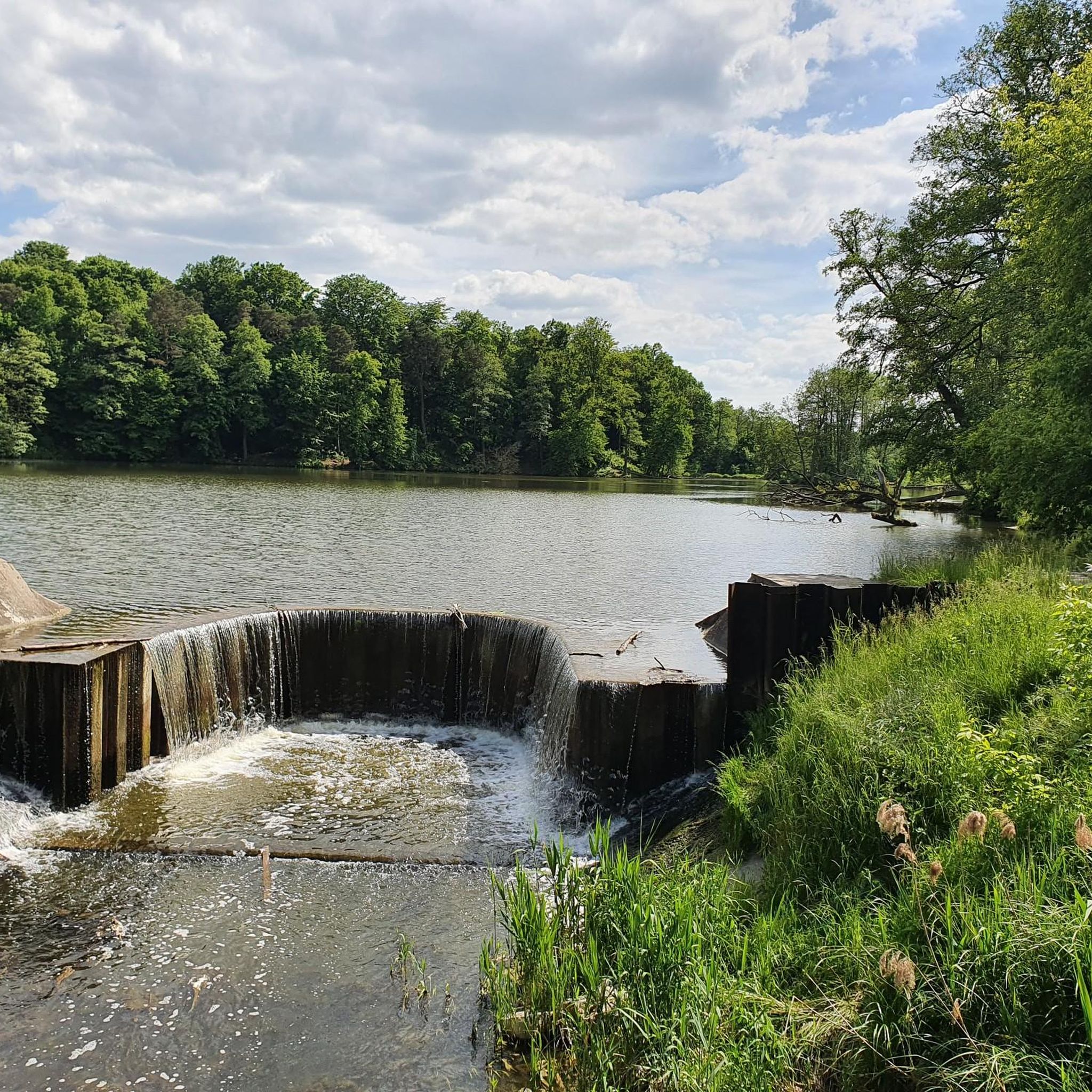
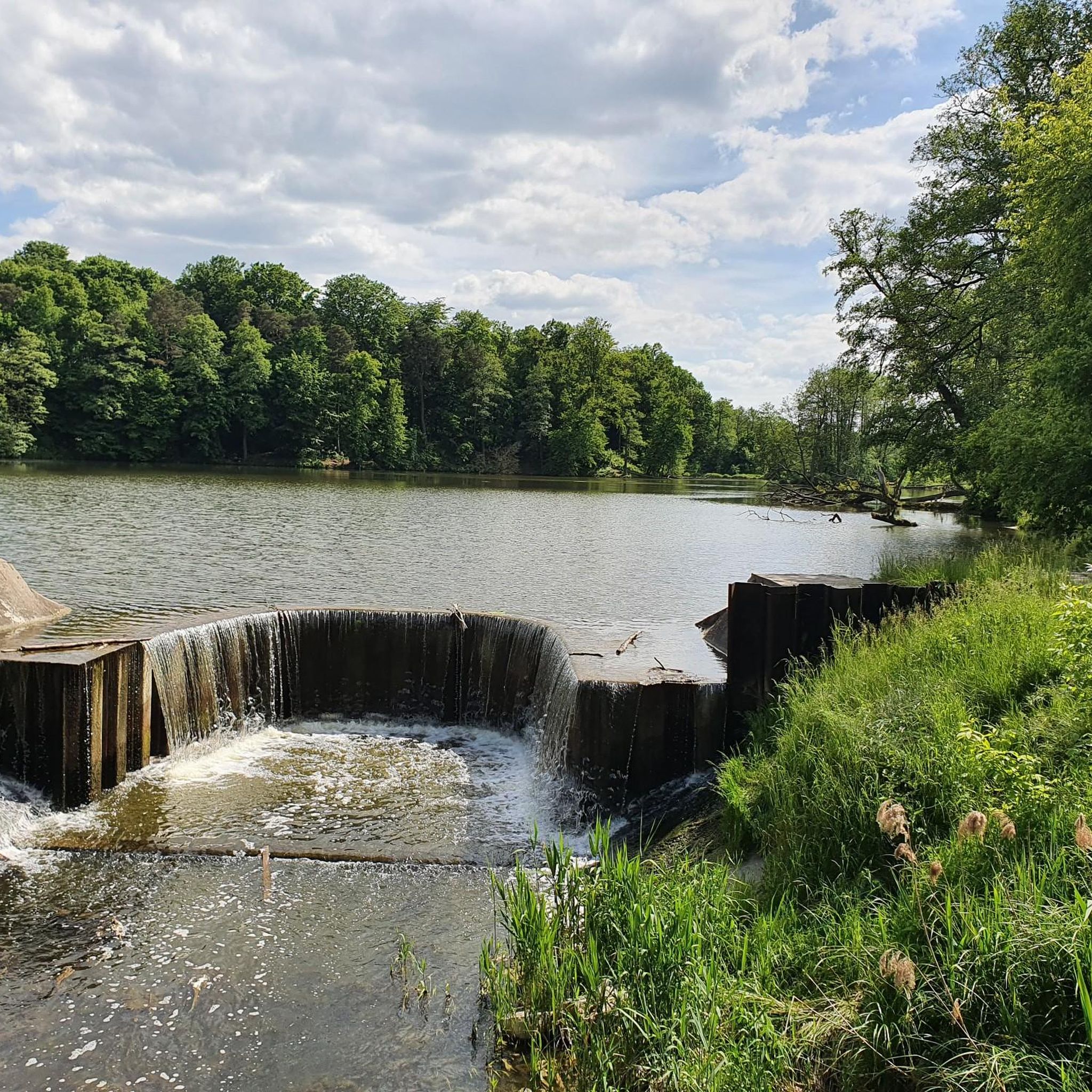
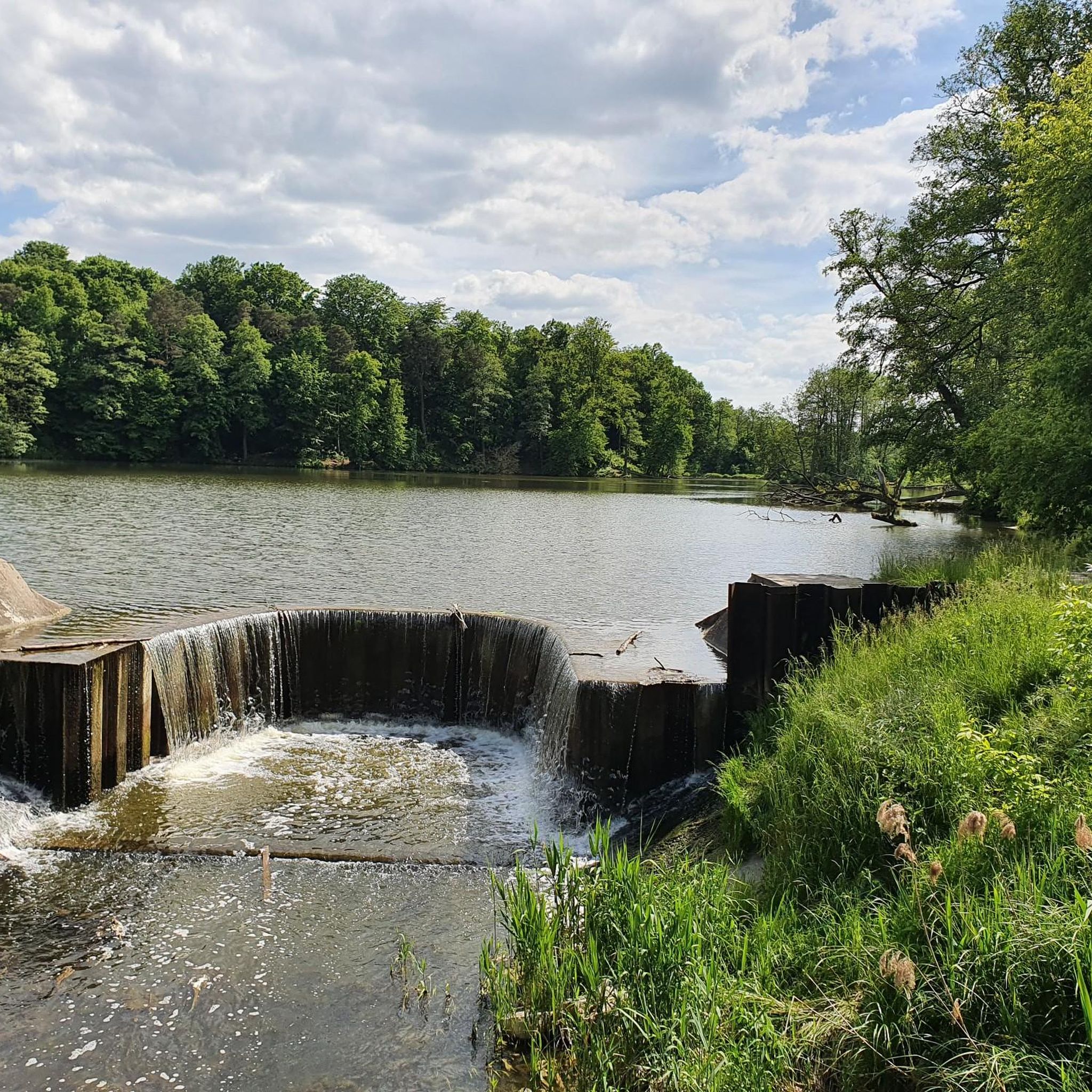
The Old Mill in Kołacin, also known as the Praga Mill, is a historic building from the 1920s, located on the Mroga River in the Łódź province. In the past, it used the power of the Mroga River, and the water accumulation created a pond that powered the mill wheels. The mill is part of the "Respite Trail", which includes the most attractive natural sites in the Łódź region. For road cyclists, there are asphalt routes in the area, but some sections may lead through roads with a poorer surface, so it is recommended to plan your route in advance. The mill is located about 250 meters from the main road, turning right by the primary school in Kołacin.
1
0

The "Praga" Mill - a wooden water mill on the Mroga River built in the 1920s or earlier, located in the former mill settlement of Praga, currently on the border of the villages of Kołacin and Kobylin, in Brzeziny County, Łódź Province. The facility is entered in the municipal register of monuments of the Rogów commune. Water mills on the Mroga River in this location were mentioned in sources from the turn of the 18th and 19th centuries. The memory of the mill existing in the 19th century has been preserved: it was a wooden, single-storey building located partly on stilts above the water and partly on solid land, equipped with a water wheel. This mill served as a manor mill. It was dismantled at the end of the 19th century.
1
0
Wooden water mill on the Mrożyca River located in Dąbrówka Mała in the Łódź province, built in 1948. In the 19th century, there was a fulling mill here and a neighboring mill powered by a water wheel. During World War I, the wheel was replaced by a water turbine and equipped with rollers and newer cleaning devices. The mill was dismantled by the Germans during World War II. The current mill was built in 1948 on the site of the former mill. The mill represents a post and beam construction. It is single-storey with a superstructure, boarded with planks. It has a gable roof covered with roofing felt. It was initially powered by a water turbine, and then (from 1957) by an electric motor. It was still in operation in the 1970s. Currently out of operation.
1
0
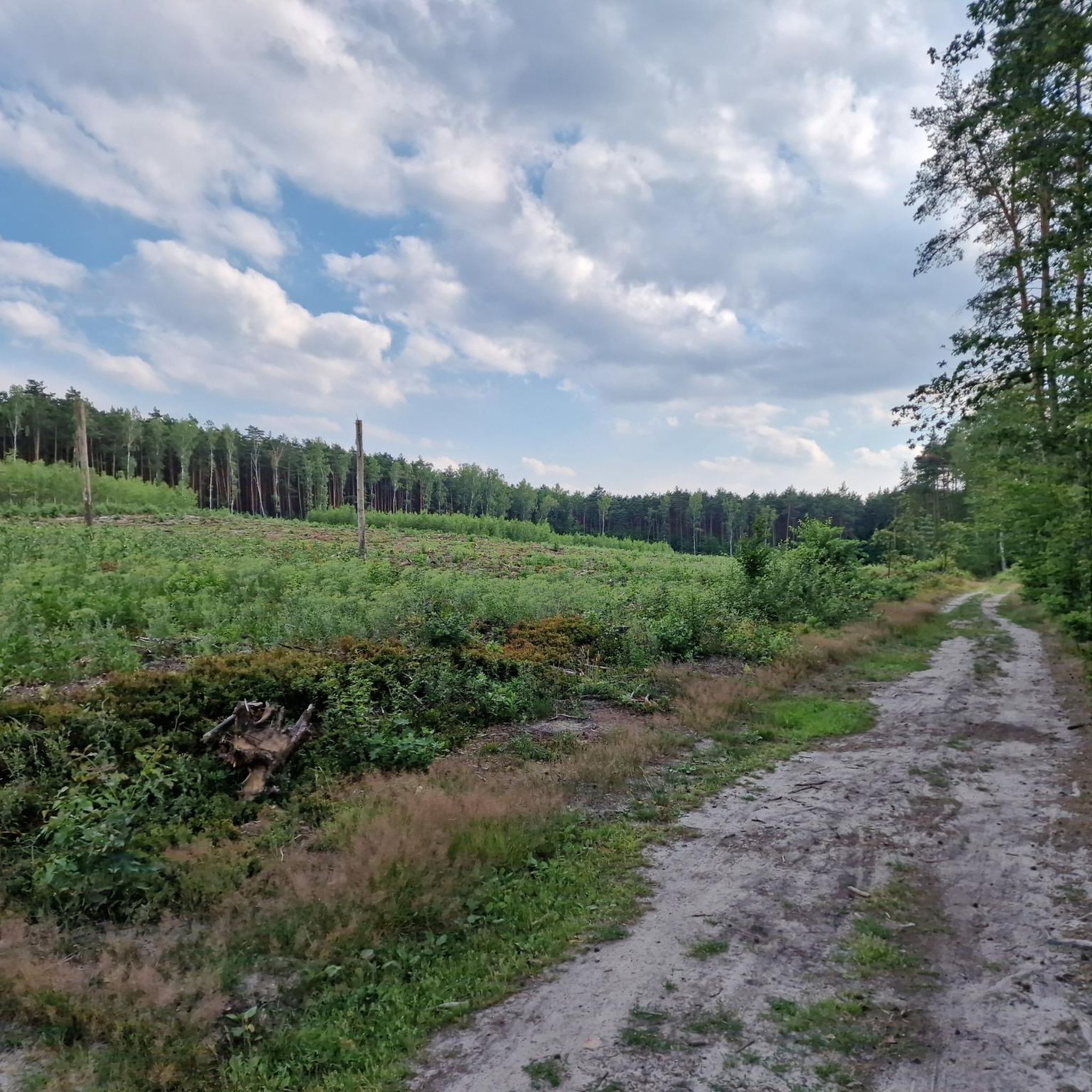
Narrow Gauge Railway Rogów – Rawa – Biała (colloquial: Kolej Rogowska) – the first and only museum narrow gauge railway in the Łódź province. Previous names were Rogow Feldbahn, Rogowska Kolej Dojazdowa and Rogowska Kolej Wąskotorowa. The name currently used also functioned in the interwar period. Its beginnings date back to 1915 when German troops built a military field railway with a 600 mm gauge connecting Rogów with Biała Rawska. The narrow gauge railway was used to supply the German front with food, weapons and ammunition. It was used to transport soldiers and evacuate the wounded. Construction of the Rogów – Rawa – Biała Narrow Gauge Railway began on February 28, 1915. Construction was carried out by the 22nd Reserve Eisenbahn Kompanie and three other German railway companies. The railway was built to supply the eastern front near the Rawka and Pilica rivers. The line ran from the standard gauge railway station in Rogów to Biała Rawska via Głuchów and Rawa Mazowiecka. After the end of World War I, the Rogów–Rawa–Biała Narrow Gauge Railway was taken over by PKP. In 1954, it was re-gauged to a 750 mm gauge. In 1996, it was entered into the register of historical monuments. In 2001, PKP decided to liquidate it. It was saved from destruction by the Foundation of Polish Narrow Gauge Railways (FPKW), which restored it to a state of technical efficiency. The Rogów Towarowy Narrow Gauge Station houses the second largest collection of historic narrow gauge rolling stock in Poland. The entire railway is maintained thanks to the work of volunteers, who can be joined by any railway enthusiast.
0
0
Mill in Kołacin – a wooden water-electric mill on the Mroga River built at the end of the 19th century. Water mills in this location were mentioned in documents from the turn of the 18th and 19th centuries. The memory of a mill that existed in the 19th century has been preserved: a wooden, single-storey building on a rectangular plan, situated partly on water piles and partly on solid land, with a hipped roof covered with thatch. This building was demolished due to old age at the end of the 19th century. In the place of the demolished mill, the current mill was built at the end of the 19th century, which underwent several reconstructions, including being significantly raised. Currently, it is a wooden building of post and beam construction, boarded with planks, with a gable roof and an adjacent single-storey extension. Initially, it was powered by a water wheel and equipped with 2 pairs of French stones, a żubrownik, perlak and jagielnik. Before World War I, a water turbine was installed in the mill. The stones were replaced with rollers and the millet mill and the perlak were eliminated. During World War II, the mill was in operation. During the Polish People's Republic, it was privately owned. It was used as a grain mill, and then (from 1965) as a wood flour factory. In 2024, it is in operation as a grain mill.
1
0
The oldest information about the church in Słupia comes from 1388. In the privilege of granting the village office in Słupia, issued on April 24, 1388 by the metropolitan archbishop of Gniezno, Bodzanta, we read that the village mayor Mikołaj, who received the office, was to pay tithes to "the rector of the church in Słupia, where he listens to the Holy Mass and receives the sacraments of the church". This is the first mention of the church, and although it was not specified as a parish church, it can be assumed that it was the seat of the parish. From the visitation of the property of the Archdiocese of Gniezno and the Gniezno Chapter from 1511, conducted by the Gniezno canon Klemens Busieński, we learn that in that year the church in Słupia was already the seat of a parish (est in eadem villa ecclesia parochialis), so the information about the foundation of the parish in Słupia only in 1548, given in the Annals of the Warsaw Archdiocese from 1958, is incorrect. This description – about the economic state of the Gniezno archbishopric – is the first full compendium of knowledge about the economic situation of Słupia and the surrounding villages, at least in the part belonging to the Gniezno archbishopric. The first description of the church and parish from 1520 mentions the church of St. Nicholas, the right of gift of which was held by the metropolitan archbishop of Gniezno.
0
0

Nice wooden church, worth seeing.
0
0
Frequently Asked Questions
What natural attractions can I explore near Koluszki?
The region around Koluszki offers several natural highlights. You can visit the Rogów Arboretum (SGGW), one of Poland's largest gardens of its type, featuring rich collections of trees and shrubs. The area also includes the "Wiączyń" Nature Reserve for appreciating natural scenery, and the Recreational Complex in Lisowice, which provides beaches and bathing areas. The Bzura River flows through the region, contributing to its scenic character, and Koluszki itself has a Municipal Park.
Are there any historical or industrial heritage sites to visit?
Yes, Koluszki has a rich historical and industrial heritage. The Praga Water Mill on the Mroga River, operational since the 1920s, and the Dąbrówka Mała Watermill, built in the 1930s, are excellent examples of industrial architecture. The historical railway station in Koluszki also stands as a testament to the town's past importance as a significant railway junction. Additionally, the Rogów Narrow-Gauge Railway offers a unique glimpse into railway history.
What cultural sites are available in the Koluszki area?
Beyond natural and industrial sites, the region offers cultural points of interest. The Rogów Narrow-Gauge Railway is not only historical but also a unique museum railway. The Miejski Ośrodek Kultury (Municipal Cultural Center) in Koluszki serves as a hub for local cultural events. You can also find the St. Nicholas Church in Słupia, an 18th-century wooden church with a nice interior.
Are there family-friendly activities or attractions near Koluszki?
Yes, several attractions are suitable for families. The Rogów Arboretum (SGGW) is a forest park that can be enjoyed by all ages. The Rogów Narrow-Gauge Railway offers a fun and educational experience for children and adults alike. The Recreational Complex in Lisowice provides beaches and bathing areas, perfect for a family day out. The St. Nicholas Church in Słupia is also listed as family-friendly.
What outdoor activities can I do near these attractions?
The area around Koluszki is great for outdoor activities. You can find various road cycling routes, including easy to moderate options like the 'Church – Mandalorian and Baby Yoda mural loop from Brzeziny' or the 'Koluszki Station – The Story of Wojtek the Bear loop from Koluszki'. For hiking, there are easy trails such as the 'Rogów Arboretum (SGGW) loop from Rogów' or the 'Beach at Janów Lake loop from Lisowice'. You can explore more options on the Road Cycling Routes around Koluszki and Hiking around Koluszki guide pages.
What do visitors enjoy most about the attractions around Koluszki?
Visitors appreciate the diverse experience offered by the region. The Rogów Arboretum (SGGW) is highly praised for its extensive collections and being a place worth visiting any time of year. The historical significance and picturesque settings of the water mills, like the Dąbrówka Mała Watermill, are also frequently highlighted. The community has shared 27 photos and given 51 upvotes, indicating a strong appreciation for the area's blend of historical interest and natural beauty.
Are there any unique structures or points of interest in Koluszki itself?
Within Koluszki, you can find the historical railway station, which is central to the town's identity. There is also a Tężnia (Brine Graduation Tower), which can be an interesting point of interest for its unique structure and potential health benefits. The Municipal Park offers a green space for relaxation within the town.
Can I find cycling routes that explore the area's history?
Yes, there is a dedicated cycling route called "Śladem dawnej kolejki" (Along the Old Railway Line) which offers a way to explore the region's history and natural beauty. Additionally, several road cycling routes are available, such as the 'Koluszki Station – The Story of Wojtek the Bear loop from Koluszki', which can provide historical context while you ride. More details can be found on the Road Cycling Routes around Koluszki guide page.
What is the best time to visit Koluszki and its attractions?
The Rogów Arboretum (SGGW) is noted as being open all year round, with varying hours, and is considered worth visiting at any time of the year. Generally, spring and summer offer pleasant weather for exploring the natural landscapes and outdoor activities, while autumn brings beautiful foliage to places like the Arboretum. Winter can offer a different, quieter charm, especially for historical sites.
Where can I see a traditional water mill in operation?
The Praga Water Mill on the Mroga River, located near Kołacin, is a wooden water mill with its current building dating from the 1920s. It remains operational with both water and electric drives, offering a unique opportunity to see a historical mill still in use. It holds significant historical value and was even a filming location for scenes in the film "Peasants".
Are there any places for swimming or water-based recreation?
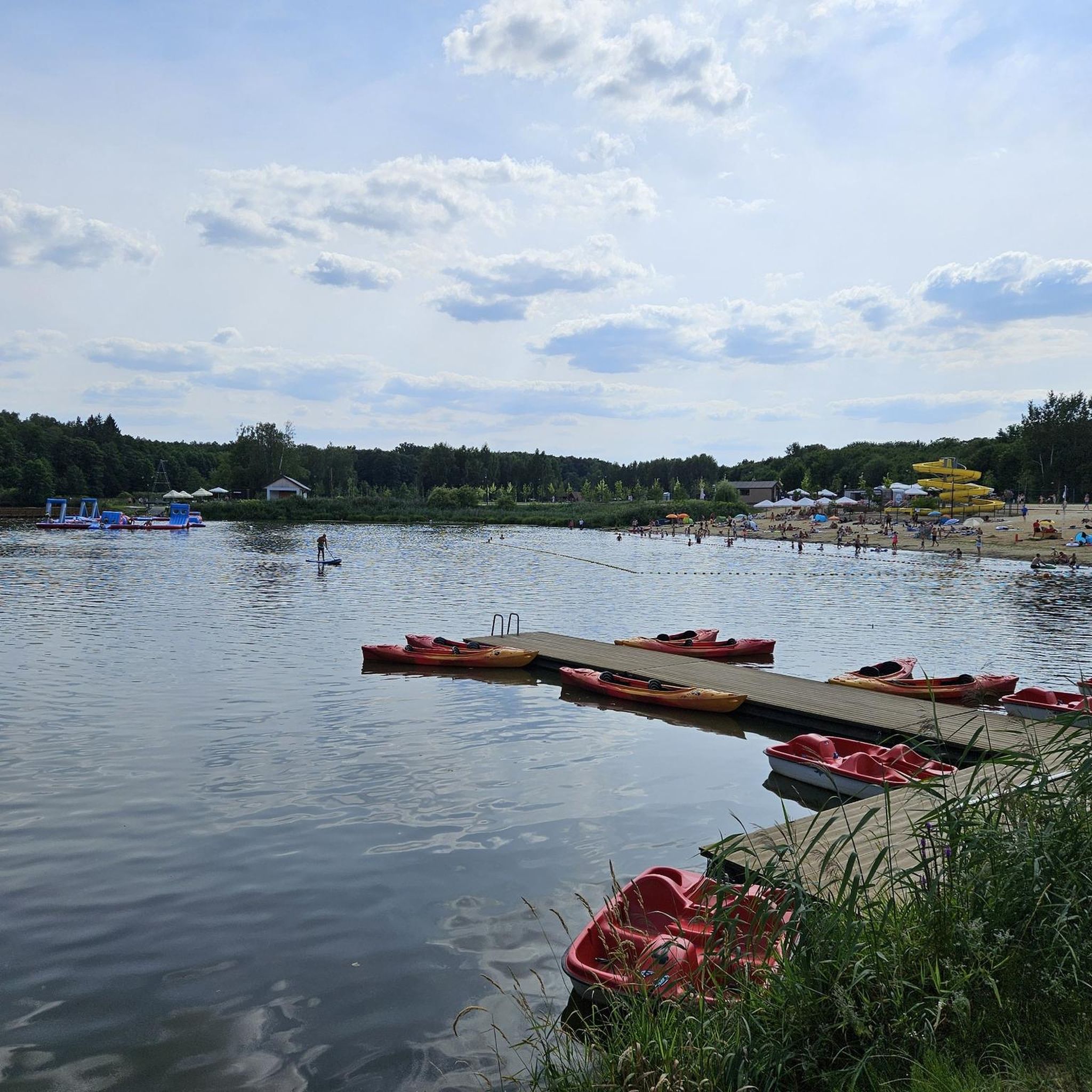
Yes, the Recreational Complex in Lisowice provides beaches and bathing areas, offering opportunities for relaxation and outdoor activities by the water. This is a great spot for those looking to enjoy swimming or simply relax by a lake.
What kind of trees and plants can I see at the Rogów Arboretum?
The Rogów Arboretum (SGGW) is renowned for its extensive and interesting collections of trees and shrubs from Central and Eastern Europe. It also includes forest experimental areas with foreign tree species and an alpine garden, making it a rich botanical destination for plant enthusiasts.
Most popular routes around Koluszki
Most popular attractions around Koluszki

Get inspired with the komoot mobile app


Explore more
Still not found the Highlight you’re looking for? See guides of the top attractions in other regions:
