Attractions and Places To See around gmina Konstantynów - Top 20
Attractions and places to see around gmina Konstantynów showcase a region in eastern Poland, within the Lublin Voivodeship, known for its natural beauty and historical sites. The area is characterized by the meandering Bug River and a significant portion of the Podlasie Bug Gorge Landscape Park. Visitors can explore a variety of architectural monuments and cultural heritage sites. This gmina offers diverse landscapes and historical insights for those exploring the region.
Best attractions and places to see around gmina Konstantynów
…Last updated: July 29, 2026
Church of the Icon of the Mother of God 'Joy of All Who Sorrow' in Koterka
Highlight • Religious Site
Translated by Google •
Tip by

Janów Podlaski Stud Farm
Highlight • Historical Site
Translated by Google •
Tip by

Sign up now to discover places like this
Get recommendations on the best single tracks, peaks, & plenty of other exciting outdoor places.
Sign up for free
Winnica Korol Winery
Highlight • Structure
Translated by Google •
Tip by
Museum of the History of the Mielnik Land
Highlight • Historical Site
Translated by Google •
Tip by

Mielnik–Zabuże Ferry Crossing
Highlight • Bridge
Translated by Google •
Tip by
Sign up for free to discover even more attractions around gmina Konstantynów.
Sign up for free
Already have an account?
Start today with a free account
Your next adventure awaits.
Login or Signup



Tips from the Community

Before organizing your route, be sure to check the ferry times and ticket prices: https://podlasie.siematycze.pl/83-siematycze-przeprawa-promowa-mielnik-zabuze It's worth having cash with you.
3
2

The Orthodox Church of the Icon of Our Lady of All Sorrows Joy in Koterka is located in a remote area surrounded by forest, approx. 1.5 km south of the village centre. An interesting story is connected with the construction of the church. According to it, on 19 May 1852, a woman appeared to a resident of these areas - Eufrozyna Iwaszczuk - ordering a prayer of atonement. In 1855, when an epidemic of plague air broke out, the Mother of God ordered Eufrozyna that the priest and the parishioners should pray for God's mercy. After this event, the parish priest - Szymon Budziłowicz decided to erect a cross at the site of the apparition. The area quickly became a popular place spontaneously visited by pilgrims, who miraculously experienced healing there. Later, a spring appeared in the place of the cross, and with it pilgrimages and further healings. In 1906, permission was obtained to build the church. On July 29, 1912, the church was consecrated. During its construction, many healings occurred. During World War I, the bells were removed from the church, which were taken down by the Germans, and the entire clergy were evacuated to Russia. During this period, the entire fence was also destroyed, as well as liturgical vestments, banners and candlesticks. A new fence was erected in 1925, while three new bells were acquired in 1931. The church is a building built on a cross plan, with a narrower chancel closed on three sides and two rectangular sacristies. The church is oriented, has a single-space interior layout divided into three parts. Next to the church there is a well over a spring in the form of a hexagonal arbor. Renovation and conservation works were carried out in 1996. In the summer of 2012, the church in Koterka celebrated the important ceremony of the 100th anniversary of the consecration of the church. The jubilee was celebrated with great pomp by the parishioners, but also by the inhabitants of the entire Mielnik commune and the surrounding area. On this occasion, a polychrome was also made inside the church, designed and executed by Jarosław Wiszenko. To this day, the church and the miraculous icon located in it are a place of pilgrimage for Orthodox believers.
0
0
The Mielnik Land History Centre – Museum in Mielnik is engaged in the popularization and dissemination of the history of the Mielnik Land. Throughout the year, souvenirs, photographs, ethnographic monuments and other exhibits are collected, which are a memento of people living in the Mielnik Commune. Therefore, in addition to exhibitions of paintings, photographs and other arts, local exhibitions related to the life and activities of the Mielnik residents are also organized. Work is also carried out on finding interesting historical sources regarding the history of Mielnik and the surrounding area, as well as interviews with the oldest residents of the Mielnik Commune, which are later recorded and stored in the ODZM. The ODZM – Museum also houses the Tourist Information Point.
0
0

As late as 1820, the streets of Janów were completely devoid of cobblestones (Historical and topographical-statistical description of the town of Janów from 1820 "). In 1837, a new road was built connecting the stud farm in Wygoda with the town, in 1850 Brzeska and Siedlecka streets were paved, in which on its section from the Market Square to the current Sienkiewicza Street not only the course of the street was corrected, but also the terrain was leveled in order to eliminate the ravine separating the town buildings from the seminary garden. The general development plan of Janów from the years 1807-1866 confirms the information about minor changes in the development and spatial structure of the town.
2
0
An important element of the historic spatial layout of the stud farm is the composed greenery: park, alleys, rows, naturalistic tufted greenery accompanying the paddocks and the old flood embankments (including mature oaks - natural monuments). The attribute of the monument is also the preserved original view relations with the panorama of Janów Podlaski and the excellent exposure of the stud farm silhouette in the Bug riverine landscape. https://zabytek.pl/pl/obiekty/janow-podlaski-janow-podlaski-stadnina-koni
3
0
After the war, Janów Podlaski grew into the world's leading center for breeding Arabian horses, which is confirmed by numerous awards won at prestigious shows and high prices for horses sold. In 1981, at an auction in Janów Podlaski, the stallion El Paso achieved a price of 1 million dollars, and in 1985, at an auction organized in the USA, the mare Penicylina z Janów was sold for 1.5 million dollars. In 2015, the mare Pepita was auctioned in Janów Podlaski for 1.4 million euros.
3
0
During the Second Polish Republic, the stud farm in Janów Podlaski was recreated, and the horses from it were used for mass breeding for the needs of the Polish cavalry. During World War II, the Germans evacuated the horses to the vicinity of Cologne, from where they returned to Poland in 1946, and from 1950, several dozen of them found themselves again in Janów, where the destroyed stables were rebuilt.
3
0
The stud farm in Janów Podlaski, currently owned by the Agricultural Property Agency, was the first state horse breeding farm on Polish soil. It was established in 1817 by the Administrative Council of the Kingdom of Poland with the task of rebuilding the herd of good-bred horses, decimated during the Napoleonic Wars. Until the outbreak of World War I, the stud farm was managed by Tsarist officials. In 1914, the horses from the Janów stud farm were taken deep into Russia.
3
0
Frequently Asked Questions
What historical and cultural sites can I explore in Gmina Konstantynów?
Gmina Konstantynów offers a rich array of historical and cultural sites. You can visit the historic Palace and Park Complex in Konstantynów, the Neo-Gothic Church of St. Elizabeth, and a 19th-century Farm Complex, all located in Konstantynów. Other notable religious sites include the Orthodox Church (now Roman Catholic Church of St. Anthony of Padua) in Gnojno and the Church of St. Stanislaus Bishop in Komarno. Don't miss the Janów Podlaski Stud Farm, a historical site established in 1817, or the Museum of the History of the Mielnik Land for insights into local heritage.
What natural attractions are there in Gmina Konstantynów?
The region is rich in natural beauty, particularly along the Bug River. A significant portion of the gmina lies within the Podlasie Bug Gorge Landscape Park, known for its well-preserved lowland river valley, diverse flora, and rich fauna. You can enjoy the natural meandering course of the Bug River, explore the "Stary Las" (Old Forest) Nature Reserve with its monumental oak trees, or visit one of the 12 designated living nature monuments (old trees) throughout the gmina. The Church of the Icon of the Mother of God 'Joy of All Who Sorrow' in Koterka is also nestled in a beautiful forest setting near the border.
Are there opportunities for hiking or cycling near the attractions?
Yes, Gmina Konstantynów offers various routes for outdoor enthusiasts. For hiking, you can explore trails within the Podlasie Bug Gorge Landscape Park, such as the Pedestrian Trail along the Bug River (Nadbużański Szlak Pieszy). Komoot also features several routes, including easy hikes around gmina Konstantynów and more challenging hiking routes. Cyclists can enjoy the GreenVelo bicycle route, which passes through the area, and find various cycling routes around gmina Konstantynów, including those utilizing the Mielnik–Zabuże Ferry Crossing.
What are some family-friendly attractions in the area?
Many attractions in Gmina Konstantynów are suitable for families. The Janów Podlaski Stud Farm is a great option, offering a chance to see Arabian horses and learn about their history. The Winnica Korol Winery, while a winery, is also listed as family-friendly and provides a glimpse into local culture. Exploring the natural landscapes of the Podlasie Bug Gorge Landscape Park and walking along the Bug River are also excellent family activities.
Can I go kayaking on the Bug River?
Yes, the Bug River is a popular spot for water activities, and there is a designated Kayaking Trail on the Bug River. Its natural meandering course and oxbow lakes make it an ideal location for a scenic paddle.
Are there any unique local experiences or businesses to visit?
Absolutely. You can visit the Winnica Korol Winery, located near Mielnik on the Bug River, to explore a site in a village with a rich history. The Janów Podlaski Stud Farm offers a unique opportunity to see a world-renowned center for breeding Arabian horses. Additionally, throughout the gmina, you can find relics of old circular buildings and wreathed huts, providing a glimpse into traditional agricultural architecture.
What is the best time of year to visit Gmina Konstantynów?
The best time to visit Gmina Konstantynów largely depends on your interests. Spring and summer are ideal for enjoying the natural beauty of the Bug River and the Podlasie Bug Gorge Landscape Park, with opportunities for hiking, cycling, and kayaking. The Mielnik–Zabuże Ferry Crossing operates from spring to autumn (typically May to November), which is useful for cyclists. Autumn also offers beautiful scenery with changing foliage, particularly in the forest reserves.
Where can I find scenic viewpoints in the gmina?
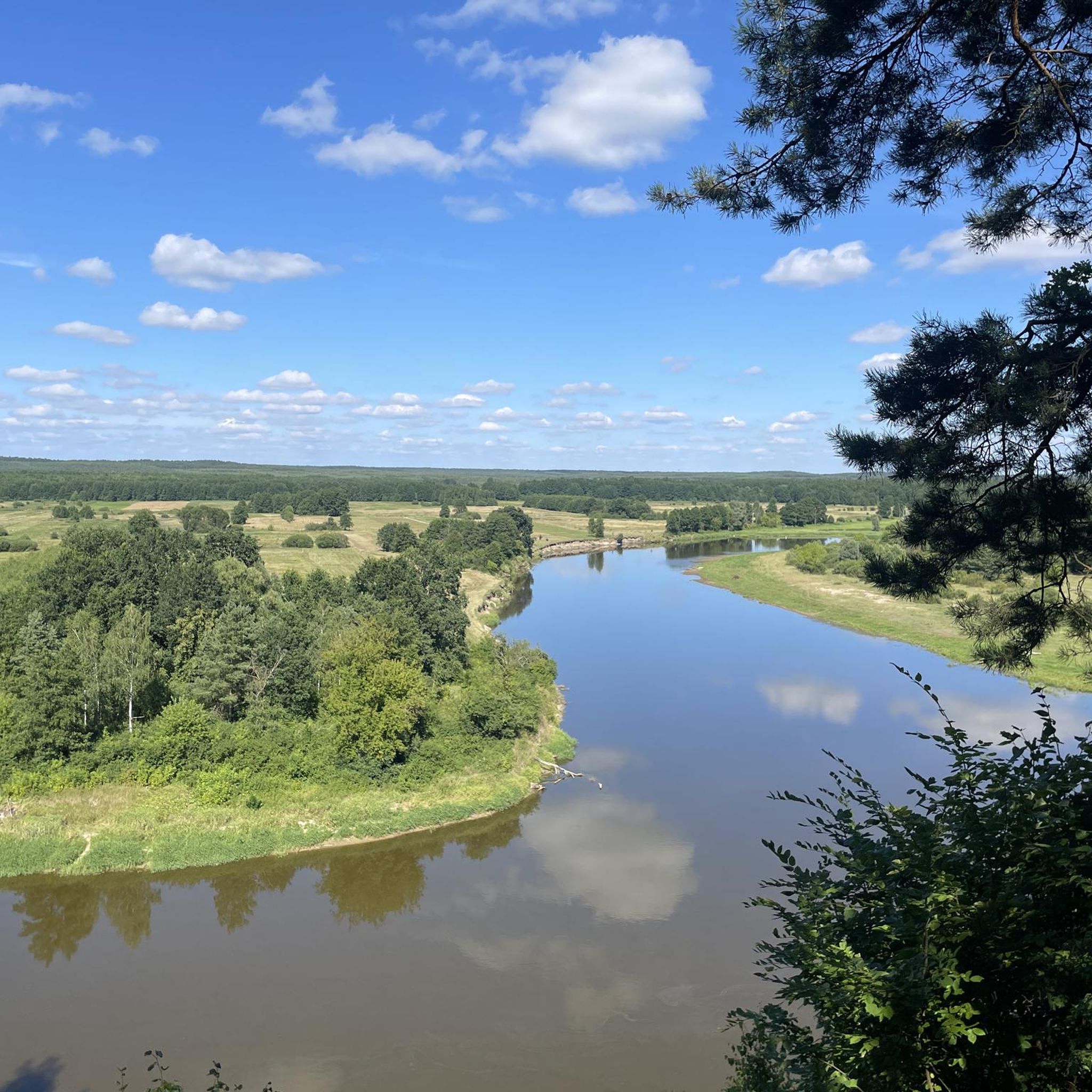
The gmina is known for its picturesque landscapes, especially along the Bug River. A specific attraction is the View of the Bend of the River Bug, which offers a stunning perspective of the river's natural course. Many points within the Podlasie Bug Gorge Landscape Park also provide excellent scenic vistas.
Are there any specific tips for visiting the Mielnik–Zabuże Ferry Crossing?
Yes, the Mielnik–Zabuże Ferry Crossing is a convenient shortcut for cyclists, especially those on the GreenVelo route. It operates from spring to autumn (typically May 1st to November 2nd), with varying hours on weekdays and weekends. It's advisable to check the current operating times and ticket prices before your visit, as they depend on the water level of the Bug River. It's also recommended to have cash with you for the fare.
What kind of wildlife can be observed in the region?
The Podlasie Bug Gorge Landscape Park is a haven for diverse fauna. You might spot various species of vertebrates, including otters and beavers, particularly along the Bug River. The park is also home to numerous bird species, such as the lesser spotted eagle and the black stork, making it an excellent location for birdwatching.
Are there any historical religious buildings to visit?
Yes, the gmina features several significant religious buildings. These include the Neo-Gothic Church of St. Elizabeth in Konstantynów, the Orthodox Church (now Roman Catholic Church of St. Anthony of Padua) in Gnojno, and the Church of St. Stanislaus Bishop in Komarno. Additionally, the Church of the Icon of the Mother of God 'Joy of All Who Sorrow' in Koterka is a notable religious building dating from 1912, located in a forest near the border.
What are some unique architectural features found in the villages?
Beyond the larger monuments, several villages in Gmina Konstantynów preserve remnants of traditional architecture. You can find relics of old circular building layouts and wreathed huts, often with their original farm equipment, offering a unique glimpse into the region's historical rural life.
Most popular routes around gmina Konstantynów
Most popular attractions around gmina Konstantynów

Get inspired with the komoot mobile app


Explore more
Still not found the Highlight you’re looking for? See guides of the top attractions in other regions:
