Attractions and Places To See around Kożuchów - Top 20
Attractions and places to see around Kożuchów offer a blend of historical landmarks, cultural sites, and natural areas. The town is known for its well-preserved medieval city walls and a historic castle, earning it the nickname "Lubuskie Carcassonne". Visitors can explore ruins, churches, and parks, with the surrounding region providing opportunities for outdoor activities. The area features diverse landscapes, from hills to forests, and includes significant archaeological sites like the Silesian Ramparts.
Best attractions and places to see around Kożuchów
- The most popular attractions is Zatonie Palace Ruins, a historical site that was originally built in 1689 and later rebuilt in a Classicist style. Although burned down in 1945, a rebuilt orangery now houses a cafe, and the revitalized park features illuminations of the ruins after dusk.
- Another must-see spot is Rose Temple, a man-made monument. This openwork gazebo is built on an artificial hill, marking the end of the longest visual axis in the park, with a spiral path leading upwards.
- Visitors also love Broniszów Castle, a castle built as a knight's building in the late Middle Ages. This impressive building can be visited, with renovated rooms available for overnight stays and a courtyard open for exploration.
- Kożuchów is known for its historical sites, religious buildings, and cycling routes. The region offers a variety of attractions to see and explore, from medieval architecture to scenic outdoor paths.
- The attractions around Kożuchów are appreciated by the komoot community, with 230 upvotes and 209 photos shared by visitors.
Last updated: May 20, 2026
Zatonie Palace Ruins
Highlight • Historical Site
These works were commissioned by the Duchess of Żagań Dorota de Talleyrand-Périgord, who moved here in the 1840s. The best period in the history of the palace coincides with the duchess's stay. In 1841, the King of Prussia, Frederick William IV, and his wife visited Zatonie [4].
After the death of Princess Dorothy in 1862, her younger son, Alexander Edmund, Marquis de Talleyrand-Périgord, became the owner of the palace. On his initiative, at the beginning of the 1870s, the palace and the adjacent orangery were rebuilt according to the design of A. Jaekel [5].
Burned down in 1945, it was not rebuilt.
In 2020, a rebuilt orangery was opened, which houses a cafe, the park has also been revitalized, after dusk you can see the beautiful illuminations of the ruins of the palace.
Translated by Google •
Tip by

Rose Temple
Highlight • Monument
Translated by Google •
Tip by

Sign up now to discover places like this
Get recommendations on the best single tracks, peaks, & plenty of other exciting outdoor places.
Sign up for free
Broniszów Castle
Highlight • Castle
Translated by Google •
Tip by

Velo Sprotavia Cycling Route
Highlight (Segment) • Cycleway
Translated by Google •
Tip by

Chotków Church
Highlight • Religious Site
The beautiful 13th-century entrance portal on the south side is particularly noteworthy. It was made of sandstone, is pointed-arched, with profiled ledges, and has columns in the corners.
The whole is surrounded by a brick fence, probably from the 15th century.
Showing Translation
Tip by
Sign up for free to discover even more attractions around Kożuchów.
Sign up for free
Already have an account?
Start today with a free account
Your next adventure awaits.
Login or Signup

Tips from the Community

The temple was erected at the end of the 13th century from erratic boulders, in the early Gothic style. The first written information about it dates back to 1376. In the 15th century, the church was extended, and in the 16th century, a tower was added, somewhat unusually, from the south side. During the Baroque period, a sacristy was added and the window openings were given a new form (the outline of pointed arch window openings can still be seen on the outer walls). The beautiful 13th-century entrance portal on the south side deserves special attention. It was made of sandstone, is pointed-arched, with profiled offsets, and has columns in the corners. The whole is surrounded by a brick fence, probably from the 15th century.
0
0
The temple was erected at the end of the 13th century from erratic boulders, in the early Gothic style. The first written information about it dates back to 1376. In the 15th century, the church was extended, and in the 16th century, a tower was added, somewhat unusually, from the south side. In the Baroque period, the sacristy was added and the window openings were given a new form (the outlines of pointed-arch window openings can still be seen on the outer walls). The beautiful 13th-century entrance portal on the south side is particularly noteworthy. It was made of sandstone, is pointed-arched, with profiled ledges, and has columns in the corners. The whole is surrounded by a brick fence, probably from the 15th century.
0
0

Unfortunately, this cycle path is not completely finished. The final layer of asphalt over the concrete slabs is missing. The cycle path is apparently rarely cleared and cleaned, which means that you have to cycle very slowly in some sections. The connection to the cycle path at the former Stypułów train station leads along an unpaved gravel road.
0
0
VELO SPROTAVIA is a strategic cycling path in the southern Lubusz Voivodeship. It runs vertically through the Szprotawa commune, from the town of Szprotawa to the village of Stypułów. At the former railway station in Stypułów, it connects with the regional RAILWAY TO BIKE path, which runs to Kożuchów, Nowa Sól, Otyń, Konotop, and the border with the Wielkopolska Voivodeship. The total length of VELO SPROTAVIA is 16 km. The route follows the former Szprotawa-Zielona Góra railway line (1911-1955), along the Szprotawa-Kartowice-Witków-Siecieborzyce-Stypułów section. Initially, the path runs parallel to the district road towards Kartowice, a short distance away. We ascend a gentle hill (141 m above sea level), offering a panoramic view of the surrounding area. Under favorable conditions, we can see the Karkonosze and Jizera Mountains from here. The agricultural landscape is only interrupted by a strip of trees growing along the path, with a significant proportion of fruit trees. According to legend, former passengers of the Zielona Góra railway, by throwing fruit pits out of the train windows, contributed to the creation of a linear orchard of plums, apples, pears, and cherries. From the hill, we descend pleasantly all the way to Kartowice itself, where, near the ruins of the village railway station, a cyclist service area (MOR) has been built, complete with a shelter, table, benches, parking spaces, and a bicycle repair module. No one will likely object if we pitch a tent near the shelter if necessary. It's a very atmospheric place. Near the shelter, we'll see a monument to the residents of Kartowice (Kortnitz in German) who died on the front lines of World War I. After a rest in Kartowice, we head further north, towards Witków. Soon, the agricultural landscape will transform into forest. This preservation owes its historical preservation to the fact that since the Middle Ages, this has been an inviolable border between the duchies of Głogów and Żagań. The forest preserves fragments of the famous Silesian Ramparts, built in the 15th/16th centuries, a kind of border barrier. All the preserved sections of the Silesian Ramparts constitute the longest archaeological site in Poland. The Szprotawa Land Museum holds a unique boundary marker from this forest. Nearby, by the district road, we come across a 19th-century stone signpost pointing the way towards Borowina (orig. "nach Hartau"). Old maps show peculiar enclaves in this area, such as Wilczy zaułek (Wilczy Lane), Krowie Bagno (Ciche Hill).
0
0

A place with great historical potential. Secured palace ruins, orangery, large park complex with rare trees and small architecture.
1
0

An impressive building, it's impossible not to notice it when driving along the road!
0
0
The castle in Broniszów was built as a knight's building in the late Middle Ages. The first owner was supposedly Bronisław, Count of Bytom Odrzański. At the beginning of the 17th century, the von Kottwitz family expanded the castle into a Renaissance residence on the plan of the letter L. In the elevated, three-storey building, two representative halls were maintained on the ground floor: one of them is covered with a beamed ceiling with an impressive Renaissance stucco decoration from the end of the 16th century, the other is covered with a Renaissance vault with a fitting ornament. The main entrance to the castle is located in the northern façade. It is decorated with a stone late Renaissance portal with the inscription ANNO MISSERIMA FORTUNA QUAE INIMICIS CARET 1608. The Baroque reconstruction from the end of the 17th century brought a change in the order of the windows, a Baroque dome of the northern tower and Baroque plasters at the expense of Renaissance sgraffito plasters. In the 19th century, the castle was rebuilt again. A brick wall and a neo-Gothic observation tower were added to the Renaissance manor house, creating an internal courtyard. The manor house was surrounded by a moat with a pond. The 20th century was not easy for Broniszow Castle. After 1945, the castle gradually fell into ruin. The renovation of this architectural monument began in 2010 and continues to this day. Thanks to our work, you can stay in one of the rooms available to guests and visit the interior of the castle. (zamekbroniszow.pl)
1
0

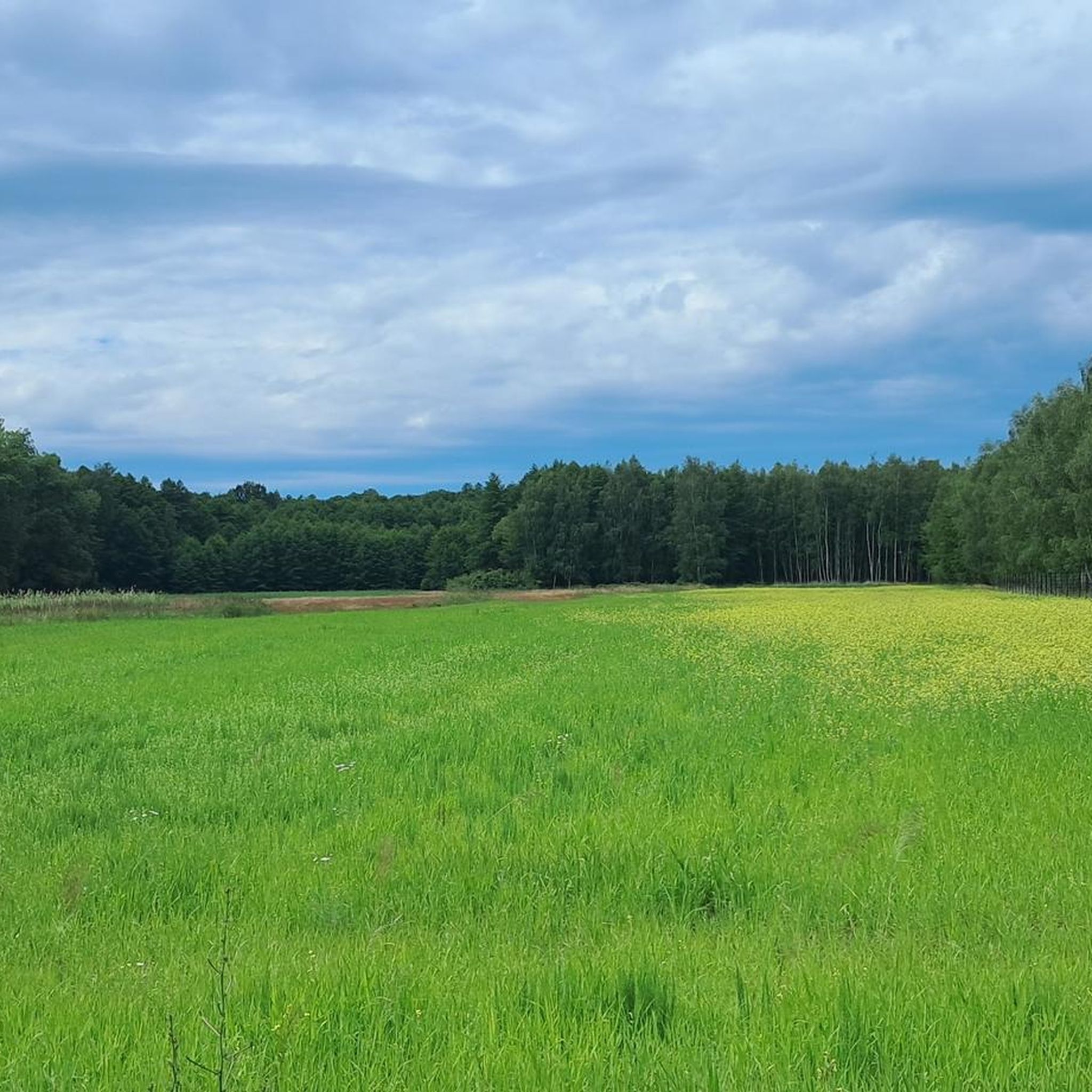
A very pleasant bike path
0
0
Frequently Asked Questions
What historical landmarks can I explore within Kożuchów itself?
Kożuchów is rich in history, often called the 'Lubuskie Carcassonne' due to its impressive medieval city walls. You can explore these well-preserved defensive walls, dating back to the 13th century, which still feature seven watchtowers and the Krosno Gate keep. Other key historical sites include the historic Kożuchów Castle, the Town Hall in the market square with its Gothic and Classicist sections, and the prominent Church of the Purification of the Blessed Virgin Mary with its distinctive tall tower.
Are there any significant historical sites located just outside of Kożuchów?
Yes, several historical sites are a short distance from Kożuchów. A must-see is the Zatonie Palace Ruins, where a rebuilt orangery now houses a cafe, and the revitalized park features beautiful illuminations of the ruins after dusk. You can also visit Broniszów Castle, a medieval knight's building offering overnight stays. Other notable sites include the Ruins of the Evangelical Church in Niwiska Park, the 12th-century church in Solniki, and the Gothic church and Renaissance palace complex in Chotków.
What natural features and viewpoints can I find around Kożuchów?
The region offers several natural spots and viewpoints. The Municipal Park provides a blend of history and nature. For scenic views, you can climb to a viewpoint in the Dalkowski Hills in the village of Cisów, offering a panorama of Kożuchów. The Urzucki Potok stream flows through the former palace park in the southern part of Kożuchów, adding to the natural charm. Additionally, the Rose Temple, an openwork gazebo on an artificial hill, offers a unique perspective within a park setting.
Are there family-friendly attractions or activities in the Kożuchów area?
Many attractions around Kożuchów are suitable for families. The Zatonie Palace Ruins and its revitalized park are family-friendly, with a cafe in the orangery. The Rose Temple, with its spiral path and gazebo, can be an engaging spot for children. The region also offers numerous hiking and cycling routes through forests and fields, providing opportunities for outdoor family adventures. The Velo Sprotavia Cycling Route is particularly noted as family-friendly.
What outdoor activities, like cycling or hiking, are available near Kożuchów?
The area around Kożuchów is excellent for outdoor enthusiasts. You can find various cycling routes, including the Velo Sprotavia Cycling Route, which follows a former railway line and offers panoramic views. For more cycling options, explore the routes in the Cycling around Kożuchów guide. If you prefer mountain biking, check out the MTB Trails around Kożuchów guide. For walkers and runners, there are scenic trails through forests and fields, with more details available in the Running Trails around Kożuchów guide.
Where can I find a cafe or a place to rest near the attractions?
The rebuilt orangery at the Zatonie Palace Ruins houses a cafe, making it a perfect spot for a break, a good cake, and a longer rest while exploring the historical site and its beautiful park.
What is the best time of year to visit Kożuchów for sightseeing and outdoor activities?
The region is generally pleasant for visitors from spring through autumn. Summer offers ideal weather for exploring historical sites and enjoying outdoor activities like cycling and hiking. Events such as the Knight's Tournament and Kożuchów Days often take place during warmer months, providing a vibrant glimpse into the city's past and present. The revitalized park at Zatonie with its illuminations is particularly charming after dusk.
Are there any unique archaeological sites in the Kożuchów area?
Yes, the forests around Kożuchów preserve fragments of the Silesian Ramparts, which were 15th/16th-century border barriers. These form the longest archaeological site in Poland, offering a unique historical exploration opportunity, particularly along sections of the Velo Sprotavia Cycling Route.
What is the significance of the Kożuchów city walls?
The Kożuchów city walls are a defining feature of the town, earning it the nickname 'Lubuskie Carcassonne.' Dating back to the end of the 13th century, they were originally up to 8 meters high and 1.9 meters thick, surrounded by a 20-meter-wide moat. While some parts were reduced, seven watchtowers and the Krosno Gate keep are still visible, showcasing the town's medieval defensive architecture. The moat is even used for knightly tournaments, bringing history to life.
Can I stay overnight in any of the historic buildings near Kożuchów?
Yes, you can experience a unique stay at Broniszów Castle. This impressive building, originally a knight's castle from the late Middle Ages, offers renovated rooms for overnight stays, allowing visitors to immerse themselves in its rich history and explore its courtyard.
What are some of the lesser-known historical gems in the Kożuchów region?
Beyond the main attractions, you can discover several hidden gems. The Lapidarium, a unique necropolis with a collection of tomb sculptures, offers a fascinating glimpse into the past (access requires arrangement with the 'Zamek' Cultural Center). The 18th-century facade at Klasztorna Street features reliefs depicting St. Peter and Paul. Additionally, the manor house in Czciradz, about 3 km east of Kożuchów, boasts a beautiful park with a monumental oak alley, including a magnificent specimen with a circumference of 595 cm.
Most popular routes around Kożuchów
Most popular attractions around Kożuchów

Get inspired with the komoot mobile app


Explore more
Still not found the Highlight you’re looking for? See guides of the top attractions in other regions:
