Attractions and Places To See around Drebach - Top 20
Best attractions and places to see around Drebach, a municipality in the Erzgebirgskreis district of Saxony, Germany, blend historical landmarks, unique natural features, and cultural sites. The region is characterized by its location in the Zschopau river valley, with gneiss rocks and diverse landscapes. Visitors can explore medieval castles, impressive rock formations, and fields of rare crocuses. Drebach offers a variety of experiences, from exploring historical sites to enjoying unique natural landscapes.
Best attractions and places to see around Drebach
…Last updated: September 26, 2026
Greifensteine Observation Rock
Highlight • Natural Monument
Translated by Google •
Tip by

Röhrgrabenweg – Historic Mining Canal Trail
Highlight (Segment) • Trail
Translated by Google •
Tip by

Sign up now to discover places like this
Get recommendations on the best single tracks, peaks, & plenty of other exciting outdoor places.
Wolkenstein Castle
Highlight • Castle
Translated by Google •
Tip by

Bridge Cliff
Highlight • Viewpoint
Translated by Google •
Tip by

Klaffenbach Water Castle
Highlight • Castle
Translated by Google •
Tip by

Sign up for free to discover even more attractions around Drebach.
Already have an account?
Start today with a free account
Your next adventure awaits.
Other adventures around Drebach

Tips from the Community

The Greifensteine are a rock formation in Saxony, known for climbing and mountaineering, among other things. Their highest point reaches an elevation of approximately 731 meters above sea level. The area around the Greifensteine is a nature reserve.
16
1
Here begins the descent into the Wolfsschlucht and access to the via ferratas.
7
1
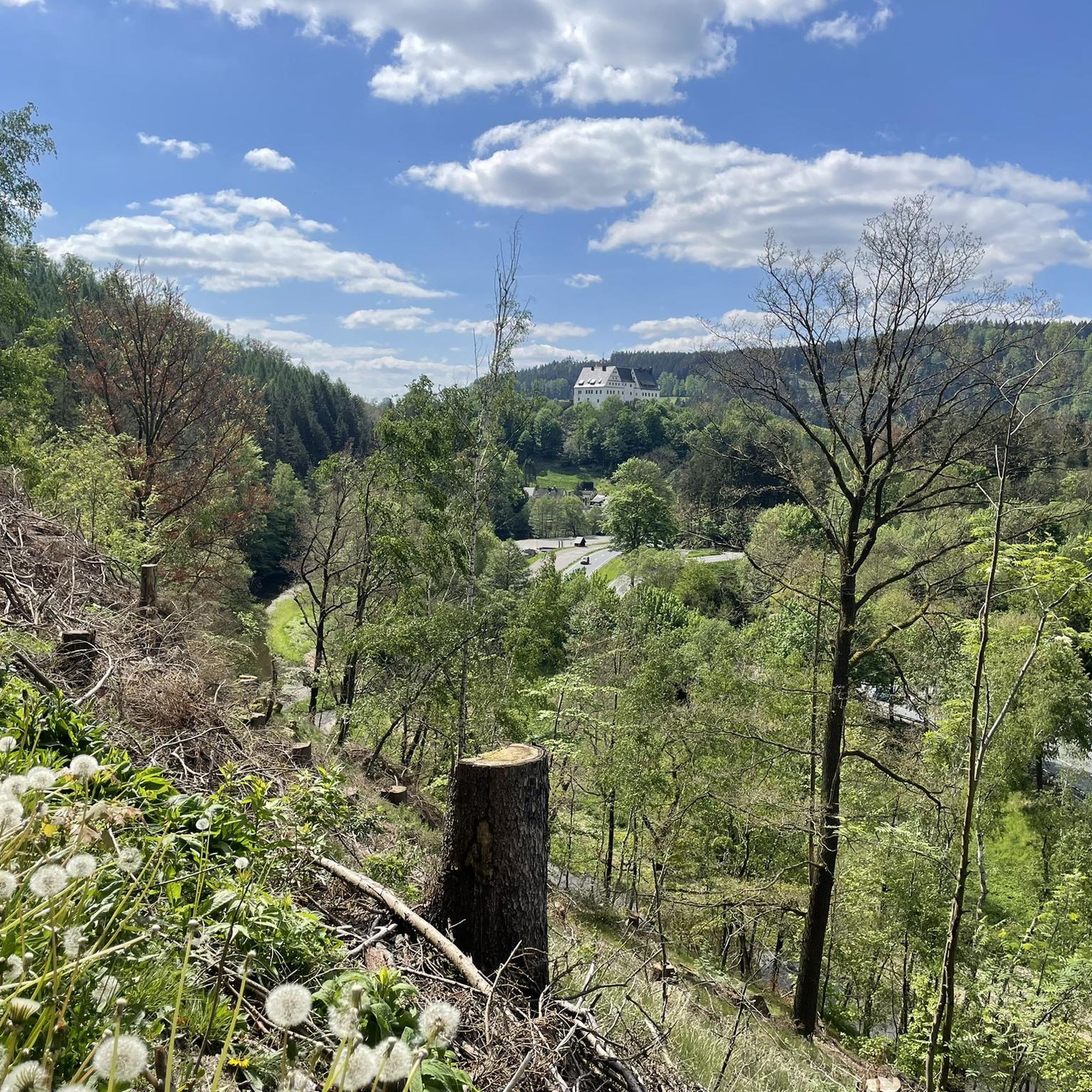
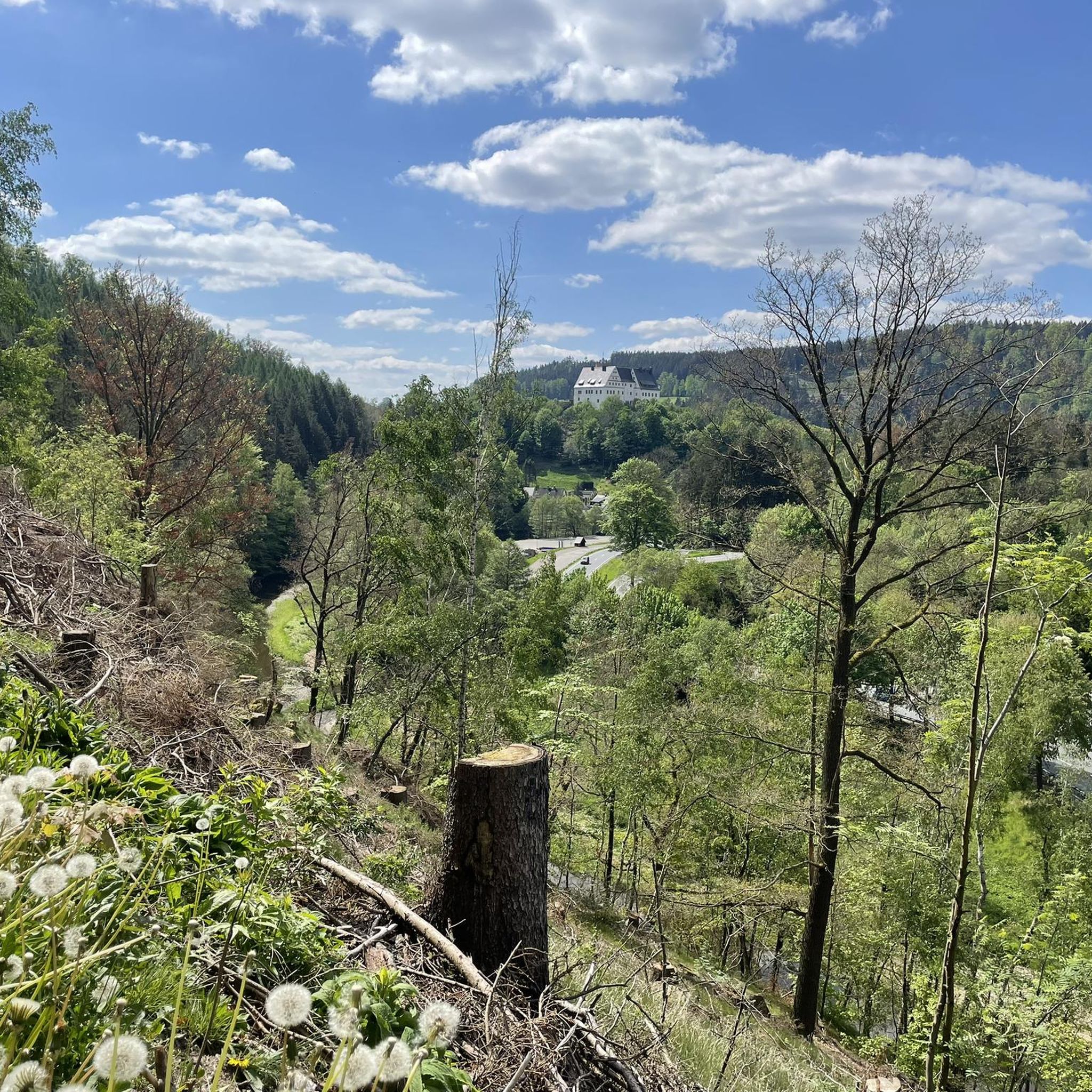
Wolkenstein Castle is a high medieval castle that was first mentioned in documents in the 13th century. The town and castle stand on gneiss rocks 80 meters above the Zschopau valley. Wolkenstein owes its existence to the "Berggeschrei" (the cries of the mountain), that is, the discovery of the ore deposits. The settlement and ore mining is older than that of Annaberg-Buchholz.
28
2
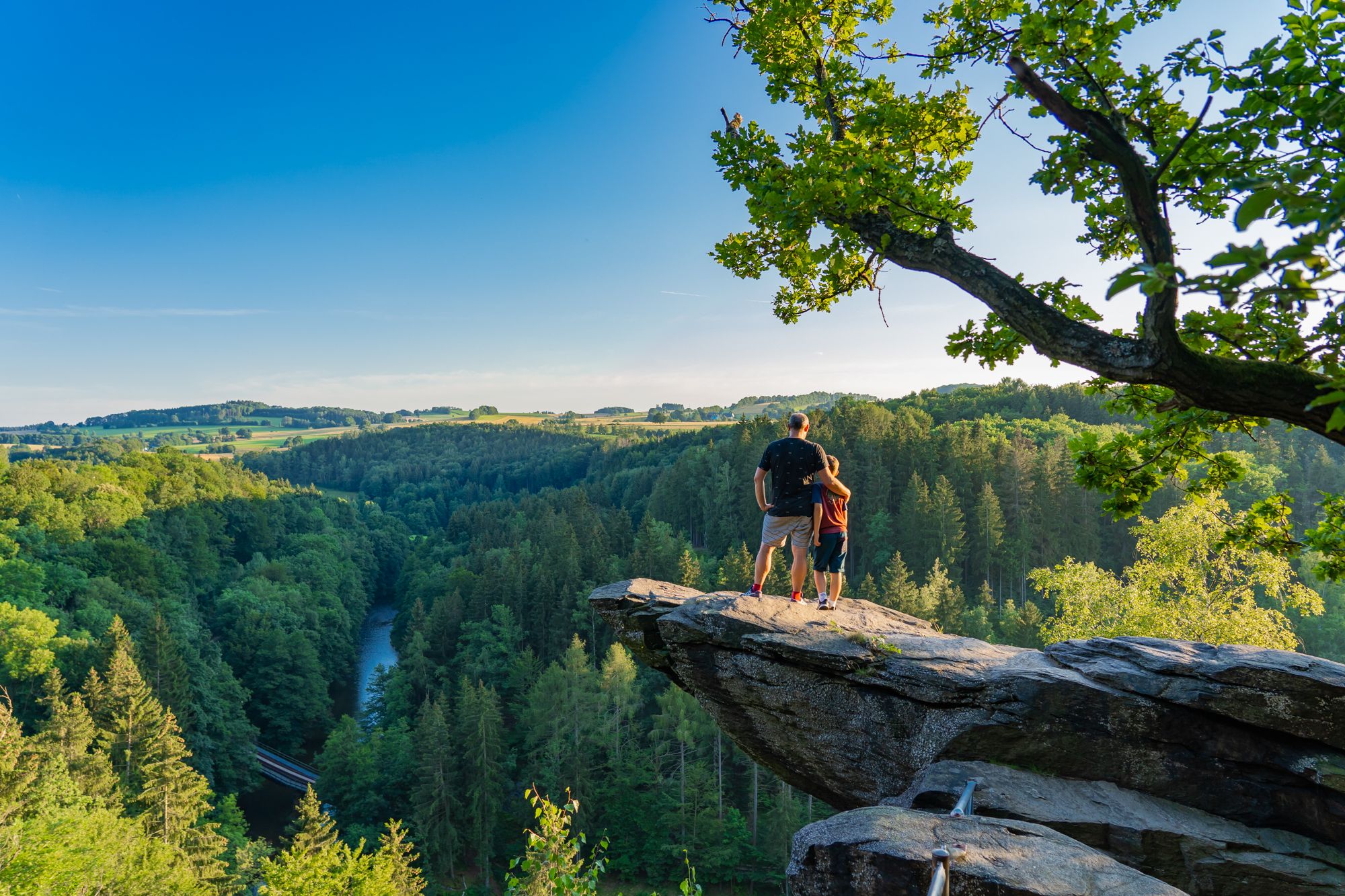
The deep valley with exposed gneiss is the result of the erosion of the Zschopau, which rises on the Fichtelberg and has been flowing in a northerly direction with a greater gradient since the uplift of the Ore Mountains block in the Tertiary period, and flows into the Freiberg Mulde near Döbeln. Steep, often bizarre rock faces are created on steep slopes by the increased flow speed. The most impressive formation is probably an overhanging cliff.
9
0

Like the neighboring villages of Neukirchen and Burkhardtsdorf, Klaffenbach was a tributary village to the Benedictine Abbey of St. Mary in Chemnitz. These villages were sold in 1543 (according to other sources, 1547) to the wealthy Annaberg citizen Wolff Hühnerkopf, owner of several silver mines and master of the mint. He had the moated castle, now known as "Klaffenbach Water Castle" (older name "Neukirchen Castle"), built around 1557. After several changes of ownership, the castle came into the possession of Baron Dietrich von Taube, a court marshal of the Electorate from the Baltic region, in 1615. The castle's current appearance is said to be the result of the reconstruction under Taube beginning in 1616. The castle remained in the possession of the von Taube family for over 200 years. In 1819, the factory owner, merchant, and trader Carl Heinrich Hähnel from Schneeberg acquired the castle complex. The castle subsequently changed hands several times. In 1926, the municipality of Klaffenbach became owner of the manor (the moated castle's farmyard), and from 1934 onward, the moated castle as well. Subsequently, it was used by the Reich Labor Service (from 1935 to 1945) and as a youth correctional facility (1947-1989). After extensive renovation in the 1990s, the castle and its adjacent farmyard were converted into a cultural meeting place. Other buildings in the farmyard housed a hotel and a restaurant.
11
3
Burg Wolkenstein, commonly called Schloss Wolkenstein, is a high medieval castle in the town of Wolkenstein in the Erzgebirge district in Saxony (Germany). Since 1963 there is u. a. the Selva Castle Museum.
7
1

I visited the castle on a via ferrata tour. Well restored, not too built up.
23
3

Frequently Asked Questions
What natural landmarks or viewpoints should I visit in Drebach?
Drebach offers several impressive natural features. The Greifensteine Observation Rock provides panoramic views of the Erzgebirge peaks and valleys towards Augustusburg and Chemnitz. Another scenic spot is Bridge Cliff, offering breathtaking views into the Zschopautal valley, especially vibrant in autumn. The Heidelbachtal Valley is also a beautiful destination year-round, known for its botanical plants.
Are there historical castles or cultural sites to explore in Drebach?
Yes, Drebach is rich in history. You can visit Wolkenstein Castle, a high medieval castle perched 80 meters above the Zschopautal, offering insights into the region's mining history. While not directly in Drebach, the nearby Klaffenbach Water Castle is an idyllic moated castle with a museum and cultural events. For a unique cultural experience, the ZEISS Planetarium with Drebach Observatory provides modern educational opportunities.
Where can I see the famous crocus meadows in Drebach?
The Drebacher Krokuswiesen (Crocus Meadows) are a major natural attraction. These unique meadows burst into bloom with countless violet crocuses, typically in March. This natural phenomenon is a protected area and has been drawing visitors for decades.
What outdoor activities can I do near Drebach's attractions?
The Drebach area is excellent for outdoor enthusiasts. You can find numerous routes for road cycling, touring cycling, and mountain hikes. For example, explore the Road Cycling Routes around Drebach or discover the Cycling around Drebach guides. For more challenging adventures, consider the Mountain Hikes around Drebach, which include routes like the Wolkenstein Via Ferrata.
Are there family-friendly attractions in Drebach?
Absolutely! Many attractions cater to families. The Röhrgrabenweg – Historic Mining Canal Trail is wonderful for children to play and learn about mining history. Wolkenstein Castle and Klaffenbach Water Castle are also considered family-friendly, with Klaffenbach offering a large playground. The Freizeitbad Venusberg public outdoor swimming pool is another great option for families during warmer months.
What is the best time of year to visit Drebach?
The best time to visit Drebach depends on your interests. If you wish to see the famous Drebacher Krokuswiesen in full bloom, March is the ideal month. For general outdoor activities like hiking and cycling, the warmer months from spring to autumn offer pleasant weather. Autumn is particularly beautiful for scenic views from spots like Bridge Cliff due to the colorful foliage.
Are there any wheelchair-accessible paths or attractions?
Yes, the Röhrgrabenweg – Historic Mining Canal Trail is noted as wheelchair-accessible, offering an opportunity to enjoy nature and history. It's always advisable to check specific accessibility details for other attractions directly before your visit.
What do visitors enjoy most about the attractions around Drebach?
Visitors frequently praise the stunning panoramic views from natural monuments like the Greifensteine Observation Rock and Bridge Cliff. The historical significance of castles such as Wolkenstein Castle and the unique natural beauty of the Drebacher Krokuswiesen are also highly appreciated. The komoot community has shared over 2100 photos and given more than 2200 upvotes, highlighting the diverse appeal of the region.
Can I find hiking trails with varying difficulty levels near Drebach?
Yes, the Drebach area offers a range of hiking trails. You can find easy walks as well as more challenging mountain hikes. For instance, the Mountain Hikes around Drebach guide includes routes like the Wolkenstein Via Ferrata, which is rated as difficult, alongside moderate options like the trail around Kreuzfelsen Climbing Rock.
Are there cafes or restaurants near the main attractions?
Yes, some attractions offer dining options. Wolkenstein Castle has a restaurant, and Klaffenbach Water Castle features both a restaurant and a cafe. Additionally, the surrounding towns and villages in Drebach and the wider Erzgebirge region provide various cafes and pubs for refreshments.
What are some hidden gems or less-known spots in the Drebach area?
Beyond the well-known attractions, the Heidelbachtal Valley is a beautiful, less-trafficked area known for its botanical plants and historical mining traces. Exploring the numerous hiking and cycling routes mentioned in the Cycling around Drebach and Mountain Hikes around Drebach guides can also lead you to many scenic and quieter spots within the deep Zschopau river valley.
Most popular routes around Drebach
Most popular attractions around Drebach

Get inspired with the komoot mobile app


Explore more
Still not found the Highlight you’re looking for? See guides of the top attractions in other regions:
