Attractions and Places To See around gmina Żagań - Top 20
Best attractions and places to see around gmina Żagań include a blend of historical significance, cultural heritage, and natural beauty. Located in western Poland within the Lubusz Voivodeship, the region features extensive forests covering approximately 48% of its area, alongside numerous water bodies. Visitors can explore a diverse landscape that combines historical landmarks with opportunities for outdoor activities.
Best attractions and places to see around gmina Żagań
- The most popular attractions is Broniszów Castle, a castle that was built…
Last updated: November 1, 2026
Iłowa Palace and Park
Highlight • Castle
Translated by Google •
Tip by

Broniszów Castle
Highlight • Castle
Translated by Google •
Tip by

Sign up now to discover places like this
Get recommendations on the best single tracks, peaks, & plenty of other exciting outdoor places.
Velo Sprotavia Cycling Route
Highlight (Segment) • Cycleway
Translated by Google •
Tip by

Abandoned Nitrocellulose Station of Alfred Nobel AG
Highlight • Historical Site
Based on the construction and the shape of the holes in the floor, I can't imagine that.
Translated by Google •
Tip by

Chotków Church
Highlight • Religious Site
Showing Translation
Tip by
Sign up for free to discover even more attractions around gmina Żagań.
Already have an account?
Start today with a free account
Your next adventure awaits.

Tips from the Community

My father was a forced laborer in this building or in one of the three others similar to it on the site of this former factory, from 1943 to 1945 (until the arrival of the Russians). Here is what he wrote about the work he had to do: "The work we did was very difficult and dangerous. It consisted of mixing special paper from Norway and Sweden with acid. When the mixture went wrong, the entire boiler would explode, and gas would spread throughout the building. All we could do was get out. But our dear friends didn't wait for it to finish. Time was pressing, and we had to intervene with handkerchiefs over our mouths. So that the gas would dissipate faster, we would spray water for some time. During these operations, our guards stayed outside, behind the doors, preventing us from leaving. They only came in for a control check once everything was finished. With this work, our clothes were not great. And when we returned to the camp with our coats riddled with holes from the acid, our guards would laugh and tell us: 'Good job!'. But we didn't answer."
0
0

The temple was erected at the end of the 13th century from erratic boulders, in the early Gothic style. The first written information about it dates back to 1376. In the 15th century, the church was extended, and in the 16th century, a tower was added, somewhat unusually, from the south side. During the Baroque period, a sacristy was added and the window openings were given a new form (the outline of pointed arch window openings can still be seen on the outer walls). The beautiful 13th-century entrance portal on the south side deserves special attention. It was made of sandstone, is pointed-arched, with profiled offsets, and has columns in the corners. The whole is surrounded by a brick fence, probably from the 15th century.
0
0
The temple was erected at the end of the 13th century from erratic boulders, in the early Gothic style. The first written information about it dates back to 1376. In the 15th century, the church was extended, and in the 16th century, a tower was added, somewhat unusually, from the south side. In the Baroque period, the sacristy was added and the window openings were given a new form (the outlines of pointed-arch window openings can still be seen on the outer walls). The beautiful 13th-century entrance portal on the south side is particularly noteworthy. It was made of sandstone, is pointed-arched, with profiled ledges, and has columns in the corners. The whole is surrounded by a brick fence, probably from the 15th century.
0
0

Unfortunately, this cycle path is not completely finished. The final layer of asphalt over the concrete slabs is missing. The cycle path is apparently rarely cleared and cleaned, which means that you have to cycle very slowly in some sections. The connection to the cycle path at the former Stypułów train station leads along an unpaved gravel road.
0
0
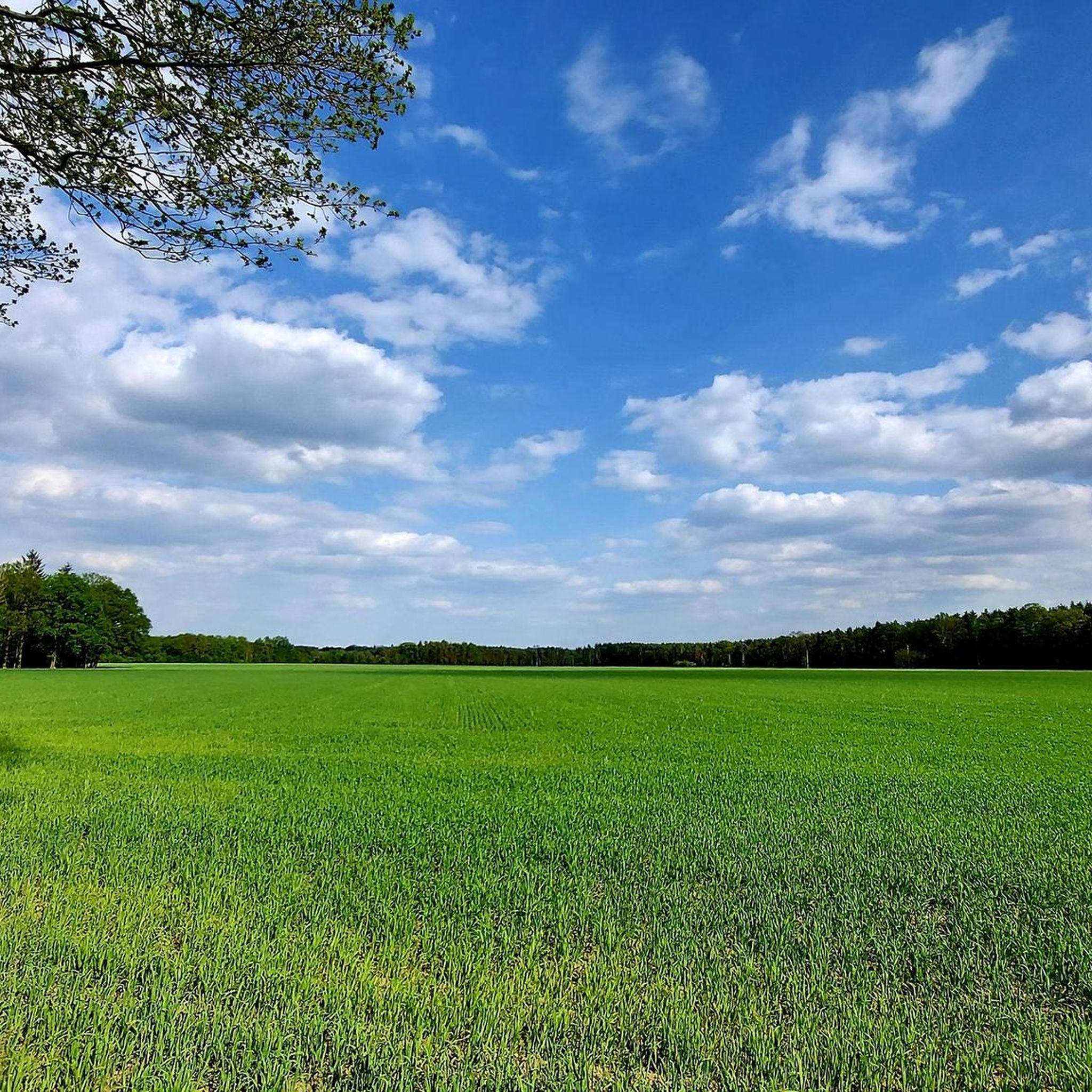
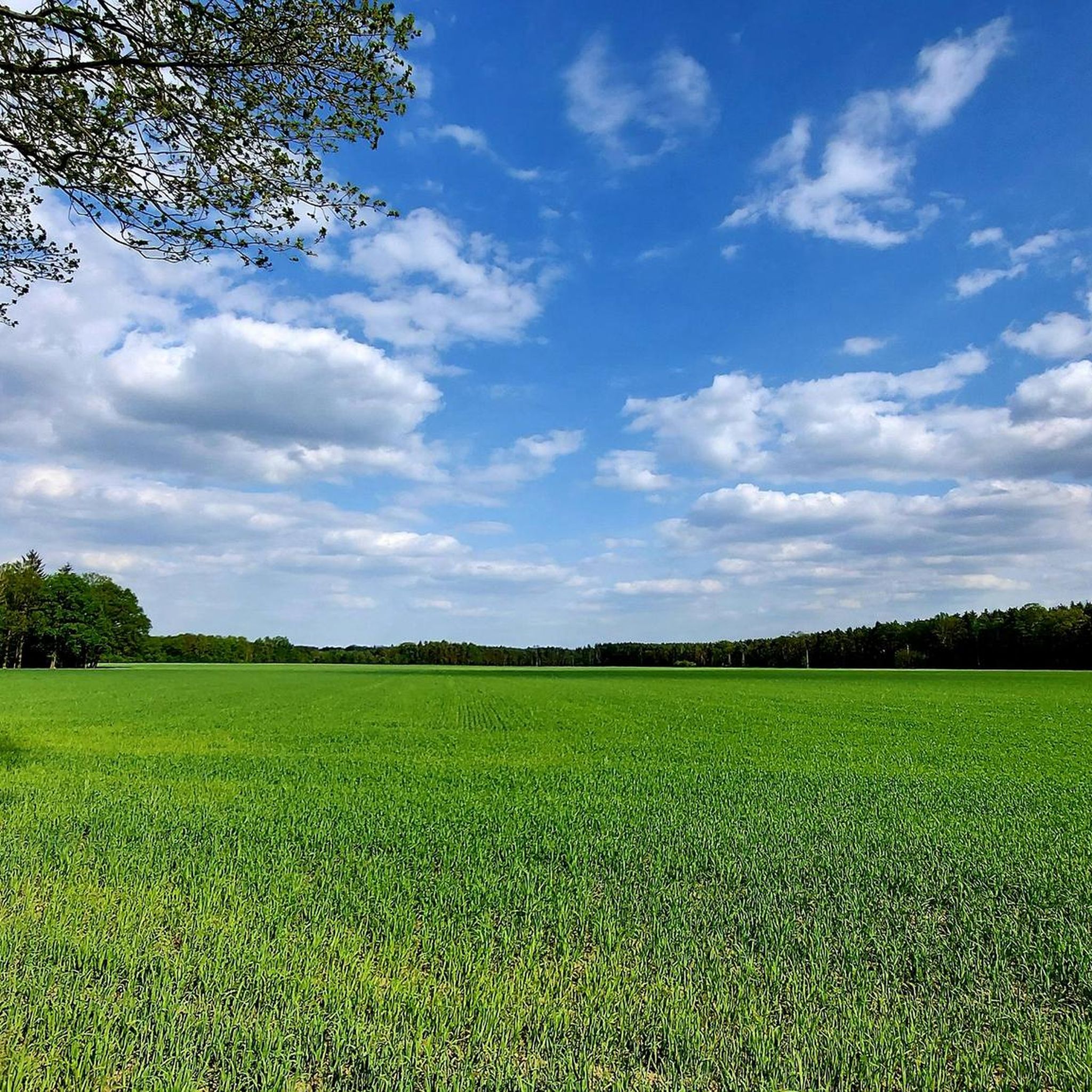
VELO SPROTAVIA is a strategic cycling path in the southern Lubusz Voivodeship. It runs vertically through the Szprotawa commune, from the town of Szprotawa to the village of Stypułów. At the former railway station in Stypułów, it connects with the regional RAILWAY TO BIKE path, which runs to Kożuchów, Nowa Sól, Otyń, Konotop, and the border with the Wielkopolska Voivodeship. The total length of VELO SPROTAVIA is 16 km. The route follows the former Szprotawa-Zielona Góra railway line (1911-1955), along the Szprotawa-Kartowice-Witków-Siecieborzyce-Stypułów section. Initially, the path runs parallel to the district road towards Kartowice, a short distance away. We ascend a gentle hill (141 m above sea level), offering a panoramic view of the surrounding area. Under favorable conditions, we can see the Karkonosze and Jizera Mountains from here. The agricultural landscape is only interrupted by a strip of trees growing along the path, with a significant proportion of fruit trees. According to legend, former passengers of the Zielona Góra railway, by throwing fruit pits out of the train windows, contributed to the creation of a linear orchard of plums, apples, pears, and cherries. From the hill, we descend pleasantly all the way to Kartowice itself, where, near the ruins of the village railway station, a cyclist service area (MOR) has been built, complete with a shelter, table, benches, parking spaces, and a bicycle repair module. No one will likely object if we pitch a tent near the shelter if necessary. It's a very atmospheric place. Near the shelter, we'll see a monument to the residents of Kartowice (Kortnitz in German) who died on the front lines of World War I. After a rest in Kartowice, we head further north, towards Witków. Soon, the agricultural landscape will transform into forest. This preservation owes its historical preservation to the fact that since the Middle Ages, this has been an inviolable border between the duchies of Głogów and Żagań. The forest preserves fragments of the famous Silesian Ramparts, built in the 15th/16th centuries, a kind of border barrier. All the preserved sections of the Silesian Ramparts constitute the longest archaeological site in Poland. The Szprotawa Land Museum holds a unique boundary marker from this forest. Nearby, by the district road, we come across a 19th-century stone signpost pointing the way towards Borowina (orig. "nach Hartau"). Old maps show peculiar enclaves in this area, such as Wilczy zaułek (Wilczy Lane), Krowie Bagno (Ciche Hill).
0
0

An impressive building, it's impossible not to notice it when driving along the road!
1
0
The castle in Broniszów was built as a knight's building in the late Middle Ages. The first owner was supposedly Bronisław, Count of Bytom Odrzański. At the beginning of the 17th century, the von Kottwitz family expanded the castle into a Renaissance residence on the plan of the letter L. In the elevated, three-storey building, two representative halls were maintained on the ground floor: one of them is covered with a beamed ceiling with an impressive Renaissance stucco decoration from the end of the 16th century, the other is covered with a Renaissance vault with a fitting ornament. The main entrance to the castle is located in the northern façade. It is decorated with a stone late Renaissance portal with the inscription ANNO MISSERIMA FORTUNA QUAE INIMICIS CARET 1608. The Baroque reconstruction from the end of the 17th century brought a change in the order of the windows, a Baroque dome of the northern tower and Baroque plasters at the expense of Renaissance sgraffito plasters. In the 19th century, the castle was rebuilt again. A brick wall and a neo-Gothic observation tower were added to the Renaissance manor house, creating an internal courtyard. The manor house was surrounded by a moat with a pond. The 20th century was not easy for Broniszow Castle. After 1945, the castle gradually fell into ruin. The renovation of this architectural monument began in 2010 and continues to this day. Thanks to our work, you can stay in one of the rooms available to guests and visit the interior of the castle. (zamekbroniszow.pl)
3
0

It’s called „hotel” by locals due to it’s shape with characteristic balcony however it was nitrocelulose station where celulose was nitrated. Process was extremaly toxic. Balconies were needed to allow workers to take quick brake from acidic gases. Holes in the floor are leftovers from vertical mixing instalation. On the top floor you can find concrete celulose reservoirs. On the ground floor cylindrical bases for tanks and machinery. Ground floor was covered with special tiles that could stand contact with acid. Building have concrete support and walls made of bricks. Because nitrocelulose is explosive the whole idea is: in case of explosion the support remains while the walls are blown up. This solution allowed to quickly fix damage and continue production.
2
0
Frequently Asked Questions
What historical sites can I visit in Gmina Żagań?
Gmina Żagań is rich in history. You can explore the impressive Żagań Ducal Palace and Park Complex, which includes a baroque palace and extensive gardens. Another significant site is the Former Augustinian Monastery Complex, a Historic Monument of Poland, featuring the Church of the Assumption and a wine museum. Don't miss the Broniszów Castle, a medieval knight's building currently undergoing restoration, or the Iłowa Palace and Park, known for its Renaissance origins and unique Japanese and Chinese gardens.
Where can I learn about the military history of Gmina Żagań?
To delve into military history, visit the Museum of Allied Prisoner of War Camps (Stalag Luft III). This site commemorates the WWII prisoner-of-war camps, famously associated with 'The Great Escape.' You can explore the museum, the camp area, a replica of the 'Harry' tunnel, and a reconstructed guard tower.
Are there any family-friendly attractions in Gmina Żagań?
Yes, several attractions are suitable for families. The parks associated with the Żagań Ducal Palace and Iłowa Palace and Park offer open spaces and interesting garden designs for children to explore. The Velo Sprotavia Cycling Route is also marked as family-friendly, providing a pleasant outdoor activity.
What natural attractions and outdoor activities are available?
Gmina Żagań boasts extensive forests, covering nearly half of its area, perfect for nature lovers and mushroom pickers. The region is home to diverse flora and fauna, including deer, wild boar, and various bird species. The rivers Bóbr and Kwisa offer opportunities for kayaking and other active recreation. You can also visit the Gorzupia Hydroelectric Power Plant, accessible via a scenic cycling route through meadows and fields.
Can I go hiking in Gmina Żagań?
Absolutely. The region's forests and natural landscapes provide excellent opportunities for hiking. You can find easy hiking trails around Gmina Żagań, such as the 'Ulica Warszawska – Park Bridge in Książański Park loop from Żagań' or the 'Serene Stream – Bridge Over the Czerna loop from Żagań'. For more options, explore the dedicated guide for easy hikes around gmina Żagań.
Are there cycling routes suitable for families?
Yes, the Velo Sprotavia Cycling Route is a strategic cycling path that runs through the area and is considered family-friendly. It follows a former railway line, offering a pleasant ride with scenic views. For more cycling options, check out the Cycling around gmina Żagań guide.
What options are there for kayaking in the area?
The Kwisa river near Trzebów is a popular spot for kayaking, often used by local associations for trips combined with sightseeing. The Bóbr river also offers opportunities for water sports, allowing visitors to experience the region's natural beauty from a different perspective.
Are there any unique or lesser-known places worth discovering?
Consider visiting the Silos of the Alfred Nobel Plant in Krzystkowice, which are remnants of a former plant with massive reinforced concrete skeletons and unique 'blow-out windows.' Another intriguing spot is the Ruins of the Evangelical Church in Niwiska Park, a 19th-century church now in picturesque ruins within a former palace park.
Where can I find historical churches in Gmina Żagań?
Gmina Żagań is home to several historic churches, some dating back to the 13th century. Notable examples include the Church of the Virgin Mary in Kożuchów, a Gothic parish church with a rich history of rebuilding, and the Church of St. John in Dzietrzychowice. Many of these showcase Gothic or neo-Gothic architecture.
What is the best time of year to visit Gmina Żagań attractions?
The region's natural beauty, with its forests and rivers, is particularly appealing during spring and autumn when the weather is mild and the landscapes are vibrant with colors. Summer is ideal for outdoor activities like cycling and kayaking. Historical sites and museums are generally accessible year-round, though checking specific opening hours is always recommended.
Is Gmina Żagań accessible by public transport?
While specific public transport routes to all attractions might vary, the town of Żagań itself serves as a central point. For detailed information on bus timetables and connections to specific sites like Iłowa Palace or the Stalag Luft III Museum, it's best to consult local transport schedules directly.
Are there dog-friendly places to visit or trails to walk?
Many of the natural areas, such as the extensive forests and parks, are generally dog-friendly for walks, provided dogs are kept on a leash and owners clean up after them. For specific regulations regarding dogs in palaces or museums, it's advisable to check with the individual venues beforehand.
Most popular attractions around gmina Żagań

Get inspired with the komoot mobile app


Explore more
Still not found the Highlight you’re looking for? See guides of the top attractions in other regions:
