The best running trails around Oświęcim
4.6
(39)
721
runners
68
runs
Jogging around Oświęcim offers diverse routes through its natural surroundings and developing recreational areas. The region, part of the Lesser Poland Voivodeship, features quiet woodlands, parklands, and paths alongside the Soła and Vistula rivers. Many routes utilize mostly paved surfaces, providing accessible options for runners. The landscape is generally flat with minimal elevation changes, making it suitable for various fitness levels.
Best jogging routes around Oświęcim
- The most popular jogging route is Łęg Kamieniec loop from Oświęcim, a 7.8…
Last updated: November 10, 2026
5.0
(21)
62
runners
12.9km
01:22
40m
40m
Moderate run. Good fitness required. Mostly paved surfaces.
37
runners
11.3km
01:12
20m
20m
Moderate run. Good fitness required. Mostly paved surfaces.

5.0
(1)
27
runners
12.8km
01:22
40m
40m
Moderate run. Good fitness required. Mostly paved surfaces.
19
runners
5.53km
00:36
10m
10m
Moderate run. Good fitness required. Mostly paved surfaces.
21
runners
29.1km
03:07
50m
50m
Hard run. Very good fitness required. Mostly runnable paths. Some sure-footedness required.
Get access to more routes and recommendations from other explorers.
Already have an account?
Our route recommendations are based on thousands of hikes, rides, and runs completed by other people on komoot.
Start today with a free account
Your next adventure awaits.

Other adventures around Oświęcim

Tips from the Community

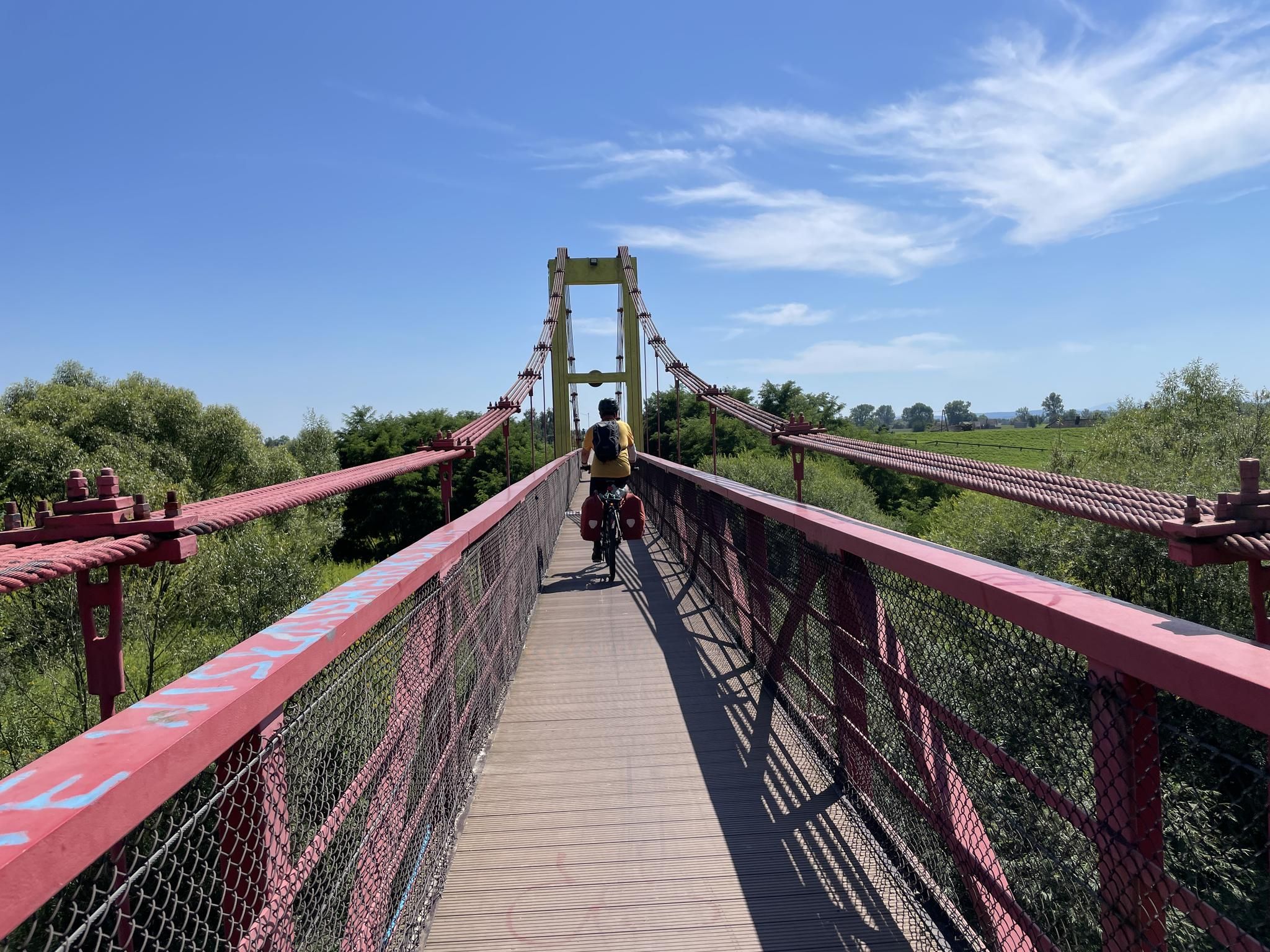
Attention ⛔️ During the closure of the footbridge, the nearest crossing for pedestrians and cyclists in this area is the Piastowski bridge. And there is quite a trap here. On the Piastowski bridge, there is a no-cycling sign. When I was riding on one side of the sidewalk, the Municipal Police warned me that cycling is not allowed, and I had to walk with my bike. Of course, the authorities of Oświęcim are unable to get anything in order. It would have been enough to make one side available only for bicycles during the renovation.
2
0
As of November 5, 2026, the footbridge has been completely closed to pedestrians and cyclists due to the start of construction work. Work is expected to last about a year and conclude in October 2027. The investment costs nearly 6 million PLN, of which over 5.1 million PLN comes from EU funding (as part of the project "Expansion of bicycle routes in the Oświęcim Agglomeration"). The facility, dating back to the 1980s, will undergo a comprehensive modernization of its structure, surface, lighting, and illumination, and will be fully adapted to the needs of people with disabilities. A bicycle repair station is also planned nearby.
2
0

Bridge over the river Sola for pedestrians and cyclists, narrow passage between the boundary pillars at the beginning and end of the bridge.
0
0

The Castle in Oświęcim is a medieval defensive stronghold located on a hill on the right bank of the Soła River. Currently, the site is home to the Museum of the Castle in Oświęcim, which presents the rich history of the city, the former Duchy of Oświęcim, and valuable historical and archaeological collections. It was here that a great diplomatic turning point occurred: in 1454, the last Piast duke of this region, Jan IV, bowed to the might of Poland and ceded the castle and his entire duchy as a fief to King Casimir Jagiellon. Three years later (in 1457), he completely sold these lands to him. The castle ceased to be a Silesian borderland and became Polish royal property for centuries. It is worth taking a look at the mighty, 13th-century Gothic tower, which remembers those events and that agreement! The history of the castle in Oświęcim dates back to the 11th century, when there was an early medieval agricultural settlement on the hill above the Soła. After it burned down, a fortified castellany stronghold was erected here. The first official documentary mention of it dates from 1179. It was then that King Casimir the Just transferred these lands to the Duke of Opole, Mieszko Plątonogi. Early Gothic tower – dates from the end of the 13th century, it is a defensive building type (bergfried) and is one of the oldest preserved brick structures in Lesser Poland. Royal history – the castle hosted prominent historical figures, including the future Queen of Poland, Bona Sforza. Underground tunnels – there are two corridors under the castle, including an air-raid shelter built by the Germans during World War II. Address: ul. Zamkowa 1, 32-600 Oświęcim Opening hours: Tuesday to Sunday from 10:00 AM to 6:00 PM (the museum is closed on Mondays).
1
0
A pleasant crossing between two bridges. You can't ride onto this footbridge, but there are guide rails. Nice view from the top of the river and the boulevards.
1
0
The castle in Oświęcim is the royal castle of King Casimir IV Jagiellon.
2
0
I recommend, nice staff, they know their stuff, overall I recommend...
2
0
Frequently Asked Questions
What kind of terrain can I expect on running routes around Oświęcim?
The running routes in Oświęcim primarily feature mostly paved surfaces, making them accessible for various fitness levels. The landscape is generally flat with minimal elevation changes, offering a comfortable experience for joggers. You'll find paths winding through quiet woodlands, alongside the Soła and Vistula rivers, and within local parklands.
Are there any easy or beginner-friendly running paths in Oświęcim?
Yes, Oświęcim offers several easy running paths suitable for beginners. The region's generally flat terrain and accessible parklands provide excellent options for those looking for a less strenuous run. For example, the routes within Park Hallera are known for their pleasant running environment.
Where can I find longer or more challenging running trails in Oświęcim?
For those seeking a longer or more challenging run, Oświęcim has options that extend further into the natural surroundings. The St. Joseph Church – Vistula Oxbow Lake loop from Oświęcim is a significant 18.4 miles (29.6 km) trail, leading through riverside areas and past the Vistula Oxbow Lake, offering a substantial workout.
Are there any circular running routes available in Oświęcim?
Many of the running routes in Oświęcim are designed as circular loops, providing convenient starting and ending points. Popular examples include the Łęg Kamieniec loop from Oświęcim and the Park Hallera loop from Oświęcim, both offering scenic round trips.
What kind of natural features or landmarks can I see while jogging in Oświęcim?
While jogging in Oświęcim, you can enjoy the tranquil settings along the Soła and Vistula rivers, and explore quiet woodlands and parklands. Notable landmarks include the historic Oświęcim Castle, which is part of some running loops. You might also encounter the Confluence of the Vistula and Soła rivers, a significant natural monument.
Are there any family-friendly running routes in the Oświęcim area?
Yes, Oświęcim offers several family-friendly running routes, particularly those in local parklands like Park Hallera. The generally flat terrain and mostly paved surfaces make these paths suitable for families, including those with strollers or younger children who might be jogging or cycling alongside.
What do other runners say about the jogging experience in Oświęcim?
The running routes in Oświęcim are highly rated by the komoot community, with an average score of 4.75 stars from over 20 reviews. Runners often praise the quiet woodlands, accessible parklands, and scenic riverside paths along the Soła and Vistula, highlighting the variety of options for different fitness levels.
Can I find running routes that pass by historical sites or points of interest?
Absolutely. Some running routes in Oświęcim incorporate historical sites. For instance, the Oświęcim Castle loop from German Nazi Concentration Camp Auschwitz (Auschwitz I) allows you to jog past the historic Oświęcim Castle, offering a blend of exercise and local history.
What are the best times of year to go jogging in Oświęcim?
Oświęcim's natural surroundings are enjoyable throughout much of the year. Spring and autumn offer pleasant temperatures and beautiful scenery, ideal for running. Summer can be warm, so early morning or late evening runs are recommended. While specific winter routes aren't detailed, the paved surfaces may still be accessible depending on snow conditions.
Are there any running routes that offer views of the rivers?
Many running routes in Oświęcim take advantage of the region's riverine landscape. You can find scenic paths along the Soła and Vistula rivers, providing tranquil settings and pleasant views. The St. Joseph Church – Vistula Oxbow Lake loop from Oświęcim is a prime example, leading directly through riverside areas.
How many running routes are available in Oświęcim?
There are over 70 running routes available around Oświęcim, catering to various preferences and fitness levels. This includes a good mix of easy, moderate, and challenging options, ensuring there's something for every runner.
Most popular routes around Oświęcim
Most popular attractions around Oświęcim

Get inspired with the komoot mobile app


Explore more
Browse the best Running Trails & Routes in other regions.
