Attractions and Places To See around gmina Biała - Top 20
Best attractions and places to see around gmina Biała are found in the Opole Voivodeship, a region in southwestern Poland situated on the Głubczyce Plateau. This area, located at the confluence of the Biała River, offers a blend of historical landmarks, cultural heritage, and natural landscapes. Visitors can explore architectural monuments, serene natural spots, and various outdoor activity routes. The gmina provides opportunities for both historical exploration and active tourism.
Best attractions and places to see around gmina Biała
- The…
Last updated: May 20, 2026
Moszna Castle
Highlight • Castle
Translated by Google •
Tip by

Tułowice Palace
Highlight • Castle
Translated by Google •
Tip by

Sign up now to discover places like this
Get recommendations on the best single tracks, peaks, & plenty of other exciting outdoor places.
Sign up for free
Rogów Opolski Castle
Highlight • Castle
Translated by Google •
Tip by

Tiele-Winckler Family Mausoleum
Highlight • Monument
Translated by Google •
Tip by

Blok Nature Reserve
Highlight • Forest
The plant community that occurs here is the sub-oceanic fresh pine forest [3]. The trees are dominated …
Translated by Google •
Tip by
Sign up for free to discover even more attractions around gmina Biała.
Sign up for free
Already have an account?
Start today with a free account
Your next adventure awaits.
Login or Signup

Tips from the Community

Eight graves have survived in the von Tiele-Winckler family cemetery. The founder of the family, Hubert von Tiele-Winckler, is buried at the foot of a tall cross. In the second row lies his eldest son, Franz Hubert, builder of the palace in Moszna. In the third row lies the second-to-last Count, Klaus Hubert (Franz Hubert's son). The last Count, Hans Werner von Tiele-Winckler, left Moszna in 1945 before the estate was occupied by the Red Army. He died in Germany in 1957 and was buried there. The Moszna family necropolis is located on a small hill, accessible by the original steps. A high fence and a wrought-iron gate (also historic) remain to this day. In spring, the cemetery is filled with colorful azaleas.
0
0

Beautiful rhododendrons blooming in May. Lots of people on weekends.
0
0

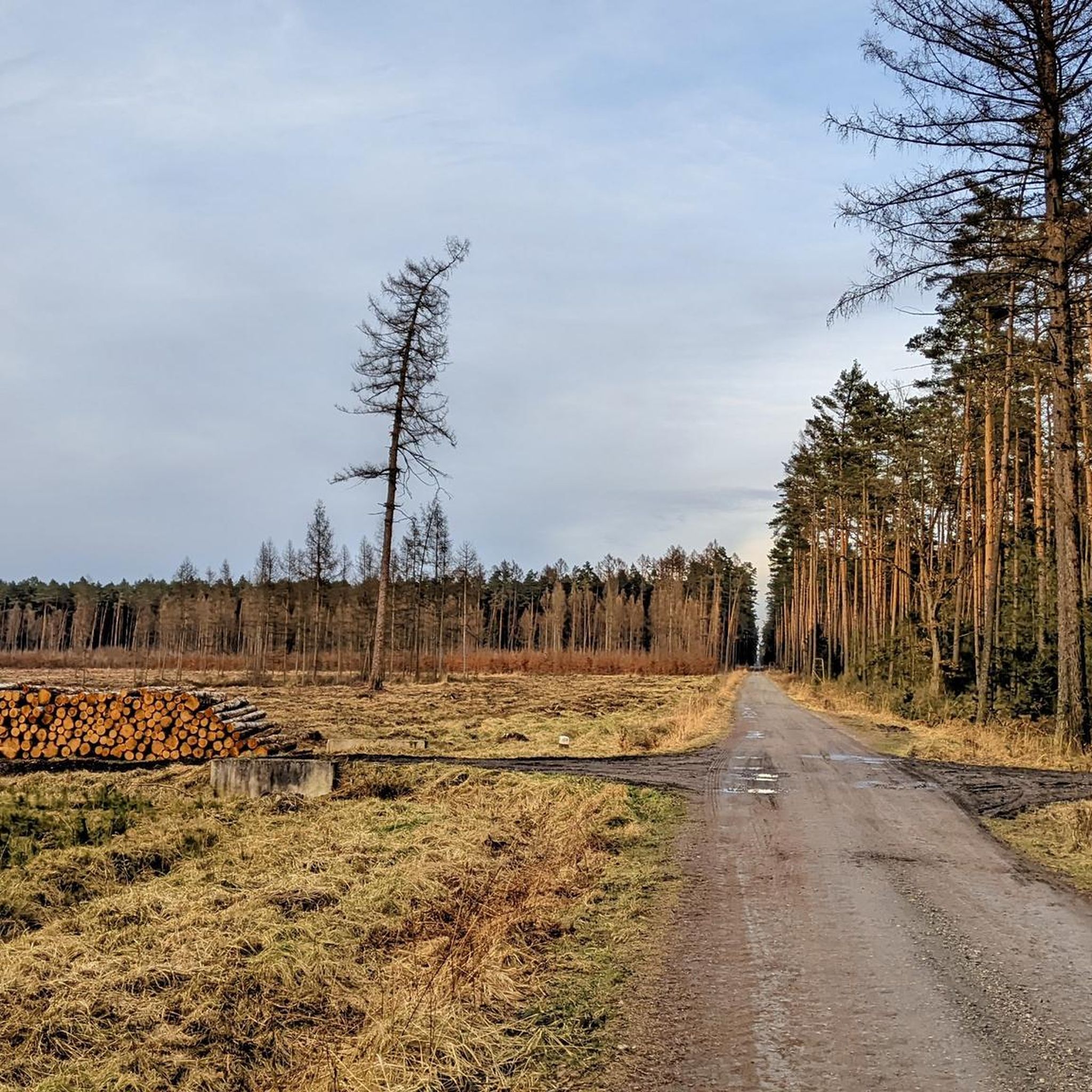
I will go back there, but the last sentence on this sign made the biggest impression on me: "The reserve is subject to generally known regulations specifying the principles of contact with nature" Such a civilized form of "no entry for simpletons, litterers and vandals"
0
0

The Praschma family palace in Tułowice is a neo-Baroque residence from the late 19th century, surrounded by a vast park with interesting old trees. Although it currently serves as a school and is not open to the public inside, it is worth stopping for a moment to see its elegant façade and relax in the peaceful surroundings. An asphalt road leads to the palace, making it easily accessible to road cyclists. It is a good place for a short stop on the route through the Tułowice area.
1
0

Once a Renaissance castle of the Rogoyski family. After the death of Stefan Rogoyski in 1612, it became the property of his wife from the Wrbsky (Wierzbiccy) family. The Rogoyski family is exiled in 1741, when Germany (Prussia) takes power. The castle becomes the property of the von Roedern family and later the von Haugwitz family. From 1932, a Hitlerjugend training camp was located here. The facility can be easily visited from the outside. At the back there is a garden with the von Haugwitz family tomb. For those with cars - it is best to leave the car at the nearby church. Cyclists can use the stands at the main entrance. On Monday, the facility is not open to visitors inside, only the park. Cycling is prohibited in the park and dogs are not allowed.
2
0
It is worth setting aside at least half an hour to walk around the palace building and walk along the park alleys. Architectural elements on the building, interesting specimens of flora, and a few other elements that make it worth staying in this place for longer.
1
0

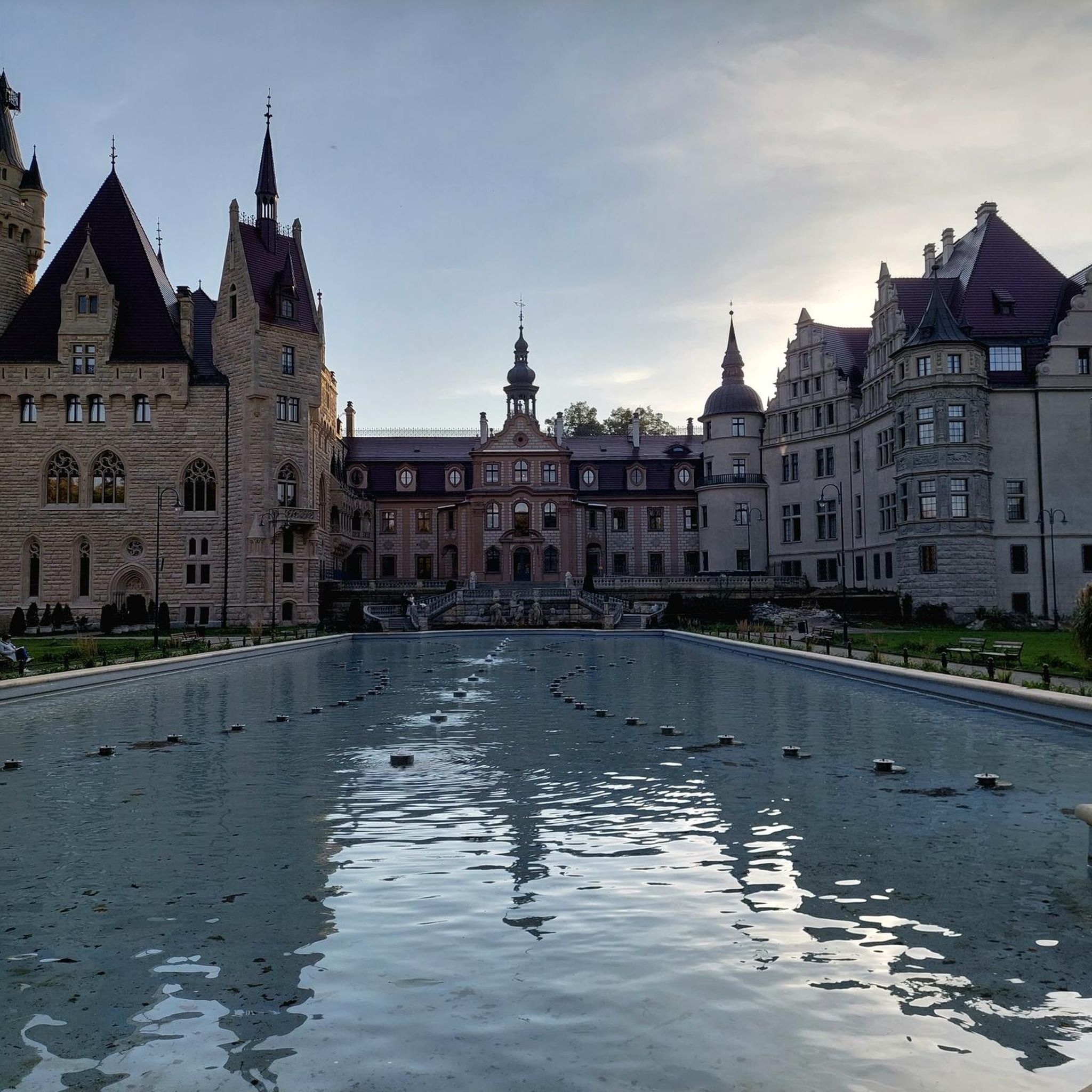
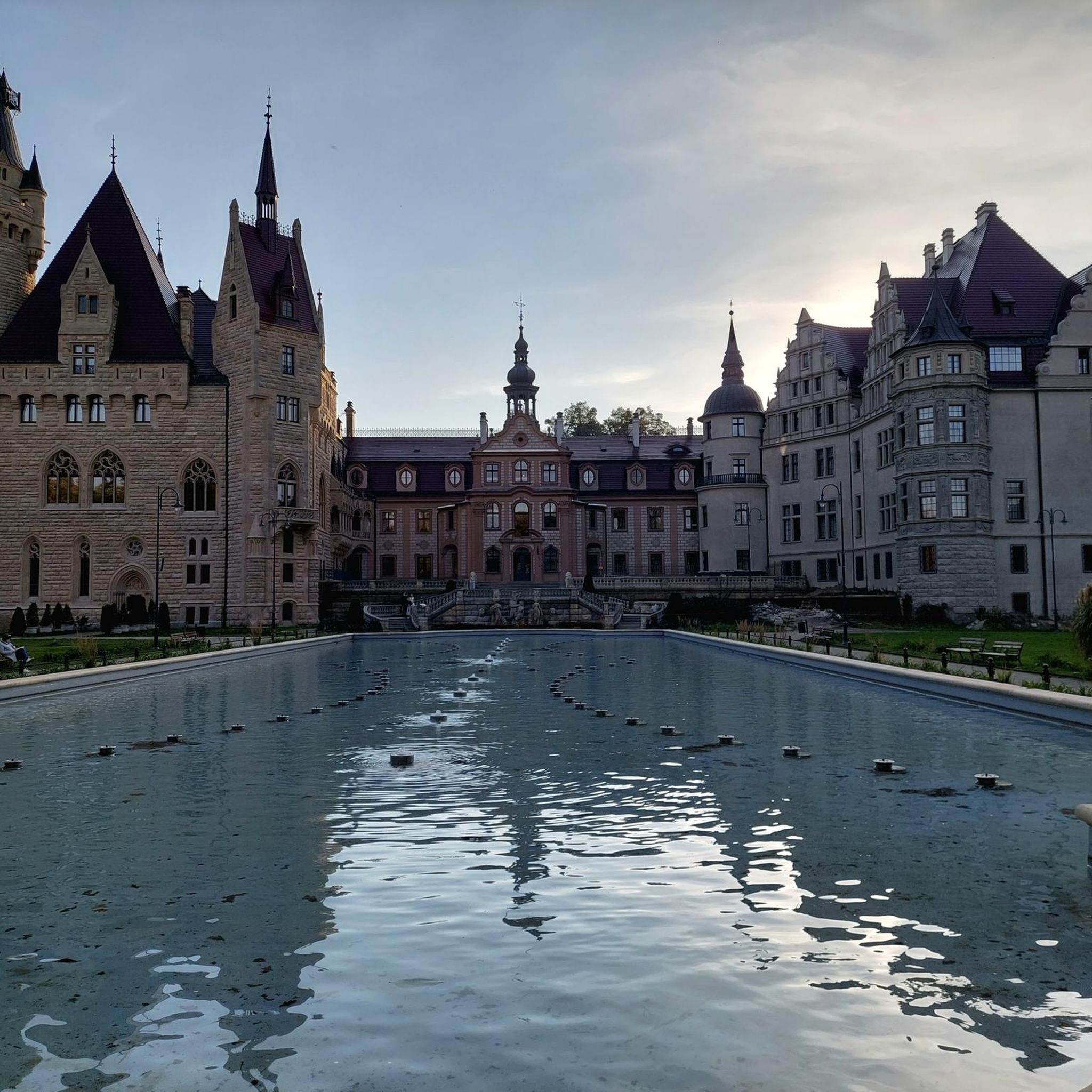
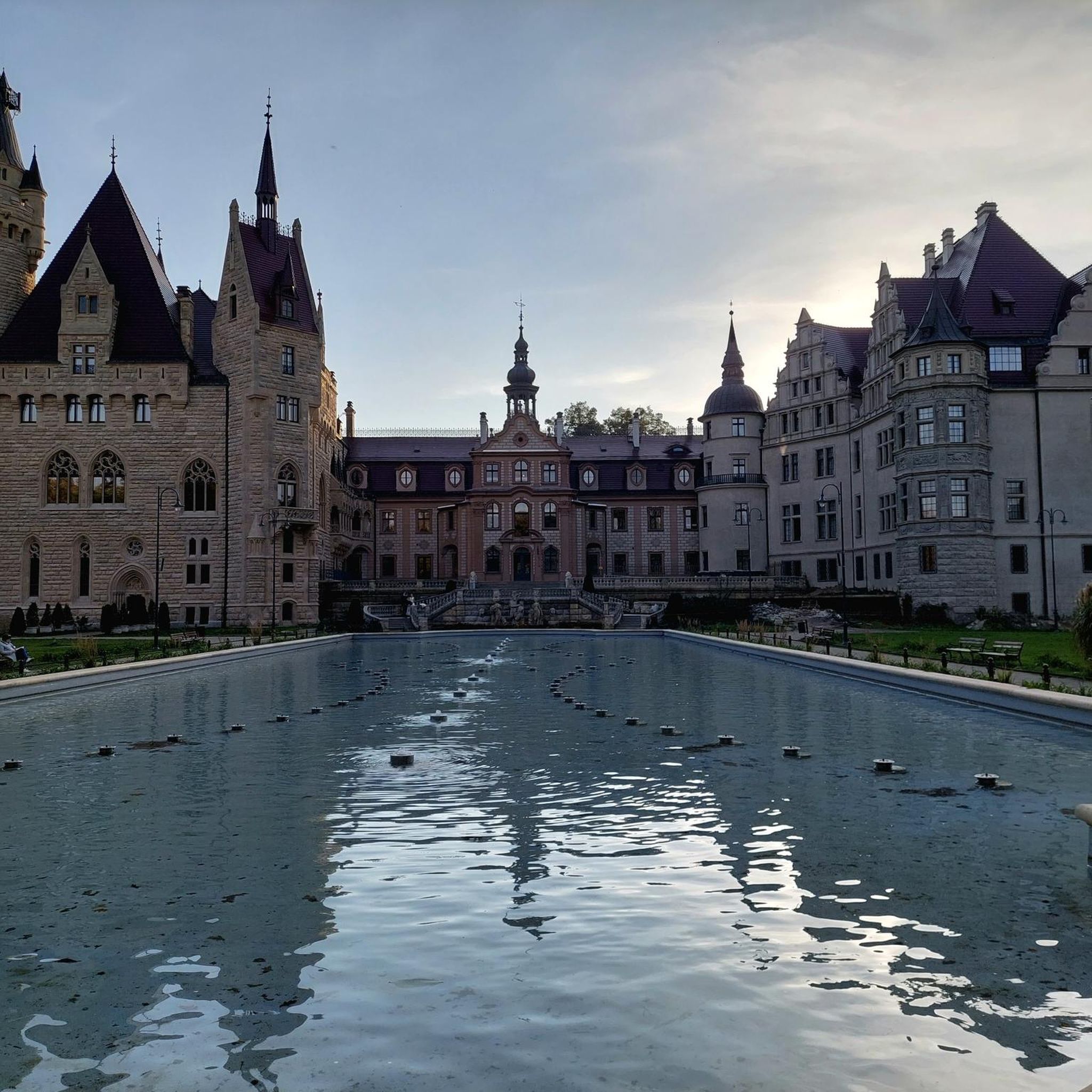
In 1853 Karl Gotthard Seherr-Thoss sold Moszna to Heinrich von Erdmannsdorf, who in 1866 sold it to Hubert von Tiele-Winckler of Miechowice. His son Franz Hubert was the originator and builder of the palace, which was built after the baroque palace was partially burned down in 1896. Franz Hubert's grandfather, Franz Winckler, worked as a miner in the mine in Miechowice. After the death of his wife and mine owner, he married his rich widow Maria Aresin. In 1840 the Prussian king gave him the title of nobility. The heiress to the fortune was his daughter Valeska, who married Hubert von Tiele in 1854. After marriage, they use a combined surname - Tiele-Winckler. Hubert died in 1893 and his estate passed to his eldest son Franz-Hubert according to the majority principle. In 1895 he became a nobility thanks to the title of count that Kaiser Wilhelm bestowed on him. A year later, after a fire, he rebuilt and expanded his headquarters. In 1904 and later in 1911 and 1912 the Count was visited by the ruler of Germany for hunting and the west wing was built for him in 1911-1913. Franz-Hubert's son Claus-Peter spent part of his ancestors' fortune in the interwar period. When he died childless, he adopted his cousin, whose son was to inherit the estate and the title of count. His family lived in Moszna Castle until the end of the war and fled to Germany from the advancing Red Army.
0
0
Moschen // Moszna. The name of the village probably comes from the surname Moschin. According to legend, Moszna belonged to the Knights Templar in the Middle Ages. In 1679, Moszna was owned by the von Skall family. In 1723, after the death of the owner Ursula Maria von Skall, Moszna passed into the hands of her cousin, the court marshal of Frederick the Great - Georg Wilhelm von Reisewitz. The castle - the central part of the current castle - dates from this period. In 1771, the von Reisewitz family lost Moszna and the property was purchased at auction by Heinrich Leopold von Seherr-Thoss. In 1853, Karl Gotthard Seherr-Thoss sold Moszna to Heinrich von Erdmannsdorf, who sold it in 1866 to Hubert von Tiele-Winckler from Miechowice. His son Franz Hubert was the originator and builder of the castle, which was built after the partial burnt down of the Baroque castle in 1896. Franz Hubert's grandfather, Franz Winckler, worked as a miner in the mine in Miechowice. After the death of his wife and mine owner, he married his rich widow Maria Aresin. In 1840, the Prussian king granted him the title of nobility. The heiress of the fortune was his daughter Valeska, who married Hubert von Tiele in 1854, who bought Moszna in 1866. After the marriage, they used a combined surname - Tiele-Winckler. Hubert died in 1893, and his estate passed to his eldest son Franz-Hubert according to the majority principle. In 1895, he was ennobled by the title of count awarded to him by Emperor Wilhelm. A year later, after a fire, he rebuilt and expanded his residence. In 1904, and later in 1911 and 1912, the count was visited by the ruler of Germany for hunting, and the west wing was built for him in 1911–1913. Franz Hubert's son Claus-Peter spent part of his ancestors' fortune in the interwar period. When he died childless, he adopted his cousin, whose son was to inherit the estate and the title of count. His family lived in Moszna Castle until the end of the war and fled to Germany to escape the approaching Red Army. After the war, the fate of the castle was different - from 1972 it has been operating as a hospital for the treatment of neuroses. Moszna - According to Franz Hubert's imagination, the castle has 365 rooms and 99 towers, for which it is famous. The unique architecture of the castle attracts crowds of tourists every year.
1
1
Frequently Asked Questions
What historical landmarks can I explore in Gmina Biała?
Gmina Biała is rich in historical sites. You can visit the historic Biała Castle, the 15th-century Prudnicka Tower (Wieża Bramy Prudnickiej) which once served as a town defense and prison, and various historical churches like St. Mary's Church and Saints Peter and Paul Church. The Market Square (Rynek w Białej) also offers a glimpse into the town's past.
Are there any notable palaces or castles near Gmina Biała?
Yes, several impressive castles and palaces are located nearby. The most popular is Moszna Castle, known for its unique architecture, 365 rooms, and 99 towers. Another must-see is Tułowice Palace, a neo-Renaissance residence surrounded by a vast park. Visitors also appreciate Rogów Opolski Castle, which has been restored to its Renaissance form and now houses a branch of the Opole Library.
What natural attractions can I find in Gmina Biała?
The region offers several natural features. The town itself is situated at the confluence of the Biała River and lies on the Głubczyce Plateau. You can also explore the "Source under the holy linden tree" (Źródełko pod św. lipą), a revitalized natural spot. For nature enthusiasts, the Blok Nature Reserve is a forest reserve with ancient pines and diverse wildlife.
Are there opportunities for outdoor activities like hiking or cycling?
Absolutely! Gmina Biała is well-suited for active tourism. There are marked cycling paths and walking trails throughout the area. For specific routes, you can explore easy hikes around Gmina Biała, including loops around Moszna Castle. If you prefer cycling, there are MTB trails and gravel biking routes available.
What cultural sites are worth visiting in the area?
Beyond historical buildings, Gmina Biała has several cultural points of interest. You can visit the Jewish Cemetery and the Evangelical Cemetery in Laskowiec for historical and cultural significance. The Gminne Centrum Kultury (Gmina Cultural Center) also hosts various cultural events, festivals, and concerts throughout the year.
Are there any family-friendly attractions in Gmina Biała?
Many attractions in Gmina Biała are suitable for families. Castles like Moszna Castle and Tułowice Palace offer expansive grounds for children to explore. The region's walking and cycling paths are also great for family outings. Additionally, the Centrum Rekreacyjne Zielona Zatoka provides recreational facilities for outdoor fun.
Where can I find scenic viewpoints in Gmina Biała?
For scenic views, consider visiting Kobylica Hill, located in the Polish part of the Opawskie Mountains. It offers picturesque vistas and is home to the charming "Żabie Oczko" pond. The Głubczyce Plateau itself also provides characteristic landscapes of the Silesian Lowlands.
What do visitors enjoy most about the attractions in Gmina Biała?
Visitors frequently appreciate the blend of historical exploration and natural beauty. The unique architecture of Moszna Castle and the peaceful park setting of Tułowice Palace are often highlighted. Many also enjoy the well-maintained walking and cycling routes that allow them to experience the region's diverse landscapes.
Are there any unique historical monuments besides castles and churches?
Yes, Gmina Biała features several unique historical monuments. You can find old mills in Górka Prudnicka and Biała, the Swedish Sconce (Szaniec szwedzki) on the remains of a medieval settlement, and historical Crosses of Atonement (Krzyże pokutne) scattered throughout the area. There's even an 19th-century fire engine in Chrzelice and a Water Tower from the turn of the 16th and 17th centuries.
What kind of natural reserves or protected areas are in Gmina Biała?
The Blok Nature Reserve is a significant forest reserve within the gmina, known for its 200-year-old pines and diverse undergrowth. Additionally, the Kobylica Hill is situated within the Opawskie Mountains Landscape Park, indicating the presence of broader protected natural areas with scenic beauty.
Can I rent electric bikes in Gmina Biała?
Yes, Gmina Biała supports active tourism with modern amenities. Electric bike rentals are available, making it easier for visitors to explore the extensive network of cycling paths and enjoy the region's natural and historical sites.
What is the Tiele-Winckler Family Mausoleum?
The Tiele-Winckler Family Mausoleum is a historical necropolis located at the end of the park on an old castle wall, surrounded by ancient oak trees. It serves as the family tomb of the former owners of the Moszna estate, offering a glimpse into the region's aristocratic past.
Most popular attractions around gmina Biała

Get inspired with the komoot mobile app


Explore more
Still not found the Highlight you’re looking for? See guides of the top attractions in other regions:
