Attractions and Places To See around Troviscal - Top 13
Best attractions and places to see around Troviscal offer a blend of natural beauty, historical sites, and cultural points of interest. The region features significant natural areas like the largest natural lagoon in the Iberian Peninsula, providing habitats for diverse bird species. Visitors can explore historical landmarks such as an 18th-century church and remnants of a Roman bridge, indicating a long history of settlement. These varied sites provide opportunities for outdoor activities and cultural exploration.
Best attractions and places to…
Last updated: July 29, 2026
Pateira de Espinchel
Highlight • Lake
Translated by Google •
Tip by

Bridge Over the Cértima River
Highlight • Bridge
Translated by Google •
Tip by
Sign up now to discover places like this
Get recommendations on the best single tracks, peaks, & plenty of other exciting outdoor places.
Sign up for free
Vagos Municipal Library
Highlight • Structure
Translated by Google •
Tip by

Espinhel Park
Highlight • Natural Monument
Translated by Google •
Tip by

Arenito de Eirol Trail
Highlight • Trail
Translated by Google •
Tip by
Sign up for free to discover even more attractions around Troviscal.
Sign up for free
Already have an account?
Start today with a free account
Your next adventure awaits.
Login or Signup



Tips from the Community

30 km circular tour (1.30h) with spectacular landscapes and fauna!!!
1
0

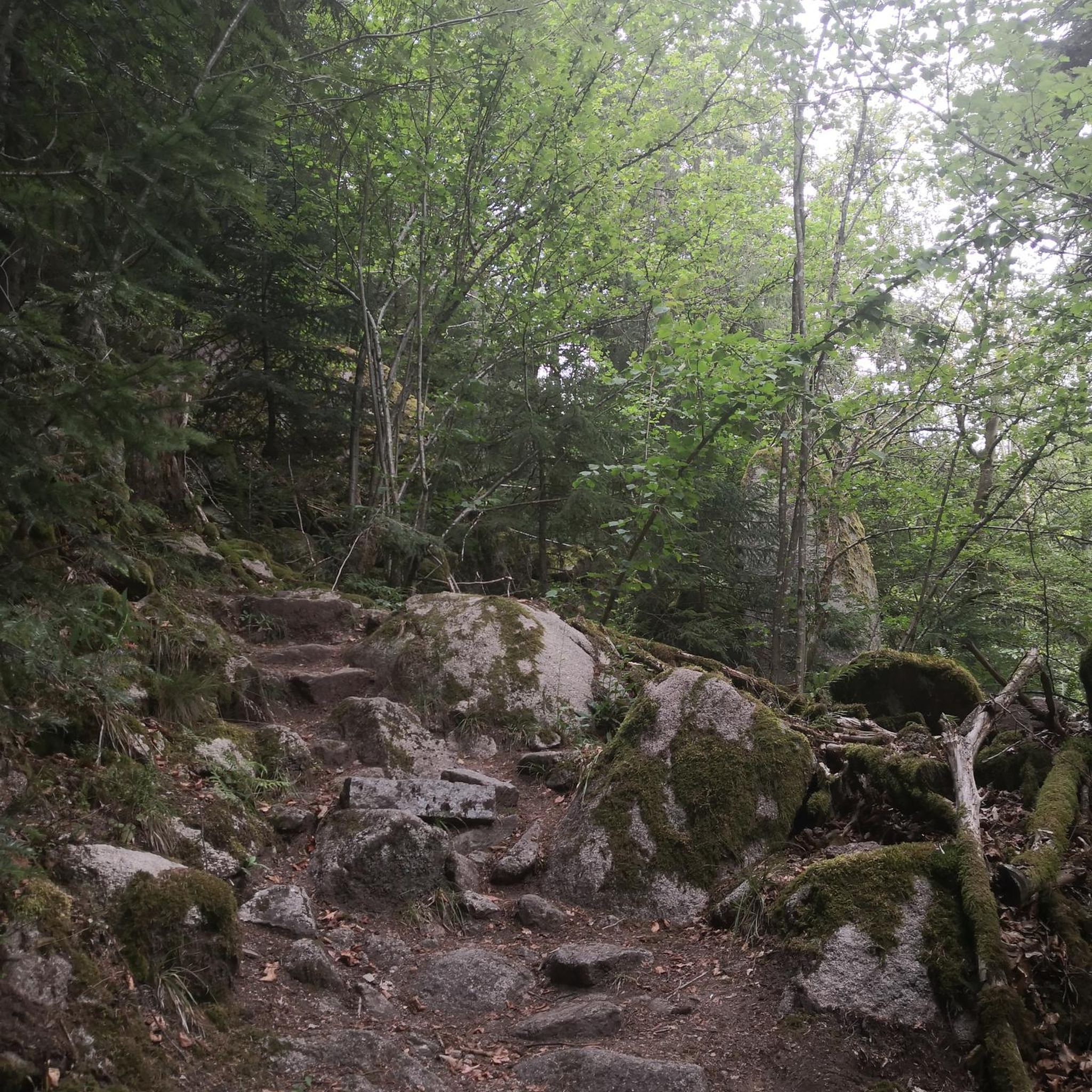
These red rocks are known as Eirol sandstone, which is a sedimentary rock made up of sand bound together by a reddish cement, clay and iron oxides, and is therefore not very resistant. This sandstone was probably formed in the Upper Triassic period and extends over a small geographical strip delimited by the Vouga and Águeda valleys, and is quite developed in the Espinhel and Eirol area. The trail is indeed very beautiful.
1
0
This is one of the most important tributaries of the River Águeda, running 43km from its source in Casal de Camba and crossing four municipalities in the district of Aveiro: Mealhada, Anadia, Oliveira do Bairro and Águeda. Initially, the river is narrower, with marginal trees – Ash (Fraxinus angustifolia), Willow (Salix spp.), Poplar (Populus sp.), among others – frequently forming riparian galleries. Its final half, between Aguada de Baixo (Oliveira do Bairro) and its mouth, in Requeixo (Aveiro), takes place at lower elevations and flat terrain, forming long floodplains on its banks. Source: https://granderota.riadeaveiro.pt/pois/rio-certima/
2
0

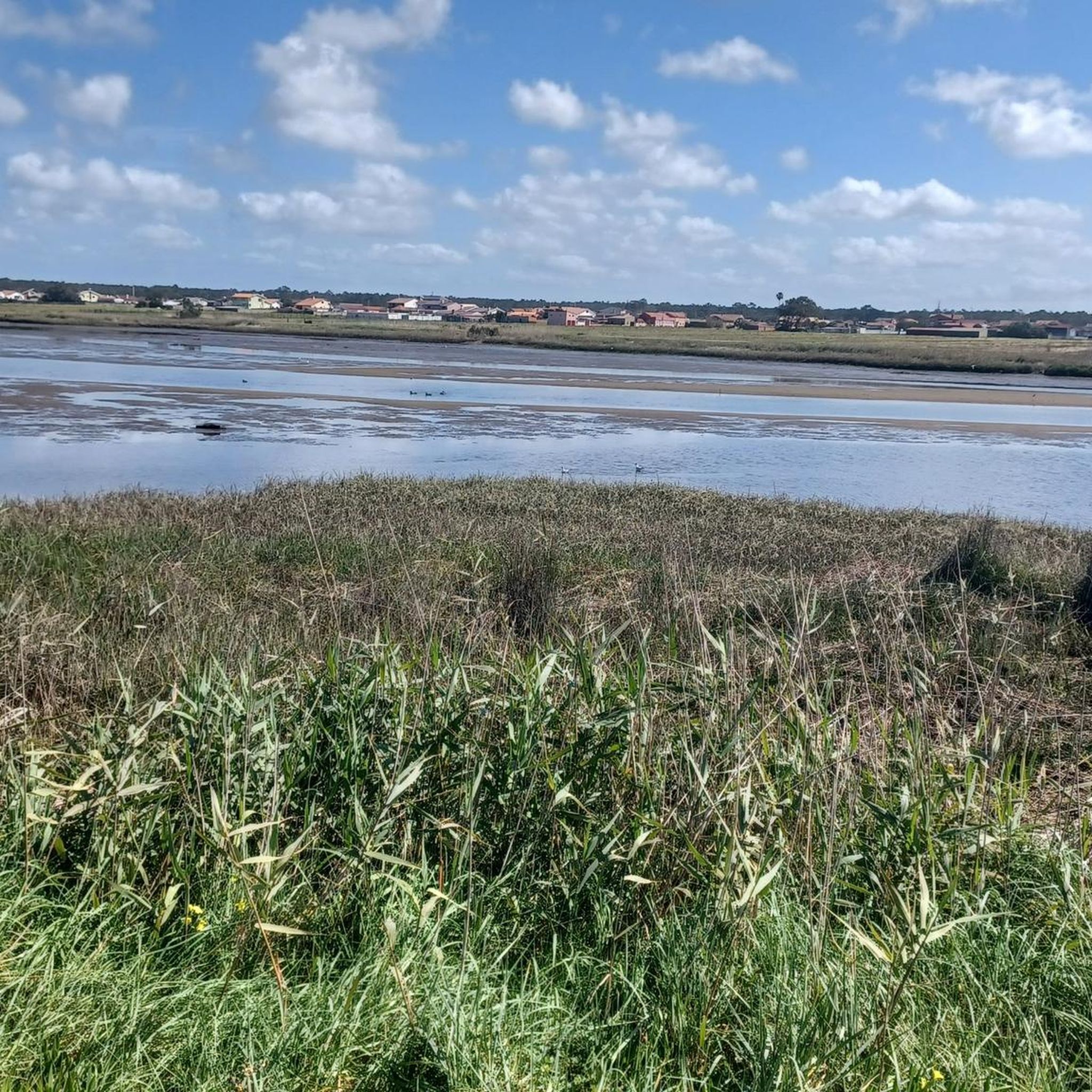
Espinhel Park offers walkways and viewpoints to enjoy the lagoon and the village of Fermentelos. It is an area rich in biodiversity. and habitat for aquatic and migratory birds, close to the geological formation of Eirol sandstones.
0
0
In the well-equipped Parque de Espinhel, there are walkways over the waters of Pateira de Fermentelos that lead us to two wooden viewpoints, whose structures are reminiscent of a bandstand. From here we can enjoy wide views over Pateira, as well as the village that gives it its name, Fermentelos, on the opposite bank. On the edge of the lagoon, in addition to reeds and bunho, we find dense swampy willows, a refuge and habitat for numerous species of fauna, among which the avifauna stands out. In this place it is common to observe Moorhens (Galinula chloropus) and Coots (Fulica atra). The attentive observer finds an abundant and diversified biological diversity throughout the year, partly due to the occurrence of summer and winter migratory species, such as: Garçote (Ixobrychus minutus), Red Heron (Ardea purpurea), Stilt (Himantopus himantopus), Black (Nycticorax nycticorax), Osprey (Pandion haliaetus), Saffron Eagle (Circus aeruginosus), Black Ibis (Plagadis falcinellus), Spoonbill (Platalea leucorodia), as well as dozens of passerines! In the vicinity of the park, red sandstones from the tertiary period (Eirol sandstones) can be seen in the disused quarry. Source: Great Route of Ria de Aveiro
1
0

According to some theses, the place was founded by the Phoenicians under the name Vacuus (roughly: thrown out), according to others it was founded by the Romans as Vacua (after a dried up tributary of the Rio Vouga). [4] Large parts of today's district, however, were still under water. Around the independence of the Kingdom of Portugal in 1139, the sea retreated further. In 1190 King Sancho I gave the place its first town charter
0
0
Frequently Asked Questions
What natural attractions can I explore around Troviscal?
Troviscal offers a variety of natural beauty. You can visit Espinhel Park, which provides walkways and viewpoints over the lagoon and the village of Fermentelos, rich in biodiversity. The Bridge Over the Cértima River is another significant natural spot, spanning an important tributary of the River Águeda with lush riparian galleries. Additionally, the Arenito de Eirol Trail allows you to discover unique red sandstone formations.
Are there any historical sites to visit near Troviscal?
Yes, the region has historical significance. You can explore the Igreja Matriz do Troviscal, a historic church dating back to 1767, built with local Ançã stone. There are also vestiges of a small Roman Bridge at Passadouro, indicating an ancient Roman road that connected Portus Cale (Porto) to Conímbriga through this area. The Vagos Municipal Library also holds historical context, with some theses suggesting the area's founding by Phoenicians or Romans.
What are the best places for families with children around Troviscal?
For families, the Troviscal River Beach is an excellent option, equipped with lifeguard assistance, easy pedestrian access, adapted toilet facilities, a first aid station, and a shallow river area with a small playground. Espinhel Park is also family-friendly, offering safe walkways and opportunities for birdwatching. The Bridge Over the Cértima River is another accessible spot for a pleasant stroll.
Where can I find good viewpoints in the Troviscal area?
Several spots offer great views. Espinhel Park features walkways and two wooden viewpoints overlooking the lagoon and the village of Fermentelos. The Bridge Over the Cértima River provides scenic views of the river and its riparian galleries. Additionally, Quinta do Troviscal, while primarily accommodation, is known for its panoramic views over the Castelo do Bode reservoir.
Are there hiking or running trails near Troviscal?
Yes, there are several options for outdoor enthusiasts. You can find various running trails, including a moderate 11.8 km loop around Espinhel Park. For more options, explore the Running Trails around Troviscal guide.
Can I go mountain biking around Troviscal?
Absolutely! The area around Troviscal offers a range of mountain biking trails. A popular moderate route is the 35 km Pateira de Fermentelos loop. For a comprehensive list of routes, check out the MTB Trails around Troviscal guide.
Are there road cycling routes available near Troviscal?
Yes, road cyclists will find several routes. Options include an easy 32.6 km loop from Amoreira da Gândara and a moderate 40 km loop from Mamarrosa. Discover more routes in the Road Cycling Routes around Troviscal guide.
What is Pateira de Fermentelos and what can I do there?
Pateira de Fermentelos is the largest natural lagoon in the Iberian Peninsula, a significant biodiversity hotspot near Troviscal. It's home to over 150 bird species. You can enjoy walking paths, observe wildlife from two wooden viewpoints, and visit Espinhel Park on its edge, which offers walkways over the water.
Are there any accessible attractions for visitors with mobility needs?
The Troviscal River Beach is designed with accessibility in mind, featuring easy pedestrian access and an amphibious chair for bathing assistance. The Vagos Municipal Library is also noted as wheelchair accessible.
Where can I see the unique red sandstone formations?
You can explore the unique red sandstone formations, known as Eirol sandstone, along the Arenito de Eirol Trail. These sedimentary rocks, formed in the Upper Triassic period, are a distinctive geological feature of the area, particularly developed around Espinhel and Eirol.
What do visitors enjoy most about the attractions around Troviscal?
Visitors particularly appreciate the blend of natural beauty and tranquility. They enjoy the spectacular landscapes and diverse fauna, especially around areas like Pateira de Espinchel, where birdwatching is a highlight. The well-equipped parks with walkways and viewpoints, such as Espinhel Park, are also highly rated for their immersive experience in nature.
Are there opportunities for swimming or water activities?
Yes, the Troviscal River Beach provides a tranquil environment for relaxation and contact with nature, suitable for swimming. Additionally, Quinta do Troviscal, overlooking the Castelo do Bode reservoir, offers the opportunity for rowing boat tours from a deck over the water.
Most popular attractions around Troviscal

Get inspired with the komoot mobile app


Explore more
Still not found the Highlight you’re looking for? See guides of the top attractions in other regions:
