Attractions and Places To See around Nossa Senhora Da Boa Fé - Top 20
Best attractions and places to see around Nossa Senhora Da Boa Fé include a variety of historical landmarks, ancient megalithic sites, and natural features within the municipality of Évora. This Portuguese locality offers insights into prehistoric eras and cultural heritage. The landscape features gentle plateaus and scenic viewpoints, providing diverse exploration opportunities. Visitors can discover significant archaeological complexes and repurposed railway paths for outdoor activities.
Best attractions and places to see around Nossa Senhora Da Boa Fé
- The most popular…
Last updated: November 15, 2026
Ecopista of the Ramal de Mora: Évora – Arraiolos
Highlight (Segment) • Cycleway
Tip by

Almendres Cromlech
Highlight • Historical Site
Translated by Google •
Tip by

Sign up now to discover places like this
Get recommendations on the best single tracks, peaks, & plenty of other exciting outdoor places.
Main Gate of Quinta das Glicínias
Highlight • Monument
Translated by Google •
Tip by

Almendres Menhir
Highlight • Monument
Translated by Google •
Tip by
Dolmen of Monfurado
Highlight • Historical Site
Showing Translation
Tip by

Sign up for free to discover even more attractions around Nossa Senhora Da Boa Fé.
Already have an account?
Start today with a free account
Your next adventure awaits.
Tips from the Community

La Serra de Monfurado, situata nella regione dell'Alentejo (Portogallo) tra i comuni di Montemor-o-Novo ed Évora, è una delle aree naturali e storiche più ricche d'Europa per il megalitismo. Quando si parla di "dolmen" (chiamati antas in portoghese) in questa specifica zona, ci si riferisce a una vasta rete di monumenti funerari del Neolitico compresi all'interno del circuito megalitico di Évora e di Monfurado
0
0

The dolmens and megalithic monuments in the Serra de Monfurado (Alentejo region, Portugal) are part of one of the most important prehistoric complexes in Europe. In this hilly area located between Montemor-o-Novo and Évora, the dolmens (locally called antas) bear witness to the intense ritual and funerary activity of Neolithic communities.
7
0

The size and number of megalithic monuments in Évora are associated with the fact that this region is the only place where the river basins of the Tejo, Sado, and Guadiana, the largest rivers in southern Portugal, meet. For this reason, it was an essential crossing point. Megalithic monuments (i.e., made of large stones) therefore appear in the Évora region because the Alentejo plains were perfect for the last hunter-gatherer communities to practice their way of life there. (Source: www.visitevora.net)
18
0

Cromeleque dos Almendres, located near Évora, is the largest and most important megalithic monument in the Iberian Peninsula. Built between the late 6th and 3rd millennium BC, it is about 2000 years older than Stonehenge. VisitEvora +3 This "Portuguese Stonehenge" is composed of about 95 granite monoliths (menhirs) arranged in circles and ellipses on a gentle slope in the Serra do Monfurado. VisitEvora +1
2
0
The Cromeleque dos Almendres, located in Nossa Senhora de Guadalupe, Évora, is the most important megalithic monument on the Iberian Peninsula and one of the largest in Europe. Composed of about 95 stone monoliths (menhirs) arranged in concentric circles, this enclosure is about 2,000 years older than the famous Stonehenge. 👍🥾
2
0
The original entrance to Quinta das Glicínias, on the north side, overlooking the Água da Prata Aqueduct, consists of a stone doorway and a circular pediment centred by an opulent granite scallop and side pilasters ending in stylised beams. It dates from 1766 and its railing is made of wrought iron. This gate led to a long, dark tunnel of trees with cedars, carob trees and laurels, some of which are centuries old, flanked by benches for resting. Quinta das Glicínias is a manor house built on the back of one of the gentle plateaus of S. Bento de Cástris, overlooking the extinct Cistercian convent of that name. It is very beautiful and comfortable and the view from its terraces of the city and neighbouring fields is unparalleled in the entire suburban area of Évora. It was the property of the Palhas heirs, descendants of Rui Palha, whose daughter, D. Bianca de Almeida, had a manor house within the walls, on the site where Cardinal-King D. Henrique founded, in 1578, the College of S. Paulo, of the Congregation of the hermits of Serra de Ossa. The current house, from the time of D. José, seems to have been founded by the prebendary canon of the Cathedral, António Pereira Palha, a priest of great local prestige.
4
0

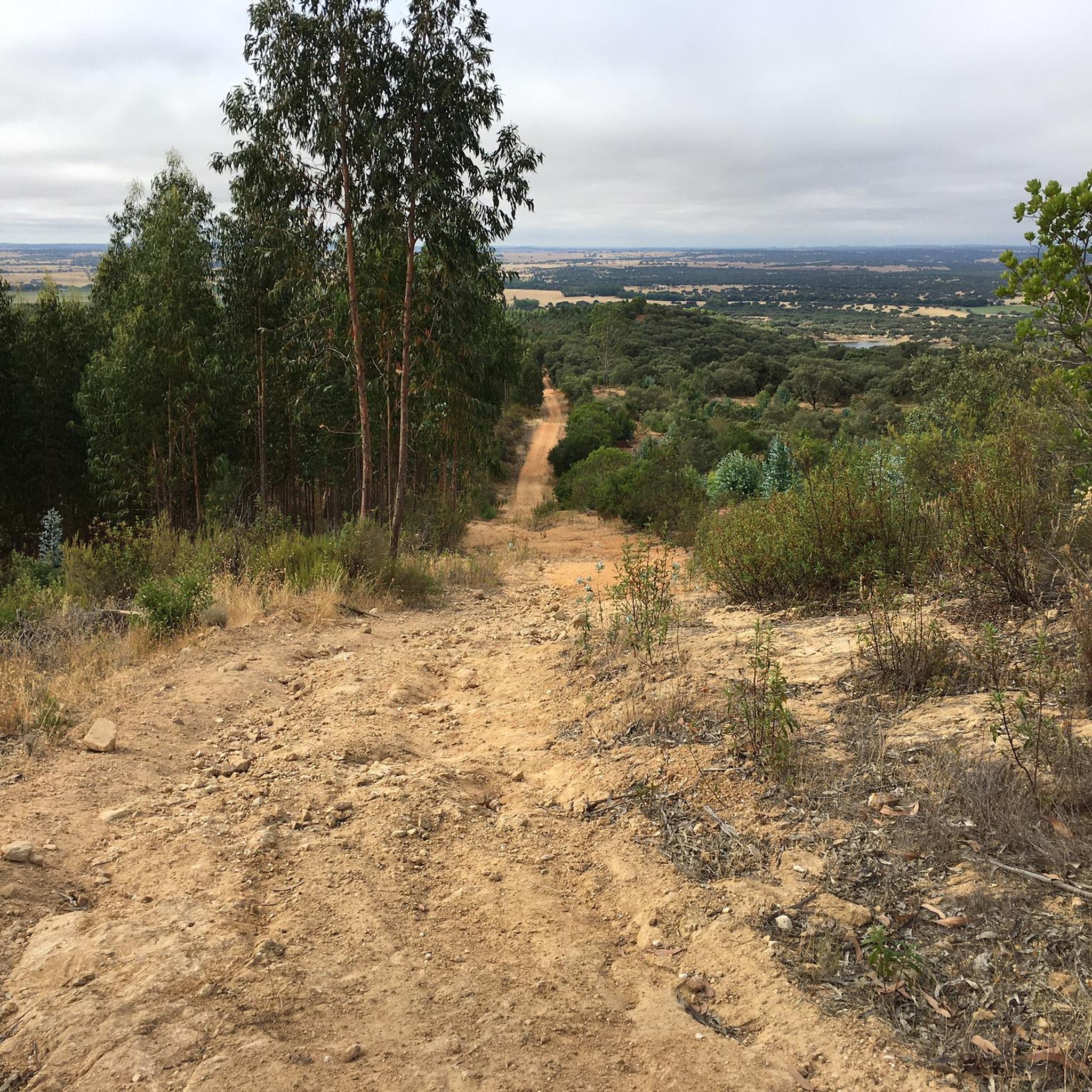
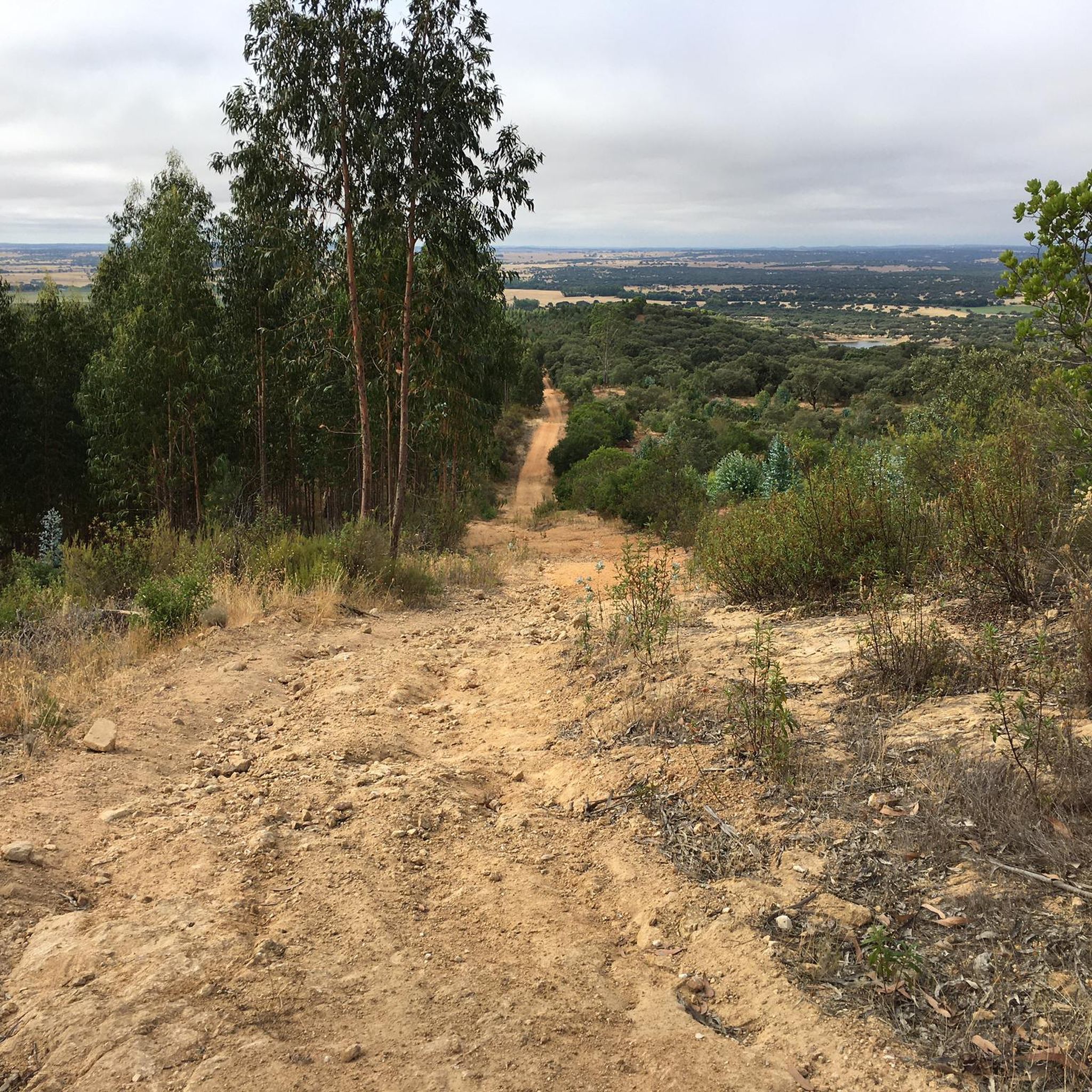
This route, along the deactivated Ramal de Mora, not only allows you to visit cultural points of interest in the city of Évora, whose historic centre was declared a UNESCO World Heritage Site, but also allows you to enjoy the magnificent landscape of the typical Alentejo plain, predominantly made up of montado and olive groves, on a route that is almost always in a rural environment, providing direct contact with nature. A short detour and a visit to Arraiolos, a town famous for its hand-made carpets, is essential, as is a stop in the village of Graça do Divor, where it is worth visiting the old houses. This Eco-track is part of the Great Montado Route, under the responsibility of CIMAC – Intermunicipal Community of Central Alentejo, which will allow the inclusion of almost 184.805 km of deactivated railway lines (Reguengos Branch, Vila Viçosa Branch, Montemor Branch, Mora Branch and Évora Line) in the Great Montado Route, in a process that includes 9 of the 14 municipalities of Central Alentejo (Arraiolos, Borba, Estremoz, Évora, Montemor-o-Novo, Mora, Redondo, Reguengos de Monsaraz and Vila Viçosa).
6
2

Stands a little off to the side and is impressive.
4
0
Frequently Asked Questions
What historical and archaeological sites can I visit around Nossa Senhora Da Boa Fé?
The region is rich in history, featuring the ancient Almendres Cromlech, a megalithic complex significantly older than Stonehenge, and the nearby Almendres Menhir. You can also explore the early 16th-century Igreja de Nossa Senhora da Boa Fé, known for its Manueline portal and 18th-century tile panels, or the 18th-century Ponte do Lagar da Boa Fé, part of an ancient road.
Are there any scenic viewpoints or natural features to enjoy?
Yes, the Miradouro da Senhora da Boa Fé, located on Monte de Airó, offers fantastic panoramic views of the Vale do Este from an altitude of 324 meters. It also has a chapel and a picnic area for relaxation.
What outdoor activities are available for cycling enthusiasts?
Cyclists can enjoy the Ecopista of the Ramal de Mora: Évora – Arraiolos, a scenic green path along an old railway line. This route provides a quiet, traffic-free cycling experience connecting Évora and Arraiolos through natural landscapes. For more cycling options, explore the Cycling around Nossa Senhora Da Boa Fé guide.
Are there family-friendly attractions or activities in the area?
The Ecopista of the Ramal de Mora is a great option for families to cycle or walk together. The Graça do Divor Former Railway Station, a point of interest along the ecopista, is also considered family-friendly and offers parking.
Where can I find hiking trails around Nossa Senhora Da Boa Fé?
The area offers various hiking opportunities, including trails around the megalithic sites. You can find routes like the 'Almendres Cromlech loop from Almendres Cromlech' which is an easy 5 km hike. For a comprehensive list of trails, including moderate and difficult options, check out the Hiking around Nossa Senhora Da Boa Fé guide.
Is there parking available near the attractions?
Yes, the Graça do Divor Former Railway Station is a convenient spot for parking, especially if you plan to explore the Ecopista.
What is the significance of the Almendres Cromlech?
The Almendres Cromlech is a highly significant megalithic complex dating from 4000 to 2800 BC, making it 1000 to 2000 years older than Stonehenge. It originally consisted of about 100 stones, some featuring ancient carvings, offering a unique glimpse into prehistoric eras.
Are there any unique architectural landmarks to see?
Beyond the ancient sites, you can see the Main Gate of Quinta das Glicínias, a manor house built on the plateaus of S. Bento de Cástris, offering views of the extinct Cistercian convent. Its original entrance dates from 1766 with a stone doorway and wrought iron railing.
What do visitors particularly enjoy about the Ecopista of the Ramal de Mora?
Visitors praise the Ecopista for its quiet, traffic-free environment, making it a pure joy for cycling. It's described as a hidden gem for getting into the countryside from Évora, though some parts may be overgrown and information boards weathered.
What running trails are available in the vicinity?
For runners, there are several trails, including challenging options like the 'Alto São Bento loop from Évora' (16.7 km) or the 'Castelo do Giraldo loop from Valverde' (18.3 km). More running routes can be found in the Running Trails around Nossa Senhora Da Boa Fé guide.
Is there public transport access to the attractions?
While direct public transport to every attraction might be limited, the Ecopista of the Ramal de Mora connects Évora, which is approximately 16 kilometers away, and offers train connections to Lisbon. This provides a way to access the region and the ecopista itself.
What is the best time of year to visit Nossa Senhora Da Boa Fé for outdoor activities?
The Alentejo region generally experiences hot, dry summers and mild winters. Spring (April-May) and Autumn (September-October) are often ideal for outdoor activities like hiking and cycling, offering pleasant temperatures and vibrant landscapes. Summers can be very warm, making early mornings or late afternoons preferable for activities.
Most popular routes around Nossa Senhora Da Boa Fé
Most popular attractions around Nossa Senhora Da Boa Fé

Get inspired with the komoot mobile app


Explore more
Still not found the Highlight you’re looking for? See guides of the top attractions in other regions:
