Attractions and Places To See around Campo e Campinho e Campinho e Campinho - Top 18
Best attractions and places to see around Campo e Campinho e Campinho e Campinho, a civil parish in Reguengos de Monsaraz, Portugal, offers a blend of historical, cultural, and natural attractions. This region is characterized by its charming landscapes, including the vast Alqueva reservoir, one of Europe's largest artificial lakes. Visitors can explore ancient castles, significant cultural sites, and scenic viewpoints. The area provides opportunities for outdoor exploration and discovering local heritage.
Best attractions and places to see around Campo…
Last updated: May 20, 2026
Castle of Moura
Highlight • Castle
Translated by Google •
Tip by

Climb up to Monsaraz Castle
Highlight (Segment) • Castle
Translated by Google •
Tip by

Sign up now to discover places like this
Get recommendations on the best single tracks, peaks, & plenty of other exciting outdoor places.
Sign up for free
Praça da Liberdade, Reguengos de Monsaraz
Highlight • Settlement
Translated by Google •
Tip by

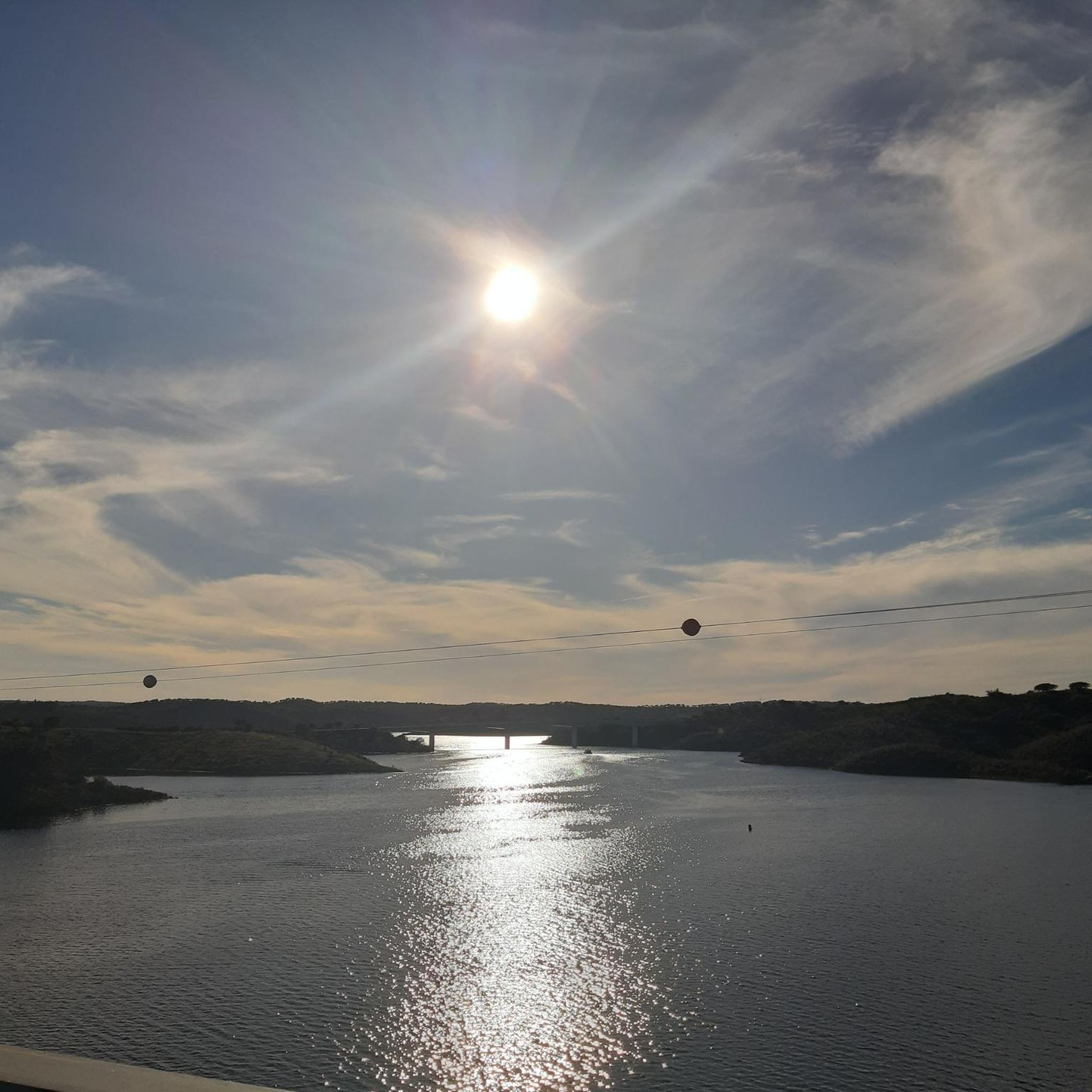
View of Alqueva Reservoir
Highlight • Viewpoint
Translated by Google •
Tip by

Tower of Herdade do Esporão
Highlight • Historical Site
Translated by Google •
Tip by
Sign up for free to discover even more attractions around Campo e Campinho e Campinho e Campinho.
Sign up for free
Already have an account?
Start today with a free account
Your next adventure awaits.
Login or Signup
Popular around Campo e Campinho e Campinho e Campinho

Tips from the Community

Moura Castle is a very old fortress, composed of round and square towers, and is the first fortress known to Moura. The Convent of Our Lady of the Assumption was built here, which incorporated the Church of Santiago, the former Moorish mosque, and became the mother church.
3
0

The first references to the Herdade do Esporão date back to the 13th century, when the property was owned by D. João Peres de Aboim, lord of Portel and advisor to D. Afonso III. There is no certainty as to when the Tower was built, but it is likely that it was built by order of Álvaro Mendes de Vasconcelos, between 1457 and 1490. Built on the family estate, its main purpose was to extol its lineage and its new social status, which was on the rise. With a quadrangular shape, the tower is divided into three levels with symmetrically harmonized windows on the upper floors. A staircase was built on an arch on the main façade. The Tower has since undergone restoration, with the aim of restoring it to its original, ancient appearance. Today, on the ground floor of the Tower you can visit the Archaeological Museum, where various finds from Esporão and pieces from the Perdigões Archaeological Complex are on display.
6
0
Rising above Moura's old town on a limestone plateaux are the ruins of a once grand castle. The medieval Castelo de Moura was built by King Dom Dinis in the 13th century on the site of an earlier Moorish citadel. There is evidence that the site is even older than this suggesting there was originally an Iron Age hill fort here. The medieval castle was a mixture of old and new including the remains of the Moorish castle and a new watchtower, the remains of which can be seen today. One of the original Moorish towers remained; the Salúquia tower, named after princess Salúquia, the daughter of the Muslim governor Abu Hassan. It is said that when the christians reconquered the town she threw herself from the top of this tower. Over subsequent years the castle was further expanded and fortified. During the 16th century the convent of Nossa Senhora da Assunção was incorporated into the castle grounds, being built on the site of the earlier Moorish mosque. It is said that the convent was home to the tombs of Pedro and Álvaro Rodrigues who were responsible for the reconquest of Moura from the Moors. The castle was almost destroyed during the Spanish War of Succession under the command of the Duke of Osuna in 1707. Further damage was caused by the 1755 earthquake leaving the Moura Castle in ruins. Today the castle is home to landscaped gardens, a military museum and an archaeological museum. It is also a great viewpoint for the town and surrounding countryside including the nearby Alqueva dam.
10
0
The Alqueva Dam, located in the heart of the Alentejo, is one of Europe’s largest dams. Constructed on the Guadiana River and completed in 2002, it creates the Alqueva Reservoir, Western Europe’s largest artificial lake. The dam plays a crucial role in regional irrigation, water supply, and hydroelectric power generation. Additionally, it supports local tourism and wildlife habitats and exemplifies a completely transformational engineering achievement.
4
0
Moura Castle dates back to the 13th century, during the Christian rule achieved in 1232 during the reign of King Dinis. During the medieval period, the town suffered several invasions, which ended up destroying the castle with its Muslim walls. It was during the Order of Aviz that a third of the income from the churches of Moura and Serpa was donated to rebuild the castle. A line of watchtowers was built covering the border, of which the Atalia da Cabeça Magra remains. During the reign of King Fernando, in the 14th century, the second walled enclosure began to enclose more of the surrounding area. Between 1805 and 1826, the old rammed earth walls of the castle were used as raw material for the production of saltpeter. The western section of the citadel wall was demolished to make way for the Vista Alegre wine press, an order given by José Pimenta Calça. The castle stands 184 metres above sea level and is built in the form of a citadel measuring 200 x 100 metres. The rectangular floor plan is in the Manueline style and features the tomb of Pedro and Álvaro Rodrigues, the conquerors of Moura from the Muslims in 1166 and protagonists of the Legend of the Town of Moura. In the late 1950s, the government began to intervene, which lasted for around 20 years. Archaeological surveys began in 1981 and restoration work began between 1982 and 1986. In 2002, the castle underwent further interventions, which included landscaping improvements. The Keep is in the Gothic style and is solid in the lower part. It has an octagonal room covered by a ribbed vault with pointed arches, supported by eight columns with slender shafts. During the 19th century, one of the towers was converted into a Clock Tower. Castle Opening Hours: Every day | 09:00 to 17:30 Clock Tower Opening Hours: Every day | 09:00 to 12:30 and 14:00 to 17:30
10
0

Worth seeing with a great view of the surroundings.
2
3


Worth a hike during the day and in the evening and also admire the church Igreja Matriz de Santo António
2
0
Frequently Asked Questions
What historical landmarks can I explore in the Campo e Campinho region?
The region is rich in history. You can visit the impressive Castle of Moura, a 13th-century fortress with a Manueline-style floor plan and a Gothic Keep. Another must-see is Monsaraz Castle, a fortress village offering fantastic views. Don't miss the Tower of Herdade do Esporão, an ancient structure with an archaeological museum on its ground floor.
Are there any significant natural attractions or viewpoints?
Absolutely! The vast Alqueva Reservoir, Western Europe's largest artificial lake, offers extensive views and opportunities for relaxation and water sports. You can also find scenic vistas from the Miradouro de São Marcos do Campo. For a unique experience, the nearby Dark Sky® Alqueva Reserve provides exceptional stargazing opportunities due to minimal light pollution.
What kind of outdoor activities can I do near Campo e Campinho?
The area is perfect for outdoor enthusiasts. You can explore numerous hidden gems through hiking and cycling routes. For specific routes, check out the Road Cycling Routes, General Cycling Routes, and MTB Trails guides for the region.
Are there family-friendly attractions in the area?
Yes, several attractions are suitable for families. The Castle of Moura and Tower of Herdade do Esporão are historical sites that can be engaging for all ages. The View of Alqueva Reservoir offers a beautiful natural setting, and the Parque de Merendas do Campinho is a pleasant picnic spot next to the Alqueva dam.
Where can I experience the local culture and architecture?
The parish of São Marcos do Campo within the region features several significant architectural monuments, including its main church and a stone cross. In Campinho, you can visit the 20th-century Igreja Matriz do Sagrado Coração de Jesus and see the 18th-century stone Pillory. The Museum of Sacred Art, next to the Church of Misericórdia, also offers cultural insights.
What is the Alqueva Lake, and what can I do there?
Alqueva Lake is one of the largest and most beautiful artificial lakes in Europe, created by the Alqueva Dam. It's a fantastic spot for relaxation, boat trips, and various water sports. Some accommodations in the area even offer direct access to the lake, including small river beaches and private moorings.
Are there any ancient archaeological sites to visit?
Yes, archaeological investigations in the area have uncovered evidence of early human settlement. You can explore the significant Megalithic Monuments of Herdade das Areias (Cebolinho), which provide a glimpse into the region's prehistoric past.
What do visitors enjoy the most about Campo e Campinho?
Visitors particularly appreciate the historical castles, natural viewpoints, and significant cultural sites. The komoot community has shared 46 photos and given 12 upvotes, highlighting the region's mix of historical landmarks, natural beauty like the Alqueva Lake, and cultural exploration opportunities.
Can I find opportunities for cycling or mountain biking?
Definitely! The region offers a variety of cycling experiences. You can find detailed road cycling routes, general cycling routes, and MTB trails, catering to different skill levels and preferences.
Where can I get scenic views of the landscape?
For breathtaking vistas, head to Monsaraz Castle, which provides panoramic views of the surrounding landscape and the vast Alqueva reservoir. The View of Alqueva Reservoir itself is an impressive spot to witness the expansive lake. Additionally, the Miradouro de São Marcos do Campo is known for its scenic outlooks.
Is there a good place for a picnic or relaxation outdoors?
Yes, the Parque de Merendas do Campinho, located right next to the Alqueva dam, is an ideal spot for outdoor meals and relaxation. It offers a pleasant environment to enjoy the natural surroundings.
What are some of the religious sites worth visiting?
In Campinho, the Ermida de Santo Amador is a hermitage built to serve the growing local population. The Igreja Matriz do Sagrado Coração de Jesus, a 20th-century parish church, showcases the architectural style of the Estado Novo period. In São Marcos do Campo, the main church is also a significant architectural monument.
Most popular routes around Campo e Campinho e Campinho e Campinho

Get inspired with the komoot mobile app


Explore more
Still not found the Highlight you’re looking for? See guides of the top attractions in other regions:
