The best MTB trails around Recarei
4.4
(49)
520
riders
60
rides
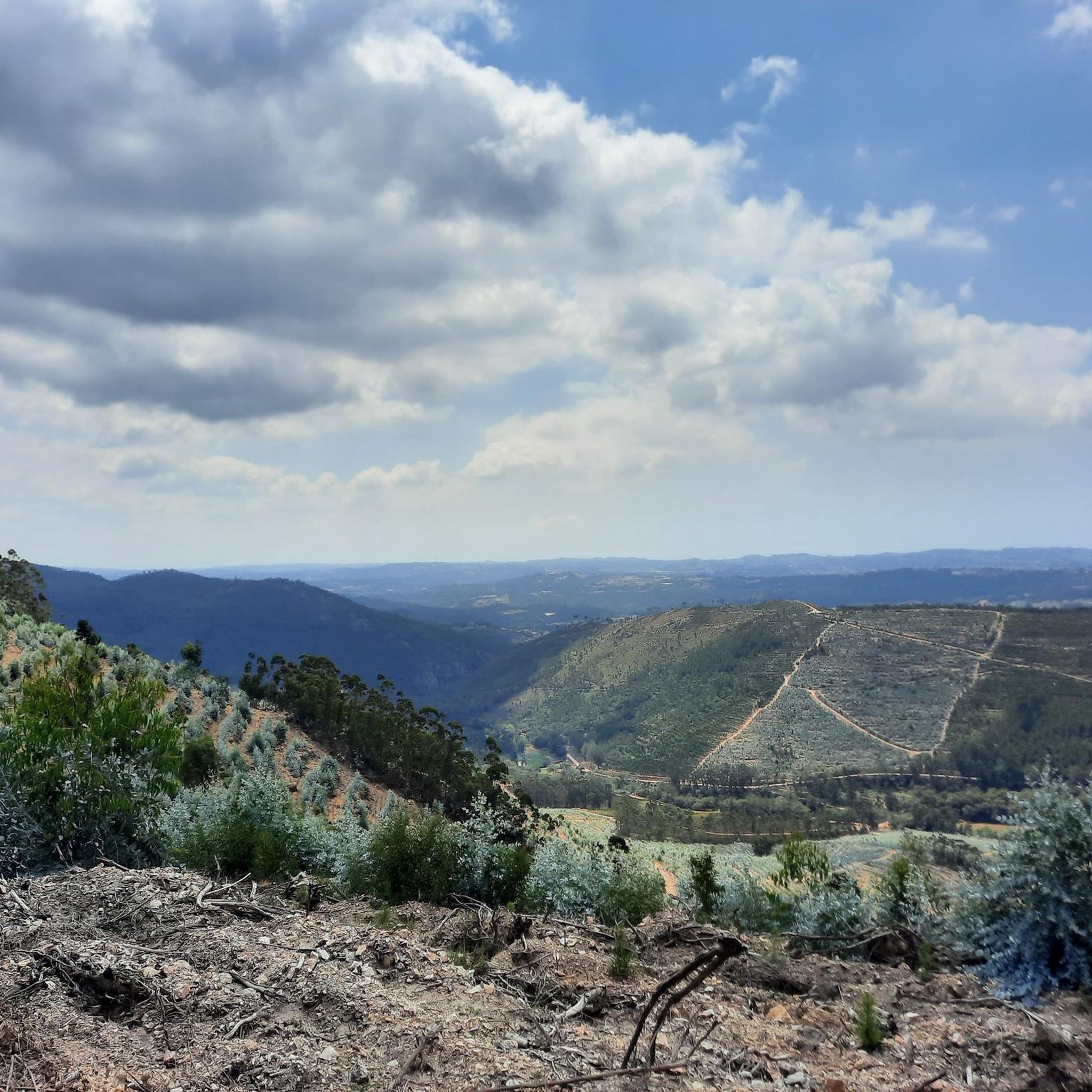
Mountain biking around Recarei offers a diverse landscape characterized by river valleys, natural woodlands, and the hilly terrain of the Serras do Porto. The region provides varied elevation changes, from moderate climbs along watercourses to more challenging ascents within the natural parks. This area is suitable for exploring different types of trails, including those that pass through rural villages and natural reserves.
Best mountain bike trails around Recarei
- The most popular mountain bike trail is Loop tour from Valongo to…
Last updated: May 4, 2026
5.0
(1)
25
riders
Moderate mountain bike ride. Good fitness required. Advanced riding skills necessary.
8
riders
27.2km
02:38
640m
640m
Moderate mountain bike ride. Good fitness required. Suitable for all skill levels.

Sign up for free
3
riders
51.9km
04:40
1,000m
1,000m
Hard mountain bike ride. Very good fitness required. Suitable for all skill levels.
4.0
(1)
5
riders
Moderate mountain bike ride. Good fitness required. Suitable for all skill levels.
4.8
(4)
7
riders
Moderate mountain bike ride. Good fitness required. Suitable for all skill levels.
Get access to more routes and recommendations from other explorers.
Sign up for free
Already have an account?
Our route recommendations are based on thousands of hikes, rides, and runs completed by other people on komoot.
Start today with a free account
Your next adventure awaits.
Login or Signup

Tips from the Community


You can enjoy some good ham sandwiches accompanied by a nice cold beer.
1
0
Religious architecture, dating from the 17th, 19th, and 20th centuries. Rectangular parish church composed of a nave and chancel, with sacristy and bell tower, having two transept arms added at the end of the 20th century. It has interior wooden roofs, gabled and with beams in the nave and coffered ceilings in the chancel, sparsely illuminated by windows in the right side facade of the chancel body. It has a 20th-century bell tower, with three registers and round-arched windows. Main facade with a gable, with three axes of openings, composed of a portal and two large windows, all rectilinear. Facades with pilastered quoins and concrete frieze finishes. Interior with a high choir resting on stone corbels, accessed from the annex, with side chapels and facing pulpits. A triumphal arch with a perfect vault, resting on Tuscan piastras, flanked by Mannerist carved altarpieces. Chancel with a central stepped platform, where the main altarpiece stands, reusing elements of Mannerist carving. A church of 17th-century foundation, of which the original structure and some openings in the sash form are maintained, profoundly remodeled in the 20th century, with the construction of the annexes, the transept, and the creation of the bell tower, this one quite tall, with three registers. The main façade and the bell tower are covered with patterned tiles. Inside, the side altarpieces, of erudite Mannerist structure, stand out, profoundly altered with the 20th-century restoration, with the reform of the finialço and the execution of new altar tables. The Epistle side altarpiece, dedicated to Our Lady of Fatima, stands out for its high-quality carving. It retains its preparatory layer and, through its structure and decorative grammar, reveals a transitional style, datable to the late 18th and early 19th centuries. It features profuse phytomorphic decoration, a scalloped back panel, but also includes urns at the top of the Corinthian columns, adorned with festoons, revealing Neoclassical elements. The main altarpiece, recently gilded, showcases the use of twisted columns, a late 17th-century style, with archivolts in a national Baroque style altarpiece structure. Also noteworthy is the Crucified altarpiece, a Neo-Baroque revivalist piece with a concave structure, possessing several Neoclassical influences, notably the urns at the top and the faux marble effect on the columns.
0
0
It is the abundant and varied landscape that most impresses in Couce, a village in Valongo bathed by the Ferreira River and located between two mountain ranges, Santa Justa and Pias. In this part of the Porto district, the houses beg to be photographed with their ancient stone walls, showcasing the most typical and traditional aspects of the genuine Portuguese rural architectural tradition, and the cobbled paths invite slow walks, allowing one to identify, here and there, the marks of the past left in constructions with quartzite blocks from the local mining and schist exploitation. The irregular walls and fences of the village fascinate the visitor with this particular configuration, resulting from the use of materials that were applied in the constructions as they were collected directly from nature, without prior treatment. In this analysis of the genuineness of Couce's architecture, however, there are other works that deserve attention, the oldest of which is the Roman bridge that persists in the village, almost intact, since the territory was occupied by explorers of the Italian empire. From a much more recent period is the village chapel, as well as its haystacks, which have served as support for the community's agricultural activities, and its threshing floors, which function as a space for socializing among the population, who threshed corn there and shared news from the land. These habits and customs encourage discovering more of the surrounding landscape, motivating walks along the green and cool banks of the Ferreira River, where it is still possible to imagine how the nooks and crannies of Couce led the Romans and their slaves to settle in the area. From those times, moreover, remains the housing layout that is still identified in this Village of Portugal, with the houses very close to each other, so that, in the context of the geographical isolation of the village, the residents could better defend themselves in case of external threats.
0
0
Abandoned and forgotten, they were easy prey for the relentless and merciless action of natural elements, accelerated by the plundering to which they were subjected. Their architecture became disfigured, and some collapsed.
0
0

The Ponte dos Arcos is a 19th-century historic structure in Valongo, Portugal. Built to irrigate the fertile lands of Campo, it also served as a pedestrian crossing. Recently restored, it is now an icon of local heritage.
1
0
The Ferreira River is a tributary of the Tâmega River in northern Portugal. Its course runs through valleys and rural landscapes, also powering some small hydroelectric power plants. Here you can cycle in complete tranquility immersed in nature.
0
0
It has great climbing walls with some roofs and many routes, a spectacular place to climb
0
0
Frequently Asked Questions
How many mountain bike trails are available around Recarei?
There are over 60 mountain bike trails around Recarei, offering a diverse range of options for different skill levels. The majority are moderate, with some difficult and a few easy routes.
What are the typical difficulty levels for mountain biking in Recarei?
The trails around Recarei primarily feature moderate difficulty, making them suitable for riders with some experience. There are also several challenging routes for advanced mountain bikers, and a few easier options for those new to the sport. For example, the Serras do Porto: Serra das Pias Loop is considered difficult, while the Loop tour from Valongo to the Sanatório chapel is moderate.
Are there any family-friendly mountain bike trails in Recarei?
While most trails are moderate, some sections along the river valleys offer gentler terrain that can be suitable for families with older children or those looking for a less strenuous ride. It's advisable to check individual route profiles for elevation and technical difficulty to ensure they match your family's capabilities.
What kind of terrain can I expect on mountain bike trails in Recarei?
Recarei's mountain bike trails are characterized by varied terrain, including river valleys, natural woodlands, and the hilly landscape of the Serras do Porto. You'll encounter both moderate climbs along watercourses and more challenging ascents within natural parks, often passing through rural villages.
Are there any mountain bike trails that follow the Ferreira River?
Yes, the Loop tour from Valongo along the Ferreira river is a popular moderate route that closely follows the course of the Ferreira river, offering scenic views through natural landscapes.
What are some notable viewpoints or landmarks along the mountain bike trails?
Many trails offer scenic points of interest. The Loop tour from Valongo to the Sanatório chapel leads to a notable chapel viewpoint. Other attractions in the region include the Senhora do Salto Waterfall and the Pico da Serra de Santa Justa, which can be incorporated into longer rides.
Are there any loop mountain bike trails in Recarei?
Yes, many of the mountain bike trails in Recarei are designed as loops. Examples include the Loop tour from Valongo to the Sanatório chapel, the Loop tour from Valongo along the Ferreira river, and the Loop tour from Valongo in the middle of nature.
What is the best season for mountain biking in Recarei?
The region generally offers pleasant conditions for mountain biking during spring and autumn, when temperatures are milder. Summer can be warm, so early morning or late afternoon rides are preferable. Winters are typically mild but can bring rain, making some trails muddy.
What do other mountain bikers say about the trails in Recarei?
The mountain bike trails in Recarei are highly rated by the komoot community, with an average score of 4.4 stars from over 40 reviews. Riders often praise the diverse terrain, the natural beauty of the river valleys and woodlands, and the variety of routes available for different skill levels.
Are there any waterfalls accessible by mountain bike in the Recarei area?
Yes, the Senhora do Salto Waterfall is a notable natural attraction in the region. The Terronhas Village – Senhora do Salto Waterfall loop from Valongo is a moderate route that includes this beautiful waterfall.
Can I find trails that offer a sense of being in the middle of nature?
Absolutely. Many routes in Recarei traverse natural woodlands and protected areas. For a truly immersive experience, consider the Loop tour from Valongo in the middle of nature, which is a longer, more challenging ride through pristine landscapes.
Most popular routes around Recarei
Most popular attractions around Recarei

Get inspired with the komoot mobile app


Explore more
Browse the best MTB trails in other regions.
