Attractions and Places To See around Chaviães - Top 13
Attractions and places to see around Chaviães, a parish within the municipality of Melgaço, offer a glimpse into local heritage and serve as a gateway to the wider Melgaço region and the Peneda-Gerês National Park. This area provides opportunities to explore historical sites, cultural experiences, and natural features. Situated near the Minho River, it serves as a starting point for discovering the diverse landscapes of northern Portugal.
Best attractions and places to see around Chaviães
- The most popular attractions is…
Last updated: October 4, 2026
Castle of Melgaço
Highlight • Castle
The castle is the most …
Tip by

Grande Hotel do Pezo Ruins
Highlight • Historical Site
Tip by
Sign up now to discover places like this
Get recommendations on the best single tracks, peaks, & plenty of other exciting outdoor places.
Alto de San Fins
Highlight • Summit
Translated by Google •
Tip by

Mosteiro de Fiães
Highlight • Religious Site
Translated by Google •
Tip by

Church of São Salvador de Paderne
Highlight • Religious Site
Tip by
Sign up for free to discover even more attractions around Chaviães.
Already have an account?
Start today with a free account
Your next adventure awaits.

Tips from the Community

This impressive complex, now reduced mainly to its church, has medieval roots and was originally a Benedictine or Cistercian monastery (its exact origin is debated among historians). Built mainly in Romanesque style in the 12th century, it has undergone significant modifications and additions over the centuries, particularly in the 17th and 18th centuries, which have given it Mannerist and Baroque elements. Despite the transformations, it still retains many of its original Romanesque features, such as the four-archivolt portal on the façade and the structure of the choir divided into quadrangular chapels. Classified as a National Monument, the Mosteiro de Fiães is an important example of Portuguese religious architecture and a testimony to its rich monastic history.
0
0

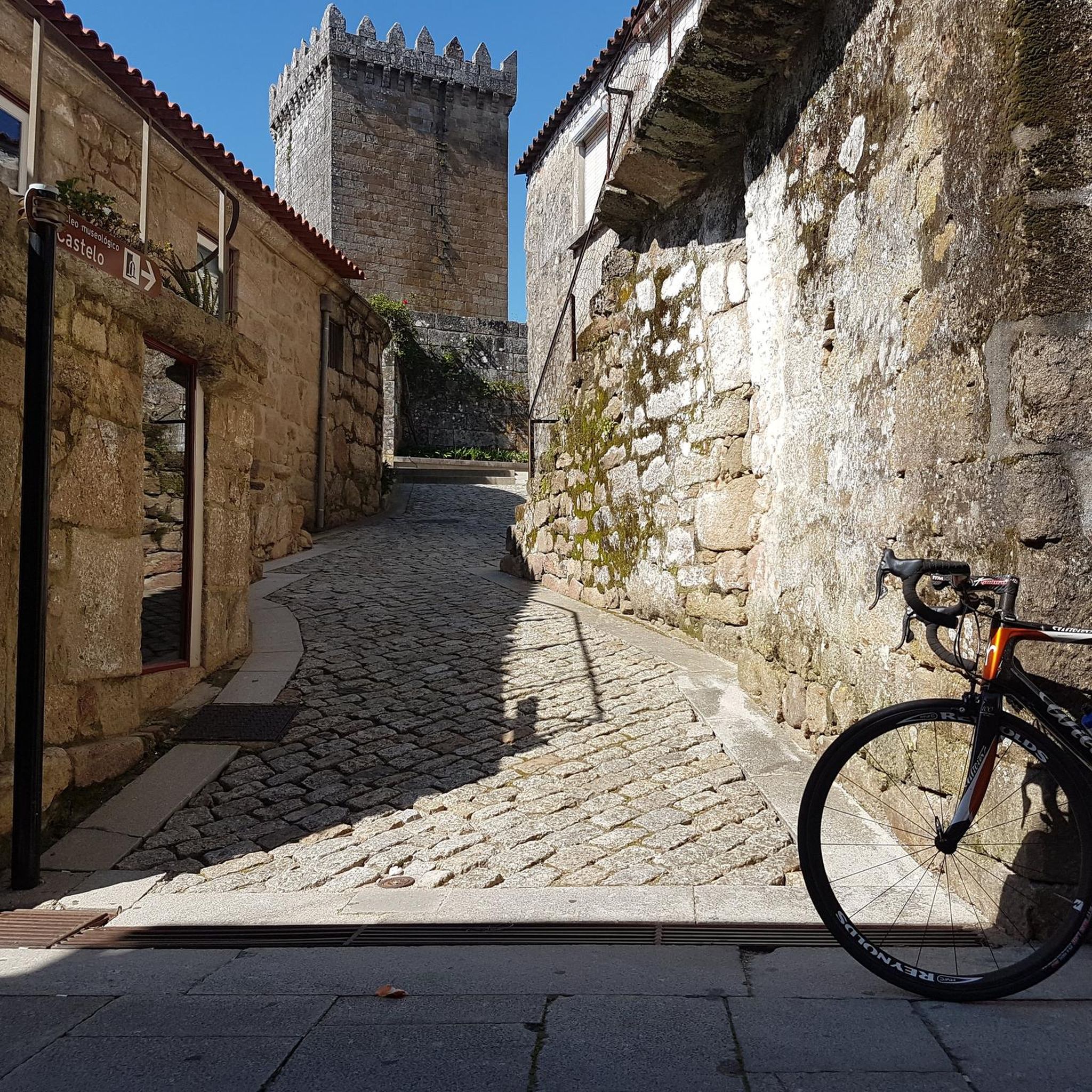
In the 12th century it was the main border defense of Alto Minho, forming the northernmost guard post in Portugal on the section where the Minho River begins its border function and monitoring the crossing into Galicia (WIKIPEDIA). Today just a ruin. There is a small museum in the preserved keep.
0
0

Visiting hours: M-D: 10:00-17:00. L: closed
0
0

The Alto de San Fins is almost 700m above sea level. In its upper part we can find the Hermitage of San Fins. From the top you can enjoy magnificent views of the Miño river valley
2
0
Demanding climb of about 7 Km. The views at the top are spectacular.
1
0

The existence of so many Theral Springs led to the construction of large thermal centers in Galicia that reached great splendor in the late 19th and early 20th centuries. Many other springs did not achieve Mondariz or Cortegada fame but were used for decades due to their medicinal properties. Today we can see the remains of the hotel, fountains, and even the church from 1938. Although previous buildings already existed, the Grande Hotel do Pezo was built in 1901 and expanded in 1931 and began to be abandoned in the last decades of the 20th century.
0
0
There are good stops along the route for a coffee and Melgaço has a really cool old town featuring a tower, open to the public. The castle is the most prominent structure in town and is at the center of the old town. Open to the public the tower offer great views of town and the surrounding area. Its worth spending some time here as the old town, while small is quite picturesque. Another bonus is the restaurants in the area. Adega Sabino has a Cabrito de Monte that is fabulous! Wikipedia: The construction of the castle dates back to 1170 by order of the first King of Portugal Afonso Henriques (1112–1185). He granted a Foral charter to the town at the same time, encouraging the development of the town. Afonso III (1248–1279) granted to the village in 1258 a second Foral Charter, promising privileges to the town. In 1361 the traffic between Portugal and Galicia was required to pass through Melgaço demonstrating its importance at the time.
0
0
In the 11th century during the siege of Castro Laboreiro castle, D. Afonso Henriques ordered the foundation of a convent to show appreciation of the help they offered him during his military campaign. There are several carvings in the stone wort a look. The various arches demonstrate architecture of the different periods and are still in quite good shape. The convent has long been closed and the buildings are showing the lack in upkeep but are still really interesting. As with most places in the region, its pretty open to explore the grounds and find its other secrets. The origins of the church are Romanesque, but it was subjected to significant alterations in the Baroque period. Other names of the church: Church of São Salvador de Paderne Convento de Paderne
1
0
Frequently Asked Questions
What historical sites can I explore near Chaviães?
The region around Chaviães is rich in history. You can visit the Castle of Melgaço, a 12th-century border defense with a tower offering great views. Another significant historical site is the Grande Hotel do Pezo Ruins, the remains of a thermal hotel from 1901. Further afield, within the Peneda-Gerês National Park, you can find the ruins of Castro Laboreiro Castle and the medieval Ponte Velha de Castro Laboreiro.
Are there any natural viewpoints or scenic spots around Chaviães?
Yes, for breathtaking views, head to Alto de San Fins, a summit with a hermitage offering magnificent vistas of the Miño river valley. The Peneda-Gerês National Park, a gateway to which is Melgaço, also provides expansive natural beauty, including the Rodeiro Waterfall and various lagoons.
What outdoor activities are available in the Chaviães area?
The Melgaço region, including areas near Chaviães, is excellent for outdoor activities. You can enjoy hiking, cycling, and mountain biking. The Minho River is popular for adventure sports like rafting, kayaking, and canoeing. The Peneda-Gerês National Park also offers opportunities for canyoning and extensive hiking.
Can I find family-friendly attractions near Chaviães?
Yes, the Castle of Melgaço is considered family-friendly and offers an engaging historical experience with great views. Exploring the natural landscapes of the Peneda-Gerês National Park or walking along the Minho River can also be enjoyable for families.
Where can I experience the local culture or heritage in Chaviães?
Beyond the historical sites, you can explore the local heritage by visiting the Church of Chaviães or the Cemitério de Chaviães. In Melgaço, the Melgaço Cinema Museum (Museu do Cinema de Melgaço - Jean Loup Passek) and Espaço Memória e Fronteira de Melgaço offer cultural insights into the region.
Are there opportunities for wine tasting near Chaviães?
Absolutely. Melgaço is renowned as one of the birthplaces of Alvarinho wine. You can visit wineries like Quinta de Soalheiro, located about 6.1 km from Chaviães, which offers tastings and tours to experience the local wine production.
What kind of hiking trails are available around Chaviães?
There are various hiking trails available, ranging from easy to moderate. For example, you can find easy hiking loops from Lamas de Mouro or moderate routes like the Castle of Melgaço loop from Melgaço. Many trails explore the natural beauty of the region, including parts of the Peneda-Gerês National Park. You can find more details on specific routes in the Hiking around Chaviães guide.
Is there a good time of year to visit Chaviães for outdoor activities?
The best time to visit Chaviães for outdoor activities is generally during the spring (April to June) and autumn (September to October) when the weather is mild and pleasant for hiking, cycling, and exploring. Summers can be warm, especially for strenuous activities, while winters are cooler and wetter.
What are some unique or lesser-known places to visit near Chaviães?
Consider visiting the Mosteiro de Fiães, an impressive complex with medieval roots and Romanesque, Mannerist, and Baroque elements. Another interesting spot is the Church of São Salvador de Paderne, with its Romanesque origins and unique stone carvings.
What are the options for cycling around Chaviães?
The area offers several cycling routes, often with challenging terrain. You can find difficult routes like the 'Tour 4 de Melgaço — Parque Nacional da Peneda-Gerês' or loops that take you past landmarks such as the Castle of Melgaço. For more detailed routes, refer to the Cycling around Chaviães guide.
Are there any religious landmarks worth visiting near Chaviães?
Beyond the local Church of Chaviães, you can visit the historic Mosteiro de Fiães, a National Monument with significant architectural history. The Church of São Salvador de Paderne, with its Romanesque origins and Baroque alterations, also offers a glimpse into the region's religious past.
What is the Peneda-Gerês National Park, and how accessible is it from Chaviães?
The Peneda-Gerês National Park is Portugal's only national park, known for its stunning natural beauty, including waterfalls, lagoons, and diverse wildlife. Melgaço, near Chaviães, serves as one of the main gateways to the park, making it readily accessible for day trips and outdoor adventures like hiking, rafting, and canyoning.
Are there any specific trails for mountain biking near Chaviães?
Yes, the region offers several mountain biking trails, often with moderate to difficult ratings. Routes include loops like 'Ponte do Mouro – Ancient Lamprey Fishing Spot' or 'Alto de San Fins'. You can explore more options in the MTB Trails around Chaviães guide.
Most popular routes around Chaviães

Get inspired with the komoot mobile app


Explore more
Still not found the Highlight you’re looking for? See guides of the top attractions in other regions:
