Attractions and Places To See around Groß-Schweinbarth - Top 20
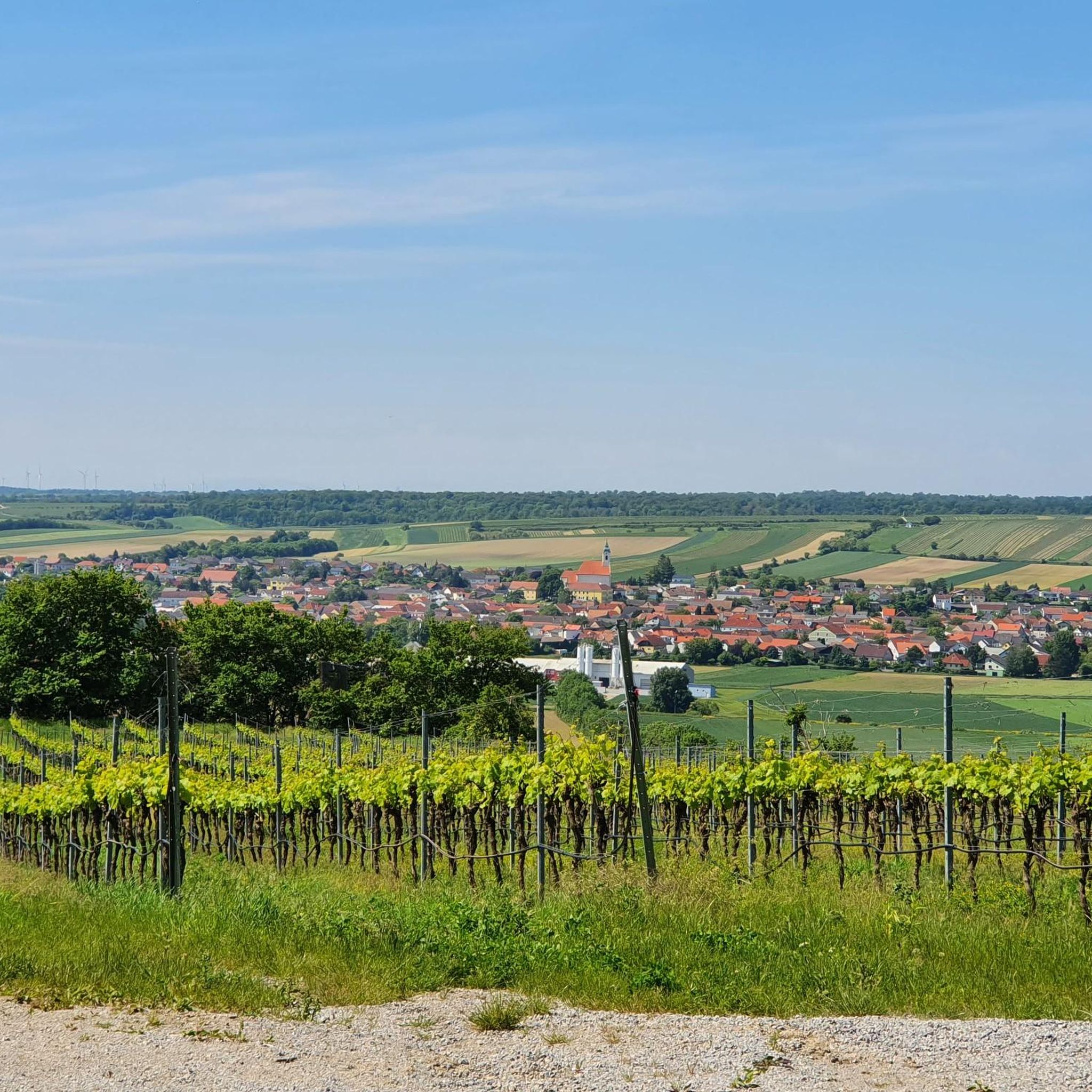
Attractions and places to see around Groß-Schweinbarth are set within the rolling hills of the Weinviertel region in Lower Austria. This market town offers a blend of historical sites, natural landscapes, and cultural experiences, particularly known for its wine culture. The Wiedenbach Valley and surrounding gentle hills provide a setting for outdoor activities. The region is characterized by features such as the Hochleithenwald, the largest oak forest in the Weinviertel, and the Königsberg-Hohlweg, a unique natural habitat.
Best attractions and…
Last updated: May 9, 2026
Pillichsdorf Rest Area
Highlight • Rest Area
Translated by Google •
Tip by

Wolkersdorf Castle
Highlight • Castle
Translated by Google •
Tip by

Sign up now to discover places like this
Get recommendations on the best single tracks, peaks, & plenty of other exciting outdoor places.
Sign up for free
Memorial to the Victims of the Strasshof Transit Camp
Highlight • Monument
Translated by Google •
Tip by

Pilgrimage church of St. Lambert on the Holy Mountain
Highlight • Religious Site
Translated by Google •
Tip by
Mühlradsberg Ascent
Highlight (Segment) • Climb
Translated by Google •
Tip by

Sign up for free to discover even more attractions around Groß-Schweinbarth.
Sign up for free
Already have an account?
Start today with a free account
Your next adventure awaits.
Login or Signup
Tips from the Community

One of my favorite roads for road cycling in the Vienna area!
0
0

The railway sleepers laid in the dark gravel, but without their iron rails, lead visitors to the central focal point of this memorial: a circular platform supported by seven stone columns, which, however, do not support a roof. This relatively new memorial—erected in 2011—commemorates the victims of the Strasshof transit camp, which existed here during the ill-fated era of the Nazi regime. The inscription states that: "People from all over Europe were forced into forced labor, humiliated, tortured, and deprived of their freedom and their lives."
1
1

The castle is simply beautiful
1
0

The complex, which in its basic form dates back to the 13th century, now houses exhibition areas, a music school, a studio and a restaurant following a partial renovation between 2011 and 2013.
2
0

Great rest area on the bike tour
2
0

Always happy here.....take a break.
1
0

The 800-year-old pilgrimage church of St. Lambert on the "Holy Mountain" is located on a wooded hill north of Hautzendorf and is considered a particularly mystical place of power. In the church tower there is a bell from 1452.
1
0

The Mühlradsberg or Mühlratzberg (as the highest point behind Manhartsbrunn or Pfösing is called) can be reached via five different routes: from Seebarn via Manhartsbrunn, from Enzersfeld via Manhartsbrunn, from Putzing via Manhartsbrunn, from Münichsthal via Pfösing and from Schleinbach. The climbs from Seebarn, Enzersfeld and Schleinbach are certainly the most scenic. From Seebarn you drive longer over very coarse-grained asphalt, which results in a little more rolling resistance and can make the ascent with the last steep section (but then with better asphalt) very tedious, especially with headwinds or side winds. The two steepest climbs are probably those via Pfösing and from Schleinbach (with sections around 13 - 15% and relatively long). In Pfösing you also have to cope with the steepest part on pavement ("cat's eyes"). An easier variant leads via Putzing, where you are most exposed to the sun in summer. The ascent from Enzersfeld is relatively easy and also shorter, as there are somewhat flatter passages here and you can enjoy the shade more in summer due to a longer stretch of forest. The special challenge of the climb from Schleinbach presented here is that you have the steepest part right at the beginning (near and after the church in Schleinbach) and the entire climb then drags on for a long time (ultimately up to the junction with the junction to Pfösing), even if this is repeatedly interrupted by flatter passages. In the other direction, caution is required on the descent, especially at the narrow double curve near the church - you should slow down here beforehand.
0
0
Frequently Asked Questions
What unique natural features can I explore near Groß-Schweinbarth?
The region offers several distinctive natural features. You can discover the Pilgrimage church of St. Lambert on the Holy Mountain, which stands on a wooded hill. Another notable spot is the Königsberg-Hohlweg, a hollow path known for its unique habitat and opportunities to observe rare animal and plant species like the European bee-eater. The Hochleithenwald, the largest oak forest in the Weinviertel, is also nearby, featuring the special 'Weinviertler Kupfereiche' (Copper Oak).
Are there any historical sites or cultural landmarks to visit?
Yes, Groß-Schweinbarth and its surroundings are rich in history. You can visit Schloss Groß-Schweinbarth, a castle with roots in the 12th century, which now houses a folk museum in its Meierhof. Another significant historical site is Wolkersdorf Castle, beautifully situated on a pond next to a park, offering a pleasant break. The Pilgrimage church of St. Lambert on the Holy Mountain, first mentioned in 1170, is also a prominent historical and religious landmark.
What outdoor activities are popular in the Groß-Schweinbarth area?
The gently rolling hills and valleys around Groß-Schweinbarth are ideal for various outdoor activities. You can enjoy leisurely hikes, relaxed walking, and cycling tours. The area features well-developed paths, such as those along the idyllic Schweinbach. For specific routes, explore the hiking trails around Groß-Schweinbarth or the road cycling routes in the area.
Are there family-friendly attractions or activities available?
Yes, several attractions cater to families. Wolkersdorf Castle, with its park and hammocks, provides a relaxing spot for all ages. The Pillichsdorf Rest Area is also noted for its thoughtful arrangement and unique items like an old piano and a large iron bike, making it an interesting stop for families. The natural landscapes, such as the Königsberg-Hohlweg, offer opportunities for family walks and wildlife observation.
What is the significance of wine culture in Groß-Schweinbarth?
Groß-Schweinbarth is a significant wine-growing community, being the second-largest in the Gänserndorf district with 210 hectares of vineyards. The region is renowned for its wine, particularly the Grüner Veltliner with its characteristic 'Pfefferl.' Many local winemakers operate traditional 'Heurigen' (wine taverns) where visitors can experience this rich wine culture firsthand and taste local wines.
Where can I find good hiking trails near Groß-Schweinbarth?
The area offers a variety of hiking trails suitable for different levels. You can find routes like the 'Hollow Way – Lösswand Königsberg loop' or the 'Kurpark Bad Pirawarth – St. Thomas Chapel loop' starting from Groß-Schweinbarth. These trails allow you to explore the rolling hills and natural features of the Weinviertel. For more options, refer to the hiking guide for Groß-Schweinbarth.
Are there cycling routes suitable for different skill levels?
Yes, the landscape around Groß-Schweinbarth is well-suited for cycling, with routes ranging from easy to moderate difficulty. Examples include the 'Vintage Bicycle Sculpture – Forest Pathway Near Vienna loop' which is an easy ride, and the 'Kreuttal among trees – Oberkreuzstetten Serpentines loop' for a moderate challenge. You can find detailed information and more routes in the road cycling guide for Groß-Schweinbarth.
What do visitors particularly enjoy about the attractions in this area?
Visitors often appreciate the thoughtful and unique touches at places like the Pillichsdorf Rest Area, which is considered one of the most beautiful by many. The serene setting of Wolkersdorf Castle by a pond and park, complete with hammocks and statues, is also a favorite for breaks. The historical significance and scenic views from the Pilgrimage church of St. Lambert on the Holy Mountain are also highly rated.
Can I observe wildlife in the Groß-Schweinbarth region?
Yes, the natural areas around Groß-Schweinbarth offer opportunities for wildlife spotting. The Königsberg-Hohlweg, in particular, is highlighted as a unique habitat where remarkable and rare animal species, such as the European bee-eater, can be observed. The Hochleithenwald also provides a rich natural environment.
Is there a memorial site related to historical events in the area?
Yes, near Groß-Schweinbarth, you can find the Memorial to the Victims of the Strasshof Transit Camp. This site commemorates the dark history of the Strasshof transit camp, which served as a labor and internment camp during World War II. The memorial was inaugurated in 2011 by the citizens of the Strasshof community.
What is the Franziskusweg Weinviertel and does it pass through Groß-Schweinbarth?
The Franziskusweg Weinviertel is a pilgrimage route that offers a spiritual and scenic journey through the region. Groß-Schweinbarth is indeed situated along this route, providing an opportunity for those interested in a reflective walk through the Weinviertel's landscape.
Most popular routes around Groß-Schweinbarth
Most popular attractions around Groß-Schweinbarth

Get inspired with the komoot mobile app


Explore more
Still not found the Highlight you’re looking for? See guides of the top attractions in other regions:
