The 20 Most Amazing Peaks around Schneeberg
Best mountain peaks around Schneeberg are found in a region characterized by diverse landscapes and historical significance. This area, particularly in the Fichtel Mountains of Germany, features granite rock formations and unique ecological zones. The peaks offer expansive panoramic views of surrounding mountain ranges and forests. Visitors can explore a variety of natural features and historical sites across the region.
Best mountain peaks around Schneeberg
- The most popular mountain peaks is Steinberg Summit and Observation Tower, a summit that…
Last updated: August 4, 2026
König Albert Tower (Spiegelwald)
Highlight • Viewpoint
Translated by Google •
Tip by

Prinz-Georg Tower
Highlight • Monument
Translated by Google •
Tip by

Sign up now to discover places like this
Get recommendations on the best single tracks, peaks, & plenty of other exciting outdoor places.
Sign up for free
Hirschenstein Summit and Triangulation Station
Highlight • Summit
Translated by Google •
Tip by

Auersbergkönig – mountain time trial route
Highlight • Trail
A project of: "Association for promoting the joy of cycling in the Erzgebirge and Vogtland e.V."
auersbergkoenig.de
Translated by Google •
Tip by

Bismarck Tower Keilberg
Highlight • Monument
Translated by Google •
Tip by

Sign up for free to discover even more peaks around Schneeberg.
Sign up for free
Already have an account?
Start today with a free account
Your next adventure awaits.
Login or Signup
Popular around Schneeberg
Wonderful Silberberg – Day Tours to the Digital Hiking Badge with SummitLynx
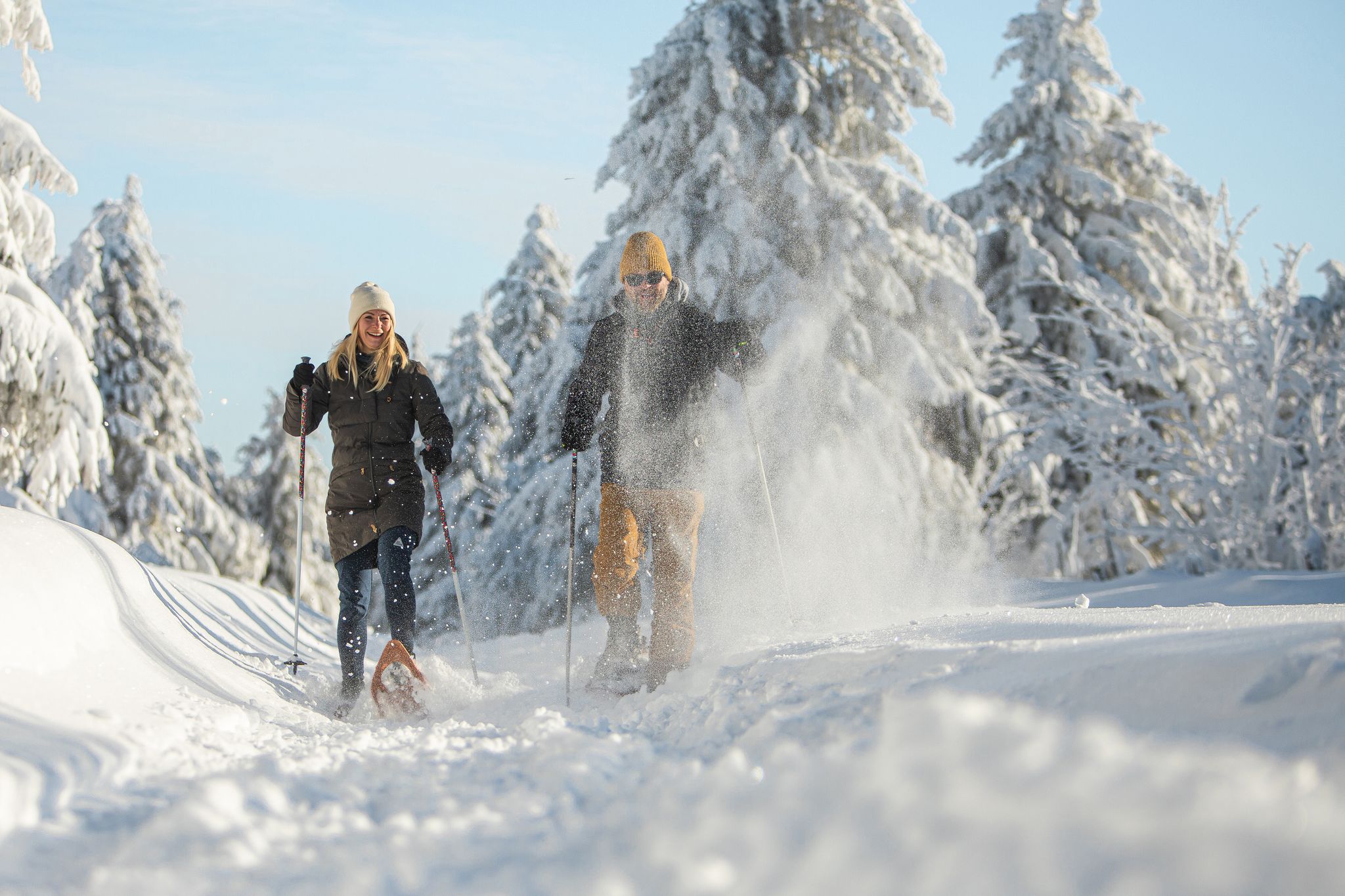
Glittering slopes and forests - winter hiking in the Ore Mountains
Digitale Wandernadel
Wandertouren - "Glück Auf" im Welterbe
Wandertouren - Gipfelglück
Hiking around Schneeberg
Cycling around Schneeberg
Running Trails around Schneeberg
MTB Trails around Schneeberg

Gravel biking around Schneeberg
Other adventures around Schneeberg


Tips from the Community

a must, puts you in a good mood and burns a lot of energy.
0
1


The first 2 km are totally relaxed, then the fun begins. At least 3 times you can enjoy it at certain points... :)
4
0

Here you receive a point for the digital hiking pin at SummitLynx. The Bismarck Tower in Schneeberg is an impressive structure that was built by the Schneeberg Erzgebirge branch association with the support of the city. The inauguration of the tower took place on August 31, 1893 under the name Keilbergturm. The stones for the tower came from a nearby quarry on the Keilberg. In honor of Otto von Bismarck, the tower was renamed the Bismarck Tower on April 1, 1899. The tower is an impressive 21 meters high and offers breathtaking views of the surrounding landscape. On April 16, 1899, a relief image of Bismarck was attached to the outer wall of the tower. The picture was made by the renowned C. Albert Bierling iron foundry in Dresden. Unfortunately, the relief image no longer exists today.
2
0

For 0.50 euros entrance at the turnstile and after a few steps you get a wonderful view of the surrounding area from the Prince George Tower.
1
0

Nice route to get from the Blauenthal waterfall to the Auersberg by bike!
3
1

A restaurant is also available. The Erzgebirge branch association Schneeberg-Neustädtel, chaired by Mayor Dr. von Woydt at the general meeting in April 1893 to have the damaged wooden observation tower on the Gleesberg demolished. Instead, a stone observation tower should be built on Klínovec. The municipal colleges decided to support the association in the construction of the lookout tower by providing a building plot and quarry stones. Due to the tower's location on the Keilberg (northwest of Schneeberg), tensions arose in the Erzgebirge branch as many members wanted to build a massive tower on the Gleesberg. Numerous Neustädter members left the branch association. This has now been renamed the Schneeberg branch association. At the request of the association, master builder Görling from Schneeberg prepared a design and a cost estimate for the observation tower, which was approved at a general meeting. It was decided that the new observation tower should be built in 1893. The members of the branch association were asked to subscribe to interest-free share certificates at 5 and 10 marks. By May 1893, shares in the amount of 1,700 marks were subscribed in Schneeberg and Schlema. In the summer of 1893, the municipal colleges approved a contribution of 500 marks to the construction of the tower and took over the construction of the access routes. The total sum for building the tower was 4,400 marks.
2
0
The "König-Albert-Turm" on the 728 m high Spiegelwald is a worthwhile destination at any time of the year. 180 steps lead up to the viewing platform, which can also be reached quickly and easily by lift (suitable for wheelchair users). Located between Grünhain-Beierfeld and Bernsbach, the tower is the only barrier-free viewing tower in the Ore Mountains. On the 1st floor, the "Multimedia Cultural Landscape" invites you on an informative, virtual journey of discovery on 200 square meters. The restaurant next to the observation tower takes care of your physical well-being. https://www.erzgebirge-tourismus.de/
4
0
Frequently Asked Questions
What are the most popular mountain peaks and viewpoints in the Schneeberg region?
The region offers several highly-rated peaks and viewpoints. Steinberg Summit and Observation Tower is very popular, providing magnificent panoramic views of the Vogtland and Erzgebirge mountains. Another favorite is Dr. Köhler Tower and Glöckner Inn on the Gleesberg, which includes a tower museum. For the highest point in Zwickauer Land with a nice rest area, visit Hirschenstein Summit and Triangulation Station.
Are there family-friendly mountain peaks or attractions in the Schneeberg area?
Yes, several spots are suitable for families. Both Steinberg Summit and Observation Tower and Dr. Köhler Tower and Glöckner Inn on the Gleesberg are considered family-friendly. The German Schneeberg in the Fichtel Mountains also offers accessible paths to its summit, with the final meters to the Backöfele observation tower being the only non-barrier-free section.
What kind of hiking trails can I find around the Schneeberg peaks?
The Schneeberg region offers a diverse network of hiking trails. In Lower Austria, the Schneeberg boasts routes ranging from easy to difficult, including the challenging Fadensteig for experienced hikers and picturesque paths through the Weichtalklamm gorge. For easier options in the German Schneeberg area, you can explore routes like the 'View of Filzteich – Filzteich loop' or the 'Anton Günther Memorial Stone – Bismarck Tower Keilberg loop'. You can find more options in the Easy hikes around Schneeberg guide.
Are there any challenging routes for experienced hikers or cyclists near Schneeberg?
Absolutely. For experienced hikers, the Fadensteig on the Austrian Schneeberg is recommended, starting from the Edelweißhütte. The Weichtalklamm also offers a challenging path with ladders. Cyclists looking for a challenge can tackle the Auersbergkönig – mountain time trial route, which is known for its demanding ascent and rewarding views. For more challenging hiking options, consider routes like the 'Fundgrube Company – Silberbach Reservoir loop' found in the Waterfall hikes around Schneeberg guide.
What historical sites or unique landmarks can be found on the Schneeberg peaks?
The region has several historical points of interest. In Lower Austria, the historic Schneeberg Railway, over 100 years old, is an attraction in itself. In the German Schneeberg, the summit features relics of military installations, including a Cold War listening post, and the Backöfele observation tower stands on a rock pillar called Felsburg. The Bismarck Tower Keilberg is another significant historical observation tower in the area.
What are the highest points in the Schneeberg region?
The highest point in Lower Austria is the Klosterwappen on the Schneeberg, reaching an elevation of 2,076 meters (6,811 ft). This makes it the easternmost and northernmost mountain in the Alps to exceed 2,000 meters. In the German Fichtel Mountains, the Schneeberg is the highest mountain in Upper Franconia, with an elevation of 1,051 meters (3,448 ft).
Can I find places to eat or stay near the mountain peaks?
Yes, there are options for refreshments and accommodation. On the Austrian Schneeberg, the Fischerhütte is Lower Austria's highest mountain hut, offering a resting point and culinary stop. In the German Schneeberg area, the Steinberg Summit and Observation Tower has a mountain restaurant (closed Mondays). The Dr. Köhler Tower and Glöckner Inn on the Gleesberg also features an excursion restaurant. While the excursion restaurant at Bismarck Tower Keilberg is currently closed, an alternative restaurant, 'Zum Starken August,' is nearby.
What unique natural features or wildlife can be observed around Schneeberg?
The Schneeberg mountains offer distinct natural characteristics. The Austrian Schneeberg is a prominent limestone massif with steep slopes and rich Karst plateaus that supply Vienna with drinking water. The German Schneeberg in the Fichtel Mountains is known for its granite rock formations and unique ecology, supporting a glacial plant community. It's also home to one of Germany's last capercaillie populations outside the Alps, with lynx sightings reported in winter.
What kind of cycling opportunities are available in the Schneeberg area?
The region provides various cycling opportunities. For mountain bikers, the Auersbergkönig – mountain time trial route offers a challenging climb with magnificent views. The German Schneeberg summit has a tarmac road, closed to private vehicles, which is suitable for racing cyclists. You can explore more options for gravel biking in the Gravel biking around Schneeberg guide.
What is the Schneeberg Railway and where does it go?
The Schneeberg Railway (Schneebergbahn) is a historic rack-and-pinion railway in Lower Austria, over 100 years old. It ascends to an elevation of 1,800 meters (5,900 ft) on the Schneeberg mountain, significantly reducing the strenuous climb to the summit. The railway itself is a scenic attraction, offering beautiful views during the ascent.
What do visitors enjoy most about the mountain peaks around Schneeberg?
Visitors frequently praise the stunning panoramic views from various summits and observation towers, such as those from Steinberg Summit and Observation Tower and Bismarck Tower Keilberg. The well-developed paths and the peaceful, cozy atmosphere at places like Hirschenstein Summit and Triangulation Station are also highly appreciated. Many enjoy the combination of natural beauty, historical elements, and the rewarding feeling of reaching a summit.
Are there any waterfall hikes near the Schneeberg peaks?
Yes, there are waterfall hiking opportunities in the broader Schneeberg region. You can find several routes, including the 'Blauenthal Waterfall – Toellischer Graben Trail loop from Neustädtel,' which is a more difficult option. For a comprehensive list of such trails, refer to the Waterfall hikes around Schneeberg guide.
Most popular routes around Schneeberg
Most popular attractions around Schneeberg

Get inspired with the komoot mobile app


Explore more
See even more amazing summits around Schneeberg with these guides:
