Top 20 Castles around Mayschoß
Castles around Mayschoß offer a glimpse into the region's rich history and strategic importance. Mayschoß is situated in the Ahr valley, an area known for its terraced vineyards and the winding Ahr River. The landscape features rocky massifs and hills, providing natural fortifications for medieval structures. This region is also recognized for its viticulture, including Germany's oldest winegrowers' cooperative.
Best castles around Mayschoß
- The most popular castles is Saffenburg Castle Ruins, a castle that is the oldest castle complex…
Last updated: August 2, 2026
Altenahrer Eck
Highlight • Viewpoint
Translated by Google •
Tip by

Saffenburg Castle Ruins
Highlight • Castle
Translated by Google •
Tip by

Sign up now to discover places like this
Get recommendations on the best single tracks, peaks, & plenty of other exciting outdoor places.
Sign up for free
View of Saffenburg
Highlight • Viewpoint
Translated by Google •
Tip by

Are Castle Ruins
Highlight • Castle
Translated by Google •
Tip by

Ahrweiler Old Town
Highlight • Settlement
Translated by Google •
Tip by

Sign up for free to discover even more castles around Mayschoß.
Sign up for free
Already have an account?
Start today with a free account
Your next adventure awaits.
Login or Signup
Tips from the Community

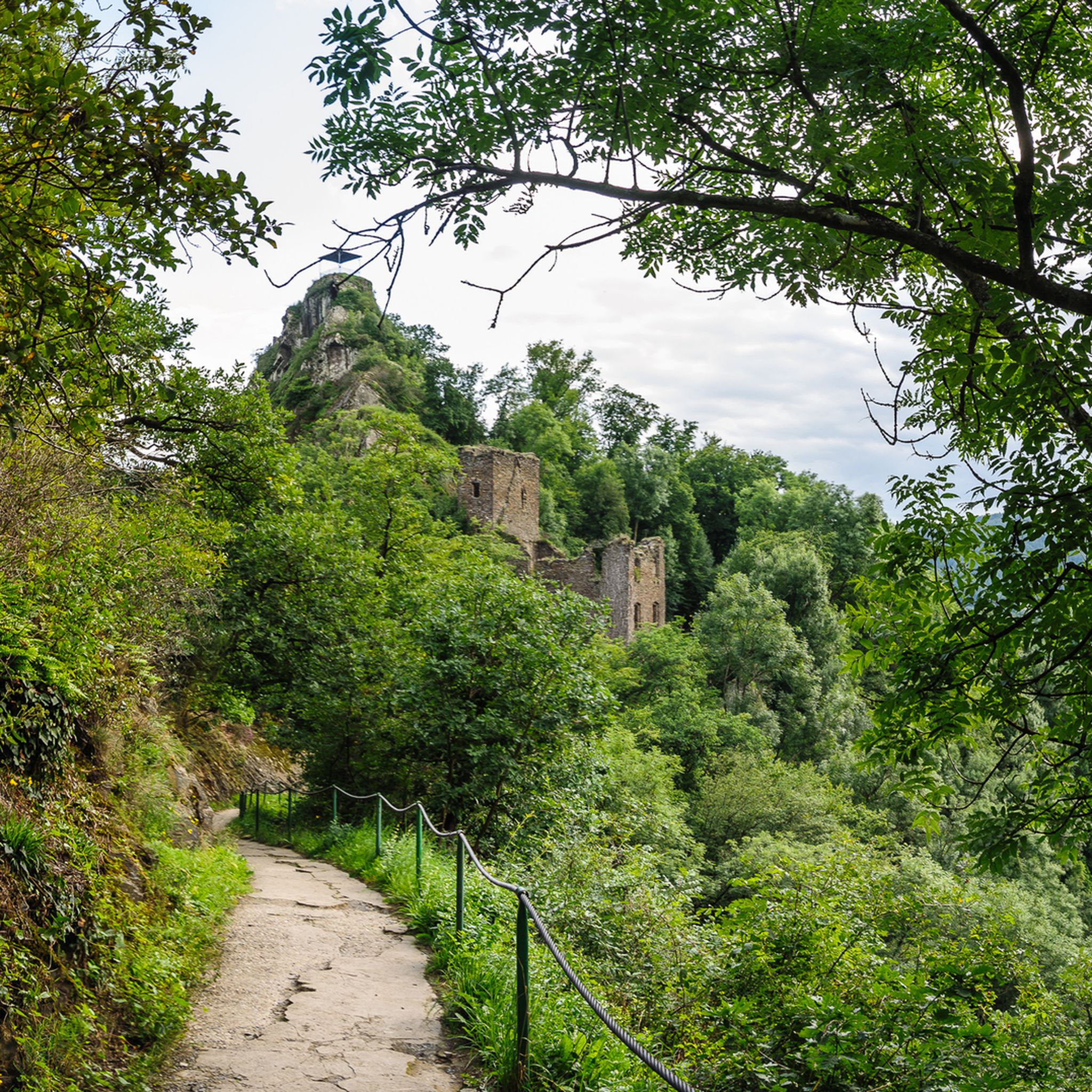
Be amazed as you look through the grate into the depths of the pit.
19
1
near the ruins a beautiful viewpoint with a bench in peace and quiet
16
0
During wine week there will be a wine kiosk here and you can buy a holder to put your wine glass in 😀
17
1

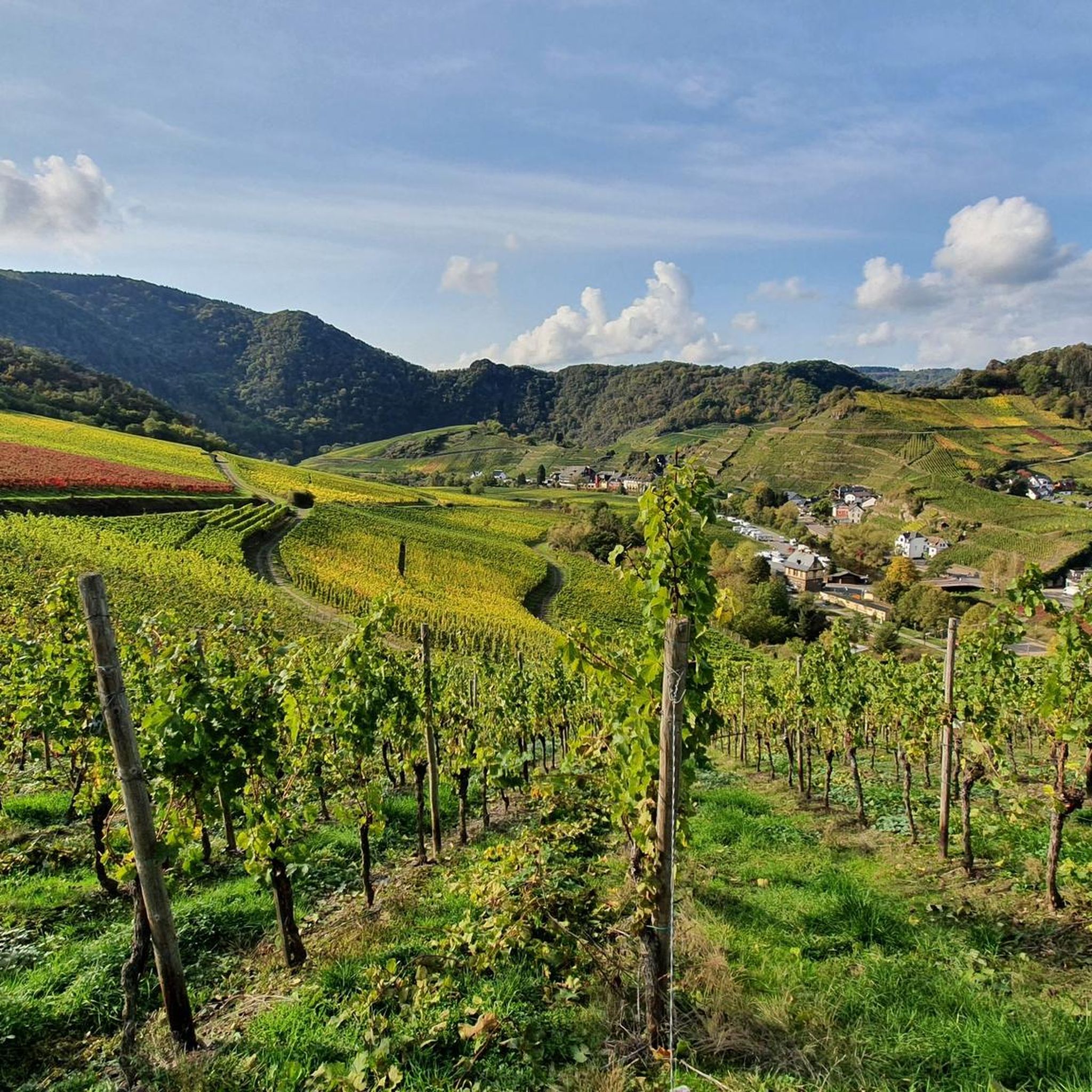
Mayschoß belongs to the Walporzheim wine-growing area in the Ahr region. There are 59 wine-growing businesses in the town, and the vineyard area is 103 hectares. Around 70% of the wine grown is red wine grape varieties (as of 2010). In 1979, there were still 89 businesses operating, and the vineyard area at that time was 91 hectares.
9
0

The attentive hiker will not have missed the Stations of the Cross lining the path. At this viewpoint far above the river, which offers a beautiful view into the Ahrtal valley, I would therefore like to recall a fitting thought from the Bishop of Innsbruck, Reinhold Stecher (*1921, + 2013), who felt very connected to nature and the mountains throughout his life, because he saw in them God's wonderful creation, which was entrusted to us humans. „Silence is the invitation to deeper humanity.“
20
1

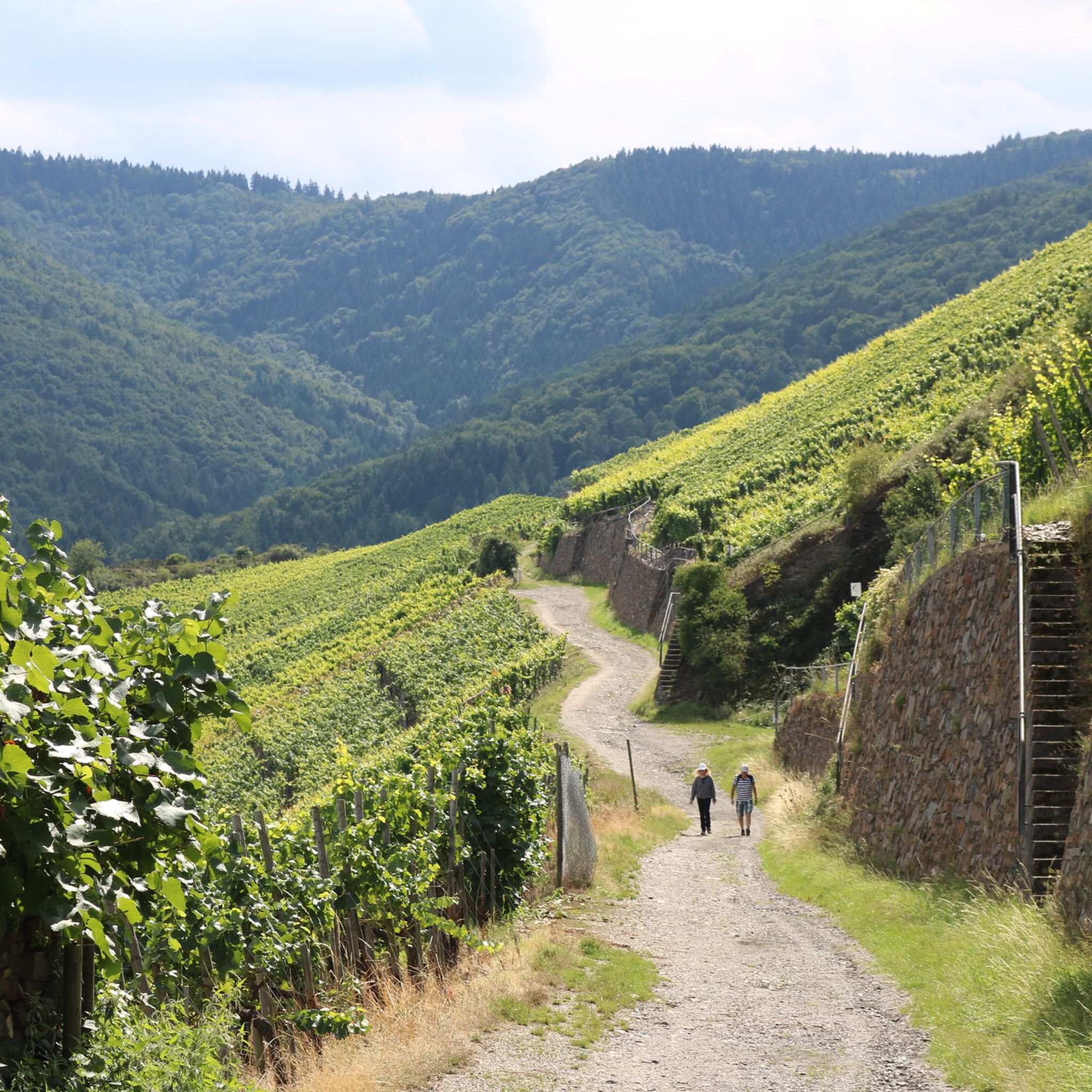
The climb to Saffenburg is worth it: Not only does the perfect view over Mayschuss and its vineyards await you here, you can also reward yourself with a delicious glass of wine at any time. Next to the refuge there is a wine vending machine with delicious white, rosé and red wines as well as grape juice and water. Glasses are also available for loan. Payment is only possible cashless.
11
0

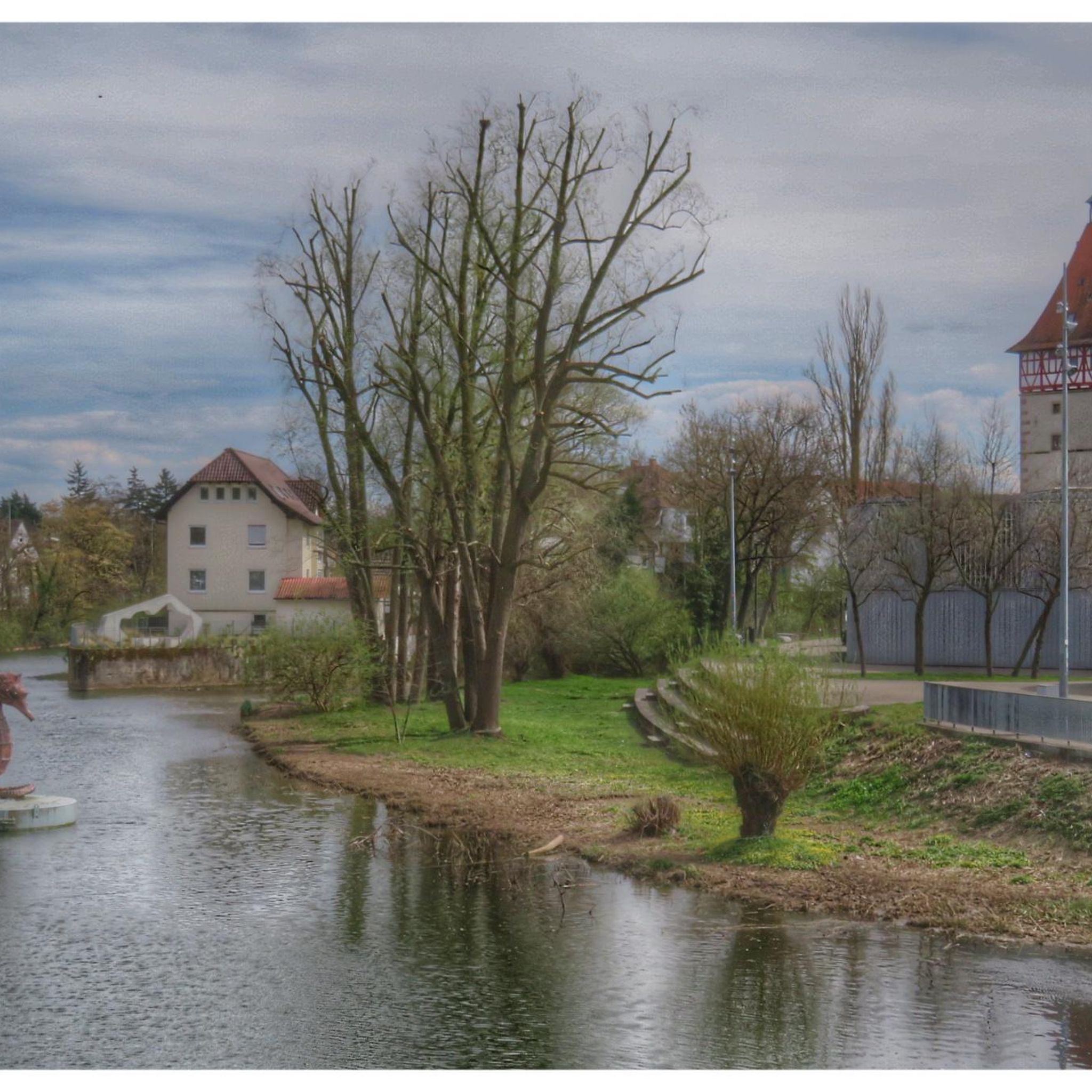
Very beautiful city center with the half-timbered houses and the well-preserved city fortifications from the Middle Ages. >> Ahrweiler << - the older of the two districts, was first mentioned as >> Ahrwilere << in the year 893 in a goods list of the Prüm Abbey. This abbey had large possessions in Ahrweiler. Until 1100 Ahrweiler belonged to the Argau. from 1100 - 1246 sovereignty was exercised by the Counts of Are; From them it passed in 1246 to the Counts of Hochstaden of the Archbishopric of Cologne, who remained rulers until 1794. Archbishop Konrad von Are-Hochstaden, who confirmed Ahrweiler's city rights in 1248, made the city, together with Bonn, Neuss and Andernach, co-capital of Electoral Cologne. In keeping with this political and strategic importance, the sovereign had Ahrweiler fortified with a fortification that is still worth seeing today. The moats, city walls, gates and towers from the 13th century are almost completely preserved today. During the Thirty Years' War (1633, 1642, 1646) the city was besieged, looted and pillaged by enemies; During the 3rd French War of Robbery on May 1, 1689, all but 10 houses were completely destroyed. It took years for the reconstruction to take place. From 1794 - 1814 Ahrweiler was under French rule, which was followed by belonging to Prussia from 1815 - 1945. Ahrweiler had to endure the last enemy attacks in 1044 and 1945. The bombing left the southern part of the city center completely in ruins. But reconstruction took place quickly. Anyone who visits Ahrweiler as a lover of antiquity will be particularly impressed by the St. Laurentius parish church (1269) - one of the first Gothic hall churches in the Rhineland - and the excavation work on the recently discovered probably second largest Roman villa north of the Alps. Source: https://finanzamt-ahrweiler.fin-rlp.de/wir-ueber-uns/chronik
9
0

For me, Ahrweiler is one of the most beautiful places on the Ahr. If you are here for the first time, you should definitely take a look at the beautiful old town, with its hustle and bustle in the alleys and on the market square.
17
0
Frequently Asked Questions
What historical castles can I explore near Mayschoß?
The region around Mayschoß is rich in history. You can visit the Saffenburg Castle Ruins, which is the oldest castle complex in the Ahr valley, first mentioned in 1081. Other notable ruins include Are Castle Ruins, situated on a 240-meter-high hill, and Tomburg Castle Ruins, which offers views of the Cologne Bay and Siebengebirge.
Are there good hiking opportunities to reach the castles around Mayschoß?
Yes, hiking is a popular way to explore the castles. The Saffenburg Castle Ruins, for instance, is a popular destination for hikers, with various trails, including parts of the Ahrsteig, leading to it through the vineyards. Many castle ruins are located on hilltops, offering scenic routes.
What kind of views can I expect from the castles near Mayschoß?
The castles around Mayschoß are often situated on elevated positions, providing magnificent panoramic views. From Saffenburg Castle Ruins, you get 360-degree views of Mayschoß, the winding Ahr River, and the surrounding villages and terraced vineyards. Are Castle Ruins offers a great panoramic view of Altenahr, and Tomburg Castle Ruins provides a view of the Cologne Bay and the Siebengebirge.
Are the castle trails around Mayschoß suitable for families or beginners?
Many trails leading to the castles are considered intermediate, but some are family-friendly. For example, the Tomburg Castle Ruins is noted as a worthwhile hiking destination for families, with picnic spots and wall remains for children to explore. Always check the specific trail details for difficulty before heading out.
What is the best time of year to visit the castles around Mayschoß?
The region is beautiful year-round. However, late autumn is particularly scenic when the foliage changes color, as noted by visitors to Are Castle Ruins. Spring to autumn offers pleasant weather for hiking and allows for enjoying amenities like the wine hut below Saffenburg Castle.
What other outdoor activities can I do near the castles in Mayschoß?
Beyond hiking to castles, the Mayschoß area is excellent for cycling. You can find various routes for gravel biking, mountain biking, and road cycling. For example, explore the gravel biking routes around Mayschoß, or check out the MTB trails and road cycling routes in the area.
Are there any amenities like cafes or pubs near the castle trails?
Yes, especially in Mayschoß itself and along popular routes. Below the plateau of Saffenburg Castle Ruins, there is a wine hut open from spring to autumn, and even a wine vending machine nearby. The Ahrweiler Old Town, a short distance away, also offers numerous cafes, pubs, and restaurants.
What makes Saffenburg Castle Ruins unique?
Saffenburg Castle Ruins holds the distinction of being the oldest castle complex in the Ahr valley, first mentioned in 1081. Its building blocks were hewn directly from the rock on-site, creating smooth, vertical rock faces. It offers magnificent 360-degree panoramic views of Mayschoß and the surrounding vineyards.
Can I visit other historical sites besides castles in the Mayschoß region?
Absolutely. The Ahrweiler Old Town is a beautiful medieval town with a Gothic hall church and impressive old frescoes, making it a worthwhile historical destination. The region's viticulture also has a rich history, with Mayschoß being home to Germany's oldest winegrowers' cooperative.
What do visitors enjoy most about the castles around Mayschoß?
Visitors frequently highlight the breathtaking panoramic views from the castle ruins, regardless of the season. The historical significance and the opportunity to explore medieval architecture are also highly appreciated. Many enjoy combining their visit with hiking through the scenic Ahr valley and its vineyards.
Are there any specific viewpoints near the castles that are highly recommended?
Yes, besides the views directly from the castle ruins, Altenahrer Eck is considered one of the most beautiful vantage points in the Ahr valley, offering breathtaking views. It's often mentioned as a great spot to taste local Ahrwein in late autumn.
Most popular routes around Mayschoß
Most popular attractions around Mayschoß

Get inspired with the komoot mobile app


Explore more
Looking for the best castles somewhere else? Discover other guides around Mayschoß:
