Top 20 Castles around Halberstadt
Castles around Halberstadt, situated on the northern edge of the Harz Mountains, offer insights into centuries of German history. The region features a diverse landscape, including the Harz foothills and pine forests, providing a scenic backdrop for historical exploration. Visitors can explore well-preserved castles and impressive ruins, each with unique architectural features. This area serves as a gateway to understanding the historical significance of the Harz region.
Best castles around Halberstadt
- The most popular castles is Regenstein Castle and Fortress…
Last updated: November 6, 2026
Regenstein Castle and Fortress
Highlight • Castle
Translated by Google •
Tip by

Luisenburg (HWN 77)
Highlight • Historical Site
Translated by Google •
Tip by

Sign up now to discover places like this
Get recommendations on the best single tracks, peaks, & plenty of other exciting outdoor places.
Schlossberg and Collegiate Church of St. Servatius (Quedlinburg)
Highlight • Castle
Opening …
Translated by Google •
Tip by

HWN 084 - Altenburg (near Heimburg)
Highlight • Viewpoint
Translated by Google •
Tip by

View of Quedlinburg’s Castle Hill
Highlight • Castle
Extensive renovation and construction work is …
Translated by Google •
Tip by

Sign up for free to discover even more castles around Halberstadt.
Already have an account?
Start today with a free account
Your next adventure awaits.


Other adventures around Halberstadt

Tips from the Community

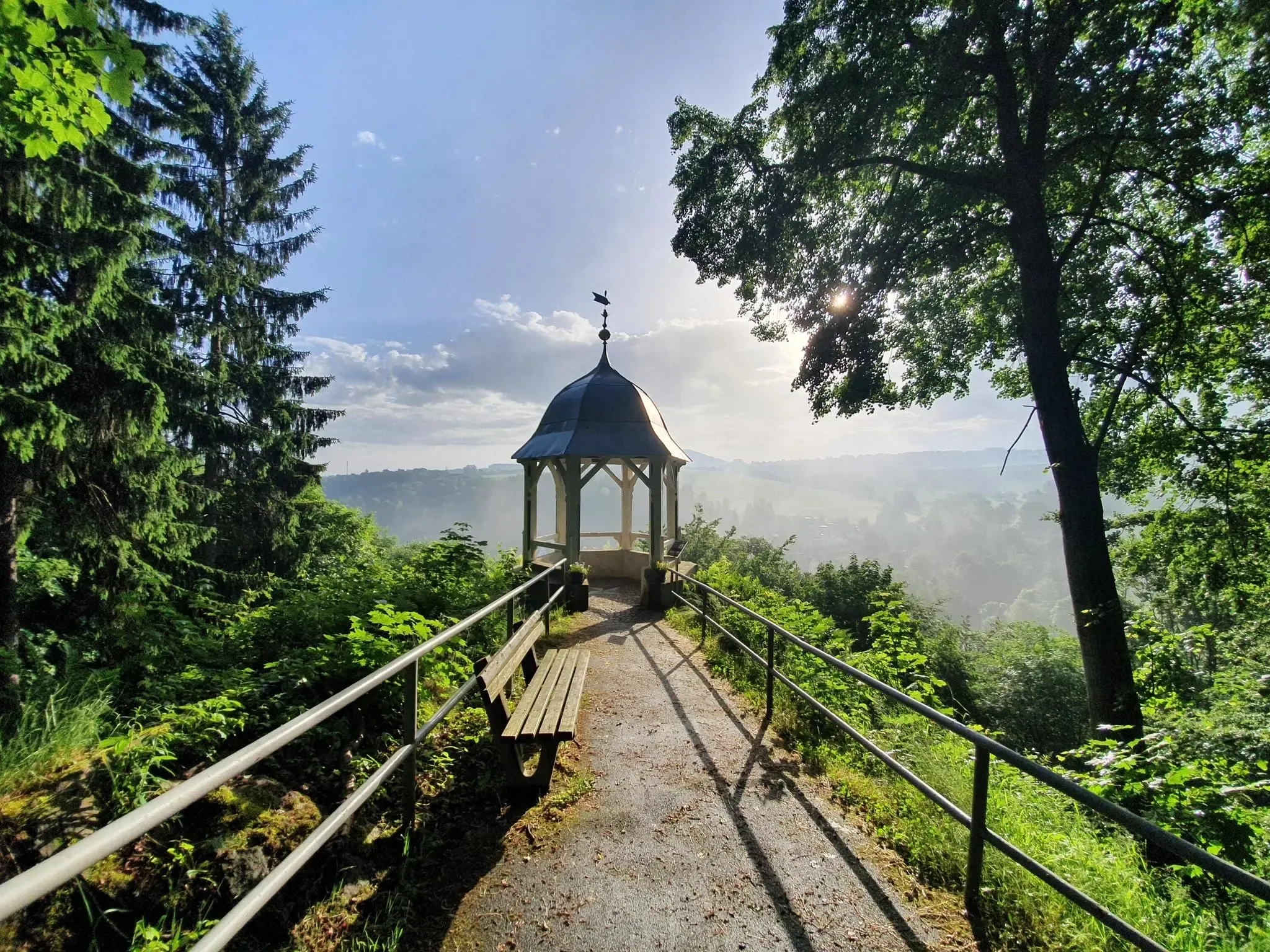
It was only after 1990 that the ruins were uncovered, the remains restored and a pavilion was added as a viewing point.
8
0

Quedlinburg Castle rises up next to the St. Servatius Collegiate Church on the Stiftsberg hill, which impressively overlooks the World Heritage town of Quedlinburg. Extensive renovation and construction work is currently underway on the buildings of the former women's convent. Visitors will soon be able to enjoy a completely redesigned museum tour through the impressive ensemble of the collegiate church, church treasury and living and representation rooms. The castle museum is not open during the construction period, but the climb up the castle hill is still worthwhile. The St. Servatii Collegiate Church, with its important cathedral treasury and the burial place of King Henry I in the Romanesque crypt, can be visited. A walk through the collegiate gardens on the mountain plateau offers an enchanting view of the historic half-timbered town of Quedlinburg, which can also be enjoyed in the cozy atmosphere of the Schlosskrug restaurant.
9
0

The residential buildings of the castle, i.e. the palace, have been rebuilt many times over the centuries. Only the interior of the medieval castle at the time of the monastery's heyday has remained in its original form. The first stone residential buildings were probably built in the 10th century. In 1928, the city of Quedlinburg acquired the palace and opened the museum in the north wing on May 8, 1929. It is currently closed for renovation.
8
3

In the process of being renovated. You can still visit the exhibition.
7
1
Quedlinburg's castle hill is in danger. This threatens not only the sandstone rock and with it the famous Romanesque collegiate church of St. Servatius and the collegiate buildings, but also numerous half-timbered houses in the town of Quedlinburg, which was added to the UNESCO World Cultural and Natural Heritage List in 1994. There have been static problems several times in its history. As early as 1571, the south wall of the transept of the collegiate church and in 1708 the south wall of the nave had to be partially rebuilt. The main problems are the desolate sandstone massif and the fact that the hill has grown steadily over the centuries, sometimes extending beyond the boundaries of the actual plateau. Even larger buildings were later built on the cultural rubble and there is no drainage. (https://www.kreis-hz.de/de/schlossberg-quedlinburg.html)
7
0
The Schlossberg is an elevation in the northern Harz foothills. It is the seat of the Quedlinburg Abbey. From the top you have a wonderful view of the city. In summer, numerous roses bloom in the monastery garden. There is also a restaurant up there.
9
3

Look into the country, especially the panoramic view of Heimburg is fantastically beautiful.
18
1
The castle hill is easy to reach in just a few meters from Heimburg.
20
2
Frequently Asked Questions
What types of castles can I explore around Halberstadt?
The region around Halberstadt offers a diverse range of castles, from impressive ruins to well-preserved palaces. You can visit unique ruined rock castles like Regenstein Castle and Fortress, which is largely carved into sandstone. There are also grand Baroque palaces such as the Great Castle of Blankenburg, and historic hilltop castle ruins like HWN 084 - Altenburg (near Heimburg).
Which castles offer the best panoramic views of the Harz foothills?
Several castles provide excellent views. Regenstein Castle and Fortress offers fantastic panoramic views of the Harz foothills and the pine forests of the Heers. The Great Castle of Blankenburg, situated high above the town, also provides wide views of the Harz foothills. Additionally, the ruins of HWN 084 - Altenburg (near Heimburg) offer a nice view over Heimburg and the Harz.
Are there family-friendly castles to visit near Halberstadt?
Yes, several castles are suitable for families. Regenstein Castle and Fortress is a unique experience for all ages, with its cavernous rooms and passages carved into sandstone, making it perfect for young explorers. It also hosts events like knight's tournaments. HWN 084 - Altenburg (near Heimburg) is also considered family-friendly, offering a historical experience in a natural setting.
What historical insights can I gain from visiting these castles?
The castles around Halberstadt offer deep insights into centuries of German history. Regenstein Castle and Fortress, originally a medieval stronghold, was expanded into a Prussian fortress, showcasing military history. The Great Castle of Blankenburg evolved from a medieval fortification into a grand Baroque residence, reflecting architectural and societal changes. Emersleben Castle, though a remnant, displays a blend of architectural eras from its origins as a moated castle to its later use as a manor.
Are there hiking opportunities near the castles?
Absolutely! The region is excellent for hiking. Regenstein Castle and Fortress is a checkpoint on the Harzer Wandernadel hiking trail network, and you can combine a visit with nearby sand caves for a short hike. The ruins of HWN 084 - Altenburg (near Heimburg) are also a Harzer Wandernadel checkpoint. For more hiking options, you can explore easy hikes around Halberstadt.
Can I visit these castles with my dog?
Yes, some castle sites are dog-friendly. For instance, HWN 084 - Altenburg (near Heimburg) is listed as dog-friendly, allowing you to enjoy the historical ruins and views with your canine companion.
What is the best time of year to visit the castles around Halberstadt?
The castles can be visited year-round, but each season offers a different experience. Spring and autumn provide pleasant temperatures for exploring the outdoor ruins and grounds, with beautiful foliage. Summer allows for longer days and often hosts cultural events at places like Blankenburg Castle. Even in winter, the snow-dusted landscapes can offer a unique, serene atmosphere, though some facilities might have reduced hours.
Are there any unique architectural features among the castles?
Yes, the castles boast unique architectural elements. Regenstein Castle and Fortress is particularly distinctive as much of it is carved directly into the sandstone rock, including numerous cavernous rooms. Emersleben Castle, a remnant of a moated castle, features a preserved gatehouse, a 20-meter-high keep, and an impressive octagonal Renaissance staircase.
What other historical sites are worth visiting near the castles?
Beyond the castles, the region offers other significant historical sites. The Schlossberg and Collegiate Church of St. Servatius in Quedlinburg is a UNESCO World Heritage site with a rich history. Additionally, while not a castle, the Spiegelsberge Hunting Lodge in Halberstadt is notable for housing the world's oldest and largest giant wine barrel and offers panoramic views of the Halberstadt skyline.
What do visitors enjoy most about the castles in this region?
Visitors frequently praise the impressive ruins and the fantastic views offered by the castles. Many appreciate the unique construction of sites like Regenstein Castle and Fortress, with its sandstone-carved features. The ongoing restoration efforts at places like the Great Castle of Blankenburg are also well-received, showcasing the commitment to preserving their historical splendor.
Are there options for cycling or running near the castles?
Yes, the area around Halberstadt provides opportunities for various outdoor activities. For running enthusiasts, you can find several running trails around Halberstadt. If you prefer cycling, there are also gravel biking routes around Halberstadt, allowing you to explore the scenic landscapes and reach some of the castles by bike.
Is there public transport available to reach the castles?
While some castles are more easily accessible by car, public transport options exist for certain locations. For example, the picturesque old town of Blankenburg, at the foot of the Great Castle of Blankenburg, is generally well-connected. For more remote ruins like HWN 084 - Altenburg (near Heimburg), a combination of public transport to nearby towns and then a walk or local taxi might be necessary.
Most popular routes around Halberstadt
Most popular attractions around Halberstadt

Get inspired with the komoot mobile app


Explore more
Looking for the best castles somewhere else? Discover other guides around Halberstadt:
