Top 20 Castles around Donaustauf
Best castles around Donaustauf offer a journey through centuries of history, set against the backdrop of the Danube River and surrounding Bavarian countryside. The region is characterized by its hilltop fortresses and historical estates. Visitors can explore ancient ruins and well-preserved palaces, many of which provide panoramic views. This area combines historical exploration with natural landscapes.
Best castles around Donaustauf
- The most popular castles is Ruins of Donaustauf Castle, a castle that offers panoramic views over the Danube River…
Last updated: May 11, 2026
Ruins of Donaustauf Castle
Highlight • Castle
Translated by Google •
Tip by

St. Emmeram Palace (Thurn and Taxis Palace)
Highlight • Castle
Translated by Google •
Tip by

Sign up now to discover places like this
Get recommendations on the best single tracks, peaks, & plenty of other exciting outdoor places.
Sign up for free
Regendorf Castle
Highlight • Castle
The castle was built in 1515 by the Regensburg master mint master Martin Lerch. The choleric moneymaker had killed his servant in …
Translated by Google •
Tip by

Villapark, Regensburg
Highlight • Natural
Translated by Google •
Tip by

Heilsberg Castle Ruins
Highlight • Castle
Translated by Google •
Tip by

Sign up for free to discover even more castles around Donaustauf.
Sign up for free
Already have an account?
Start today with a free account
Your next adventure awaits.
Login or Signup
Tips from the Community

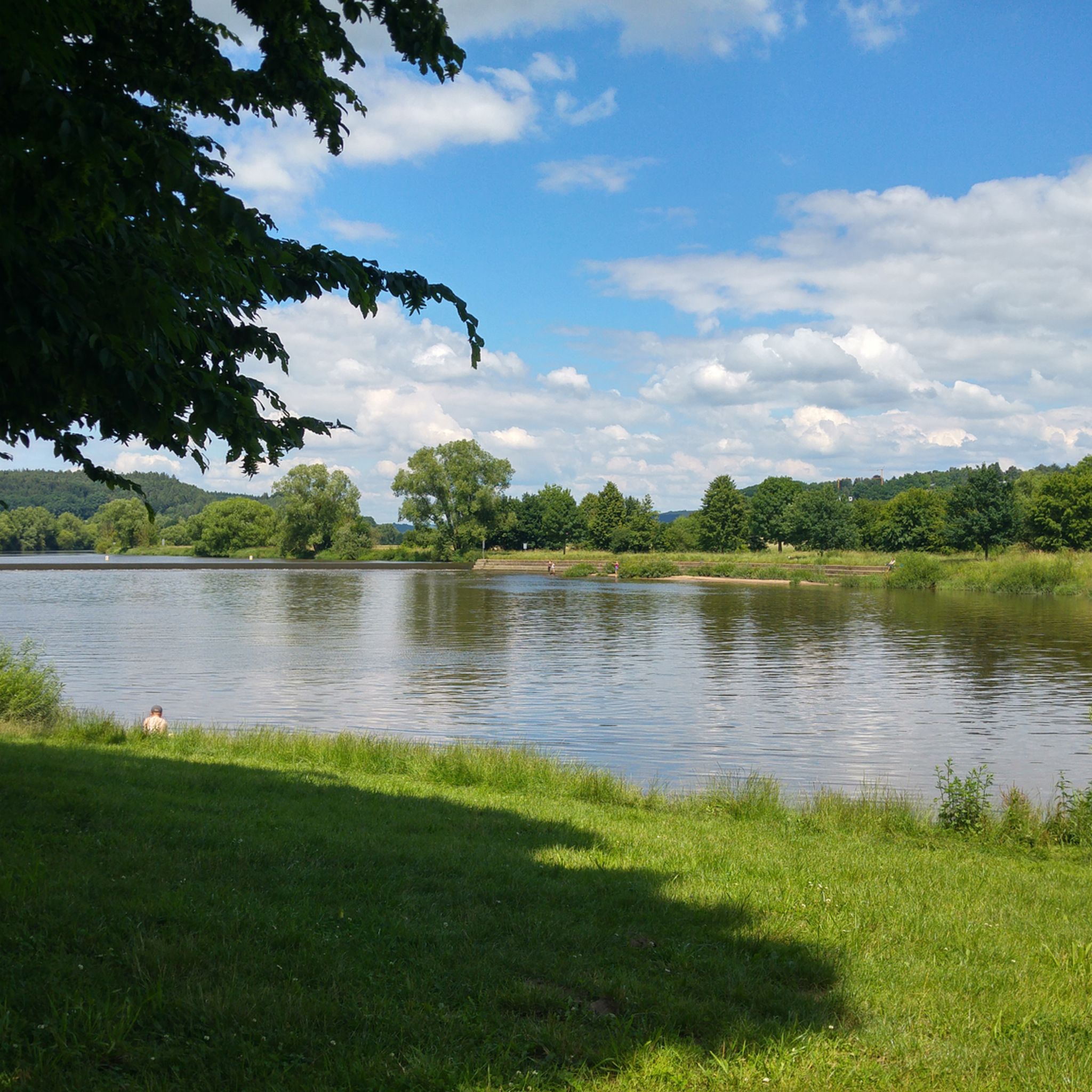
If the battery of the e-bike starts to run low, there is a free charging station opposite the lock, which really impressed me.
0
0

King Maximilian II had the Royal Villa built as a summer residence on the Ostenbastei between 1854 and 1856, designed by Ludwig Foltz. Today, it houses the Regensburg office of the Bavarian State Office for the Preservation of Historical Monuments.
2
1

The Villa Park, the eastern counterpart to the Herzogspark to the west and connected to it by the avenues surrounding the old town, owes its existence to none other than the Bavarian King Maximilian II. In 1852, he spent an extended period in Regensburg to stabilize his ailing health through supposedly healing Danube baths. At that time, he realized that there was no suitable accommodation for the royal family in the cathedral city and commissioned the architect and sculptor Ludwig Foltz to build a summer residence. The park is divided into three parts. The area to the east is still popularly known as the "Orphanage Garden" because it once served as a vegetable garden for the adjacent municipal orphanage. The park is visually divided by the former city moat. Finally, to the west is the actual front garden of the Royal Villa, which is also open to the public. The entire complex is owned by the Free State of Bavaria. The municipal gardening department maintains the park based on a 1981 agreement between the City of Regensburg and the Free State of Bavaria. Source: https://www.regensburg.de/leben/parks-in-regensburg/villapark
1
0

Few remains of the ruins, but very beautiful and photogenic.
0
0

Regendorf Castle The Lords of Regendorf, initially referred to as "Lords of Regeldorf", were first mentioned at the beginning of the 13th century. In 1490, Hans Regeldorfer of Regeldorf and Wolfsegg is entered in the Land Register. In 1475, he appears in the entourage of Duke Ludwig IX at the Landshut wedding. Hans Regeldorfer was married twice, he left behind two daughters and no male descendants, and so Regendorf passed into other hands as a male fief after his death. In 1515, the castle was rebuilt for the then owner, the Regensburg Imperial Mint Master Martin Lerch. He had to have a crucifixion group erected for the manslaughter of a mint clerk in 1513. This is now in the apse of the Minorite Church in Regensburg. In 1699, Franziska Adelheid von Braittenburg sold the Regendorf castle and manor to Philipp Anton Leopold Freiherr von Oberndorff, who came from the Upper Palatinate line of the Oberndorff family. They rebuilt the castle around 1840 and added a floor. In 1884, Regendorf Castle was sold to the Imperial Councilor Freiherr von Faber in Stein near Nuremberg and later to the Counts of Faber-Castell. In 1916, it was purchased from them by the royal Bavarian treasurer Eduard von Harnier. As the von Harnier family was known to the National Socialist authorities as anti-National Socialists, they had to vacate the castle in 1936 and sell it to the city of Regensburg. Regendorf Castle is a complex dating back to 1515 and consists of two parallel wings that are connected in the middle by an intermediate building. The main building is a three-story hipped roof building with an H-shaped floor plan. The eastern wing has two four-storey round towers and a garden staircase. The castle chapel at the north end of the east wing dates from 1688. The former stables are a two-storey stable barn with a half-hipped roof from 1830. Remains of the terraced landscape garden with staircase from the 18th century can be found to the west of the castle. The park enclosure, with a fence to the south, otherwise a stone wall with stone pillars, dates from around 1840. Source: Excerpts from www.wikipedia.de
2
0

The castle is gigantic. It is not open to the public. In winter there is a Christmas market with admission.
3
1
Heilsberg Castle Ruins In the last third of the 12th century, Ulrich and Wernhardus from Heilsberg appeared in documents for the first time. Since Ulrich's successor Ekbert, they were also vassals of Eggmühl and fiefs of the Bavarian duke. They were thus in the middle of the power struggle between the Wittelsbach dukes and the Regensburg bishops. In a contract, Duke Ludwig of Kelheim had to give up a castle that was already under construction near Heilsberg, which the Heilsbergers were obviously supposed to receive as a fief. Over the course of the 13th century, Ekbert and his son Ulrich repeatedly tried to use their bailiwick rights to alienate property from the bishop. The bishop accused them of forcing their subjects to perform unjust feudal labor in order to illegally expand their castle. In addition, the Heilsbergers had bloody feuds with the Paulsdorfers and with Konrad von Hohenfels. In the first third of the 14th century, the male line of Heilsberg died out, followed by a series of owners, including the powerful Upper Palatinate knightly family of Notthafft. It was not until around 1500 that the Wittelsbachs were finally able to take over the Heilsberg domain, and in 1505 it was assigned to the Palatinate-Neuburg line. The castle was probably already abandoned in the 16th century, and on Apian's map of 1568 it is already marked as a ruin. A local support group has recently been working to save the ruins. The most striking remains of the castle are the keep, which dates from around 1200 and has a side length of 7.5 meters with 2.5 m thick walls. This is evidenced by its masonry, which consists of smooth blocks and humped blocks with 5 to 10 centimetre wide edges; the ring wall fragment with the archway is so deep in the ground that it is almost impossible to date it. Among the later extensions to the castle that are known to have been made, there is also a new gate in 1498. In 1474, a new bridge and a new gate were built. In 1498, the castle was repaired after a fire, and work on the bower, the new parlor and the stables is known to have been carried out. Recently, the keep has been secured and renovated at great expense, and the buried interior of the tower has also been uncovered. The extremely deep, almost circumferential moat separates the castle grounds from the Heilsberg plateau on two sides. Source: Extracts from www.burgenseite.de / www./burgen/detail/burgruine-heilsberg/178
4
0

Somehow a mystical-looking place
0
0
Frequently Asked Questions
Which castles around Donaustauf offer the best panoramic views?
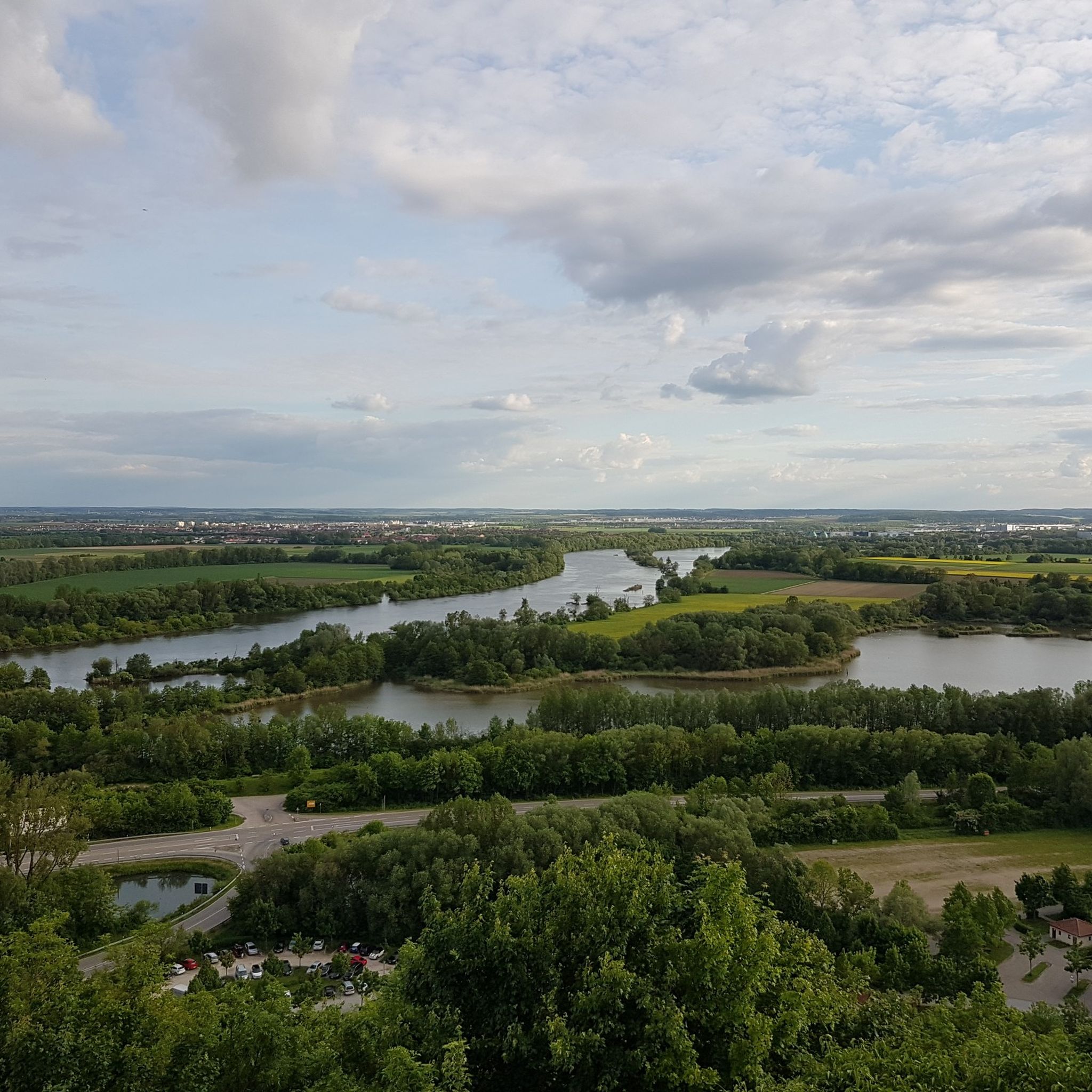
For breathtaking panoramic views, the Ruins of Donaustauf Castle are highly recommended. Perched on a hilltop 100 meters above the Danube, they provide stunning vistas of the river and the Bavarian countryside, especially beautiful at sunset. The Heilsberg Castle Ruins also offer a nice viewpoint.
Are there family-friendly castles to visit in the Donaustauf area?
Yes, the St. Emmeram Palace (Thurn and Taxis Palace) is noted as a family-friendly historical site. While the Ruins of Donaustauf Castle are free to enter and offer many nooks and crannies to explore, making them a great option for families with children and dogs.
What kind of historical insights can I gain from visiting Donaustauf Castle?
The Ruins of Donaustauf Castle offer a deep dive into centuries of history. It's the oldest documented castle in the Regensburg area, with fortifications dating back to 500 B.C. as a Celtic fort. You can explore remnants from the 11th century, see defensive structures like its six original gates (four still visible), and learn about its destruction by Swedish troops in 1634 during the Thirty Years' War. Informational signs on-site detail its eventful past.
Are there hiking trails that connect the castles around Donaustauf?
Yes, the Ruins of Donaustauf Castle are integrated into the Donaustauf Castle Trail (Donaustaufer Burgensteig), a 30-kilometer network of footpaths linking over 40 castles in the Regensburg Land. For specific routes, you can find various hiking options around Donaustauf, including loops connecting the castle ruins with the Walhalla Memorial. Explore more hiking routes on the Hiking around Donaustauf guide.
What outdoor activities are available near the castles in Donaustauf?
Beyond exploring the castles, the area around Donaustauf offers excellent opportunities for outdoor activities. You can find numerous routes for gravel biking and road cycling. For example, there are moderate to difficult gravel biking routes like the 'View of the Walhalla – Walhalla loop from Friesheim' and road cycling routes such as the 'Chinese Tower, Donaustauf – View of the Walhalla loop from Donaustauf'. Check out the Gravel biking around Donaustauf and Road Cycling Routes around Donaustauf guides for more details.
Is there parking available near the castles, especially Donaustauf Castle?
Yes, the Ruins of Donaustauf Castle are easily accessible with ample parking nearby. The journey to the castle involves a scenic, albeit steep, climb from the parking area.
What makes Kürn Castle unique, even in its ruined state?
Kürn Castle, originally built by the Lords of Kürn, was rebuilt in a classicist style after a fire in 1825. While only the moat remains from its medieval complex, it is notable for its large natural park featuring granite blocks and a rich beech population. It's a beautiful former castle, though not open for visits, and offers a small increase in elevation for those looking for a short climb.
Can I reach the castles around Donaustauf using public transport?
While specific public transport details for each castle are not provided, Donaustauf itself is generally accessible. For the Ruins of Donaustauf Castle, the ascent from the center of Donaustauf involves stairs, making it possible to integrate into a tour even without a car.
What is the best time of year to visit the castles in Donaustauf?
The castles, particularly the Ruins of Donaustauf Castle, offer stunning panoramic views that are particularly beautiful at sunset. Visiting during spring or autumn can provide pleasant weather for exploring the ruins and hiking the surrounding trails, avoiding the peak heat of summer or potential winter snow.
What are some lesser-known historical sites or 'hidden gems' among the castles?
While not a hidden gem in terms of being unknown, the Regendorf Castle offers a fascinating, albeit dark, history. Built in 1515, it has a complex past involving its original owner, Martin Lerch, who was implicated in a murder and used tombstones from a Jewish cemetery as building material. The castle has undergone several reconstructions and is now privately owned, consisting of two parallel wings with round towers and a castle chapel.
What do visitors appreciate most about the castles in Donaustauf?
Visitors frequently highlight the rich history and the stunning panoramic views offered by sites like the Ruins of Donaustauf Castle. The serene and uncrowded atmosphere, along with the accessibility and free entry, also contribute to a relaxing and enjoyable experience. The integration of the ruins with hiking trails is also a popular feature.
Most popular routes around Donaustauf
Most popular attractions around Donaustauf

Get inspired with the komoot mobile app


Explore more
Looking for the best castles somewhere else? Discover other guides around Donaustauf:
