The best MTB trails around Eggendorf
4.6
(1346)
5,910
riders
377
rides
Mountain biking around Eggendorf offers diverse terrain within the Wiener Alpen, making it an excellent destination for outdoor enthusiasts. The region features varied landscapes, including vineyard hills, elevated areas with panoramic views, and historic waterways like the Wiener Neustädter Kanal. These natural features provide a range of mountain bike routes suitable for different preferences and skill levels.
Best mountain bike trails around Eggendorf
- The most popular mountain bike trail is Marchgraben Valley Trail – Vineyard Hills Near Winzendorf loop from…
Last updated: November 3, 2026
4.5
(2)
20
riders
46.0km
03:53
530m
530m
Moderate mountain bike ride. Good fitness required. Advanced riding skills necessary.
4.0
(2)
29
riders
27.0km
01:28
110m
110m
Easy mountain bike ride.

5.0
(1)
13
riders
35.7km
03:04
570m
570m
Hard mountain bike ride. Good fitness required. Advanced riding skills necessary. Some portions of the route may require you to push your bike.
5.0
(4)
11
riders
43.6km
02:52
100m
100m
Moderate mountain bike ride. Good fitness required. Advanced riding skills necessary.
4.5
(2)
7
riders
Moderate mountain bike ride. Good fitness required. Advanced riding skills necessary.
Get access to more routes and recommendations from other explorers.
Already have an account?
Our route recommendations are based on thousands of hikes, rides, and runs completed by other people on komoot.
Start today with a free account
Your next adventure awaits.
Tips from the Community

The Schlössl Wöllersdorf was built at the end of the 17th or beginning of the 18th century as a stately manor house. It served primarily as a representative residence and administrative headquarters for the operators of the local iron and metal processing industry. Overview of the historical milestones: • Expansion into a castle (18th century): The industrialist Ferdinand Schmid took over the property, generously expanded the building, and gave it its characteristic castle-like appearance with baroque vaulted forms. • The Wöllersdorf Mint (from 1759): The building became a central economic hub. On behalf of the Vienna Mint, blanks (flans) for state coin minting from silver and copper were produced here in an attached copper hammer mill. • Use in the 19th and 20th centuries: After the end of coin blank production, the building changed owners several times and was used primarily as a residential and administrative building, while the surrounding Wöllersdorf region grew into an important center of the armaments industry (Wöllersdorfer Werke). • Municipal center (since 1998): The municipality of Wöllersdorf-Steinabrückl bought the castle, which was in need of renovation, in 1998. After a comprehensive revitalization (2000–2002) including a modern extension, it is used today as a public community center.
0
0
The Höhlturm ruin was built in the second half of the 15th century and served as a high medieval defensive structure. Unlike classic castles, it was not a permanent residence for the nobility, but a purely functional fortification. The most important stages of its history: • Strategic security (15th century): The tower was built to monitor and secure the strategically important entrance to the Piestingtal valley. At the same time, it protected access to the cave located directly behind it. • Place of refuge during enemy incursions: In the crisis times of the late Middle Ages and the early modern period (e.g., during the Turkish wars), the facility served as a refuge for the local population. If the defense at the tower collapsed, the population retreated into the underground cave system. • Decay into ruins: With the change in warfare and the increasing pacification of the region, the facility lost its military significance. It was left to itself and decayed into ruins over the centuries. • Rescue and monument protection (1994): To save the historical landmark from final collapse, the ruin was extensively renovated in 1994 and secured as a historical monument.
0
0

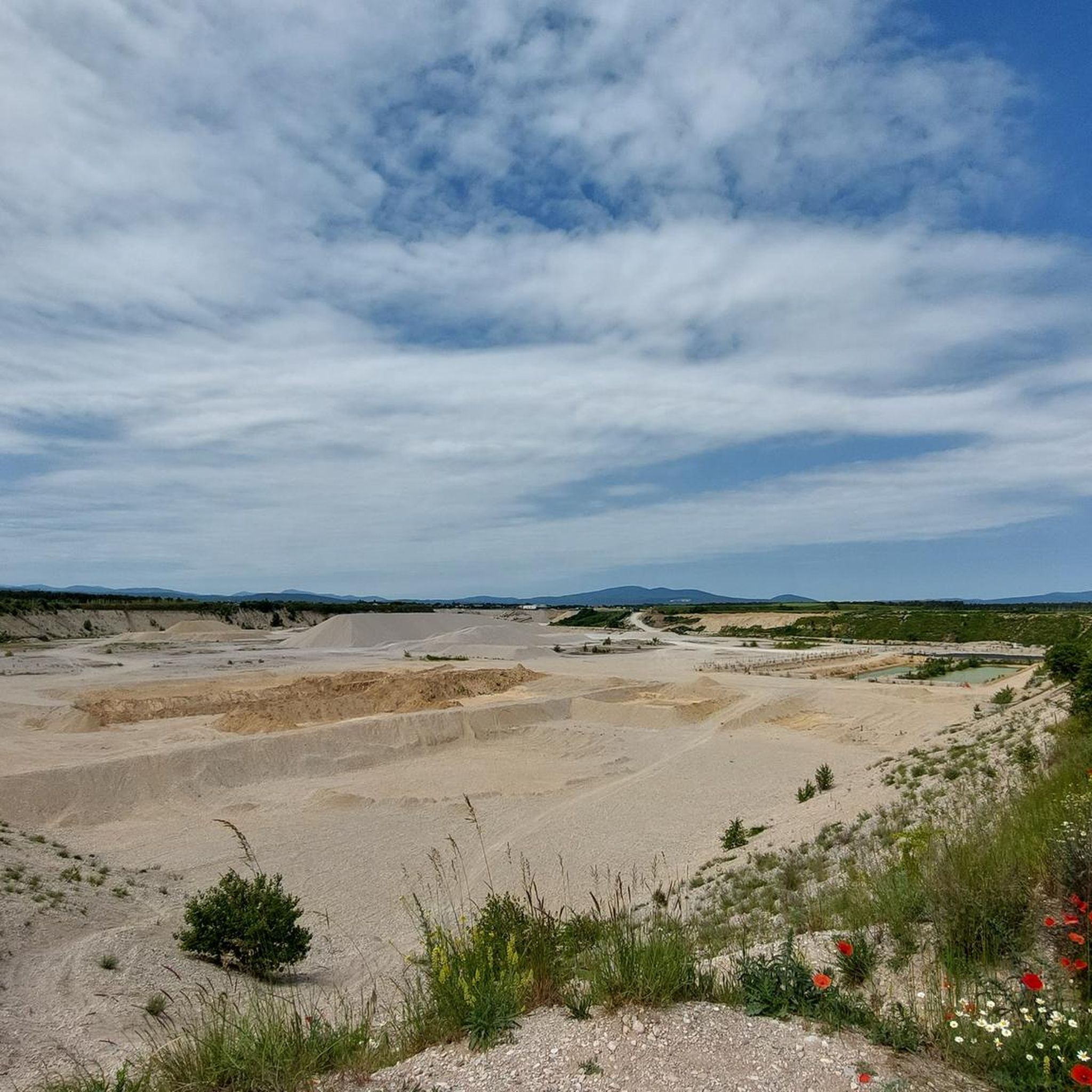
The Marchgraben-Talweg trail runs through the region of Bad Fischau as a scenic and natural path. It is popular with hikers and mountain bikers for excursions into the surrounding nature and the Fischauer Vorberge foothills. This section of the route offers a good opportunity to get some exercise while immersing yourself in the peaceful forest landscape.
1
0
The Karolinenruhe in the Fischauer Vorbergen is a small cave or grotto, located not far from Bad Fischau. According to tradition, the original name goes back to the tragic fall of a girl at this spot. Around 1900, the site was converted into a place of worship by Josef Bratsch as a result of a vow.
1
0
The "Schlössl" in Wöllersdorf, built as a manor house around the turn of the 18th century and later expanded in a castle-like manner, once served as a production site for silver and copper coin plates. After being acquired by the municipality in 1998, the building was extensively renovated and extended with a modern annex. Today, the historic estate houses municipal apartments, the local library, event rooms, and a small museum.
1
0

The urge to "immerse oneself in nature" is not a modern fad that we humans of the 21st century are letting ourselves be led into – for example, with the komoot tour planner – but rather is based on much older behavioral patterns and the ancient knowledge that it simply does us good. Even in a "memo book" written by Peter Rosegger (1843 to 1918), the exhortation reads: "We must once again properly seek out our healthy limbs and immerse ourselves in nature, rediscovering within ourselves the lost strengths that are ours. ... This makes you fresh, this makes you strong, and this makes you wise. You learn a lot from it, especially how to live simply and become cheerful."
0
0

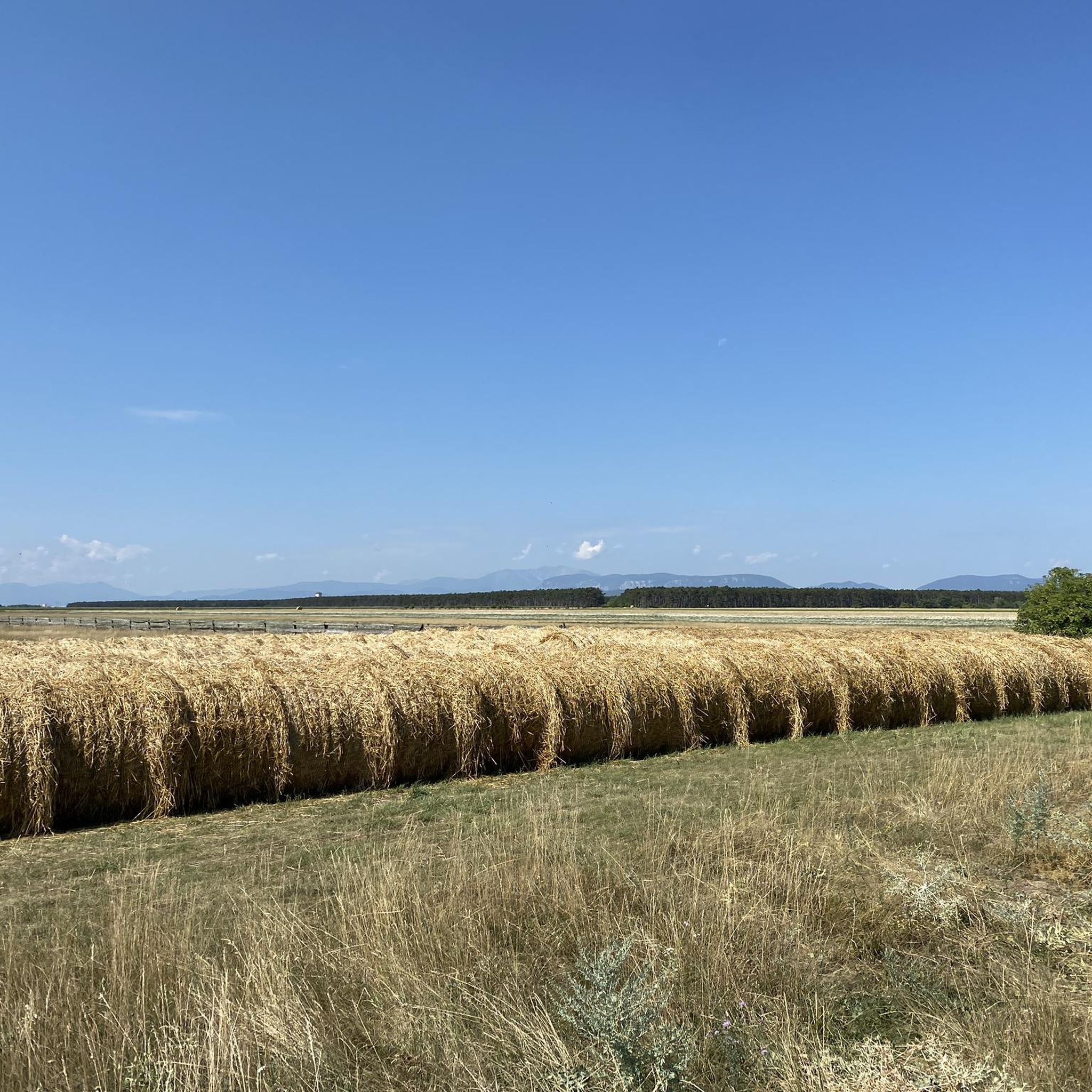
On Sunday mornings in the warm season, it is also managed gastronomically.
2
0
The border guard house in Neudörfl, rebuilt in 1994, is a historical monument at the former crossing from Trans- to Cisleithania (Hungary/Austria). It is located about 150 meters east of the middle of the Leitha river and recalls the time when the place was a border station.
3
0
Frequently Asked Questions
How many mountain bike trails are available around Eggendorf?
There are over 400 mountain bike tours around Eggendorf listed on komoot, catering to various skill levels. This includes 68 easy routes, 290 moderate routes, and 51 difficult routes, ensuring options for everyone from beginners to advanced riders.
What types of landscapes can I expect on mountain bike trails in Eggendorf?
Mountain biking around Eggendorf offers diverse terrain within the Wiener Alpen. You'll encounter varied landscapes such as vineyard hills, elevated areas with panoramic views, and historic waterways like the Wiener Neustädter Kanal. The region also features natural monuments, caves, and lakes, providing a scenic backdrop for your rides.
Are there any easy mountain bike trails suitable for beginners in Eggendorf?
Yes, Eggendorf offers 68 easy mountain bike routes. An excellent option for beginners is the Cave Tower – Piestingtal Cycle Path loop from Felixdorf, which is 16.8 miles (27.1 km) long and leads through the Piestingtal valley with minimal elevation gain.
Are there any mountain bike trails with significant climbs or challenging terrain?
For those seeking a challenge, Eggendorf has 51 difficult mountain bike routes. The Stream Crossing – Marchgraben Valley Trail loop from Felixdorf is a difficult 35.6 miles (57.4 km) route with over 570 meters of elevation gain, offering a more demanding experience.
What kind of natural features or landmarks can I see along the mountain bike trails?
Many trails pass by interesting natural features and historical sites. You might encounter natural monuments like Steinerner Stadl or explore caves such as Eisenstein Cave. The region also features historic canals and offers views of mountain peaks.
Are there any castles or historical sites accessible by mountain bike?
Yes, the region around Eggendorf is rich in history. You can find impressive structures like Kottingbrunn Castle, a great moated castle with a museum, or Pottendorf Castle. These can make for interesting stops during your ride.
Are there any mountain bike routes that offer panoramic views?
Absolutely. The Mitterriegel – Steinkogel Lookout Tower loop from Untereggendorf is a moderate 30.8 miles (49.6 km) route that includes climbs to a lookout tower, providing expansive and breathtaking views of the region.
What is the best time of year for mountain biking in Eggendorf?
The Wiener Alpen region, where Eggendorf is located, is generally excellent for outdoor activities. Spring through autumn typically offers the most favorable weather conditions for mountain biking, with pleasant temperatures and lush scenery. While specific winter conditions vary, some trails might be accessible, but it's always best to check local conditions.
Are there any circular mountain bike routes in Eggendorf?
Many of the mountain bike routes around Eggendorf are designed as loops, allowing you to start and end at the same point. For example, the Marchgraben Valley Trail – Vineyard Hills Near Winzendorf loop from Felixdorf is a popular 29.8 miles (48.0 km) circular trail exploring vineyard hills and valley paths.
What do other mountain bikers say about the trails in Eggendorf?
The mountain bike trails in Eggendorf are highly rated by the komoot community, with an average score of 4.6 stars from over 1,100 reviews. More than 6,000 mountain bikers have explored the varied terrain, often praising the diverse landscapes, from vineyard hills to scenic valley paths, and the range of options for different skill levels.
Are there any places to eat or drink along the mountain bike trails?
While specific cafes or pubs directly on every trail are not detailed, the region around Eggendorf offers various amenities. The At the Elm Snack Bar – Leitha Covered Bridge loop from Untereggendorf mentions a snack bar, indicating that some routes may have refreshment stops. Additionally, towns and villages in the Wiener Alpen often have local eateries and accommodations.
Are there family-friendly mountain bike trails in Eggendorf?
Yes, with 68 easy routes available, there are plenty of options suitable for families. These trails typically feature less challenging terrain and shorter distances, making them enjoyable for riders of all ages. The Piestingtal Cycle Path, for instance, offers a gentle ride through a scenic valley.
Most popular routes around Eggendorf
Most popular attractions around Eggendorf

Get inspired with the komoot mobile app


Explore more
Browse the best MTB trails in other regions.
