Top 20 Castles in Landkreis Amberg-Sulzbach
Best castles in Landkreis Amberg-Sulzbach offer a journey through the region's rich history, from medieval fortifications to stately homes. Located in Bavaria, Germany, this area features a diverse landscape that provides a scenic backdrop for historical exploration. Many sites are nestled within the Bavarian Jura, offering panoramic views and opportunities for outdoor activity. The castles and ruins here reflect centuries of architectural and cultural development.
Best castles in Landkreis Amberg-Sulzbach
- The most popular castles is Lichtenegg Castle Ruins, a castle that is freely accessible and offers views across the Bavarian Jura to the Fichtel Mountains. The ruin has been restored and features information panels with archaeological finds.
- Another must-see spot is Poppberg Castle Ruins, a castle located on the highest elevation in the Franconian Alb. This well-preserved ruin includes a residential building from the period after 1300.
- Visitors also love Breitenstein Castle Double Chapel, a religious building that once belonged to Breitenstein Castle. It is the only two-storey double chapel from the Romanesque era in the Upper Palatinate.
- Landkreis Amberg-Sulzbach is known for castle ruins, preserved castles, and historical palaces. The region offers a variety of sites, from medieval strongholds to later Baroque structures, many of which are integrated into hiking routes.
- The castles in Landkreis Amberg-Sulzbach are appreciated by the komoot community, with more than 1,100 upvotes and over 1,600 photos shared across 42 highlights.
Last updated: May 11, 2026
Lichtenegg Castle Ruins
Highlight • Castle
Translated by Google •
Tip by

Breitenstein Castle Double Chapel
Highlight • Religious Site
Translated by Google •
Tip by

Sign up now to discover places like this
Get recommendations on the best single tracks, peaks, & plenty of other exciting outdoor places.
Sign up for free
Oberes Schloss Schmidmühlen (Town Hall)
Highlight • Castle
Schmidmühlen is a recognized climatic health resort. Here you will find cozy overnight accommodations and a good selection of inns.
Translated by Google •
Tip by

Neidstein Castle
Highlight • Castle
Translated by Google •
Tip by
Kastl Monastery Castle
Highlight • Castle
Translated by Google •
Tip by

Hartenfels Summit and Castle Ruins
Highlight • Summit
Translated by Google •
Tip by
Ziegeltor, Amberg
Highlight • Monument
The Gothic tower was raised in 1581, it is flanked by two semicircular battery towers, and was repaired again in 1888.
Today it is the headquarters of a youth organization.
Translated by Google •
Tip by

Poppberg Castle Ruins
Highlight • Castle
Translated by Google •
Tip by
Schweppermannsburg castle ruins, Pfaffenhofen
Highlight • Castle
After extensive renovation by the Bavarian state, the castle complex has been under the administration of the Amberg Section of the German Alpine Club since 1965 and serves as a youth and hiking base.
The outer bailey of the Schweppermannsburg is freely accessible at all times, the main castle with the keep is usually not accessible.
If you want to take a look inside, you should contact the Amberg section of the German Alpine Club. Here you can also find out the date for the annual castle festival (usually in May or June) with a field fair and subsequent catering.
Translated by Google •
Tip by

Rossstein Castle Ruins
Highlight • Castle
Roßstein is located near Schmidmühlen and Hohenburg in the middle of the lonely Taubenbacher Forest.
Chunrad Oerelheimer named himself after the castle for the first time in 1331, so he could be the builder. At that time it was conveniently located on the Bistumer Steig, a trade route from the Eger region. In 1357 the castle came to Rüdiger Punzinger, who was in the service of the Wittelsbach Count Palatine, as a dowry to a daughter of Konrad.
Rüdiger made a career and became a nurse in Hohenfels around 1375. After his death, his brother Georg Punzinger succeeded him in 1381 - a pugnacious spirit. He came into conflict with the city of Regensburg around 1400: Apparently he housed shady rabble in his castle, who had repeatedly attacked Regensburg merchants on the street. In the course of this feud, the castle was set on fire by the Regensburgers in 1411, but was rebuilt by Andreas Punzinger. Nevertheless, the Punzinger did not lose their important position.
However, the family gradually loses interest in the now remote Roßstein Castle. The Counts Palatine want to buy Roßstein back from the last Punzinger named Mathes, but he refuses. After his death, Roßstein was only inspected by a forester from the Palatinate. In 1550 it caught fire due to carelessness. Lienhart Spieß, appointed as administrator in 1563, no longer renews it, but resides in the Spießhof, which still exists today, at the foot of the castle hill. Since then decay up to our days, around 2000 securing of the remains.
The main castle consists of a large, almost rectangular residential tower made of quarry stone. The corners are made of ashlars, one can even find a few hump ashlars. The residential tower has a vaulted basement, a low ground floor with light slits and two spacious upper floors with windows and two head-high, vaulted entrances. Access to the east could be blocked with a locking bar.
Even if the castle ruins are rather small, a visit is worthwhile, especially if you combine it with a hike through the beautiful Taubenbach valley and the lonely Taubenbach forest. Far away from major roads, the Upper Palatinate Jura can be experienced in a unique way.
Source: Excerpts from Burgen-seite.de
Translated by Google •
Tip by

Sign up for free to discover even more castles in Landkreis Amberg-Sulzbach.
Sign up for free
Already have an account?
Start today with a free account
Your next adventure awaits.
Login or Signup
Popular around Landkreis Amberg-Sulzbach
Bavaria-Bohemia long-distance cycling trail – Crossing borders
Jurasteig — hiking in the heart of Bavaria
Five Rivers Cycle Path — 5 stages along Bavaria's most beautiful rivers
The National Natural Landscapes in Bavaria
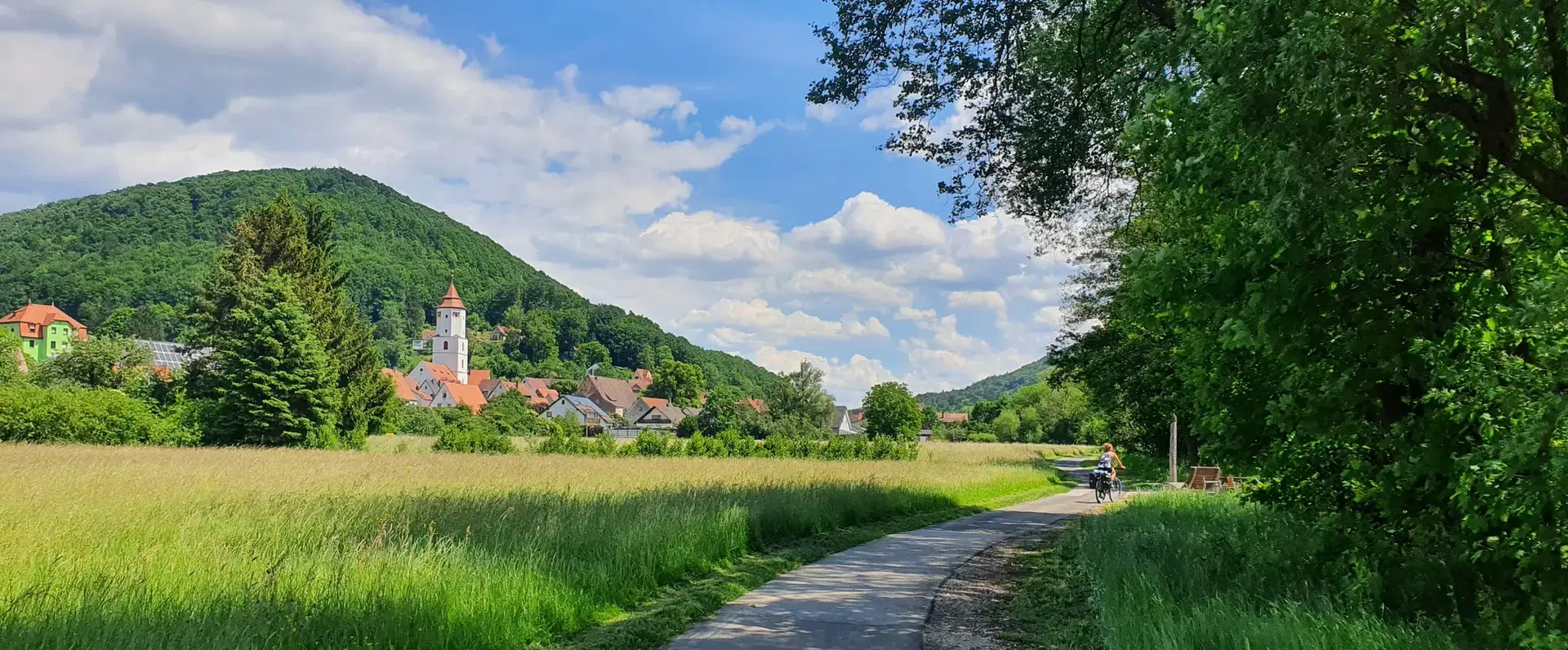
Cycling through the Nuremberg metropolitan region – nature & enjoyment
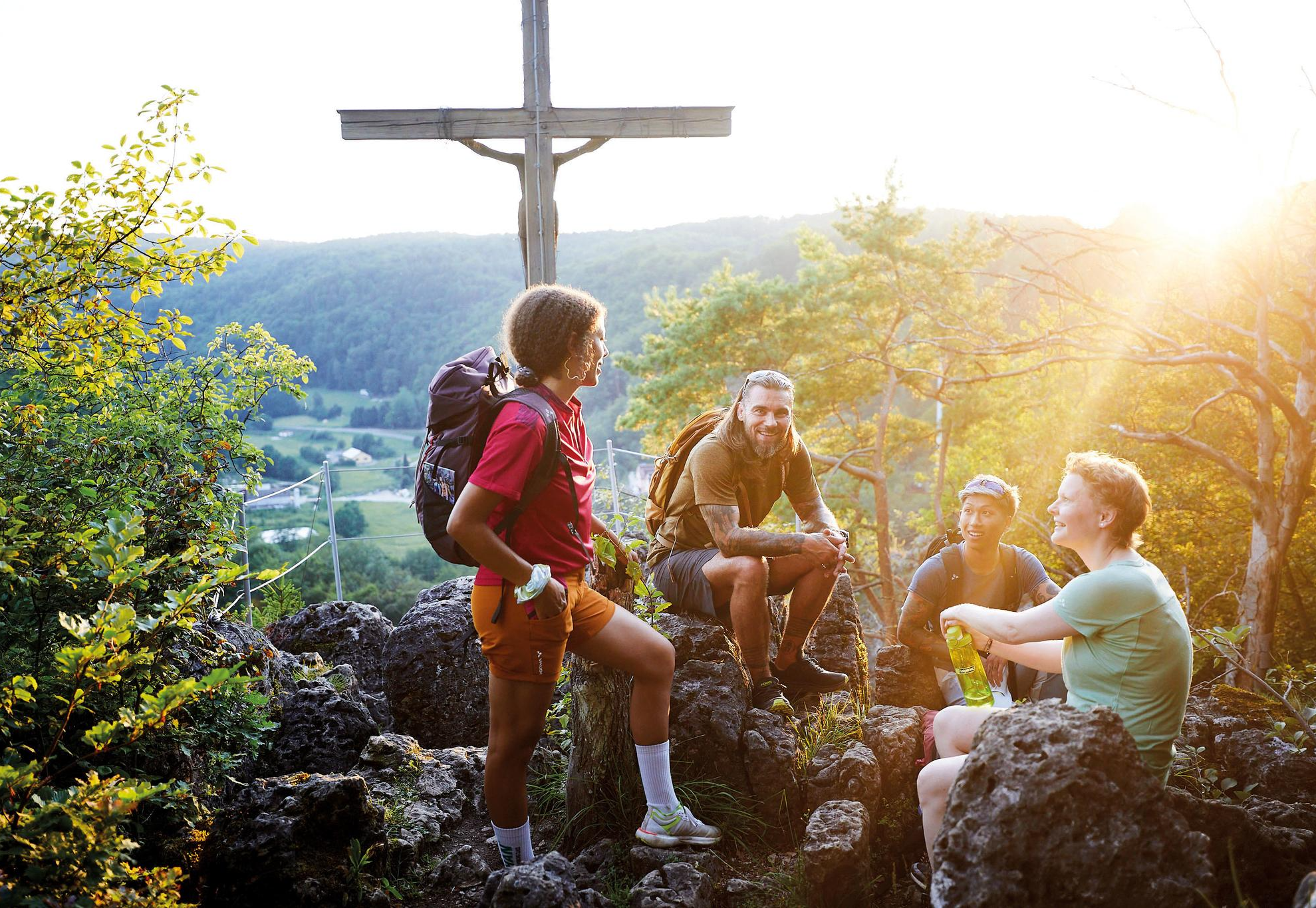
City, country, lake – VGN leisure tips 2025
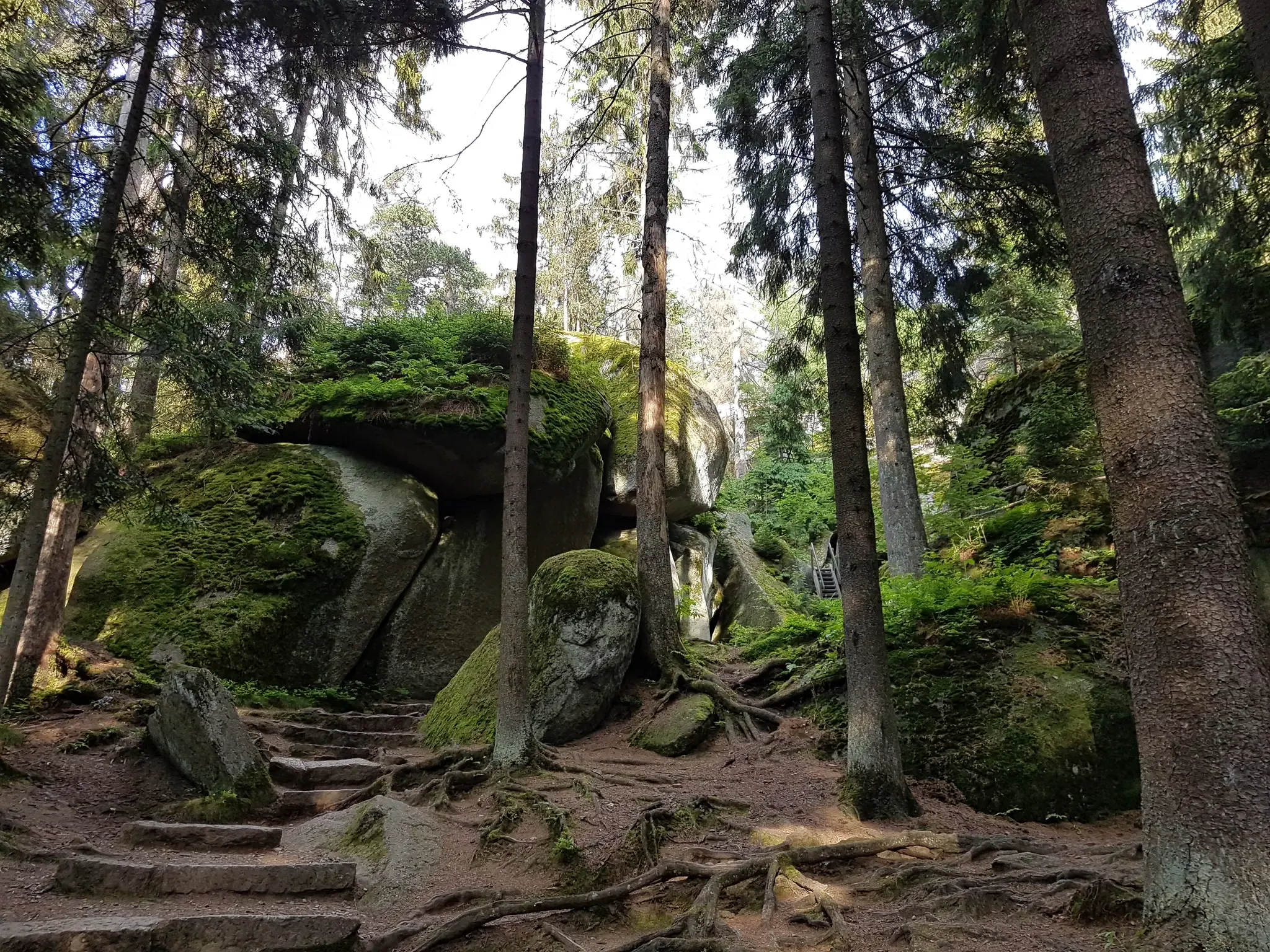
Nature, the outdoors and adventure – hiking through the VGN's nature parks
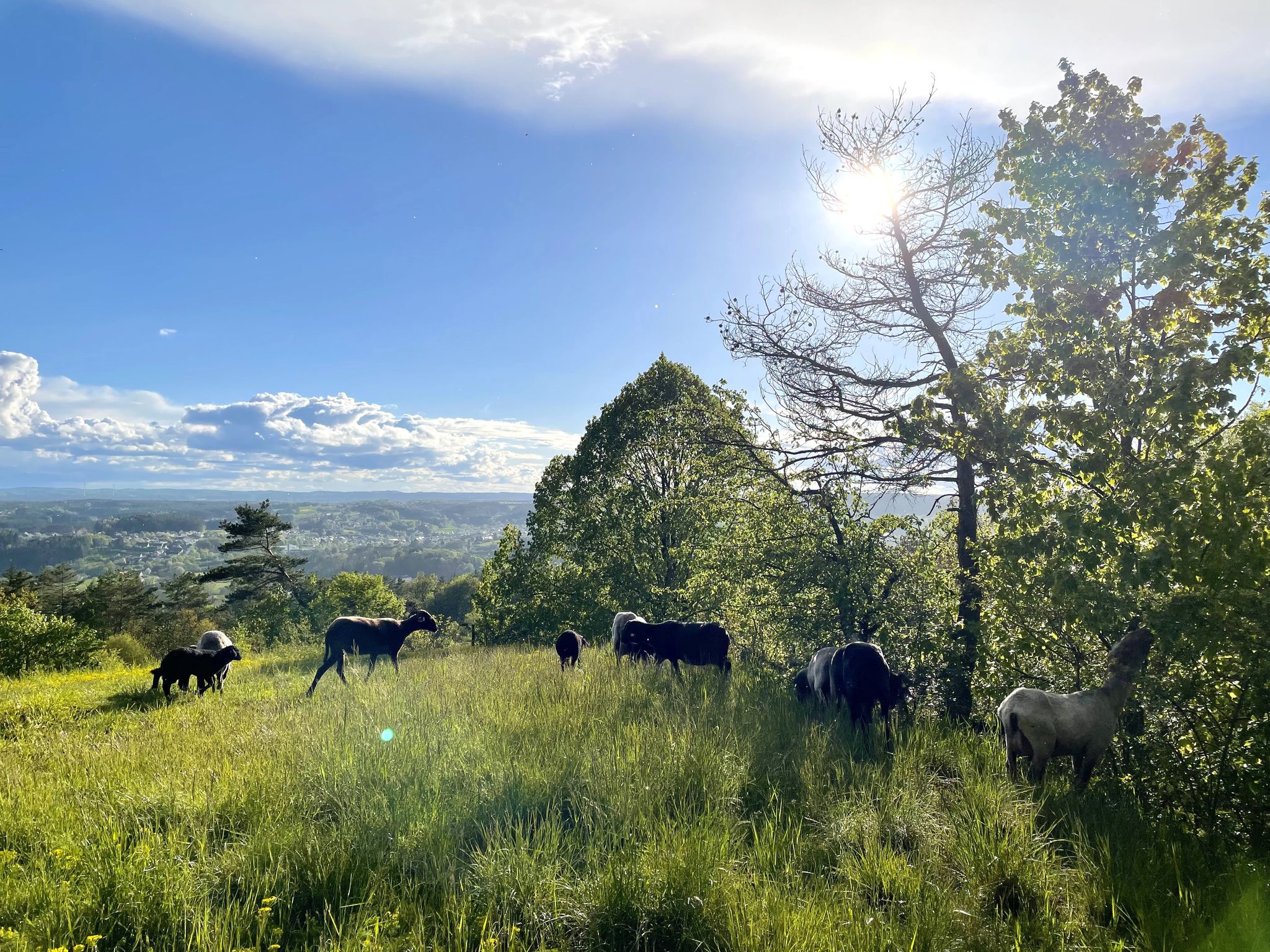
11 Days on the Erzweg Quality Hiking Trail
All aboard for summer hiking with Germany’s VGN
Full of views and fun – VGN leisure tips 2022
Other adventures in Landkreis Amberg-Sulzbach


Tips from the Community

An old hilltop castle, long used as a monastery by various religious orders. Today it houses the police academy. It lies on a dolomite spur above the valley. This is also where the "Hochholz Trail" begins, which is not to be missed.
0
0

The Kastl castle complex has towered over the Lauterach Valley since the 10th century. In 1098, it was decided to convert the castle into a monastery. Description: It was founded in 1103, and the choir and St. Egidius Chapel were consecrated in 1129. Construction of the monastery church was completed at the end of the 12th century. Through constant renovations and expansions, the church acquired its present appearance. In 1782, it became the property of the Knights of Malta. The basilica has been used as a parish church since 1808. A late Gothic main portal, a four-bay barrel vault, the alternating support of columns and pillars in the nave, and the Gothic stone tomb in the vestibule, which was once the tomb of the deceased Princess Anna, make the church a true gem. Princess Anna was the daughter of King Ludwig the Bavarian and died in 1319. The mummy of the one-and-a-half-year-old "Kastl Child" was preserved until the end of 2013 and can be viewed again. The antechamber also houses the sarcophagus of General Schweppermann. [ Source: https://www.ostbayern-tourismus.de/attraktionen/klosterburg-kastl-fd22a56fae ]
1
0

Very beautiful monastery castle currently serves as a police training center
0
0

Poppberg Castle Ruins It is difficult to determine from the sources when the castle was built. It is particularly unclear whether the mentioned castles and lords of the "Puchberg," "Puckberg," or "Pocksberg" are identical with the Poppbergs. A coat of arms of the "Pocksberg" appears in the Kastl monastery church in the row of founders' coats of arms on the south side of the nave. It can be assumed that the castle was founded to control the "high road" from Prague to Nuremberg, perhaps even under the Counts of Sulzbach, who ruled until 1188. In any case, the village of Poppberg is mentioned as belonging to the Fürnried parish as early as 1139. However, the castle's existing buildings show no signs of such an early foundation; they are more consistent with the period after 1300, when tower-like residential buildings became fashionable. The first truly confirmed reference to the castle appears in 1373, when the so-called New Bohemian Lands of Emperor Charles IV passed into the hands of the Bavarian duke. Poppberg was part of this Bohemian territory on Upper Palatinate soil, founded by Charles in 1353, but dissolved after his death. The Bavarian dukes pawned the castle to their Palatinate relatives in 1395, but redeemed the pledge in 1451. What seems odd is that two years later the castle is described as "deserted and desolate," meaning it was already abandoned. In 1505, after the Landshut War of Succession, Poppberg passed to the Duchy of Palatinate-Sulzbach, and in 1791 to Bavaria, but remained abandoned and fell into disrepair until the present day. The entrance to the castle is protected by a narrow tower on a pointed rock formation that forms the highest point of the castle. The upper part of the tower is occupied by a recently built, concreted shelter, which served as an air observation post during World War II. A circular wall adjoins the rock formation, forming a clearly visible edge of the terrain and extending extensively around the entire area. Traces of soil near the entrance suggest several utility buildings. The most impressive part of Poppberg is the residential building, a typical late medieval mixture of residential tower and palace dating from after 1300. The lower floor of the building probably served as a pantry and kitchen. The second floor is much more residential, with larger windows and two large entrances leading to the former battlements on either side. A third floor is suspected. Source: www.burgenseite.de
5
0


Great monastery castle with an amazing view - be sure to take the small juniper hiking trail!
0
0

Very beautifully designed castle
0
0
Burgstall Hartenfels The site of the abandoned spur castle is located in the Middle Franconian Jura, on a southwest-facing rocky spur of the Great Hartenfels at 530.6 m above sea level. The castle was probably built during the 13th century by the Lords of Neidstein, but there is no mention of the castle itself. It is only mentioned indirectly in a document dated February 21, 1268, in the name of Heinrich von Hertenvels. In addition to the high medieval fortification on the Hartenfels, there are also the remains of a prehistoric structure at the same location. A long section of the rampart, about half a meter high, has been preserved, which arches around the mountain spur outside the moat of the medieval castle and thus sealed it off. Today, the site of the former castle is completely overgrown with forest, and only two ditches and the remains of the foundation walls of the former ring wall have survived. The former hilltop castle was once divided into two areas, an outer bailey at the transition from the spur to the flat summit area or plateau of the Hartenfels, and a main castle at the rocky tip of the mountain spur, in the best protected place by nature. The outer bailey was protected by a two-meter-deep and about ten-meter-wide moat. The area of the outer bailey is irregularly shaped, as it was adapted to the rocky terrain between the plateau and the rocky spur. As it was easily attacked from the plateau, it had to be protected on its north-east side by a strong wall, of which a 4.50-meter-wide and one-meter-high rampart still remains. Approximately in the middle of this rampart, a 3.80-meter-wide break gives an idea of the former entrance to the castle, and even today you enter the castle grounds at this point. The main castle has a trapezoidal area about 50 meters long and 25 meters wide. On its west and south sides it is well protected by the vertical drop of the rocks by several meters and the steep eastern slope also offered sufficient protection. Only at the northwest corner is a small remnant of a wall still visible above ground. There are no further traces of construction on the flat surface of the main castle, apart from an almost square pit in the middle of the area. This pit measures 4 by 3.50 meters and could be the remains of a cistern or a cellar room. Source: Excerpts from www.wikipedia.de
2
0
Frequently Asked Questions
Are there hiking trails around the castles in Landkreis Amberg-Sulzbach?
Yes, many castles in the region are integrated into hiking routes. For example, the Lichtenegg Castle Ruins are a popular destination for hikers, offering stunning views. You can find various hiking options, including easy and moderate trails, in the Hiking in Landkreis Amberg-Sulzbach guide, which features routes like the "Hansel and Gretel Rocks – Turk's Rock loop from Burgruine Lichtenegg".
How much time should I plan for visiting the castles in this region?
The time needed varies depending on the castle. For ruins like Lichtenegg Castle Ruins or Poppberg Castle Ruins, you might spend 1-2 hours exploring and enjoying the views. Larger sites like Schloss Theuern, which houses the Mining and Industrial Museum, could easily take half a day to fully experience the exhibitions and industrial monuments.
Are there family-friendly castles in Landkreis Amberg-Sulzbach?
Absolutely. Many castles, especially those with accessible ruins and scenic surroundings, are great for families. The Lichtenegg Castle Ruins are freely accessible and have tables and benches for resting, making them suitable for a family outing. Oberes Schloss Schmidmühlen (Town Hall) is also listed as family-friendly and offers facilities.
What kind of historical insights do the castles offer?
The castles provide a deep dive into the region's past. Sites like Burgruine Lichtenegg, first documented over 700 years ago, showcase medieval aristocratic life and later reconstructions. Schloss Theuern, now the Mining and Industrial Museum, offers unique insights into East Bavaria's industrial heritage, once known as the 'Ruhr area of the Middle Ages' due to its rich ore deposits.
Can I visit castles that are still well-preserved or only ruins?
Landkreis Amberg-Sulzbach offers a mix of both. You can explore extensive ruins like Poppberg Castle Ruins, which are well-preserved and offer a magical feel. On the other hand, the Electoral Palace in Amberg, though partially rebuilt, stands as a significant historical building, and Schloss Theuern is a preserved late Baroque castle now housing a museum.
Are there any castles with unique architectural features?
Yes, the region boasts unique architectural elements. The Electoral Palace in Amberg is notable for its connection to the Zeughaus (armory) across the Vils river via the fortified bridge known as the "Stadtbrille" (city spectacles). Also, the Breitenstein Castle Double Chapel is particularly unique as the only two-storey double chapel from the Romanesque era in the Upper Palatinate.
What outdoor activities can I do near these castles besides hiking?
Beyond hiking, the region offers excellent cycling opportunities. You can find routes like the "Burgenland cycle with culinary delights" or the "Lauterachtal Cycle Path loop from Utzenhofen" in the Cycling in Landkreis Amberg-Sulzbach guide. These routes often pass by or near historical sites, combining outdoor activity with cultural exploration.
Are there any castles that offer panoramic views?
Many castles in the region are situated to provide excellent views. The Lichtenegg Castle Ruins are renowned for their magnificent panoramic views across the Bavarian Jura to the Fichtelgebirge. Similarly, Poppberg Castle Ruins, located on the highest elevation in the Franconian Alb, also offers impressive vistas.
What do visitors enjoy most about the castles in Landkreis Amberg-Sulzbach?
Visitors frequently appreciate the combination of historical exploration and natural beauty. The freely accessible ruins with stunning views, like those at Lichtenegg, are highly praised. The well-preserved nature of sites like Poppberg, offering a 'magical feel,' also resonates with visitors. The opportunity to combine castle visits with hiking and cycling in picturesque landscapes is a major draw.
Are there any castles that are privately owned and not publicly accessible?
Yes, some castles in the region are privately owned and not open to the public. For instance, Neidstein Castle, once owned by actor Nicolas Cage, is currently privately owned and cannot be visited inside. However, the surrounding area still offers beautiful hiking trails where you can admire its exterior.
Can I find food and drink options near the castles?
Yes, some castle locations offer nearby amenities. For example, directly below the Lichtenegg Castle Ruins, there is a traditional inn, the Alter Schloss-Wirt Lichtenegg, which serves regional specialties and has a beer garden. Kastl Monastery Castle also has a cafe on-site.
What is the best time of year to visit the castles?
The castles are generally enjoyable year-round, but spring, summer, and early autumn offer the most pleasant weather for exploring the outdoor ruins and hiking trails. During these seasons, the views are often clearest, and nearby inns and cafes are typically in full operation. Winter can offer a unique, serene experience, especially for walks, but some facilities might have reduced hours.
Most popular routes in Landkreis Amberg-Sulzbach
Most popular attractions in Landkreis Amberg-Sulzbach

Get inspired with the komoot mobile app


Didn’t find what you were looking for?
Explore Landkreis Amberg-Sulzbach’s best castles region by region:
Explore more
Looking for the best castles somewhere else? Discover other guides in Landkreis Amberg-Sulzbach:
