Attractions and Places To See in Halle-Saale-Unstrut - Top 20
Best attractions and places to see in Halle-Saale-Unstrut are found in central Germany, a region characterized by its historical landmarks, cultural sites, and scenic natural features. The area is known for its ancient astronomical sites, medieval cathedrals, and the Saale-Unstrut wine region. Visitors can explore a diverse range of attractions along the Saale and Unstrut rivers.
Best attractions and places to see in Halle-Saale-Unstrut
- The most popular attractions is Naumburg Cathedral of St. Peter and St. Paul, a religious…
Last updated: August 3, 2026
Ducal Vineyard below Neuenburg Castle
Highlight • Structure
High above the wine-growing town of Freyburg lies Neuenburg, the sister castle of Wartburg, founded around 1090 by the Thuringian Count Ludwig the Springer. The first mighty …
Translated by Google •
Tip by

Vines on the Saalberge
Highlight • Natural
Showing Translation
Tip by

Sign up now to discover places like this
Get recommendations on the best single tracks, peaks, & plenty of other exciting outdoor places.
Sign up for free
Confluence of the Saale and Unstrut Rivers
Highlight • River
Translated by Google •
Tip by

Marina Mücheln on Lake Geiseltal
Highlight • Structure
Translated by Google •
Tip by

View of Marina Braunsbedra on Lake Geiseltal
Highlight (Segment) • Viewpoint
Translated by Google •
Tip by

Geiseltalsee Beach
Highlight • Beach
Translated by Google •
Tip by
Reiferts Vineyard at Geiseltalsee
Highlight • Restaurant
Translated by Google •
Tip by

Rudelsburg
Highlight • Castle
Translated by Google •
Tip by

Peissnitz Bridge
Highlight • Bridge
Translated by Google •
Tip by

Saaleradweg Vineyards and Castle Ruins
Highlight • Cycleway
Translated by Google •
Tip by

Sign up for free to discover even more attractions in Halle-Saale-Unstrut.
Sign up for free
Already have an account?
Start today with a free account
Your next adventure awaits.
Login or Signup
Popular around Halle-Saale-Unstrut
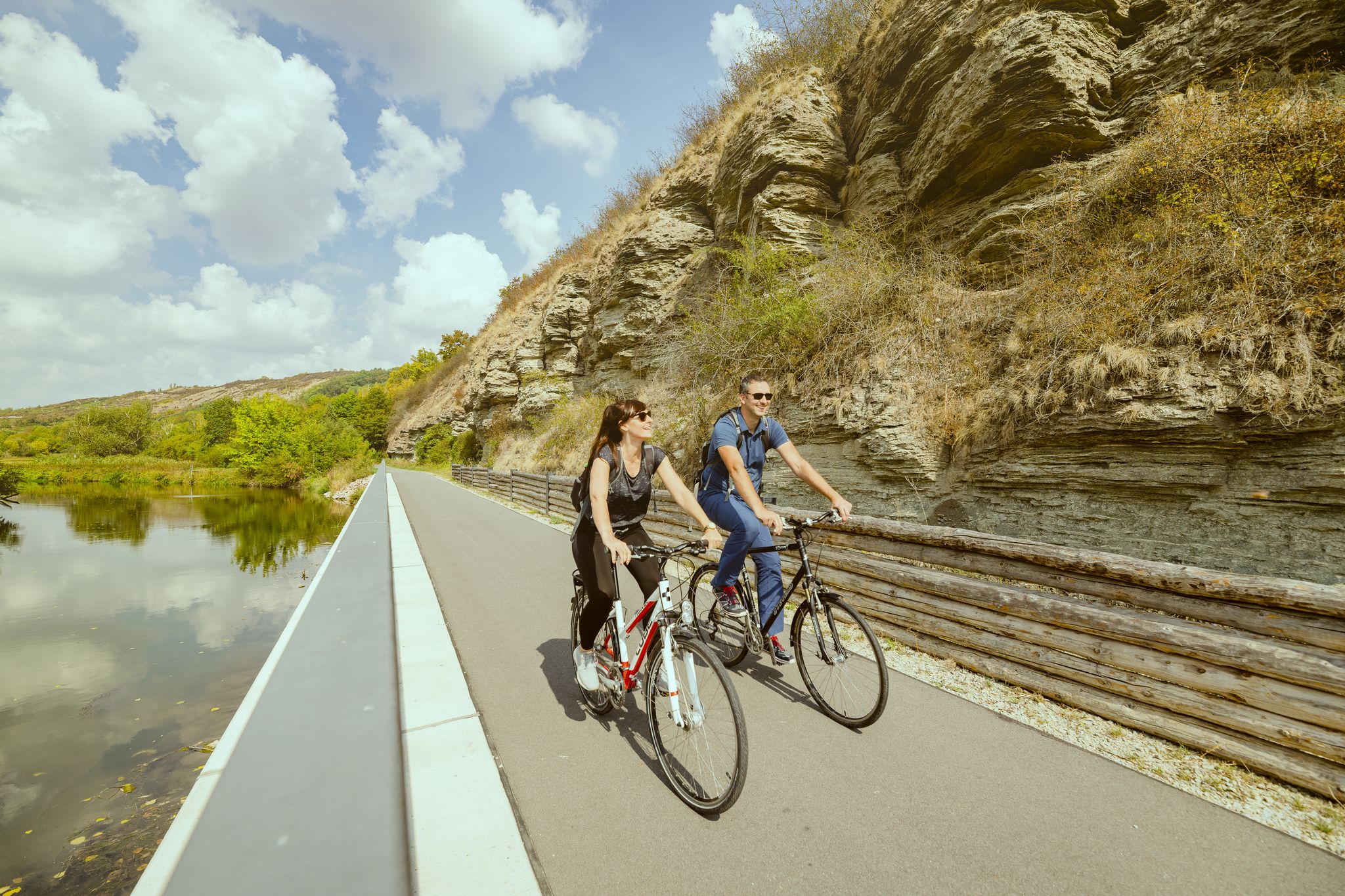
Unstrut Cycle Path – from the source in Eichsfeld to the River Saale
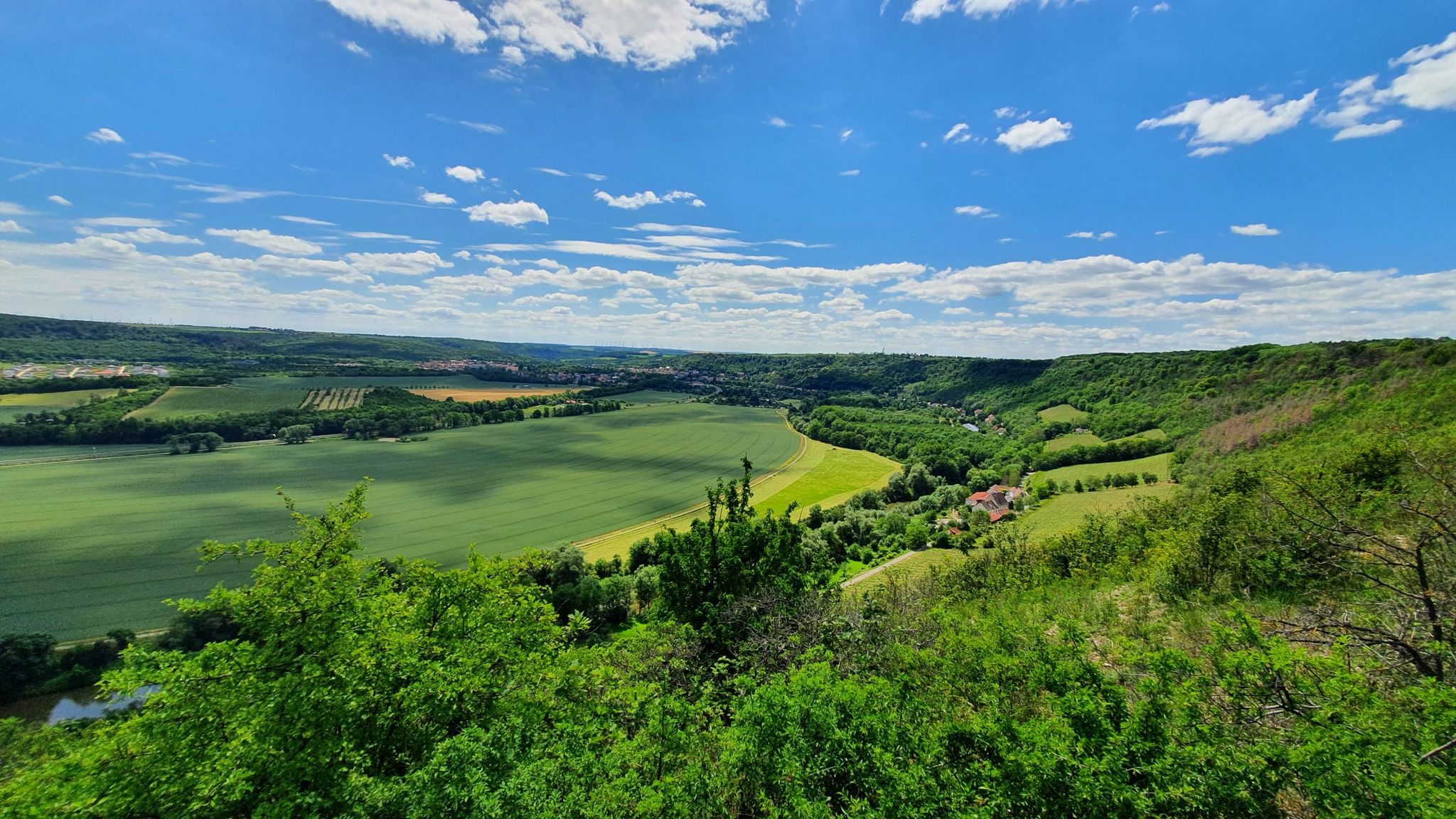
Feengrotten Kyffhäuserweg – Hike Germany's trail
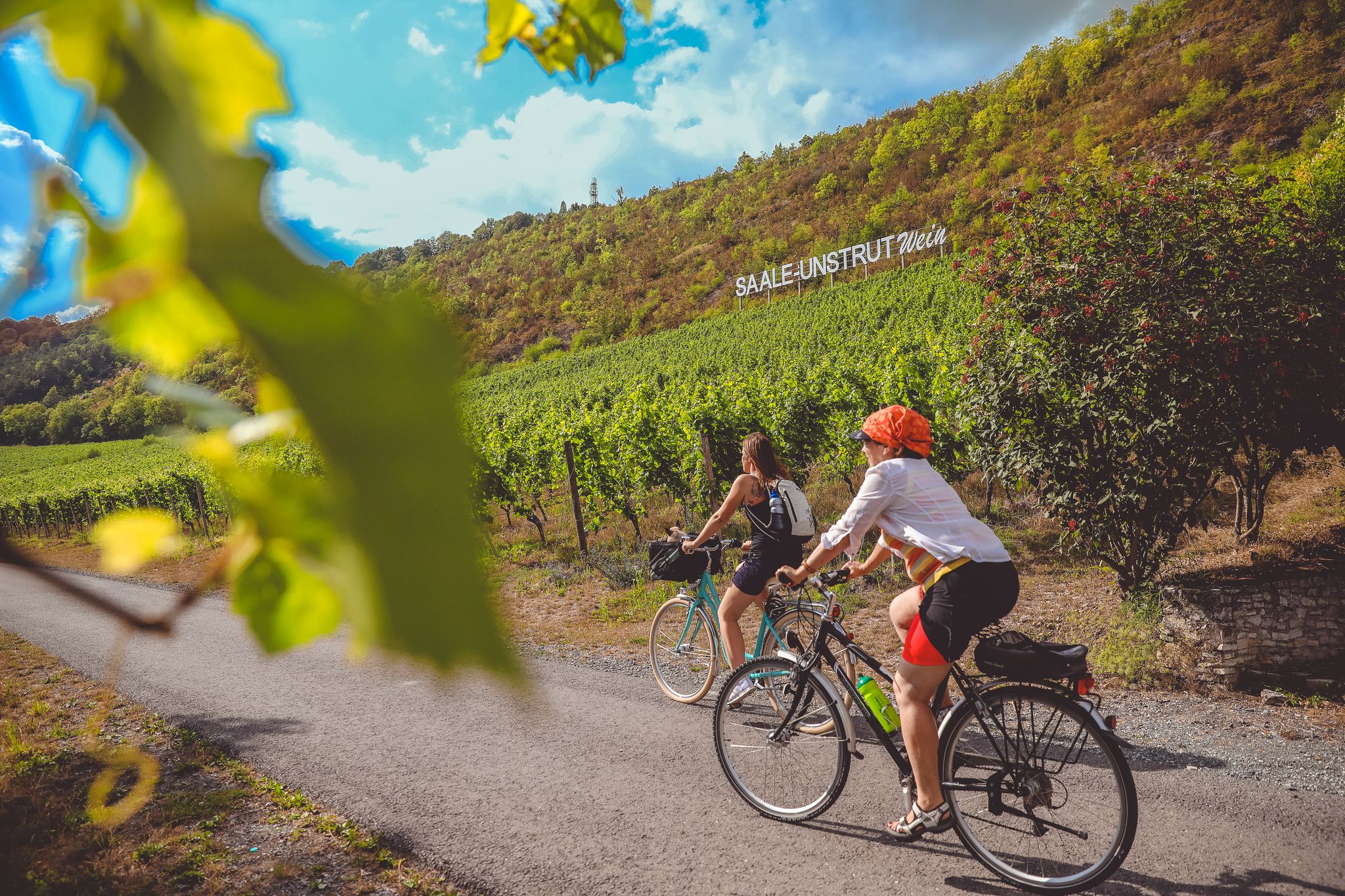
Saale Cycle Path part 2 – culture and nature along the river

Around Thuringia — 7 stages through Germany's green heart
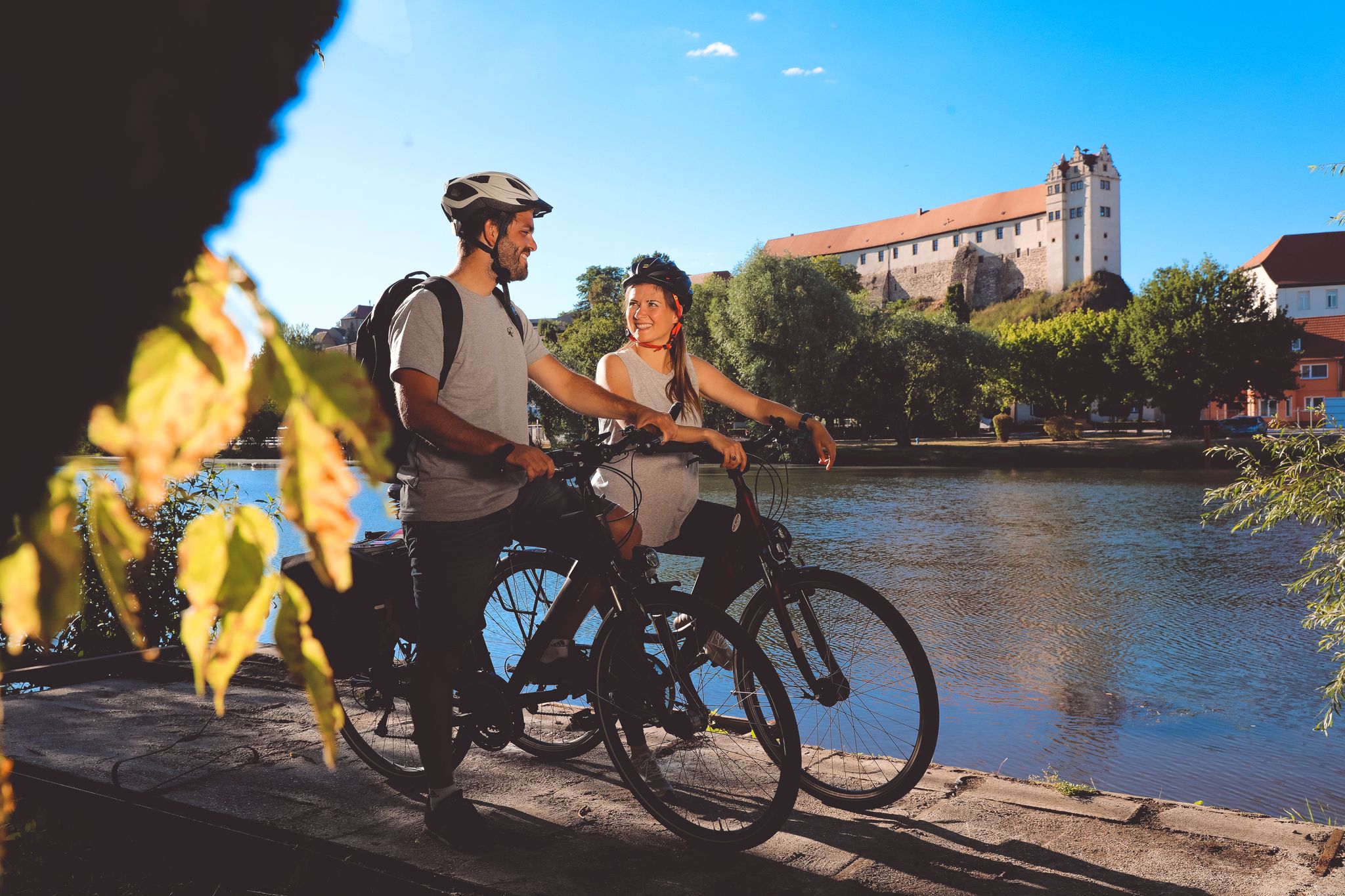
Saale Cycle Path — 9 stages from the source of the Saale to the Elbe
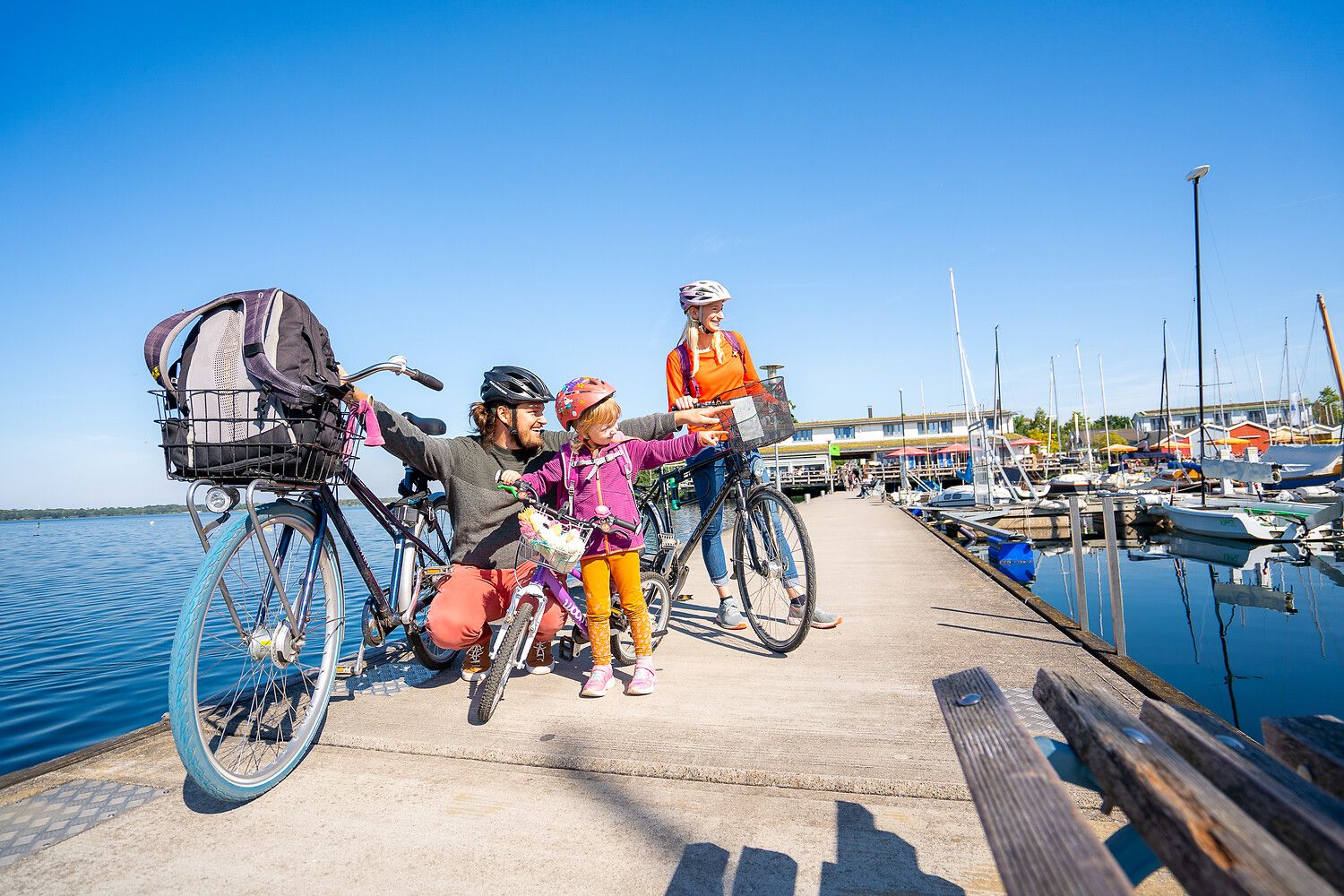
Lake views and fresh air – cycling by the water in the Leipzig region
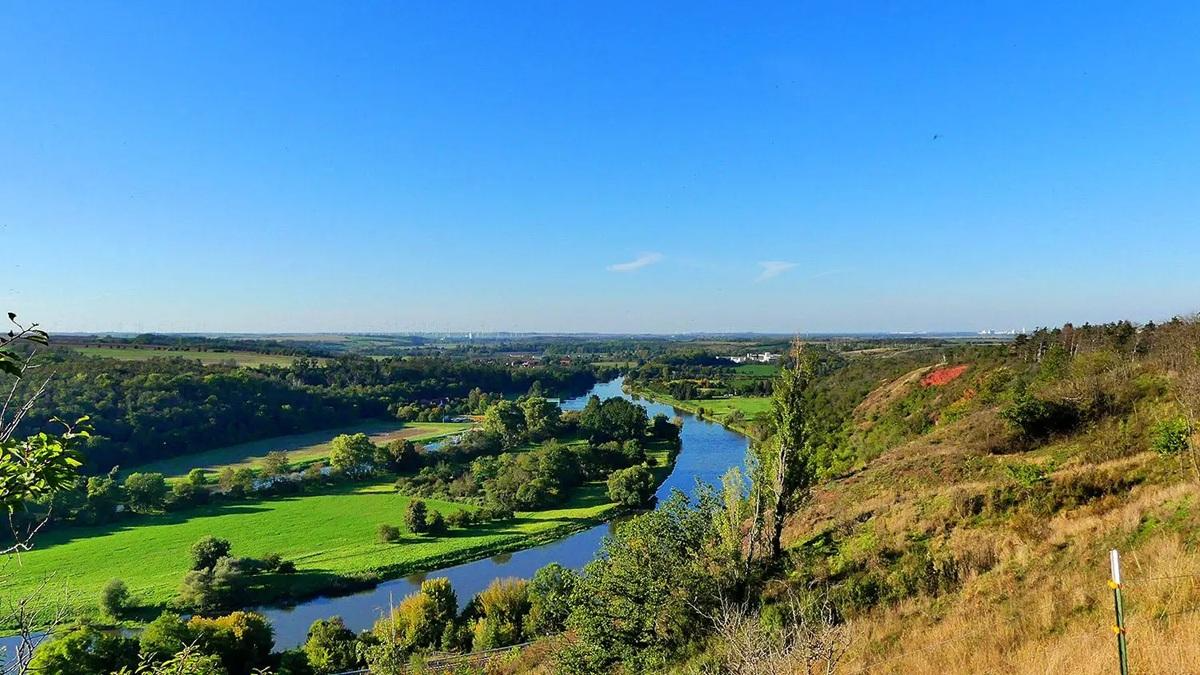
The National Natural Landscapes in Saxony-Anhalt
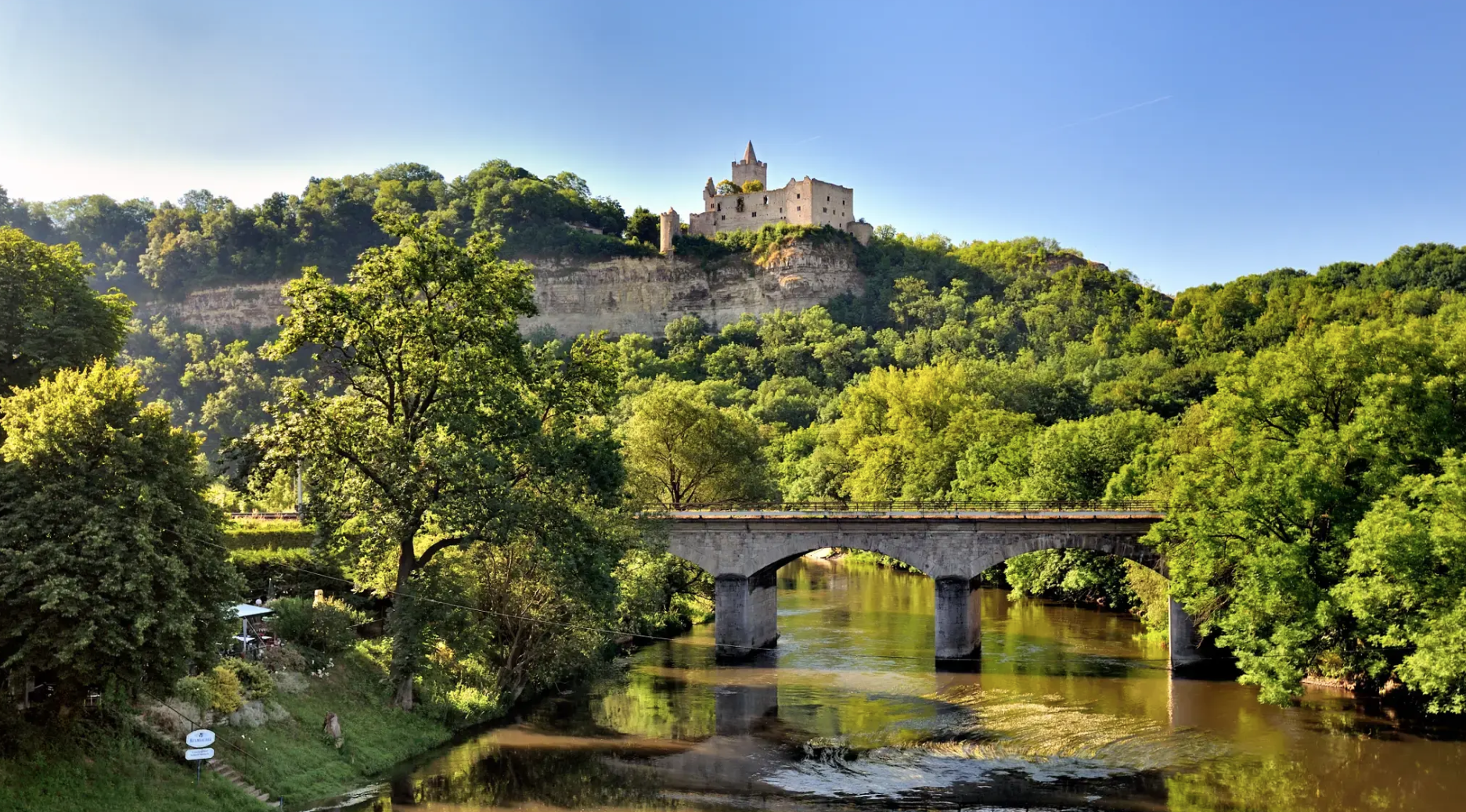
Walking and Wellness – spa towns in the Leipzig area
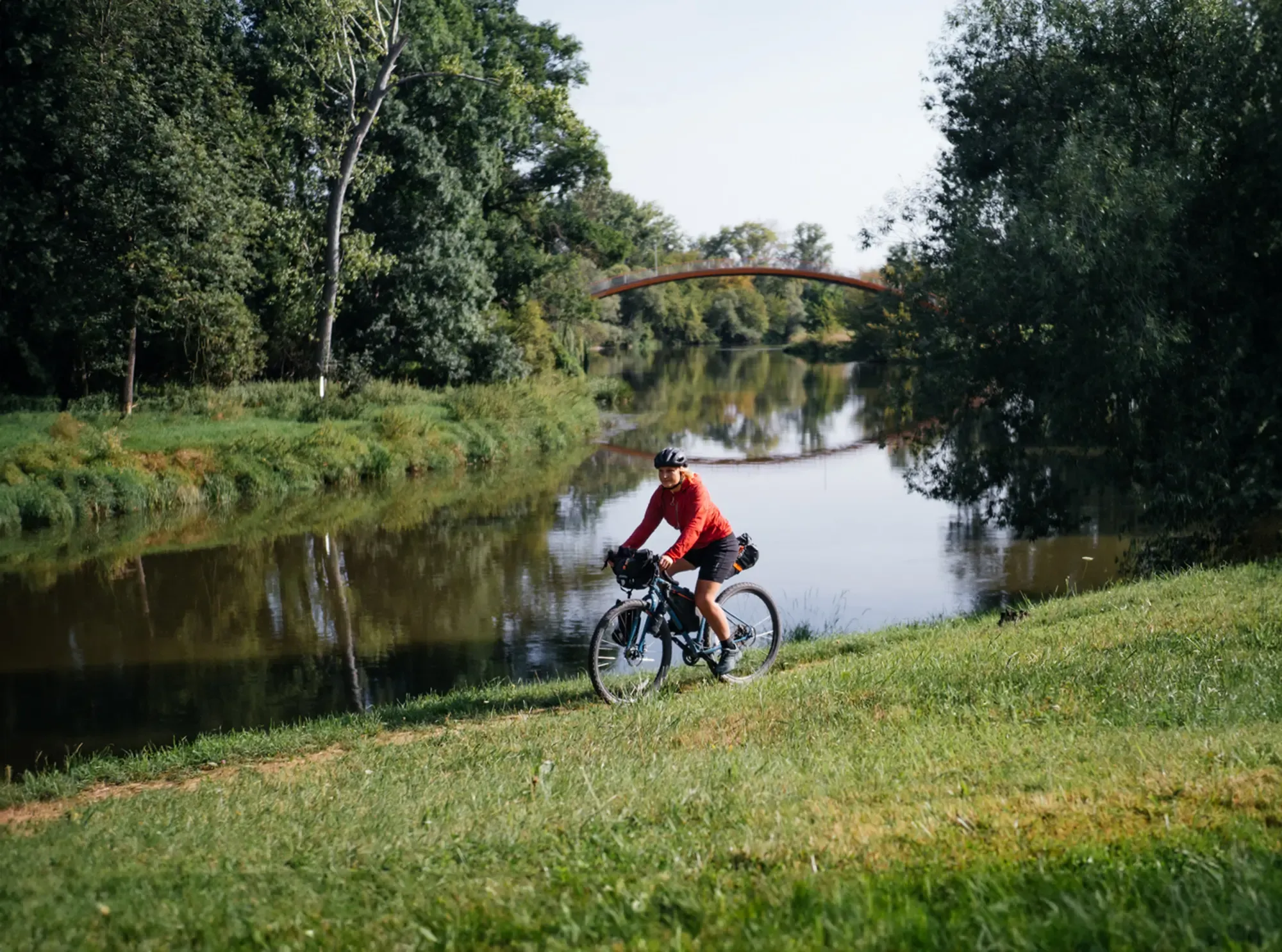
Out with Fräulein Draußen on the Saale Cycle Path
Lakes, castles and nature – discover the Leipzig region by bike
Other adventures in Halle-Saale-Unstrut


Tips from the Community

A beautiful landscape on the Saale.
0
0

Please keep the area clean👍🏻
0
0

I liked the cycle path here and it was properly marked.
4
0

Museum & Exhibitions High above the wine-growing town of Freyburg lies Neuenburg, the sister castle of Wartburg, founded around 1090 by the Thuringian Count Ludwig the Springer. The first mighty complex was built by 1150. The rise of the Landgraves of Thuringia was accompanied by further magnificent expansion. By 1230, Neuenburg was already around three times as large as Wartburg! The Romanesque double chapel built around 1170/75 is still an architectural gem today. On behalf of Hermann I, Heinrich von Veldeke completed the Eneasroman around 1185, the first Middle High German knightly-courtly verse epic ever. Neuenburg experienced the end of its high medieval heyday under Landgrave Ludwig IV and his wife, Saint Elisabeth.
13
0

UNSTRUT Source near Kefferhausen in Eichsfeld (400m); Length 192 km; Estuary Großjena near Naumburg into the Saale The Unstrut rises west of Kefferhausen near Dingelstädt in northern Thuringia in southern Eichsfeld. In the Sachsenburg or Thuringian Gate it breaks through the Hainleite. In its lower reaches it flows in numerous loops through the Burgenland district in southern Saxony-Anhalt; below Memleben it is initially flanked by the Ziegelroda Plateau, near Laucha by the Dorndorf Plateau, near Freyburg by the limestone-rich Silent Mountains and flows into the Großjenaer Blumengrund near Naumburg Saale. SAALE Source near Zell in the Fichtelgebirge (728m); Length 413 km; Estuary near Barby into the Elbe The Saale rises in the Fichtelgebirge in Upper Franconia between Zell and Weißenstadt. The upper reaches of the Saale between Zell and Hof are quite leisurely. The river then runs straight through the Thuringian Slate Mountains. The Saale is dammed several times here. The area of the middle Saale begins with the river exiting the Thuringian Slate Mountains and entering the Triassic plate and hill country. After leaving the Saale-Unstrut-Triasland Nature Park near Naumburg, the lower reaches of the river begin. This runs in a flat landscape to the mouth of the Elbe near Barby. Source: http://www.reportagereisen.de/unstrut_01.html
11
0

It's so lovingly designed with so many decorative elements that it's always a joy to admire the countless rivets. The steel structure rests on vividly hewn porphyry granite stones. Solid yet majestic. Truly aesthetic!
4
0

You can cycle wonderfully to the left and right of the river, so "laps" are also possible
7
0

What a great destination. At the Geiseltalsee you can bike, run, skate, paddle, sail, dive, swim, bathe, sunbathe, camp, go boating, drink wine, celebrate, relax and and and ... I hope I haven't forgotten anything, because here you can really so much to do ... really recommendable!
11
1
Frequently Asked Questions
What are the most significant historical and cultural sites in the Halle-Saale-Unstrut region?
The region is rich in history. Don't miss the Naumburg Cathedral of St. Peter and St. Paul, a UNESCO World Heritage site renowned for its medieval art and architecture, including the famous Uta sculpture. Other notable sites include Merseburg Cathedral, with its 1,000-year history and Ladegast organ, and Querfurt Castle, one of Germany's largest and best-preserved medieval castles. For ancient history, visit Arche Nebra, the visitor center near the discovery site of the Nebra Sky Disc, or explore the Himmelswege archaeological route.
Are there any family-friendly attractions in Halle-Saale-Unstrut?
Yes, many attractions cater to families. The Ducal Vineyard below Neuenburg Castle offers historical exploration in a scenic setting. The Marina Mücheln on Lake Geiseltal provides a pleasant spot with facilities and views. The Braunsbedra Pier is also a great option, offering a pure sea feeling with its 200-meter-long pier, and is noted as wheelchair accessible. Many castles and natural areas are also suitable for family outings.
Where can I experience the region's natural beauty and wine culture?
The Saale-Unstrut region is Germany's northernmost wine region. You can explore vineyards along the Saale and Unstrut rivers, particularly along the Saaleradweg Vineyards and Castle Ruins cycle path. The Vines on the Saalberge highlight offers beautiful views of the wine landscape. Don't miss the Confluence of the Saale and Unstrut Rivers for a picturesque natural viewpoint.
What outdoor activities, like cycling or hiking, are available near the attractions?
The region offers numerous outdoor opportunities. For cycling, the Gravel biking in Halle-Saale-Unstrut guide features routes like the 'View of Raßnitzer Lake – Wallendorfer See loop'. If you prefer mountain biking, check out the MTB Trails in Halle-Saale-Unstrut guide, which includes routes around Geiseltal Lake Marina. For running or walking, the Running Trails in Halle-Saale-Unstrut guide has options like the 'Saale Promenade – North tip of Peißnitz Island loop'.
Are there any accessible attractions for visitors with mobility needs?
Yes, some attractions offer accessibility features. The Braunsbedra Pier is noted as wheelchair accessible, allowing everyone to enjoy the lake views. While specific accessibility details vary, many modern visitor centers like Arche Nebra are designed with accessibility in mind. It's always recommended to check with individual sites for their specific provisions.
What are some lesser-known or 'hidden gem' attractions in the area?
Beyond the main highlights, consider visiting the Goethe-Theater Bad Lauchstädt, the only preserved theater building from the Goethe era, known for its original canvas ceiling and acoustics. The Francke Foundations in Halle offer a historic cultural hub with museums and educational programs. For a unique experience, the Beatles Museum in Halle is also a point of interest for music enthusiasts.
What do visitors enjoy most about the attractions in Halle-Saale-Unstrut?
Visitors frequently praise the breathtaking beauty and historical significance of sites like Naumburg Cathedral, often recommending guided tours. The scenic views from castles like Rudelsburg are highly appreciated, with many enjoying the combination of history and stunning landscapes. The well-marked and enjoyable cycle paths, such as the Saaleradweg, are also a community favorite for experiencing the region's nature and wine culture.
Where can I find impressive viewpoints in the Halle-Saale-Unstrut region?
For panoramic vistas, Rudelsburg offers fantastic views over the Saale valley. The Ducal Vineyard below Neuenburg Castle also provides scenic outlooks. Additionally, the Braunsbedra Pier on Lake Geiseltal offers a unique perspective over the water, and the Confluence of the Saale and Unstrut Rivers is a naturally beautiful spot for views.
What are some notable sites related to ancient astronomy and prehistory in the region?
The Halle-Saale-Unstrut region is a cradle of ancient astronomy. The Arche Nebra visitor center tells the story of the 3,600-year-old Nebra Sky Disc. You can also explore the Himmelswege archaeological tourism route, which connects sites like the Sonnenobservatorium Goseck (the world's oldest known solar calendar) and the Ringheiligtum Pömmelte, a reconstructed wooden ring sanctuary often called the 'German Stonehenge'.
What is there to see and do in the city of Halle (Saale) itself?
Halle (Saale) offers several attractions. The Marktkirche Unser Lieben Frauen (Market Church of Our Lady) is a prominent late Gothic church with five distinctive towers and a Luther museum. You can also see the Roter Turm (Red Tower), an 84-meter-tall bell tower with Europe's largest carillon. Other points of interest include the Händel-Haus (birthplace of George Frideric Handel), Kunstmuseum Moritzburg, and the Halloren Chocolate Factory, Germany's oldest chocolate factory.
Can I find any castles or ruins to explore in the Halle-Saale-Unstrut area?
Absolutely. The region is dotted with historical castles. Querfurt Castle is a must-see, being one of Germany's largest and best-preserved medieval fortresses. Neuenburg Castle in Freyburg, a sister castle to Wartburg, features a Romanesque double chapel. You can also visit Rudelsburg, which offers not only historical interest but also an inn and great views.
Most popular routes in Halle-Saale-Unstrut
Most popular attractions in Halle-Saale-Unstrut

Get inspired with the komoot mobile app


Didn’t find what you were looking for?
Are you keen on exploring more awesome places nearby? Browse our guides:
Explore more
Still not found the Highlight you’re looking for? See guides of the top attractions in other regions:
