Top 20 Castles in Landkreis Augsburg
Castles in Landkreis Augsburg are found within a region rich in historical significance, featuring varied landscapes including river valleys and wooded ridges. This area offers insights into Bavaria's past, with many sites showcasing centuries of architectural evolution. The region's cultural heritage is deeply intertwined with these historic structures. Visitors can explore a blend of natural settings and man-made monuments.
Best castles in Landkreis Augsburg
- The most popular castles is Prince-Bishop's Residence Augsburg, a historical site that was the former prince-bishop's residence. The main wing was built in 1743, and the complex includes a courtyard garden.
- Another must-see spot is Castle Church and Castle Hill Oberwittelsbach, a historical site and castle. This location is historically significant as the ancestral home of the Bavarian Wittelsbach family, featuring an impressive Gothic church and remains of fortress walls.
- Visitors also love Sisi Castle Unterwittelsbach, a castle that was once the summer residence of Duke Max in Bavaria. It houses a dedicated Sisi exhibition and a Sisi Café, offering a unique opportunity to delve into the personal history of Empress Sisi.
- Landkreis Augsburg is known for its Renaissance châteaux, water castles, and sites with medieval origins. The region offers a variety of castles to see and explore, from private residences to publicly accessible historical attractions.
- The castles in Landkreis Augsburg are appreciated by the komoot community, with more than 900 upvotes and over 500 photos shared across various highlights. This demonstrates the general appeal and historical interest these sites hold for visitors.
Last updated: September 26, 2026
Blumenthal Castle Beer Garden
Highlight • Restaurant
Translated by Google •
Tip by

Scherneck Castle
Highlight • Castle
Translated by Google •
Tip by

Sign up now to discover places like this
Get recommendations on the best single tracks, peaks, & plenty of other exciting outdoor places.
Castle Church and Castle Hill Oberwittelsbach
Highlight • Historical Site
Showing Translation
Tip by

Elmischwang Castle
Highlight • Castle
Translated by Google •
Tip by

Markt Castle (Fugger Castle Markt)
Highlight • Castle
Right next door is a (private) garden (Fugger) that is worth seeing and can only be visited as part of public tours.
Translated by Google •
Tip by

Affing Castle
Highlight • Castle
Affinger Bücherstüberl | Schlossplatz 1 | 86444 Affing
Network: website
Opening hours:
Tuesday: 3:00 p.m. to 5:00 p.m.
Thursday: 4:00 p.m. to 6:00 p.m.
Sunday: 3:00 p.m. to 5:00 p.m.
Translated by Google •
Tip by

Hofhegnenberg Castle
Highlight • Castle
Further information and source: de.wikipedia.org/wiki/Schloss_Hofhegnenberg
Translated by Google •
Tip by

Hammel Castle
Highlight • Castle
Translated by Google •
Tip by

Markt Castle
Highlight • Castle
The listed complex consists of the eastern castle around the keep and the front (western) castle with the Onoldsbacher tower. The castle was probably built in the 14th century and belonged to the rule of the Rechbergers, then the Pappenheimers. The castle was acquired by Jakob Fugger in 1508 and rebuilt as a palace in 1525. The castle chapel of St. John the Baptist from 1738 is part of the complex.
Translated by Google •
Tip by

Guggenberg Castle
Highlight • Castle
Translated by Google •
Tip by
Sign up for free to discover even more castles in Landkreis Augsburg.
Already have an account?
Start today with a free account
Your next adventure awaits.
Popular around Landkreis Augsburg
Augsburger Jakobsweg – Through Bavarian-Swabia
Hike from Augsburg to the Allgäu Alps
The Romantic Road – To the Pearls of Southern Germany
The Via Julia – on new old roads
The Romantic Road – 10 fabulous stages
Mountain air by train – hiking in the BRB Network
The National Natural Landscapes in Bavaria
Castles, Nature and History – hiking loops in the Wittelsbacher Land
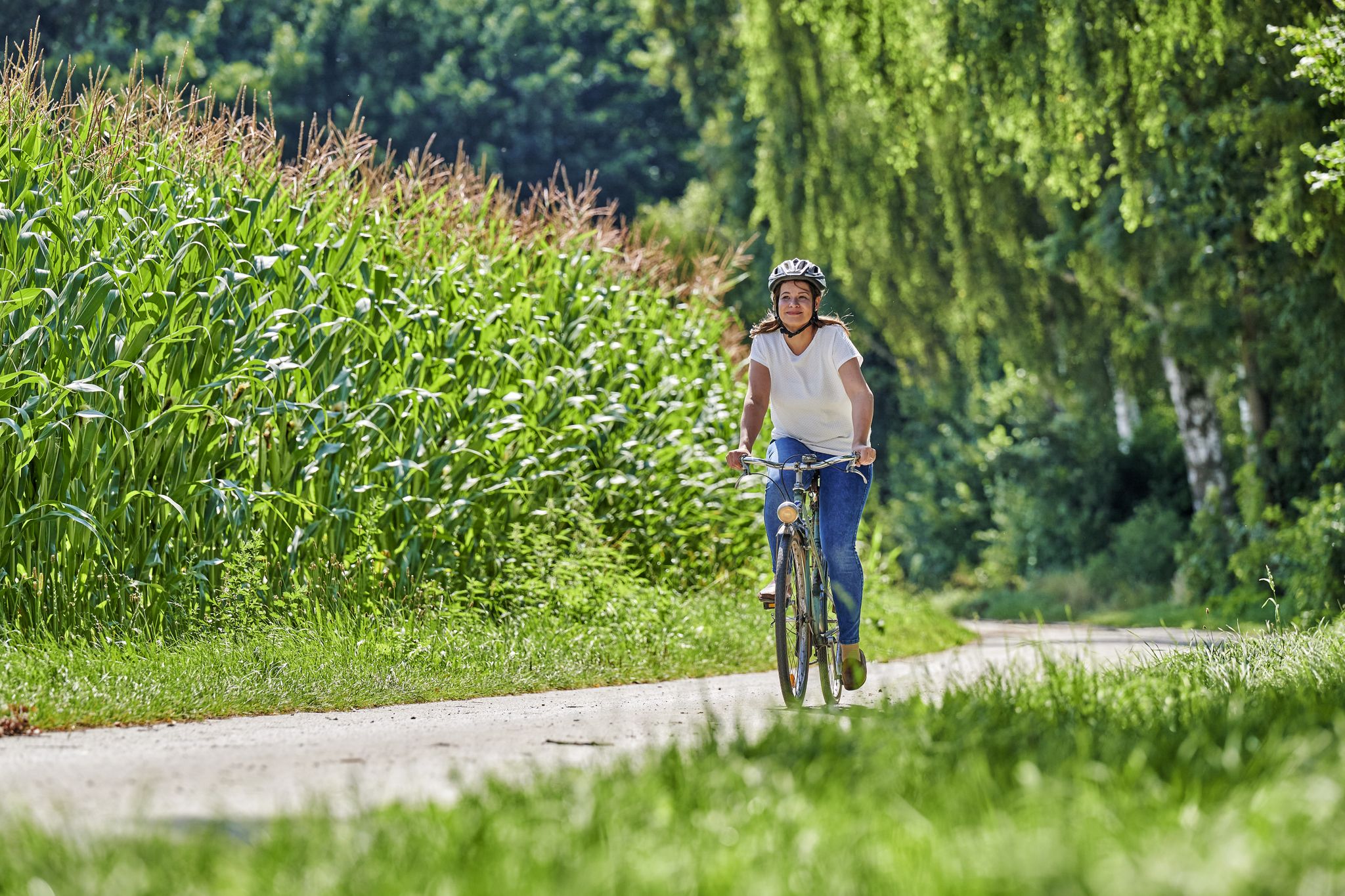
Enjoying nature and culture – cycling in the Augsburger Land
#GoFurther – discover the views of Germany!
Other adventures in Landkreis Augsburg


Tips from the Community

In the 19th century, a comprehensive redesign was carried out by the architect Jean Keller, who also designed the magnificent grand hall.
1
0

If you take the small effort to inform yourself before a visit, you will quickly find that guided tours are offered from various sources, during which the interior of the church can also be visited: 1. On selected Sundays, the parish community offers an open tour at 2:00 p.m. without registration. 2. The Aichach City Museum arranges tours at different times. We were very lucky 🍀 to receive a highly interesting and entertaining presentation of the history of the former castle and the church from an engaged guide full of knowledge on a Friday at 12 noon, which also included a visit to the church.
5
0

Built in the 14th century as a hilltop castle
0
0
Built in 1550, in 1700 the castle came into the possession of the Augsburg patrician family von Stetten through marriage
0
0

Markt Castle: The remains of Markt Castle rise above the Markt district, on a ridge that slopes down on three sides. The castle was first documented in the 14th century, but the oldest surviving parts of the building date back to 1525, when the Fugger family had it rebuilt as a palace.
1
0
Wolfgang von Paler the Elder was granted sheep in 1550. He commissioned the construction of a new palace around 1550/60. The building was presumably destroyed by the Swedes in 1648. The new owner, Raimund Egger, had the palace rebuilt.
3
0

A site worth seeing, which is currently home to 47 adults and 29 children... and has four cars of its own.
7
0
Every second Saturday you can take a guided tour with tasting in the cheese factory.
6
0
Frequently Asked Questions
What are some of the most historically significant castles in Landkreis Augsburg?
Landkreis Augsburg is rich in history. The Castle Church and Castle Hill Oberwittelsbach is particularly significant as the ancestral home of the Bavarian Wittelsbach family, featuring an impressive Gothic church and remains of fortress walls. Another key site is the Prince-Bishop's Residence Augsburg, a former residence where the Augsburg Confession was read in 1530.
Are there family-friendly castles to visit in Landkreis Augsburg?
Yes, several castles offer family-friendly experiences. Sisi Castle Unterwittelsbach is a great option, featuring a dedicated Sisi exhibition with interactive elements and replicas of her dresses, which can be engaging for children and adults alike. Many castles also have grounds suitable for family walks.
Can I find castles with dining options or cafes in Landkreis Augsburg?
Absolutely. You can enjoy a meal or a coffee at several castle-related locations. For instance, Blumenthal Castle Beer Garden offers a pleasant spot for food and drinks. Scherneck Castle also has a restaurant with good food and a beer garden. Additionally, Sisi Castle Unterwittelsbach includes a Sisi Café.
What outdoor activities, like hiking or cycling, can I do near castles in Landkreis Augsburg?
The region around the castles offers various outdoor activities. For hiking, you can explore routes like the 'Maria Birnbaum to Blumenthal' or the 'Three Castles Tour'. Cyclists can enjoy routes such as the 'Weldenbahn Cycle Path' or the 'Anhauser Valley – Wertach Embankment Trail'. You can find more details and routes in the Hiking in Landkreis Augsburg and Road Cycling Routes in Landkreis Augsburg guides.
Are there any castles in Landkreis Augsburg that offer insights into Empress Sisi's life?
Yes, Sisi Castle Unterwittelsbach is dedicated to Empress Elisabeth ('Sisi') of Austria. It was once the beloved summer residence of her father, Duke Max in Bavaria. The castle houses a permanent exhibition, 'Sisi - Life, Death & Myth,' which uses multimedia presentations to explore her life, beauty rituals, and travels.
Which castles in Landkreis Augsburg are known for their architectural styles or unique features?
Landkreis Augsburg features diverse architectural styles. Schloss Wellenburg, though privately owned, is notable for its distinctive triangular structure with three round towers. Hofhegnenberg Castle showcases a blend of medieval, Renaissance, Baroque, and Neo-Gothic styles, having survived the Thirty Years' War largely intact. Schloss Zusmarshausen, dating back to 1505, is a three-story building with a high hip roof, originally serving as a bishop's administrative office.
Are there castles in Landkreis Augsburg where I can explore gardens or scenic grounds?
Yes, several castles offer beautiful outdoor spaces. Schloss Wellenburg features an impressive two-kilometer tree-lined avenue of linden trees, perfect for a picturesque walk. Schloss Zusmarshausen has a small garden behind the castle that provides expansive views over the Zusam valley. Additionally, Markt Castle (Fugger Castle Markt) includes a private Fugger garden that is accessible to the public through guided tours.
What is the best time of year to visit castles in Landkreis Augsburg?
The best time to visit castles in Landkreis Augsburg is generally during the spring, summer, and early autumn months (April to October). During these periods, the weather is usually pleasant for exploring castle grounds and nearby natural areas. Many castles also host cultural events and markets during the warmer months, offering additional attractions.
Are there castles in Landkreis Augsburg that are privately owned or have limited public access?
Yes, some castles in the region are privately owned and not fully accessible to the public. For example, Schloss Wellenburg is privately owned by the Fugger-Babenhausen family, and its interior is not open for tours, though its exterior and the linden avenue are publicly viewable. Schloss Zusmarshausen, while housing the Bavarian State Forests, is not typically open for public tours, though its garden is accessible.
Can I visit castles in Landkreis Augsburg that have a connection to the Fugger family?
Yes, the Fugger family has a strong historical presence in the region. Markt Castle (Fugger Castle Markt) is directly associated with the Fugger family and offers guided tours that include their private garden. While Schloss Wellenburg is also owned by a branch of the Fugger family, its interior is not publicly accessible.
Are there any castles in Landkreis Augsburg that host cultural events or markets?
Yes, Hofhegnenberg Castle is known for its vibrant cultural calendar. It regularly opens its doors for various events, cultural programs, and regional markets, such as the traditional Kipferlmarkt, fostering a lively atmosphere for visitors.
Are there dog-friendly options at castles in Landkreis Augsburg?
While specific rules vary by castle, many castle grounds and outdoor areas in Landkreis Augsburg are dog-friendly, especially if dogs are kept on a leash. For example, the Wellenburg Castle Restaurant is listed as dog-friendly. It's always a good idea to check individual castle policies before your visit, especially if you plan to enter interior exhibitions or buildings.
What should I bring for a day trip to castles in Landkreis Augsburg?
For a day trip to the castles in Landkreis Augsburg, consider bringing comfortable walking shoes, as many sites involve exploring grounds or nearby trails. Depending on the season, layers of clothing, sun protection, and rain gear can be useful. If you plan to picnic, bring snacks and drinks. Don't forget your camera to capture the beautiful architecture and scenic views!
Most popular routes in Landkreis Augsburg
Most popular attractions in Landkreis Augsburg

Get inspired with the komoot mobile app


Didn’t find what you were looking for?
Explore Landkreis Augsburg’s best castles region by region:
Explore more
Looking for the best castles somewhere else? Discover other guides in Landkreis Augsburg:
