The best road cycling routes around Delville Wood
3.7
(11)
266
riders
49
rides
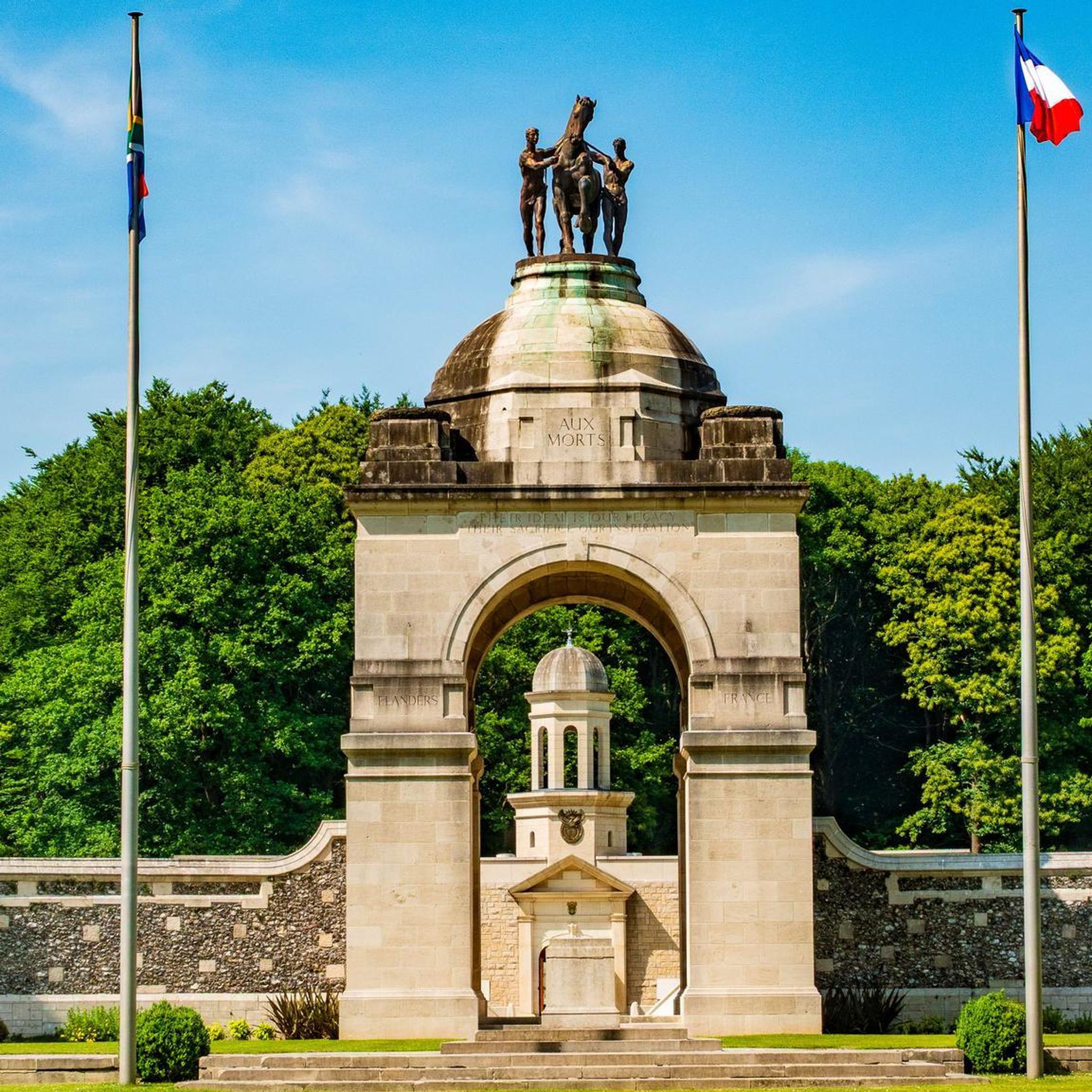
Road cycling around Delville Wood features routes traversing the historical landscapes of the Somme region, characterized by gently rolling terrain and agricultural fields. The area includes sections alongside the Canal de la Somme and passes through various memorial sites and small villages. Elevations are generally moderate, making the region accessible for diverse road cycling experiences.
Best road cycling routes around Delville Wood
- The most popular road cycling route is Canal de la Somme Cycle Path – Saint-Léger Church loop from…
Last updated: May 21, 2026
3.0
(1)
4
riders
53.8km
02:21
350m
350m
Moderate road ride. Good fitness required. Mostly well-paved surfaces and easy to ride.
4
riders
41.8km
02:10
340m
340m
Moderate road ride. Good fitness required. Mostly well-paved surfaces and easy to ride.

Sign up for free
4
riders
32.3km
01:36
280m
280m
Easy road ride. Great for any fitness level. Mostly well-paved surfaces and easy to ride.
6
riders
48.0km
02:46
350m
350m
Moderate road ride. Good fitness required. Mostly well-paved surfaces and easy to ride.
4.7
(3)
4
riders
45.2km
02:16
420m
420m
Moderate road ride. Good fitness required. Some segments of this route may be unpaved and difficult to ride.
Get access to more routes and recommendations from other explorers.
Sign up for free
Already have an account?
Our route recommendations are based on thousands of hikes, rides, and runs completed by other people on komoot.
Start today with a free account
Your next adventure awaits.
Login or Signup



Tips from the Community

The Tour d'Ulster, also known as the Helen Tower or Tour de Belfast, is a British war memorial. It was built in 1921 to commemorate the soldiers of the 36th Ulster Division who died during the Battle of the Somme in World War I. The tower is a replica of a neo-Gothic tower in Clandeboye Park, near Belfast, where the 36th Division trained. An interesting anecdote is that the 36th Ulster Division was the first to attack during the Battle of the Somme on 1 July 1916, but suffered heavy losses from both German and British artillery fire. The division lost over 5,500 men in just a few hours. The Tour d'Ulster has a cafeteria where you can enjoy a cup of tea, scones or Tayto chips, a specialty from Northern Ireland. It is a nice place to relax.
6
0
The Cratère de Lochnagar, an impressive war memorial, was created by a huge mine blown up by the British Royal Engineers on 1 July 1916, as part of the Battle of the Somme. The explosion marked the beginning of the battle and left a crater 90 metres in diameter and 25 metres deep. Interestingly, the crater was named after Lochnagar Street, the trench from which the tunnel was dug. The crater is now a preserved site of remembrance and a religious service is held there every year on 1 July in memory of those who died.
8
0
Tour d'Ulster has a cafeteria where you can enjoy a cup of tea, scones or Tayto chips, a specialty from Northern Ireland. It is a nice place to relax for a while.
1
0
The Tour d'Ulster, also known as the Helen Tower or Tour de Belfast, is a British war memorial. It was built in 1921 to commemorate the soldiers of the 36th Ulster Division who died during the Battle of the Somme in World War I. The tower is a replica of a neo-Gothic tower in Clandeboye Park, near Belfast, where the 36th Division trained. An interesting anecdote is that the 36th Ulster Division was the first to attack during the Battle of the Somme on 1 July 1916, but suffered heavy casualties from both German and British artillery fire. The division lost over 5,500 men in just a few hours.
1
0

The town of Bapaume presents one of the most traditional facets of Pas-de-Calais. From its belfry in the village center to the many trails that surround it, discover an authentic village.
0
0
French politician, MP and then resistance fighter, born on November 6, 1890 in Bapaume, he became mayor of the town in 1929. In 1934, he was elected general councilor of Pas-de-Calais. In 1936, he ran in the legislative elections and was elected in the second round. He was arrested in 1943 by the Nazis as he left the prefecture, and deported to the Gross-Rosen camp where he died on November 27, 1944. Since 1948, a monument showing him at the time of his arrest honors his memory. At the Town Hall there is an urn with soil from Gross-Rosen as well as a painting of him.
0
0

The cemetery's name, "Adanac," was formed by reversing the letters of "Canada" to honor the 1,078 Canadians buried there. There are now 3,187 Commonwealth and First World War commemorative graves in this cemetery, of which 1,709 are unidentified: 1,989 British, 1,074 Canadian, 70 New Zealand, 56 Australian, and 1 German. The village of Miraumont was occupied by British troops on February 24 and 25, 1917, following the German withdrawal to the Hindenburg Line. The village, recaptured by the Germans on March 25, 1918, was finally captured by the 42nd (East Lancashire) Division on August 24.
0
0
The village of Combles was captured by the Germans in August 1916, lost in March 1918 and finally recaptured five months later. This cemetery, which was started by the Guards Division, contains the graves of 182 British soldiers and four Newfoundlanders who fell in these engagements.
0
0
Frequently Asked Questions
How many road cycling routes are available around Delville Wood?
There are over 45 road cycling routes available around Delville Wood, catering to various skill levels. This includes 12 easy routes, 30 moderate routes, and 3 more challenging options.
Are there easy road cycling routes suitable for beginners in Delville Wood?
Yes, Delville Wood offers 12 easy road cycling routes perfect for beginners or those seeking a relaxed ride. An example is the Mémorial Crucifix Corner – Saint-Léger Church loop from Carnoy-Mametz, which is 32.3 miles (52 km) long with moderate elevation.
What kind of terrain can I expect on road cycling routes in Delville Wood?
The terrain around Delville Wood is characterized by gently rolling landscapes and agricultural fields. Many routes include sections alongside the Canal de la Somme and pass through historical memorial sites and small villages. Elevations are generally moderate, making the region accessible for diverse road cycling experiences.
Are there options for long-distance road cycling in the Delville Wood area?
Yes, for those looking for longer rides, routes like the Canal de la Somme Cycle Path – Saint-Léger Church loop from Carnoy-Mametz offer extensive canal-side riding over 48.5 miles (78.1 km), providing a substantial cycling experience.
Where can I park when road cycling in Delville Wood?
Parking is generally available in the small villages surrounding Delville Wood and near many of the memorial sites. It's advisable to check local signage for specific parking regulations in each location before you start your ride.
When is the best season for road cycling in Delville Wood?
The best seasons for road cycling in Delville Wood are typically spring (April to June) and autumn (September to October). During these months, the weather is usually mild, and the natural scenery is particularly pleasant. Summer can also be good, but be prepared for potentially warmer temperatures.
Are there challenging road cycling routes for experienced riders in Delville Wood?
While the region is known for its gently rolling terrain, there are 3 routes classified as difficult for those seeking more of a challenge. These routes will feature more significant climbs or longer distances to test experienced riders.
What do other road cyclists enjoy most about road cycling in Delville Wood?
The area is highly rated by the komoot community, with an average score of 3.8 stars from over 14 reviews. Reviewers often praise the historical significance of the routes, the peaceful agricultural landscapes, and the well-maintained canal paths.
Are there any scenic road cycling routes that highlight the region's history?
Many routes in Delville Wood offer a blend of scenic beauty and historical significance. For example, the Somme Trench Museum – Lochnagar Crater loop from Carnoy-Mametz takes you past important memorial sites while traversing the local countryside.
Can I find cafes or places to stop for refreshments along the road cycling routes?
Yes, as many routes pass through small villages, you will often find opportunities to stop for refreshments. These villages typically have local cafes, bakeries, or small shops where you can refuel during your ride.
Are the road cycling routes in Delville Wood suitable for families?
Many of the easy and moderate routes, particularly those along the Canal de la Somme or through quieter agricultural areas, are suitable for families. The generally moderate elevations make it a good region for family outings, though supervision is always recommended.
Are there circular road cycling routes available in Delville Wood?
Yes, many of the routes around Delville Wood are designed as loops, allowing you to start and end at the same point. Examples include the Suzanne Castle loop from Montauban-de-Picardie and the Roadbike loop from Combles.
What should I bring for road biking in Delville Wood?
Beyond your road bike and helmet, it's advisable to bring water, snacks, a repair kit, and appropriate clothing for varying weather conditions. Given the historical nature of the area, a camera might also be a good idea to capture the sights.
Most popular routes around Delville Wood

Get inspired with the komoot mobile app


Explore more
Browse the best Road cycling routes in other regions.
